In 2002, a retired Marine general sank sixteen American warships in two days. The exercise was Millennium Challenge, the fleet was quietly refloated, and the lesson was filed. Iran spent 2026 mining the Strait of Hormuz with the same cheap, dispersed tactics, which makes this a reasonable moment to ask which war games broke and which held.
Institutions have been simulating an Israel-Iran war for more than fifteen years. Those simulations are public, dated, and specific enough to score. Below is that scorecard: nine published exercises from Brookings, the Institute for National Security Studies in Tel Aviv, the Center for a New American Security, the Washington Institute, the Atlantic Council and others, weighed against what has happened since the IAEA declared Iran in breach of its non-proliferation obligations in June 2025.
The result is uncomfortable for the field. The games were broadly right about how the war would start and badly wrong about where it would go.
The exercises, and what each one claimed
| Exercise | Institution | Year | Core claim |
|---|---|---|---|
| Millennium Challenge 2002 | US Joint Forces Command | 2002 | A low-tech Gulf adversary can gut a carrier group |
| Osiraq Redux | Brookings / Saban Center | 2009 | Iran absorbs a strike and keeps enriching |
| Serious Play (review of three games) | Washington Institute | 2010 | Diplomacy fails; Iran never feels threatened |
| Internal Look | CENTCOM | 2012 | An Israeli strike pulls in the US; Americans die |
| Hours Following an Attack | INSS Tel Aviv | 2012 | About 100 missiles per wave; Israel seeks fast de-escalation |
| In Dire Straits? | CNAS | 2019 | Hormuz closure spikes oil to $175-$200/bbl |
| Risk and Responsibility | CNAS | 2022 | Even nuclear-armed, Iran is unlikely to use it |
| Pandora Unleashed | NPEC | 2024 | The conflict goes nuclear by 2027 |
| Proxy playbook game | Atlantic Council | 2025 | Iran prioritises regime survival over proxies |
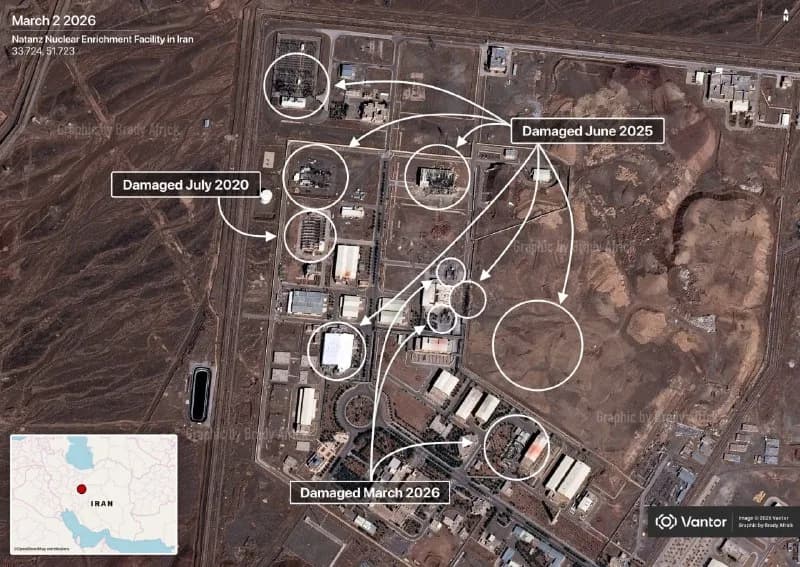
Two of these deserve their reputations. Exercise Internal Look, run by CENTCOM in 2012 and reported at the time, concluded that an Israeli strike on Iran's nuclear sites would lead to a wider regional war that could draw in the United States and leave hundreds of Americans dead. That is, structurally, the war that arrived fourteen years later. The Washington Institute's 2010 review of three separate December 2009 simulations reported that across all of them "the United States secured no meaningful international cooperation," and that Iran "never felt seriously threatened." The June 2025 sequence, an IAEA non-compliance finding on the 12th, Iran announcing a new undisclosed enrichment facility and sixth-generation centrifuges at Fordow the same week, and Israeli strikes on the 13th, reads as a near-literal enactment of that finding.
Where the games were right
The starting conditions were called correctly, repeatedly, by people writing more than a decade early.
The trigger held. Every serious exercise assumed the war would begin with an Israeli strike on nuclear infrastructure following a verification crisis rather than a border incident or a proxy attack, and that is what happened. The IAEA Board of Governors declared Iran in breach of its non-proliferation obligations on 12 June 2025, the first such finding in twenty years. Israeli strikes followed within roughly twenty-four hours.
The escalation ladder held. INSS assessed in 2012 that Iran would answer with roughly 100 ballistic missiles in a first wave and a comparable second wave. The opening Iranian barrage in late February 2026 was reportedly on the order of 170 missiles, which is the right order of magnitude from a fourteen-year-old estimate. That is about as well as this kind of forecasting can be expected to do.
The Strait held its place as the centre of gravity. CNAS modelled Hormuz mining and closure in 2019 and concluded that "the most profound costs in the more likely scenarios are not energy-related but security-related." Every ceasefire in this war has since broken on Strait access rather than on the nuclear file. The April 2026 agreement collapsed over transit tolls, the June Islamabad Memorandum collapsed in July over attacks on shipping, and the 60-day deadline expired in August in stalemate. For the mechanics of why that chokepoint is so hard to reopen, see the Hormuz math and Iran's naval mine strategy.
Where they were wrong
Three misses, in ascending order of importance.
The games under-modelled duration. Nearly all of them ran a compressed window, and INSS explicitly modelled only the first 48 hours. The real conflict has run in phases across roughly eighteen months, with at least three negotiated pauses that each failed. A 48-hour frame cannot capture a war whose defining feature is that it keeps restarting.
The games missed decapitation. Not one exercise in this set appears to have modelled the killing of Iran's Supreme Leader as an opening move. They treated leadership as a fixed actor to be bargained with, which is a reasonable simplifying assumption and, on the evidence, the wrong one.
And the games over-weighted the nuclear tripwire. This is the central correction the real war offers, and it is worth taking slowly.
The nuclear branch that never fired
| Exercise | Nuclear-use branch | Status as of September 2026 |
|---|---|---|
| CSIS (2007) | Both sides eventually target population centres | Has not occurred |
| INSS (2012) | Strike sets programme back about 3 years, no nuclear use | Partially held |
| NPEC (2024) | Israel launches 50 weapons at 25 Iranian targets by 2027 | Has not occurred |
| CNAS (2022) | Iranian nuclear use judged unlikely even if armed | Held |
The NPEC exercise, run across five sessions in late 2023 with 35 participants and set in 2027, concluded that an isolated Israel "launches a 'precision' follow-on nuclear strike of 50 weapons against 25 Iranian military targets," drawing an Iranian nuclear response. Anthony Cordesman's 2007 CSIS work reached a similar terminus, assessing that both sides "would probably be forced to target the other's population centres" once escalation passed a demonstrative strike.
Neither has happened. The real war has been extraordinarily violent by any measure. Iranian official and monitoring-group figures are reported in the thousands killed with tens of thousands injured, though these counts are contested and are better treated as directional than precise. A head of state was reportedly killed. Nuclear sites were struck twice, in June 2025 and again in 2026. The nuclear threshold was not crossed.
The exercise that called this correctly is the least dramatic one in the set. CNAS's 2022 tabletop series concluded that "even if Iran acquires a nuclear weapon, the likelihood the regime will use it is low," and that the regime would more plausibly reach for chemical or biological options to escalate. That assessment has held cleanly through eighteen months of open warfare.
Why the field skewed toward the nuclear branch
This is inference rather than evidence, and worth marking as such. War games are commissioned to explore tail risk, and a game that ends in a negotiated stalemate does not justify its funding. The incentive runs toward the dramatic branch. That may be defensible as a design choice and misleading as a base rate, and readers of this literature should adjust for it.
Key findings
- The games predicted the trigger well and the trajectory badly. Verification crisis into Israeli strike into US involvement was correct. Almost nothing after week one was.
- The most reliable prediction in fifteen years of this literature was a negative one: that Iran would not use a nuclear weapon.
- No exercise modelled leadership decapitation as an opening move, and that omission propagated through every branch that followed.
- The Strait of Hormuz, not the nuclear programme, has been the operative fault line of every failed ceasefire. See our full Hormuz analysis and the insurance repricing that followed.
- Millennium Challenge's 2002 lesson about cheap, dispersed, low-signature tactics appears vindicated. The argument that 2026 specifically validated it is being made by commentators, and we could not locate a formal assessment that establishes it.
What to watch
The near-term test is the IAEA Board of Governors. Reporting on 4 September 2026 indicated that the United States, United Kingdom, France and Germany had drafted a resolution referring Iran to the UN Security Council, with a board vote expected the following week. That would be the first such referral in two decades. Iran is estimated to hold roughly 440 kg of uranium enriched to 60 percent, and inspectors have not had access to sites damaged in the 2025 strikes.
This matters for the scorecard because a referral is the one move none of these exercises gamed in detail. They modelled strikes. They modelled talks. The institutional-escalation path, the mechanism by which a technical verification body forces a political decision at the Security Council, is the branch the literature left thin, and it is the branch now live.
Two things would falsify the reading above. If the nuclear threshold is crossed within twelve months, NPEC's timeline was early rather than wrong and the field's emphasis was right. If the Strait reopens and holds for two consecutive quarters while the nuclear file stays unresolved, then the CNAS judgement about security costs outweighing energy costs may need revisiting too. The central question for the next twelve months is not whether Iran can build a weapon, but whether the referral track forces a decision the strikes did not. Both are checkable, which is more than most commentary on this war offers. For the strike-by-strike record, see our timeline of US military action against Iran.
What we could not score
Four comparisons stayed open. They are listed rather than guessed at.
| Open item | Why it is unresolved |
|---|---|
| CNAS 2019 oil band of $175-$200/bbl | No verified Brent or WTI series for Feb-Sept 2026 obtained |
| INSS 3-year nuclear setback estimate | No post-strike damage assessment obtained |
| Whether 90% enrichment was the real 2026 strike trigger | Claimed in a 2025 war game, unconfirmed as the actual threshold |
| Casualty totals on all sides | Contested and revised, so reported as ranges only |
Every exercise cited here is published by a named institution with a fetchable source, and each is dated. Where a comparison could not be verified it is flagged above rather than scored. The scorecard is offered as a falsifiable reading, not a verdict.
Related Analysis
- Gladio Stay-Behind Hybrid War 2026: What Still Applies
- Israel-Turkey War Game Analysis: NATO, Escalation Paths, 2026
- Europe's 2026 Rearmament: Can the Factories Deliver?
- Jet-Powered Shaheds: Russia's 2026 Drone Escalation and the Interceptor Race
- Hezbollah Fires Anti-Ship Cruise Missile at Warship Off Lebanon [2026]
Related Topics
Video Intelligence
- ▶Iranian Missile Strike Hits Arad Israel: Video Moments
- ▶Iran Releases Official Footage of Drone Launches During War
- ▶FPV Drone Strikes US Victoria Base Near Baghdad Airport
- ▶Trump's Iran Rhetoric as Marines Deploy
Share This Analysis
Get a shareable verdict card for this article.
Get the next one first
Free briefings when we publish major outlooks and forecasts. No spam — unsubscribe anytime.
Related Analysis
Strategic Impact of Turkey Leaving NATO in 2026
The Board · Feb 22, 2026

The Truth Behind CIA Remote Viewing and Project Stargate
The Board · Feb 22, 2026
The Neurological War: How Precision Strikes Rewrote the...
The Board · Mar 27, 2026

Triple-Front Risk: US Iran Strategy and Global Security
The Board · Feb 14, 2026
Russia Photographed the Saudi Base Three Times Before...
The Board · Mar 30, 2026
A Russian Drone Hit NATO Territory This Week
The Board · Mar 26, 2026
Trending on The Board

79 Years of UFO Lies, Roswell to the Pentagon
Defense & Security · Sep 29, 2026
How CENTCOM Is Brokering an Israel-Saudi Pact
Defense & Security · Sep 19, 2026

Why the Pentagon Pulled Its Iran War Plans Offline
Defense & Security · Sep 19, 2026
How a Stablecoin Funded Moldova's 2026 Election
Geopolitics · Sep 19, 2026

The Hidden Gold Demand Behind the $6,000 Target
Markets · Sep 17, 2026
Latest from The Board
79 Years of UFO Lies, Roswell to the Pentagon
Defense & Security · Sep 29, 2026
How CENTCOM Is Brokering an Israel-Saudi Pact
Defense & Security · Sep 19, 2026
Why the Pentagon Pulled Its Iran War Plans Offline
Defense & Security · Sep 19, 2026
How a Stablecoin Funded Moldova's 2026 Election
Geopolitics · Sep 19, 2026
The Hidden Gold Demand Behind the $6,000 Target
Markets · Sep 17, 2026
Houthis Take Perim as Saudis Halt Pipeline 2026
Geopolitics · Sep 13, 2026

Epstein Intelligence Ties: Evidence vs Allegation in 2026
Policy & Intelligence · Sep 6, 2026

Central Banks Turned Gold Sellers. One Country Did It.
Markets · Aug 30, 2026