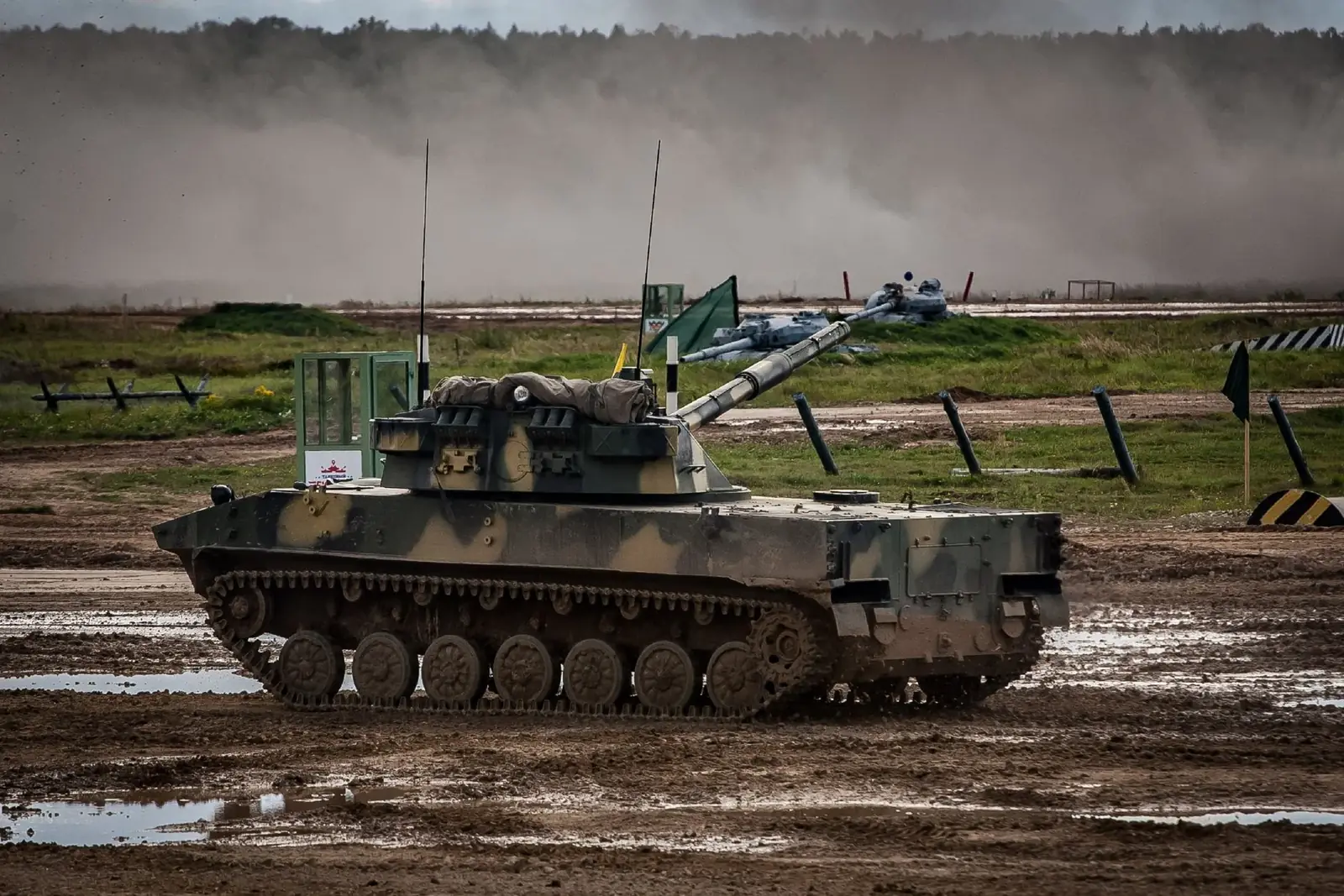
Executive Summary
Europe has mobilized €150 billion in shared EU loans and Germany a €377 billion weapons wishlist, yet a July 2026 audit from the U.S. Government Accountability Office warns that more than 48,000 Pentagon acquisition staff have departed — a labor collapse that threatens to strand the very orders now surging onto factory books. The money has arrived. The question is whether the people and plants to spend it have.
This is the week the two halves of the story collide. NATO's 36th summit convenes in Ankara on July 7–8, days after Norway and Ukraine signed a battlefield-robotics deal and the GAO published its starkest warning yet on acquisition capacity. Pledged capital is at generational highs; proven delivery is not. And the binding constraint — skilled labor, qualified suppliers, testing bandwidth — appears to bind on both sides of the Atlantic.
The Money: €150bn That Skips Germany
The EU's Security Action for Europe (SAFE) instrument authorizes up to €150 billion ($171 billion) in long-maturity loans for joint procurement. The first €38 billion tranche was approved in February 2026 — and the list of recipients is the tell: Belgium, Bulgaria, Denmark, Spain, Croatia, Cyprus, Portugal, and Romania, per Euronews.
Who's actually drawing on SAFE
Germany — one of the EU's AAA-rated sovereigns — did not request SAFE funding at all. Berlin self-finances a far larger program: a €108 billion 2026 defense budget and an internal €377 billion procurement wishlist, with Rheinmetall the chief beneficiary at roughly €88 billion. The single "European rearmament" headline actually conceals two different machines: a common credit facility used mainly by the lower-rated periphery, and a German build-out funded outside it. On the eastern flank, Poland has already run ahead of everyone, budgeting defense at 4.8% of GDP for 2026 — the highest in NATO — while richer core members phase in the Hague summit's 3.5% target more cautiously.
The aggregate shift is real. SIPRI estimated European military spending at $864 billion in 2025, up 14% — the sharpest Central and Western European growth since the Cold War — with Germany at $114 billion, up 24%, per SIPRI.
| Metric | Figure (2025–26) |
|---|---|
| EU SAFE loan facility | €150bn ($171bn) |
| First SAFE tranche | €38bn / 8 states |
| Germany 2026 defense budget | €108bn |
| Germany procurement wishlist | €377bn ($439bn) |
| European spending (SIPRI 2025) | $864bn (+14%) |
| Poland defense share | 4.8% of GDP |
| Rheinmetall order backlog | €73bn → ~€135bn guided |
| BAE Systems order backlog | £83.6bn (record) |
The Washington Wildcard
The transatlantic frame is deliberately unsettled. The Trump administration ordered roughly 5,000 U.S. troops out of Germany and has signaled deeper cuts, even as NATO's own tally shows European and Canadian spending up about 20% year-on-year, with every ally clearing the old 2% threshold for the first time. The counterweight is legal, not executive: the FY2026 defense authorization bars cutting U.S. forces in Europe below 76,000 without formal certification and notice to Congress, according to Euronews. Ankara is where Europe will learn how much of Washington's commitment it can still bank — a continuation of the security-rent bargaining that defined Munich earlier in 2026.
The Bottleneck Nobody Ordered
Here the audit trail turns sharp — and it comes from the system's own inspectors. The GAO's 2026 weapons assessment found the average time to field a new capability now exceeds 12 years, with nearly half of 23 major rapid-acquisition programs starting on immature technology, per GAO. Worse for delivery: more than 48,000 Defense Department staff left under a deferred-resignation program, hitting 37 key procurement programs, and the Pentagon's weapons-testing office was cut from 126 authorized positions to 30, as Federal News Network reported.
Record backlogs, unproven delivery
None of that is, on paper, a European problem. But the same constraint may bind Europe's primes. Rheinmetall's order backlog reached a record €73 billion and is guided toward roughly €135 billion by year-end; BAE Systems booked a record £83.6 billion, per Rheinmetall. Order books that large are the market's vote of confidence in the arms boom — and also the source of the risk. According to the GAO's own reviewers, the gap between order intake and delivery appears to be widening, and industry commentary suggests the same labor and supplier constraints that gutted U.S. programs may also bind Europe's plants. It cannot yet be verified from hard delivery data whether the base exists to convert those backlogs into fielded systems on schedule — on the evidence so far, the delivery wall is real. The money is proven; the throughput is not.
What Ukraine's Robots Signal
The most forward-looking data point is a memorandum with no dollar figure attached. On July 3, Norway's KONGSBERG and Ukraine's DevDroid signed a deal to jointly produce remotely operated combat robots, pairing Norwegian remote-weapon-station engineering with combat-tested Ukrainian ground systems, per KONGSBERG. Kyiv is repositioning from aid recipient to co-developer, projecting $35–60 billion in 2026 domestic production and eyeing controlled exports to allies. That is a bet that Ukraine's battlefield expertise, not merely its need for Western money, is now the tradeable asset — and a hint that the next phase of Europe's build-out runs through strategic-autonomy questions as much as through budgets.
Key Findings
- The €150bn headline is misleading. Germany, the biggest rearmer, doesn't use SAFE; the loans mostly serve the lower-rated periphery.
- Spending is genuinely historic — European outlays up 14% to $864bn, Germany +24%, Poland at 4.8% of GDP.
- Delivery is the open question. The GAO documents a gutted U.S. acquisition workforce and a testing office cut over 75%.
- Backlogs ≠ deliveries. Rheinmetall (~€135bn guided) and BAE (£83.6bn) show demand; capacity to fulfill it is unproven.
What to Watch
The Ankara summit's national roadmaps — due mid-2026 — are the first test of whether 3.5%-of-GDP pledges convert into contracts. Beyond the politics, watch for the metric that actually matters: unit deliveries and shell-and-propellant output, not order intake. Russia's own spending reached $190 billion in 2025, about 7.5% of its GDP, and the Kremlin has publicly dismissed Europe's build-up as overreaction even as its war economy expands — a reminder that the race is being run against a clock the audits suggest the West's factories may not beat. The real question is whether Europe can convert record order books into fielded steel — and on the audits' evidence, that remains to be seen.
Sources
- Euronews — first €38bn SAFE tranche approved: https://www.euronews.com/my-europe/2026/02/11/eu-approves-38bn-in-first-defence-investments-under-150bn-safe-scheme
- SIPRI — 2025 global military spending, Europe +14%: https://www.sipri.org/media/press-release/2026/global-military-spending-rise-continues-european-and-asian-expenditures-surge
- GAO — Weapon Systems Annual Assessment (GAO-26-108457): https://www.gao.gov/products/gao-26-108457
- Federal News Network — staff shortages strain weapons programs: https://federalnewsnetwork.com/defense-news/2026/07/staff-shortages-strain-weapons-programs-gao-says/
- Rheinmetall — Q1 2026 backlog statement: https://www.rheinmetall.com/en/media/news-watch/news/2026/05/2026-05-07-rheinmetall-news-quarterly-statement-q1
- KONGSBERG — KONGSBERG–DevDroid cooperation: https://www.kongsberg.com/news/news-archive/2026/kongsberg-and-devdroid-of-ukraine-announce-strategic-cooperation/
Related Analysis
- Jet-Powered Shaheds: Russia's 2026 Drone Escalation and the Interceptor Race
- Hezbollah Fires Anti-Ship Cruise Missile at Warship Off Lebanon [2026]
- US Crew Rescued After Jet Downed: Israeli Media Reports
- Iran Ground Assault: Kharg Island Target Analysis
- Russia Photographed the Saudi Base Three Times Before...
- Oil 2026: Why $72 Brent Misreads the Hormuz Truce
- Blackstone Sells $7.8bn Virginia Data Centers in 2026 — Top Signal?
- Iran After Khamenei 2026: State Funeral, New Supreme Leader, US Deal
Related Topics
Video Intelligence
- ▶Iranian Missile Strike Hits Arad Israel: Video Moments
- ▶Iran Releases Official Footage of Drone Launches During War
- ▶FPV Drone Strikes US Victoria Base Near Baghdad Airport
- ▶Trump's Iran Rhetoric as Marines Deploy
Share This Analysis
Get a shareable verdict card for this article.
Get the next one first
Free briefings when we publish major outlooks and forecasts. No spam — unsubscribe anytime.
Related Analysis

Strategic Impact of Turkey Leaving NATO in 2026
The Board · Feb 22, 2026

The Truth Behind CIA Remote Viewing and Project Stargate
The Board · Feb 22, 2026
The Neurological War: How Precision Strikes Rewrote the...
The Board · Mar 27, 2026

Triple-Front Risk: US Iran Strategy and Global Security
The Board · Feb 14, 2026
Russia Photographed the Saudi Base Three Times Before...
The Board · Mar 30, 2026

A Russian Drone Hit NATO Territory This Week
The Board · Mar 26, 2026
Trending on The Board

79 Years of UFO Lies, Roswell to the Pentagon
Defense & Security · Sep 29, 2026

How CENTCOM Is Brokering an Israel-Saudi Pact
Defense & Security · Sep 19, 2026

Why the Pentagon Pulled Its Iran War Plans Offline
Defense & Security · Sep 19, 2026
How a Stablecoin Funded Moldova's 2026 Election
Geopolitics · Sep 19, 2026

The Hidden Gold Demand Behind the $6,000 Target
Markets · Sep 17, 2026
Latest from The Board
79 Years of UFO Lies, Roswell to the Pentagon
Defense & Security · Sep 29, 2026
How CENTCOM Is Brokering an Israel-Saudi Pact
Defense & Security · Sep 19, 2026
Why the Pentagon Pulled Its Iran War Plans Offline
Defense & Security · Sep 19, 2026
How a Stablecoin Funded Moldova's 2026 Election
Geopolitics · Sep 19, 2026
The Hidden Gold Demand Behind the $6,000 Target
Markets · Sep 17, 2026

Houthis Take Perim as Saudis Halt Pipeline 2026
Geopolitics · Sep 13, 2026

Epstein Intelligence Ties: Evidence vs Allegation in 2026
Policy & Intelligence · Sep 6, 2026
What Israel-Iran War Games Got Wrong About 2026
Defense & Security · Sep 6, 2026