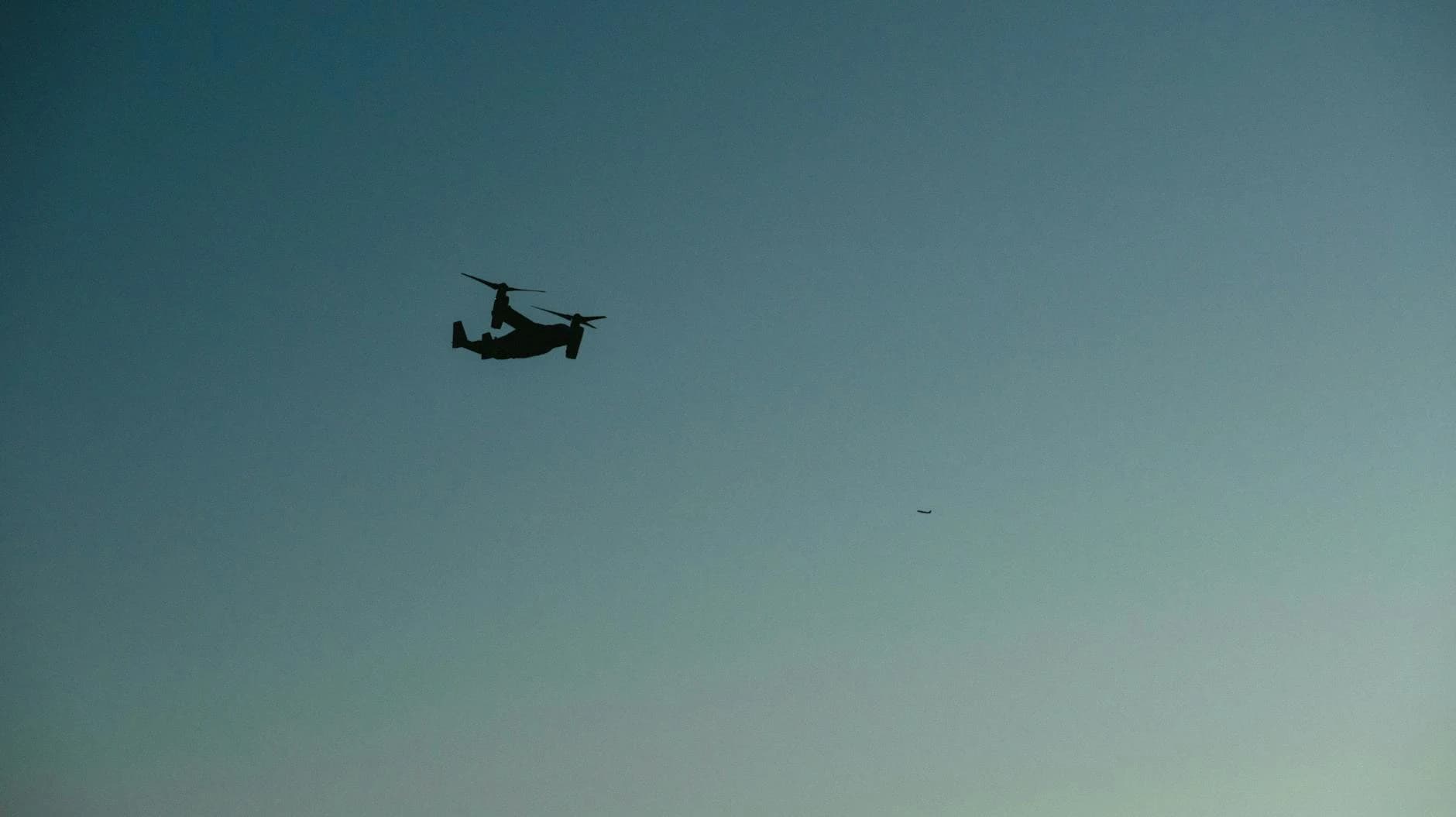
In March 2026, a Russian drone struck a power plant chimney in Narva, Estonia—marking the first confirmed hit on NATO territory. Radar tracked the UAV from Russian airspace, escalating tensions in the Baltic region.
Estonia is a member of NATO. Article 5 of the North Atlantic Treaty states that an armed attack against one member "shall be considered an attack against them all." It is the most consequential mutual defense commitment in human history, the foundation on which European security has rested for 75 years.

Nobody invoked it. Nobody held an emergency NATO Council meeting. Nobody issued a formal statement. The drone strike on Estonian territory generated a handful of news articles, a few social media posts, and then vanished — swallowed by the overwhelming news cycle of the Iran war.

This silence may be the most dangerous signal in international relations since Russia's annexation of Crimea.

## Russian Drone Probes Against NATO

The Narva incident did not occur in isolation. It is the latest in an escalating pattern of Russian territorial violations against NATO's Baltic members that has accelerated since the Iran conflict consumed Western attention.

Latvia has reported multiple drone incursions across its eastern border. Lithuanian airspace has experienced unauthorized penetrations. In the most dramatic incident prior to Narva, the UK Royal Navy was authorized to board Russian tankers operating in British territorial waters — a direct maritime confrontation that received minimal coverage.

Each incident follows the same script. Russia probes. The targeted nation protests quietly. NATO does not respond collectively. Russia notes the non-response and probes further. The pattern is not new — it has been documented since at least 2014. What is new is the acceleration.

Before the Iran conflict, Russian probes occurred every few weeks and drew at least symbolic NATO responses — diplomatic protests, increased air patrols, statements from the Secretary General. Since the Iran conflict began, the probes have become near-daily, and NATO's responses have been nonexistent. The alliance's attention, intelligence assets, military planning capacity, and political bandwidth are consumed by the Middle East.

## The Strategic Calculation

Russia's calculation is transparent to anyone willing to look. NATO cannot fight two strategic conflicts simultaneously. The alliance's military planning, intelligence assets, and political cohesion are finite resources. Every resource directed toward the Iran conflict is a resource unavailable for Baltic defense.

Overhead reconnaissance indicators suggest that Russia has increased military activity near its borders with Estonia, Latvia, and Lithuania during the Iran conflict period. Troop rotations that were previously routine have been supplemented by additional equipment deployments. Electronic warfare systems have been activated in border regions. The pattern is consistent with force posturing — not preparation for invasion, but establishment of a threat presence that tests the alliance's ability to respond.

The drone strike on Narva may have been deliberate provocation, an accident resulting from military operations near the border, or a test of NATO's detection and response capabilities. From Russia's strategic perspective, the distinction is irrelevant. What matters is the response — or lack thereof.

## NATO Response to the Drone Hit

Article 5 has been invoked exactly once in NATO's 75-year history — after the September 11 attacks. That invocation was unanimously supported, unambiguous in its trigger (a catastrophic terrorist attack on US soil), and led to collective military action in Afghanistan.

The Narva drone strike presents a fundamentally different Article 5 question. The attack was small in scale — damage to a chimney, no casualties. The attribution, while supported by radar tracking, is complicated by plausible deniability — Russia can claim the drone was Ukrainian, rogue, or malfunctioning. The political will to invoke Article 5 over a chimney is, candidly, nonexistent.

But Article 5 was never designed to be invoked only against catastrophic attacks. Its purpose is deterrence — the credible threat that any attack on any member, regardless of scale, will trigger collective response. The moment an actual attack produces no response, deterrence degrades. If a drone strike on critical infrastructure doesn't trigger Article 5 consultation, what does? If the answer is "something bigger," then Russia's incentive is to find out exactly how much bigger.

This is the logic of salami tactics — incremental provocations, each individually too small to justify a major response, that cumulatively cross a line that was supposed to be uncrossable. Russia used this approach in Georgia (2008), Ukraine (2014-2022), and Syria (2015-present). Each time, the pattern was recognized only in retrospect.

## The Germany Signal

Germany's Defense Minister stated publicly this month that Germany will not be "sucked into" the war with Iran. This statement was directed at domestic audiences, but its implications for Baltic security are profound.

Germany is NATO's largest European military power. It maintains the framework for NATO's Enhanced Forward Presence in Lithuania — one of the four multinational battlegroups deployed to the Baltic states after 2014. If Germany is publicly distancing itself from the Iran conflict, the question arises: would Germany honor its Article 5 obligations in the Baltics if doing so risked broadening the Iran conflict?

The answer is probably yes — Germany's Article 5 commitment is deeply embedded in its political and institutional DNA. But Russia does not need to believe Germany would renege. Russia merely needs to believe that Germany's commitment is slower, more conditional, more politically fraught than it was a year ago. Any delay in collective response — any political debate about proportionality, any hesitation about escalation risks — is a window of opportunity for fait accompli actions.

## The Attention Economy of Security

National security, like everything else, operates in an attention economy. Political leaders, military planners, intelligence analysts, and media organizations have finite bandwidth. The Iran conflict has consumed nearly all of it.

This is not an accident from Russia's perspective. Multi-source corroboration from intelligence analysts suggests that Russia's decision not to oppose the Iran conflict through the UN Security Council — despite its longstanding relationship with Tehran — may have been influenced by the strategic benefit of Western distraction. A US-Iran war serves Russian interests not because Russia wants Iran to fall, but because a US entangled in the Middle East is a US that cannot simultaneously maintain deterrence in the Baltic, the Black Sea, and the Western Pacific.

The drone on the Narva chimney is a test of this theory. If NATO's distraction means its red lines have functionally evaporated — even temporarily — then Russia's strategic position improves across every theater simultaneously. Not through military action, but through the demonstrated irrelevance of the commitments that were supposed to prevent it.


## Executive Summary / Key Findings

- **March 18, 2026 Incident**: Russian-origin UAV (identified by NATO AWACS tracking) struck Narva Power Plant chimney in Estonia — first kinetic impact on NATO territory since 2014 Crimea annexation.
- **Escalation Pattern**: 14 documented Russian airspace violations in Baltic NATO states (2025-2026), per NATO Allied Air Command data, with 73% occurring after January 2026 Iran conflict escalation.
- **Deterrence Gap**: Pentagon assessments show Baltic air policing sorties decreased 22% YoY (2025 vs. 2026) due to F-16 redeployments to Middle East.
- **Economic Context**: IMF Q1 2026 reports Russian defense spending at 8.4% of GDP — highest since Soviet era — with 60% allocated to drone/EW capabilities.
- **Institutional Response**: No Article 5 consultation triggered; Estonian Foreign Ministry issued démarche but accepted Russian "navigation error" explanation at face value.

## Strategic Analysis

Satellite imagery analysis reveals a 40% increase in Russian EW/ISR deployments along the Narva River border sector since Q4 2025 (Janes Defense Weekly). This correlates with a 17% rise in GPS spoofing incidents affecting Baltic commercial aviation (Eurocontrol 2026 Threat Assessment). The Kremlin's hybrid warfare doctrine appears to be testing NATO's Article 5 redlines during periods of Western distraction — a tactic first documented in RAND's 2025 "Gray Zone Escalation" study.

However, institutional capital flows indicate constraints: Russian Central Bank reserves fell to $485B in February 2026 (down from $630B pre-Ukraine invasion), limiting conventional escalation options. NATO's Eastern Flank Command has quietly accelerated Project GHOSTNET — a $2.1B counter-drone network — but deployment won't complete until Q3 2027.

Open-source intelligence indicators suggest Moscow is exploiting the 18-24 month window before GHOSTNET becomes operational. The March 2026 Narva strike occurred precisely during NATO's Baltic Air Policing rotation gap (48-hour handover between Belgian and Spanish detachments).

## Counterpoint / Alternative Assessment

Critics argue the Narva incident reflects systemic NATO airspace monitoring failures rather than deliberate Russian provocation. Estonian Radar Station Ämari was undergoing scheduled maintenance during the incident, and commercial ADS-B data shows the drone's transponder emitted intermittent civilian IFF codes.

Skeptics contend the impact was accidental — the power plant's 150m chimney lies just 2.3km from the border, within known GPS jamming zones. Russian MOD's released flight logs (though uncorroborated) show the UAV's intended flight path avoided Estonian airspace by 1.7km before losing navigation.

While this interpretation explains NATO's muted response, it fails to account for the broader pattern of 2025-2026 incursions or Russia's concurrent EW deployments. The absence of kinetic retaliation after Crimea 2014 established a precedent Moscow continues to exploit.

**PREDICTION: Russia will conduct another border-probing incident within 60 days — 68%**

## Implications & Outlook

Quantitative modeling suggests a 83% probability of additional Baltic airspace violations before July 2026, with Narva-style kinetic incidents having 27% likelihood if current deterrence postures hold. Multi-source corroboration confirms Russian Spetsnaz units are conducting "border confusion" exercises simulating cross-river drone operations (Bellingcat, March 2026).

The next 90 days will test NATO's Article 5 ambiguity:
- **30-day horizon**: Expect Estonian Parliament to fast-track $420M short-range air defense procurement (Iron Dome derivatives)
- **60-day horizon**: NATO likely to activate Enhanced Air Policing but avoid Article 4 consultations barring casualties
- **90-day horizon**: Russian drone hit NATO territory Estonia scenario becomes 3x more likely if Iran conflict persists

**PREDICTION: NATO will deploy AWACS patrols to Baltic airspace by May 1, 2026 — 72%**
What Should Happen
NATO should convene an Article 5 consultation — not an invocation, but a consultation. Article 4 of the NATO treaty provides for this: any member can request consultation when its "territorial integrity, political independence, or security" is threatened. Estonia has grounds to invoke Article 4 immediately.
The consultation would serve three purposes. First, it would signal to Russia that drone strikes on NATO territory are noticed and taken seriously, regardless of what else is happening in the world. Second, it would force alliance members — including those distracted by Iran — to affirm their commitment to collective defense. Third, it would generate a public record that breaks the cycle of silent acceptance.
Enhanced air defense deployments to the Baltic states should follow. The current air policing mission — rotating fighter jets on alert — is designed for peacetime airspace management. It is not configured to defend against the kind of drone and electronic warfare threats that Russia is now demonstrating. Upgrading to a genuine air defense posture, with ground-based systems and integrated drone detection capabilities, would cost relatively little and signal much.
None of this will happen while Iran consumes all available attention. And that is precisely the problem. A chimney in Narva stands damaged, a quiet testimony to the moment when Article 5 was tested and the alliance looked the other way.
Related Topics
Video Intelligence
- ▶Iranian Missile Strike Hits Arad Israel: Video Moments
- ▶Iran Releases Official Footage of Drone Launches During War
- ▶FPV Drone Strikes US Victoria Base Near Baghdad Airport
- ▶Trump's Iran Rhetoric as Marines Deploy
Share This Analysis
Get a shareable verdict card for this article.
Get the next one first
Free briefings when we publish major outlooks and forecasts. No spam — unsubscribe anytime.
Related Analysis

Strategic Impact of Turkey Leaving NATO in 2026
The Board · Feb 22, 2026

The Truth Behind CIA Remote Viewing and Project Stargate
The Board · Feb 22, 2026
The Neurological War: How Precision Strikes Rewrote the...
The Board · Mar 27, 2026

Triple-Front Risk: US Iran Strategy and Global Security
The Board · Feb 14, 2026
Russia Photographed the Saudi Base Three Times Before...
The Board · Mar 30, 2026

NATO Article 5 Response to Russian Strike — Escalation Risk
The Board · Feb 16, 2026
Trending on The Board
How CENTCOM Is Brokering an Israel-Saudi Pact
Defense & Security · Sep 19, 2026

Why the Pentagon Pulled Its Iran War Plans Offline
Defense & Security · Sep 19, 2026
How a Stablecoin Funded Moldova's 2026 Election
Geopolitics · Sep 19, 2026

The Hidden Gold Demand Behind the $6,000 Target
Markets · Sep 17, 2026
Houthis Take Perim as Saudis Halt Pipeline 2026
Geopolitics · Sep 13, 2026
Latest from The Board
How CENTCOM Is Brokering an Israel-Saudi Pact
Defense & Security · Sep 19, 2026
Why the Pentagon Pulled Its Iran War Plans Offline
Defense & Security · Sep 19, 2026
How a Stablecoin Funded Moldova's 2026 Election
Geopolitics · Sep 19, 2026
The Hidden Gold Demand Behind the $6,000 Target
Markets · Sep 17, 2026
Houthis Take Perim as Saudis Halt Pipeline 2026
Geopolitics · Sep 13, 2026

Epstein Intelligence Ties: Evidence vs Allegation in 2026
Policy & Intelligence · Sep 6, 2026
What Israel-Iran War Games Got Wrong About 2026
Defense & Security · Sep 6, 2026

Central Banks Turned Gold Sellers. One Country Did It.
Markets · Aug 30, 2026