Executive Summary
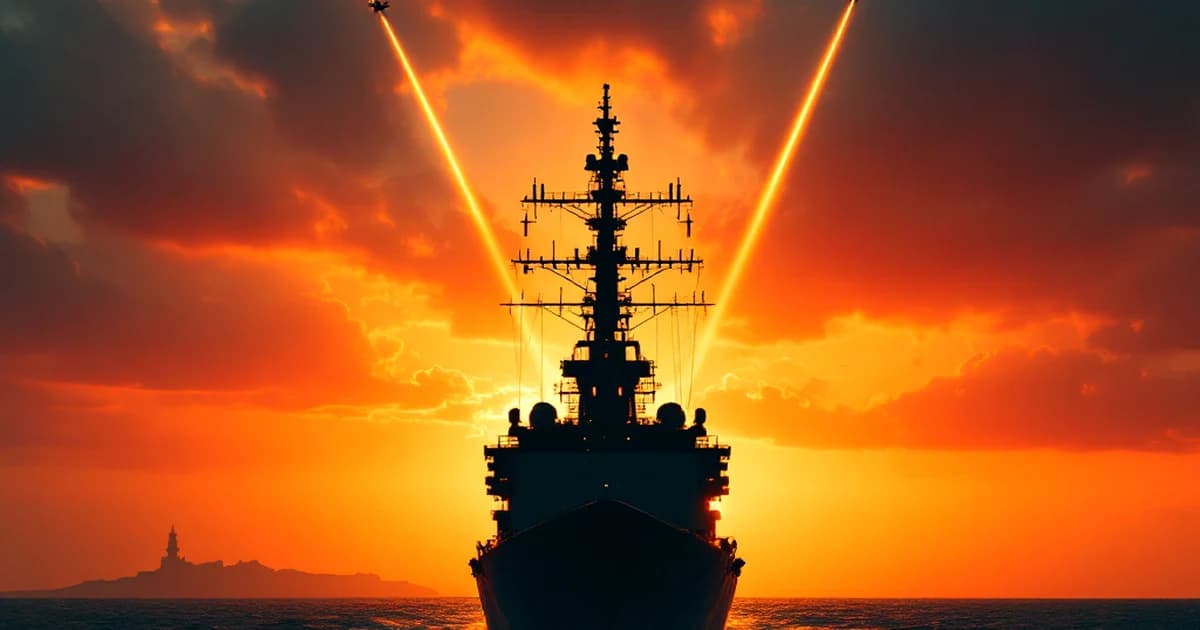
Routing Israeli intelligence through CENTCOM gives Washington a plausible-deniability conduit: the US gets Israel's ISR edge without being drawn directly into an escalation with Iran or the Houthis. The talks mirror the existing Israel-UAE ISR arrangement, avoiding overt Israeli-Saudi military contact and keeping data flowing through US command structures instead, which preserves the "quiet" status of the still-unfinalized Abraham Accords track with Riyadh. The arrangement touches three things at once: post-Iran-war US security architecture in the Gulf, the wider geopolitical calculus of major powers, and how capital markets price Saudi oil-infrastructure risk. It also remains only a discussion, and over-stating it could inflate regional expectations, provoke Iranian-aligned retaliation, or expose the limits of what the US will actually do for Saudi Arabia militarily.
1. A denial-by-proxy architecture for US Gulf strategy
Axios first reported the Germany meeting on September 15, 2026, describing it as the first such multilateral gathering since the US and Israel went to war with Iran more than six months earlier [F1, F2]. It examined "possible Israeli intelligence, surveillance and reconnaissance (ISR) support for Saudi operations against the Houthis" [F3]. The arrangement involves no direct Israeli participation; intelligence would transfer through CENTCOM channels instead [F6], which gives Washington plausible deniability over any boost to Saudi capability.
For Washington, that means using Israel's ISR edge, already demonstrated in the Israel-UAE partnership where Israel deployed Iron Dome systems and provided real-time ISR [F4], to boost Saudi capability without committing additional US troops or aircraft, a real consideration after the costly US-Israel war with Iran [F2]. The talks themselves are limited to real-time surveillance, targeting data, and threat warning; no weapons hand-off or direct Israeli involvement in kinetic action is on the table [F6]. President Trump rejected direct US strikes against the Houthis, opting for intelligence support instead [F7].
The catalyst is the Houthis' own advance: on September 10-11, 2026, they seized Mokha, Dhubab, and Perim Island, splitting the Bab el-Mandeb shipping channel [F8]. A Saudi-backed official put it plainly: "everything that was under our control on the western coast has fallen" [F9]. Houthi-linked drones also struck the East-West (Petroline) pipeline on September 11, 2026, forcing a partial shutdown of a line that moved 4-5 million barrels per day [F11], detailed in our coverage of the Perim seizure and pipeline halt. Real-time ISR could help locate Houthi positions and protect the pipeline.
Israel and Saudi Arabia have no formal diplomatic relations and have never publicly acknowledged direct security cooperation [F12]. One analyst described the emerging arrangement as a "secret bromance" forged under pressure from the Houthi-Iran war [F13].
2. Geopolitical reactions: Beijing, Moscow, and the Global South
| Lens | Sourced reaction | Assessment |
|---|---|---|
| Beijing | No sourced reaction available. | No Chinese state media reaction is cited in the supplied facts. |
| Moscow | No sourced reaction available. | No direct Russian commentary appears in the provided material. |
| Global South | No sourced reaction available. | The facts do not contain statements from Global-South actors or NGOs. |
3. Market signals and energy-sector stakes
The Houthi capture of key Red Sea ports and the partial shutdown of the Petroline pipeline already introduced volatility into oil-related equities [F8], [F11], and the disruption of the Bab el-Mandeb channel has pressured Brent and WTI upward. An Israeli-enabled ISR boost signals to investors that Saudi Arabia may regain situational awareness over its western coastline; a credible partnership, even one still under discussion, may get priced as a mitigating factor against future Houthi attacks and cap further spikes.
That said, the arrangement "has been discussed and examined... not confirmed as active" [F14]. Over-stating operational readiness could mislead markets into premature moves, and capital markets treating the ISR discussion as a proxy for US commitment to Saudi oil-infrastructure protection should weigh the real probability that the deal stalls.
Conclusion
The September 2026 Germany gathering marks a quiet shift in Washington's Gulf strategy, exploring an Israeli ISR conduit through CENTCOM rather than any direct Israeli-Saudi arrangement. Nothing has moved beyond exploration: no operational hand-off or direct Israeli-Saudi contact has been confirmed [F14], and no documented reaction from Beijing, Moscow, or the Global South has surfaced, which tells you how covert the talks still are.
For investors, the ISR discussion is a modest bullish signal for Saudi security-related assets, tempered by the uncertainty of implementation and the Houthis' continuing advance. Whether it becomes more than that depends on whether the arrangement moves from paper to practice.
Key takeaways
- Axios reported on September 15, 2026 that the US, Israel, and Saudi Arabia discussed routing Israeli ISR support to Riyadh through CENTCOM, modeled on the existing Israel-UAE arrangement (F1, F3, F4).
- The talks followed the Houthis' September 10-11, 2026 seizure of Mokha, Dhubab, and Perim Island, and a drone strike that partially shut down the Petroline pipeline (F8, F11).
- Nothing is confirmed as operational: no weapons hand-off, no direct Israeli-Saudi contact, and no reaction yet from Beijing, Moscow, or the Global South (F6, F14).
Related Analysis
- Why the Pentagon Pulled Its Iran War Plans Offline
- What Israel-Iran War Games Got Wrong About 2026
- Gladio Stay-Behind Hybrid War 2026: What Still Applies
- Israel-Turkey War Game Analysis: NATO, Escalation Paths, 2026
- Europe's 2026 Rearmament: Can the Factories Deliver?
- Trump Iran Deal Stalemate: Naval Blockade Impact
- World Economy 2030: AI Integration Impact
- US Territorial Expansion Geopolitical Impact
Related Topics
Video Intelligence
- ▶Iranian Missile Strike Hits Arad Israel: Video Moments
- ▶Iran Releases Official Footage of Drone Launches During War
- ▶FPV Drone Strikes US Victoria Base Near Baghdad Airport
- ▶Trump's Iran Rhetoric as Marines Deploy
Share This Analysis
Get a shareable verdict card for this article.
Get the next one first
Free briefings when we publish major outlooks and forecasts. No spam — unsubscribe anytime.
Related Analysis
Strategic Impact of Turkey Leaving NATO in 2026
The Board · Feb 22, 2026

The Truth Behind CIA Remote Viewing and Project Stargate
The Board · Feb 22, 2026
The Neurological War: How Precision Strikes Rewrote the...
The Board · Mar 27, 2026

Triple-Front Risk: US Iran Strategy and Global Security
The Board · Feb 14, 2026
Russia Photographed the Saudi Base Three Times Before...
The Board · Mar 30, 2026
A Russian Drone Hit NATO Territory This Week
The Board · Mar 26, 2026
Trending on The Board
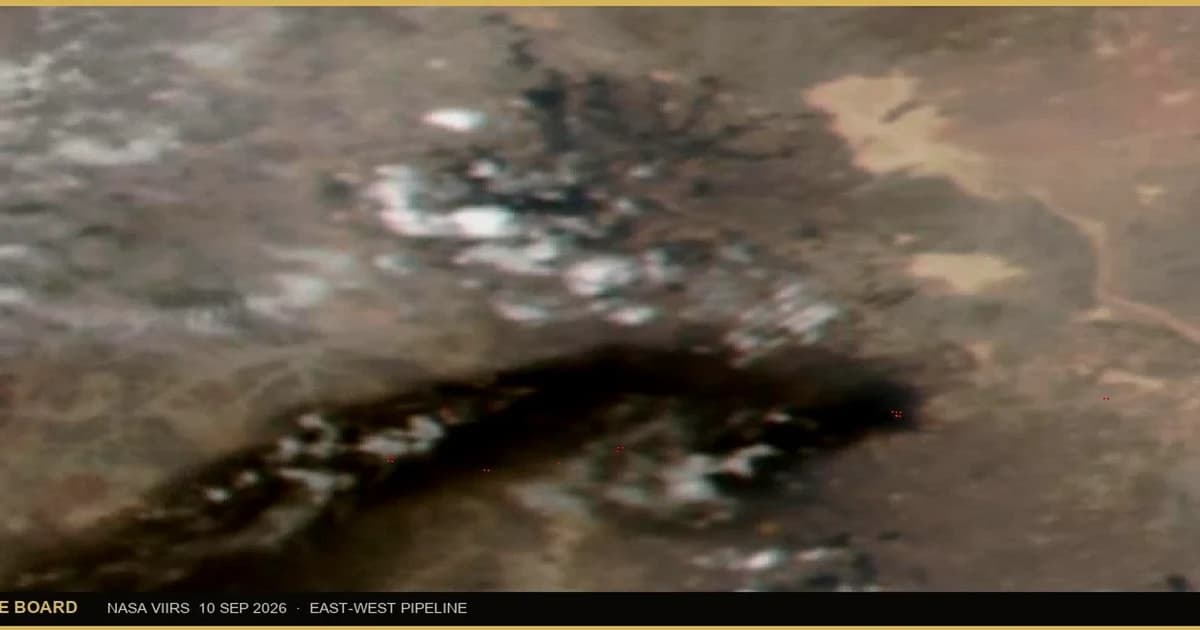
Houthis Take Perim as Saudis Halt Pipeline 2026
Geopolitics · Sep 13, 2026

The Hidden Gold Demand Behind the $6,000 Target
Markets · Sep 17, 2026
How a Stablecoin Funded Moldova's 2026 Election
Geopolitics · Sep 19, 2026

Why the Pentagon Pulled Its Iran War Plans Offline
Defense & Security · Sep 19, 2026
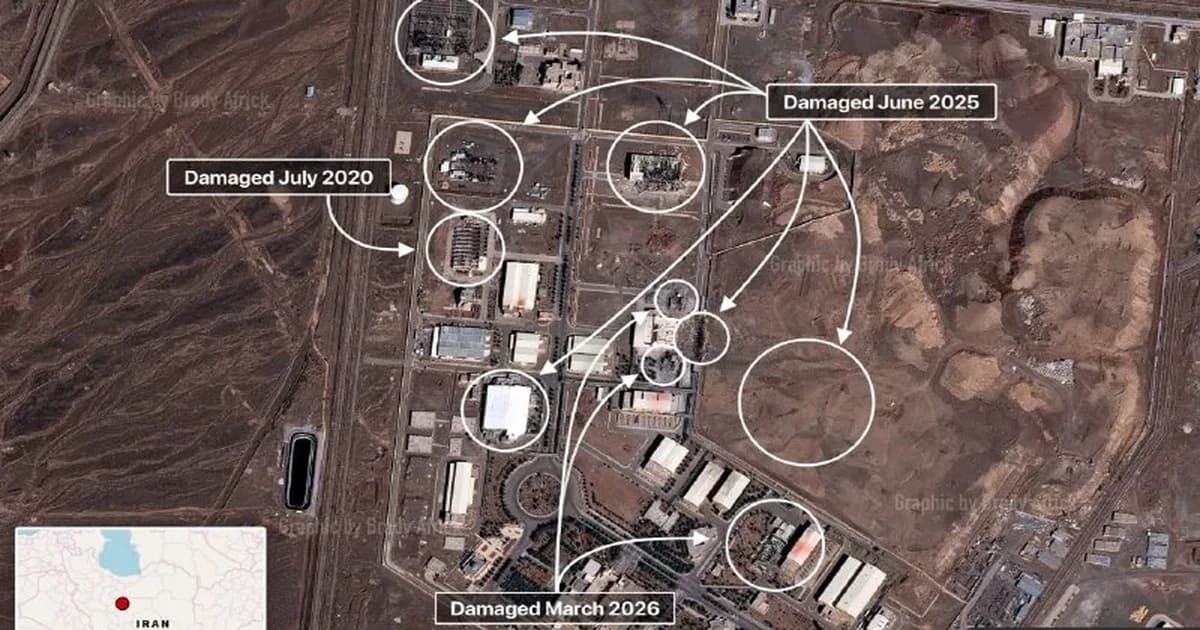
What Israel-Iran War Games Got Wrong About 2026
Defense & Security · Sep 6, 2026
Latest from The Board
Why the Pentagon Pulled Its Iran War Plans Offline
Defense & Security · Sep 19, 2026
How a Stablecoin Funded Moldova's 2026 Election
Geopolitics · Sep 19, 2026
The Hidden Gold Demand Behind the $6,000 Target
Markets · Sep 17, 2026
Houthis Take Perim as Saudis Halt Pipeline 2026
Geopolitics · Sep 13, 2026

Epstein Intelligence Ties: Evidence vs Allegation in 2026
Policy & Intelligence · Sep 6, 2026
What Israel-Iran War Games Got Wrong About 2026
Defense & Security · Sep 6, 2026

Central Banks Turned Gold Sellers. One Country Did It.
Markets · Aug 30, 2026

Schiff vs Saylor vs the Banks: Who Got 2026 Right?
Predictions · Aug 27, 2026