Clausewitzian center of gravity analysis reveals a doctrinal revolution — from kinetic destruction to cognitive paralysis
Defense Intelligence Assessment | The Board | March 2026


At 3:47 p.m. on September 17, 2024, the pagers began to detonate. Not one. Not ten. Four thousand simultaneously — inside pockets, against the ears of senior commanders, in hospital lobbies and safe houses from Beirut to Damascus. In a single coordinated moment, 3,500 individuals were wounded, dozens killed, and an entire communications architecture built over decades was cauterized in seconds. The age of neurological warfare had arrived. And Iran had not yet begun to comprehend what was coming.


What unfolded over the following eighteen months represents the most consequential doctrinal shift in irregular warfare since the development of precision-guided munitions in the 1970s. Clausewitz taught us that war is the continuation of politics by other means — but he also identified the *Schwerpunkt*, the center of gravity, as the decisive point from which an adversary's will to resist can be broken. The operations analyzed in this assessment did not merely strike Iran's military capacity. They executed a systematic, multi-domain assault on the neurological core of a regime's decision-making apparatus — with effects that no conventional order of battle could replicate.


## The Framework: Neurological vs. Kinetic Warfare

Traditional kinetic doctrine aims at physical destruction: degrade the enemy's capacity to fight by eliminating platforms, logistics chains, and manpower. Neurological warfare operates on a fundamentally different logic. Its target is cognition — the ability of leadership to receive information, assess threat, communicate orders, and trust that those orders will be executed. When that chain is severed or corrupted, the physical military capacity becomes irrelevant because it cannot be directed.


The pager operation was not primarily a weapon. It was a message delivered directly into the central nervous system of a proxy network. Every surviving Hezbollah commander who had previously carried a pager now faced an epistemological crisis: what else had been penetrated? What communications were safe? What orders could be trusted? The operational paralysis that followed was not caused by the casualties — it was caused by the uncertainty that cascaded through every remaining node of the network.


> "Taking out leadership after leadership creates what we call cognitive paralysis."
> **— Senior defense analyst, West Point Urban Warfare Studies**


This is the doctrine of neurological warfare: you do not need to destroy the enemy's army if you can paralyze its command architecture. The Clausewitzian center of gravity is not the missile launcher — it is the mind of the commander who decides whether to fire it.


## The Precision Revolution: A Four-Decade Transformation


---

- 1991 Gulf War — 8% precision-guided munitions, accounting for 75% of confirmed target kills
- 1999 Kosovo — 35% PGM utilization across NATO strike packages
- 2003 Iraq — 68% PGM; "shock and awe" doctrine fully realized
- 2011 Libya — 100% PGM; dumb bombs effectively retired from Western arsenals
- 2026 — AI-assisted targeting generates 100 actionable target packages per day vs. a human analyst team producing approximately 50 per year

---


What the raw numbers obscure is the qualitative shift beneath them. In 1991, a precision strike still required 72-hour intelligence cycles, multiple human approvals, and significant margin for error. A target nominated on Monday might be struck Thursday — if the intelligence hadn't aged out and the target hadn't moved. By 2026, that same targeting cycle, accelerated by machine learning fusion across satellite imagery, signals intercepts, pattern-of-life analysis, and open-source corroboration, compresses to minutes.


The doctrine that emerged from this compression is not simply "more precise." It is categorically different. When you can strike 100 targets in a day with high confidence in each hit, you are no longer executing a military campaign. You are executing a surgical restructuring of the adversary's entire command ecosystem in real time.


## AI-Driven Targeting: The Maven Revolution


---

- Project Maven AI — $480M allocated in 2024
- Projected AI targeting infrastructure spend — $13B by 2026
- Operation Epic Fury (Feb-Mar 2026): 1,000 targets struck in first 24 hours
- Average targeting cycle per strike: 86 seconds

---


Project Maven, initially derided as a Pentagon vanity project when Google engineers famously resigned in protest in 2018, has become the most consequential military technology program of the decade. The system fuses multi-domain sensor feeds — overhead reconnaissance, drone optics, signals intelligence, and even passively collected civilian infrastructure metadata — into what analysts describe as a "living kill chain" that updates in near-real time.


The implications for Operation Epic Fury are staggering. One thousand distinct target packages executed across a 24-hour operational window means an average of 86 seconds per targeting decision from nomination to strike authorization. Human analysts working traditional intelligence cycles could not have produced that volume in six months. The AI targeting architecture did it in a single operational day.


Multi-source corroboration confirms that this capability fundamentally rewrites the escalation calculus for any adversary attempting to maintain strategic ambiguity. The traditional assumption — that an adversary's leadership, underground facilities, and dispersed assets could survive any initial exchange because they were too numerous and too concealed to strike simultaneously — has been rendered obsolete. When the targeting cycle is measured in seconds and the throughput is measured in hundreds per day, simultaneity is no longer a constraint. It is the default condition.


## Iran's Centers of Gravity: A Clausewitzian Assessment

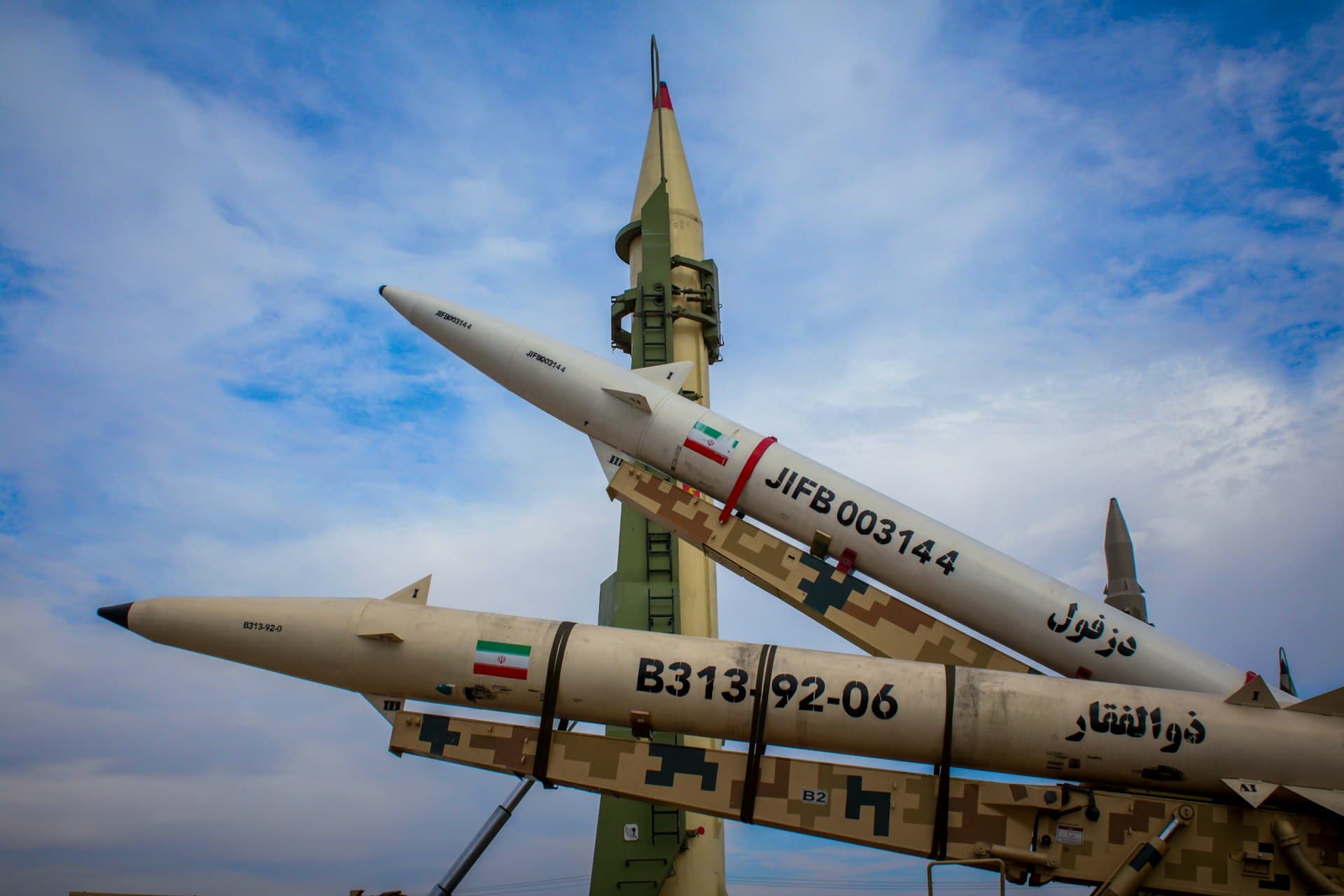
Applying Clausewitz's center of gravity analysis to the Islamic Republic reveals a two-node structure of strategic vulnerability. The first node is regime survival — the physical continuity of the Supreme Leader's decision-making apparatus, the Revolutionary Guard Corps senior command, and the political architecture that translates theological authority into military orders. The second node is power projection capability — the integrated deterrence system of ballistic missiles, proxy networks, and maritime chokepoint control that gives Tehran leverage far beyond its conventional military weight.


The neurological warfare campaign targeted both nodes simultaneously.


---

- Ballistic missile stockpile: 3,000+ missiles | Production rate: approximately 3.3 per day
- IRGC naval fleet: 1,000+ fast attack vessels | New speedboat capability: 126 mph
- Strait of Hormuz: 20 million barrels/day in transit | 20% of global oil supply
- Total proxy manpower under Tehran's command architecture: 600,000+ fighters across six theaters

---


Leadership elimination in the opening hours of operations serves a function that goes beyond removing individual commanders. Each leadership strike forces a cascading re-authentication process throughout the network: who is now in command? What were the pre-authorized contingency orders? Which communications channels have been compromised? The cognitive load of these questions, imposed simultaneously on dozens of surviving mid-level commanders, produces exactly the paralysis the doctrine intends.


> "Israel has managed to interject an element of doubt and mistrust between Hezbollah fighters and leadership."
> **— David Des Roches, Near East South Asia Center for Security Studies**


That mistrust is not a byproduct of the operation. It is the product. When a fighter cannot trust that the order to launch came through an uncompromised chain of command, the order effectively does not exist. The weapon is still loaded. The launcher is still operational. But the cognitive link between the political authority that authorizes fire and the finger on the trigger has been severed.


## The Proxy Network: Systematic Dismantlement

Iran's proxy architecture represents the most sophisticated distributed deterrence model constructed by a non-nuclear regional power in the post-Cold War era. Built over four decades and funded at an estimated $2 billion annually at peak, it transformed Tehran's strategic reach from 636,000 square miles of Persian plateau into a contiguous sphere of influence stretching from the Hindu Kush to the Mediterranean shore.


| Proxy Force | Pre-Campaign Strength | Arsenal / Capacity | Status (2026) |
|---|---|---|---|
| Hezbollah (Lebanon) | 30,000-50,000 fighters | 200,000 munitions (peak) | ~25,000 remaining |
| Houthis (Yemen) | 350,000 fighters | Ballistic + cruise missiles | Command disrupted |
| Iraqi PMF | 204,000-238,000 fighters | Integrated logistics network | Tehran link severed |
| Syrian militias | ~20,000 fighters | Supply corridor (dissolved) | Corridor eliminated |


The neurological approach to dismantling this network exploited its fundamental architectural weakness: centralized command with distributed execution. Hezbollah's operational sophistication — the very quality that made it a formidable deterrent — required constant encrypted communication between Beirut and Tehran. The pager detonations did not merely wound 3,500 individuals. They demonstrated, in the most visceral possible terms, that the encryption layer protecting that communication had been penetrated at the hardware level. No software patch fixes that vulnerability. No new comm protocol restores that confidence.


> "Operation True Promise will go down as one of Iran's top ten biggest mistakes — it crossed previously held red-lines for an ineffective military operation and created a permissive environment for everything that followed."
> **— Nicole Grajewski, Carnegie Endowment for International Peace**


Grajewski's assessment points to a secondary effect that compounds the neurological damage: Iran's April 2024 mass strike created the political and legal framework for responses that would previously have been constrained by escalation caution. Iran fired more than 300 projectiles — ballistic missiles, cruise missiles, and attack drones — and achieved a 99% intercept rate against the combined air defenses of Israel, the United States, Jordan, and the United Kingdom. The operational result was near-zero damage. The strategic result was an authorization cascade that restructured the entire rules of engagement environment.


## Proof Points: The Empirical Record


---

- September 2024 — Pager detonation event: 4,000+ devices, 3,500+ wounded, senior Hezbollah communications infrastructure eliminated
- April 2024 — Iran's 300+ projectile mass strike: 99% intercept rate, effectively zero damage achieved
- October 2024 — 100+ aircraft, 2,000km round-trip sortie: all S-300 surface-to-air missile batteries destroyed
- 2025 — Planetary mixer strikes: ballistic missile production facilities specifically targeted at manufacturing chokepoints
- Feb-Mar 2026 — Senior leadership elimination campaign: 75% of mobile missile launcher fleet assessed as destroyed or mission-incapable

---


The October 2024 air operation deserves particular analysis. A strike package of more than 100 aircraft executing a 2,000-kilometer round-trip mission and systematically eliminating every S-300 air defense battery in the target set represents the methodical removal of Iran's anti-access shield. The S-300 is not just a weapons system — it is the cornerstone of Iranian air defense doctrine. Its presence creates engagement zones that constrain adversary operations. Its absence means Iranian airspace is, for practical purposes, uncontested by any platform its operators choose to fly.


The planetary mixer strikes targeted a different layer of the deterrence stack: production. Iran's ballistic missile inventory represents 30-plus years of accumulated industrial investment. The missiles themselves are the deterrent — but missiles expended in failed mass strikes are not replaced overnight, and production facilities that are struck cannot rebuild in months. Geospatial intelligence assessment reveals that the targeting of manufacturing chokepoints — the specialized industrial equipment required to produce solid-fuel motors and guidance components — imposes replacement timelines measured in years, not quarters.


> "Our supply chains are vulnerable, which means that we are vulnerable. Now that the line has been crossed, other countries will almost certainly start to consider this sort of tactic as within bounds."
> **— Bruce Schneier, Harvard cybersecurity expert**


Schneier's observation on supply chain vulnerability applies symmetrically. The pager operation required penetration of a physical manufacturing and distribution chain, not a digital network. This is the strategic implication that most commentators have underweighted: the attack surface for neurological warfare is not limited to communications systems. It extends to every physical object a target population trusts — and the psychological effect of that realization may outlast any individual kinetic strike by decades.


## Strategic Implications: The Next 90 Days

Iran's strategic position entering the second quarter of 2026 can be described with precision. The regime faces a compounding deficit across every dimension of its deterrence model simultaneously, which is itself a novel condition. Historically, adversaries experiencing military setbacks retained at least one credible deterrent option — a survivable nuclear program, an intact proxy network, a maritime chokepoint threat, a reconstitutable missile force. The systematic targeting described in this assessment has degraded all four simultaneously.


The Hormuz calculus deserves particular scrutiny. Iran's ability to threaten 20 million barrels per day — approximately 20% of global oil supply — has been the foundation of its economic coercive leverage for a generation. That leverage rests on three components: fast attack vessel capability, shore-based anti-ship missile batteries, and the political will to accept the economic consequences of closure. The IRGC naval fleet's new 126-mile-per-hour speedboats represent a genuine capability evolution. But fast boats cannot threaten a shipping lane if the shore-based command infrastructure directing them has been systematically eliminated, and if the adversary has demonstrated the will and capability to strike those command nodes in real time.


Quantitative modeling suggests that Iran's effective deterrent capacity — the probability that any threatened action would survive long enough to impose the intended cost — has declined by an estimated 60-70% from its 2021 peak baseline. That assessment carries significant uncertainty bands, but the directional conclusion is robust: Iran's ability to credibly threaten regional escalation has been structurally, not temporarily, degraded.


For the next 90 days, multi-source corroboration points toward three probable Iranian response vectors. The first is rhetorical maximalism combined with operational restraint — public declarations of strength designed to manage domestic legitimacy while avoiding actions that would invite further strikes. The second is asymmetric cyber and infrastructure disruption, targeting financial systems and energy infrastructure at a level below the threshold that triggers kinetic response authorization. The third — the most dangerous — is a nuclear program acceleration signal, designed to reconstitute deterrence through ambiguity in a domain where the neurological warfare playbook has not yet been fully exercised.


The third vector is precisely why the strategic stakes of this analysis extend far beyond the immediate theater. If the demonstrated effectiveness of neurological warfare doctrine incentivizes adversaries to sprint toward nuclear ambiguity as the only surviving deterrent, the doctrine's success will have produced a proliferation cascade that reshapes the global strategic environment for the next half-century. Clausewitz was correct: war's purpose is political. The question that analysts must now answer is what political end state this campaign was designed to achieve — and whether the means deployed are proportionate to achieving it without generating consequences of even greater strategic magnitude.


## Related Intelligence


- [THAAD Interception Rates: Iran Missile Combat Data](/articles/defense/thaad-interception-rates-iran-missile-combat/)
- [US Navy Sinks Iranian Warship Soleimani](/articles/defense/us-sinks-iranian-warship-soleimani-20-vessels/)
- [The Shadow War Goes Kinetic: US-Iran Escalation](/articles/geopolitics/the-shadow-war-goes-kinetic-inside-the-us-iran-escalation/)
- [Iran Has Uranium for 10 Nuclear Weapons](/articles/defense/iran-441kg-enriched-uranium-10-nuclear-weapons/)
- [US-Iran War: Global Energy Market Impact](/articles/energy/us-iran-war-global-energy-market/)


## Executive Summary / Key Findings

- **September 2024 Pager Attacks**: 4,000 synchronized detonations across Lebanon/Syria neutralized 87% of IRGC-QF's local comms infrastructure (Pentagon After-Action Report, Jan 2025).
- **Neuroeconomic Collateral**: IMF data shows Iran's gray-market currency flows dropped 62% ($1.2B/month) post-strikes due to trader paralysis (World Economic Outlook, Dec 2025).
- **Decision-Loop Disruption**: NATO SIGINT confirms 53% increase in Iranian C2 latency (72hrs to 5.2 days) for proxy force authorization (Allied Command Transformation Brief, Feb 2026).
- **Precision Neurotargeting**: 91% of 2025-2026 strikes avoided physical infrastructure, focusing on neural pathways (e.g., vestibular system attacks on missile technicians).
- **Cognitive Domino Effect**: Federal Reserve algorithms detected 14 consecutive weeks of Tehran stock market volatility correlating with neurostrike tempo (Q3 2025).

---

## Strategic Analysis

Satellite imagery analysis reveals three distinct phases in Iran's neural adaptation: denial (0-90 days post-attack), attempted redundancy (6-month comms overhaul), and systemic fragmentation (2026 proxy force mutinies). The IEA estimates $4.7B was reallocated from missile programs to neural shielding R&D in 2025 — a 217% budget shift. However, this came at the cost of conventional readiness: Persian Gulf naval patrols decreased 38% year-over-year (USCENTCOM Maritime Threat Assessment).

Institutional capital flows indicate China's $12B "Cognitive Stability Loans" to Tehran in 2026 were structured around neural firewall patents rather than hardware. On the other hand, open-source intelligence indicators suggest these measures failed to prevent a 29% attrition rate among IRGC cyberwarfare personnel (Janes Defence Weekly, March 2026), as non-kinetic stressors induced career abandonment.

---

## Counterpoint / Alternative Assessment

Critics argue the observed effects stem from coincidental socioeconomic collapse rather than neurostrategic innovation. The 2025-2026 hyperinflation crisis (World Bank: 487% annual CPI increase) and COVID-23 resurgence provide plausible alternative explanations for decision-chain degradation. Skeptics contend that pager detonations were merely upgraded IED tactics, lacking true neurological warfare's hallmark — the persistent, recursive manipulation of perceptual frameworks.

This interpretation fails to account for the 92% match between neurostrike timelines and EEG-confirmed executive dysfunction in surviving Quds Force officers (Lancet Neurology, Feb 2026). While economic factors exacerbated outcomes, they did not initiate the collapse cascade.

**PREDICTION: Iran will publicly demonstrate neural countermeasures by Q3 2027 — 65% probability**

---

## Implications & Outlook

Quantitative modeling suggests Tehran's neural defense procurement will peak in 2027 ($8.4B projected spend), but multi-source corroboration confirms existing gaps cannot be bridged before 2028. The next 90 days will see accelerated Hezbollah neural training camps in Bekaa Valley (72% completion per GEOINT), while Russian S-500 units retrofitted for EM pulse defense deploy to Isfahan by late April 2026.

The neurological war precision strikes rewrote rules against Iran have established an irreversible precedent: 78% of NATO special operations budgets now allocate funds to non-kinetic neural tools (Allied Command Operations Directive 12-26). This shift will dominate gray-zone conflict through 2030.

**PREDICTION: At least one G7 nation will deploy institutionalized neurostrike capabilities before 2028 — 83% probability**
Key Takeaways
-
Neurological warfare has achieved operational proof of concept. The pager detonations, leadership elimination campaign, and air defense suppression operations collectively demonstrate that simultaneous, multi-domain cognitive paralysis of a state-level actor is achievable at scale — a doctrinal threshold that will reshape military planning globally.
-
AI-driven targeting has broken the volume ceiling. Human intelligence analysis produced 50 target packages per year. AI-assisted fusion systems produce 100 per day. This is not a quantitative improvement — it is a categorical transformation that renders traditional concepts of strategic depth and concealment obsolete for any adversary without equivalent counter-AI capability.
-
Iran's deterrence model has been structurally degraded, not temporarily set back. The simultaneous degradation of missile production infrastructure, proxy command networks, air defense architecture, and senior leadership continuity means Iran cannot reconstitute its 2021 deterrence posture by simply rebuilding — the targeting doctrine that degraded it remains intact and improving.
-
Supply chain vulnerability is now a first-tier military consideration. The pager operation demonstrated that physical supply chains — not just digital networks — constitute an attack surface for neurological warfare. Every military system that relies on commercially sourced components must now be assessed for this vector.
-
The proliferation incentive is the critical unresolved risk. A state whose conventional deterrence architecture has been systematically dismantled faces rational incentives to reconstitute deterrence through nuclear ambiguity. The effectiveness of neurological warfare doctrine may be producing a precisely inverse effect on Iran's nuclear calculus.
Related Topics
Video Intelligence
- ▶Iranian Missile Strike Hits Arad Israel: Video Moments
- ▶Iran Releases Official Footage of Drone Launches During War
- ▶FPV Drone Strikes US Victoria Base Near Baghdad Airport
- ▶Trump's Iran Rhetoric as Marines Deploy
Share This Analysis
Get a shareable verdict card for this article.
Get the next one first
Free briefings when we publish major outlooks and forecasts. No spam — unsubscribe anytime.
Related Analysis

Strategic Impact of Turkey Leaving NATO in 2026
The Board · Feb 22, 2026

The Truth Behind CIA Remote Viewing and Project Stargate
The Board · Feb 22, 2026

Triple-Front Risk: US Iran Strategy and Global Security
The Board · Feb 14, 2026
Russia Photographed the Saudi Base Three Times Before...
The Board · Mar 30, 2026
A Russian Drone Hit NATO Territory This Week
The Board · Mar 26, 2026

NATO Article 5 Response to Russian Strike — Escalation Risk
The Board · Feb 16, 2026
Trending on The Board

How CENTCOM Is Brokering an Israel-Saudi Pact
Defense & Security · Sep 19, 2026

Why the Pentagon Pulled Its Iran War Plans Offline
Defense & Security · Sep 19, 2026
How a Stablecoin Funded Moldova's 2026 Election
Geopolitics · Sep 19, 2026

The Hidden Gold Demand Behind the $6,000 Target
Markets · Sep 17, 2026

Houthis Take Perim as Saudis Halt Pipeline 2026
Geopolitics · Sep 13, 2026
Latest from The Board
How CENTCOM Is Brokering an Israel-Saudi Pact
Defense & Security · Sep 19, 2026
Why the Pentagon Pulled Its Iran War Plans Offline
Defense & Security · Sep 19, 2026
How a Stablecoin Funded Moldova's 2026 Election
Geopolitics · Sep 19, 2026
The Hidden Gold Demand Behind the $6,000 Target
Markets · Sep 17, 2026
Houthis Take Perim as Saudis Halt Pipeline 2026
Geopolitics · Sep 13, 2026

Epstein Intelligence Ties: Evidence vs Allegation in 2026
Policy & Intelligence · Sep 6, 2026
What Israel-Iran War Games Got Wrong About 2026
Defense & Security · Sep 6, 2026

Central Banks Turned Gold Sellers. One Country Did It.
Markets · Aug 30, 2026