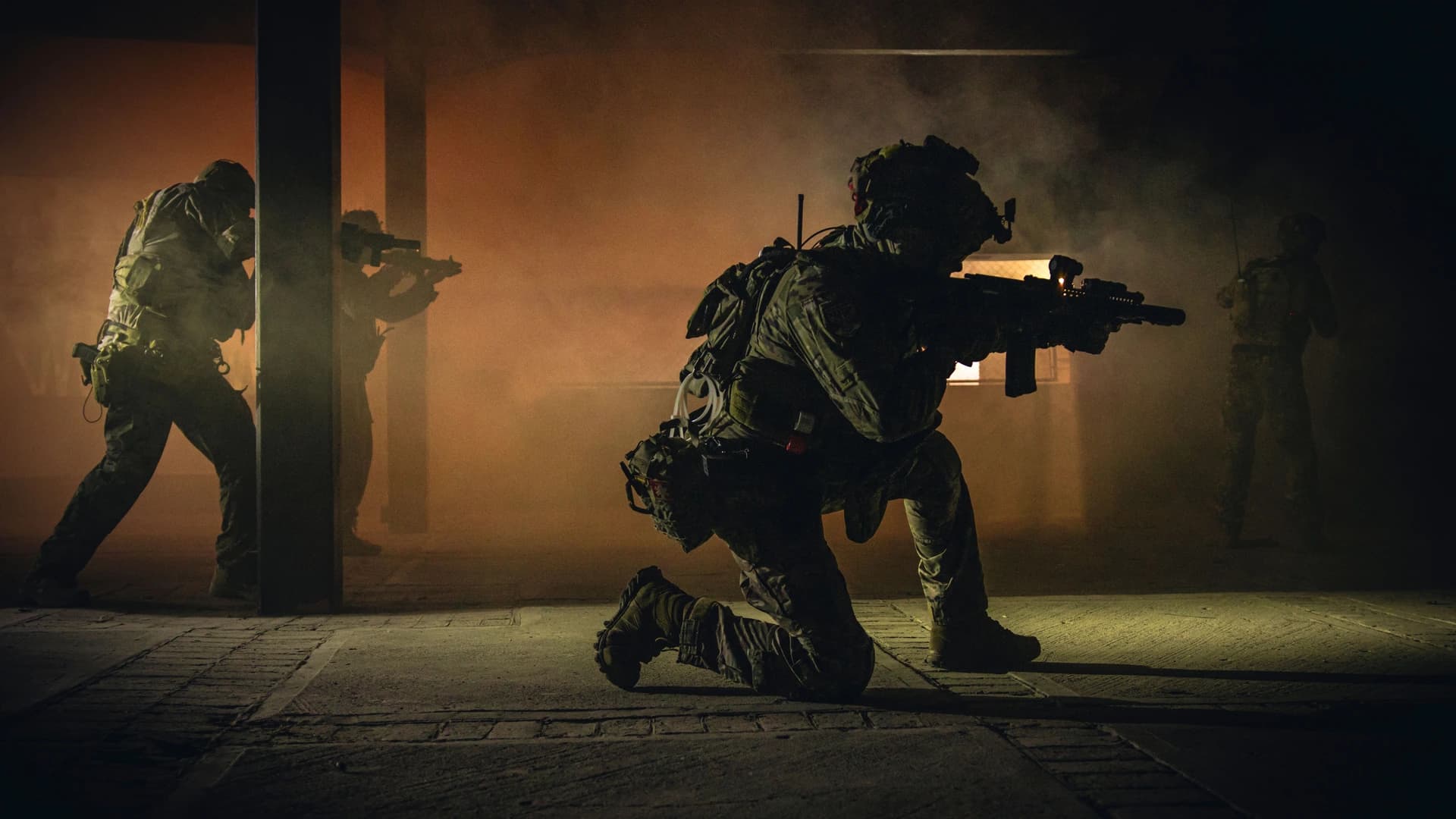
Operation Gladio is often used as a conspiracy shortcut: a single phrase that “explains” every sabotage rumor, false-flag claim, or hybrid incident. That is analytically lazy. The historically documented core is narrower—and more useful.
Gladio refers to NATO-era stay-behind networks built in Western Europe during the Cold War to organize resistance if the Warsaw Pact occupied allied territory. Parliamentary inquiries (notably in Italy) and declassified threads established that such structures existed, were poorly supervised in places, and became politically radioactive when linked to domestic violence controversies. For primary-context overviews, see the Italian Senate historical materials on Gladio archives and scholarly summaries such as the Wilson Center / Cold War International History Project collections on European clandestine planning.
For 2026 defense analysis, the question is not “is Gladio still running the world?” It is: which design features of stay-behind architecture reappear in modern hybrid war—and which claims fail basic evidence tests?
What Gladio actually was (usable history)
Strip the meme layer. The durable facts for planners:
- Purpose: prepare clandestine resistance, sabotage, and continuity-of-government nodes under occupation—not a peacetime political party.
- Sponsorship pattern: national intelligence services with varying degrees of allied coordination; not a cartoon “single HQ that ran Europe.”
- Oversight failure mode: secret structures + weak parliamentary control + Cold War urgency → mission creep risk and later scandal.
- Public reckoning: Italian and other European inquiries forced partial transparency; the brand “Gladio” became political shorthand far beyond the archival record.
If a 2026 claim cannot map onto these four points with sources, it is usually narrative freeloading on a famous name.
For a longer historical framing already on the Board, see Operation Gladio and modern hybrid warfare and the Gladio protocol in 2026 architecture debates.
Stay-behind design → hybrid-war functions
Hybrid war (state + proxy + cyber + information + economic pressure below open conventional war) reuses some functions of stay-behind thinking without requiring the same organizations:
| Cold War stay-behind function | 2026 hybrid analogue | Analytical caution |
|---|---|---|
| Pre-positioned networks | Proxy cells, criminal cut-outs, PMC logistics | Shared function ≠ same chain of command |
| Sabotage of infrastructure | Undersea cables, energy nodes, rail, ports | Attribution is hard; motive is not proof |
| Covert communications | Encrypted apps, dead drops, commercial SATCOM | Dual-use tech floods false positives |
| Psychological / political warfare | Influence ops, deepfakes, “leaks” | Volume ≠ efficacy |
| Continuity planning | Government-in-exile plans, diaspora nodes | Often legitimate resilience, not conspiracy |
War-game rule: model capability + opportunity + incentive. Do not reverse-engineer every blackout into a named historical program.
What 2026 hybrid campaigns actually look like
Open conflicts since 2022 sharpened a repeatable hybrid stack—described in NATO and national doctrine papers such as NATO’s hybrid threats overview and related resilience guidance:
- ISR and targeting via commercial satellites, social video, and OSINT—compressing the “secret network” advantage.
- Infrastructure harassment (energy, logistics, undersea) with ambiguous attribution windows.
- Narrative battlespace designed to split alliances faster than ground gains.
- Proxy and deniable force to stay under formal Article 5 / mutual-defense tripwires.
That stack is closer to modern irregular + information warfare than to 1950s arms caches in forests. Invoking Gladio is only useful when the institutional design matches: clandestine domestic networks, weak oversight, occupation-contingency logic.
Cross-check regional escalation ladders with pieces like Israel–Turkey war-game analysis and Europe rearmament industrial gaps—hybrid effects often aim at alliance cohesion and industrial tempo, not just kinetic damage.
Five analytical traps
- Name laundering: attaching “Gladio 2.0” to any unexplained blast. Labels are not attribution.
- Single-string conspiracy: assuming one Western (or one Eastern) program explains multi-actor chaos.
- Ignoring adversary doctrine: Russia, Iran, and others publish/practice hybrid concepts without needing NATO genealogy.
- Equating secrecy with illegitimacy: special operations and resilience planning are sometimes secret and legal under national law.
- Selecting only confirming scandals: Cold War history has real abuses; that does not validate every modern rumor.
How a serious 2026 assessment should look
If you are red-teaming hybrid risk for a government or critical-infrastructure operator:
- Map assets: cables, transformers, ports, data centers, election systems, reserve logistics.
- Map actors: states, proxies, criminals-for-hire, ideologues—with separate confidence scores.
- Separate phases: pre-crisis shaping → crisis sabotage → wartime stay-behind (only if occupation is realistic).
- Demand evidence classes: signals intel, forensic, financial, human—not viral threads.
- Plan oversight: secret capability without audit trails recreates the Gladio failure mode even when the threat is real.
Falsifiers
The “Gladio explains 2026 hybrid war” thesis fails if:
- Major hybrid incidents are better explained by criminal profit, accident, or non-state ideology with no state tradecraft.
- Adversary open doctrine + observable force posture already predict the behavior without clandestine Western networks.
- Inquiries and forensic releases repeatedly attribute incidents to other actors with higher-confidence evidence.
The opposite thesis—“Gladio is pure myth, ignore clandestine networks”—fails if new declassifications or court records show active, poorly supervised stay-behind-like structures with domestic political tasking.
Bottom line
Gladio is a case study in clandestine stay-behind design and oversight failure, not a master key for every 2026 headline. Hybrid war reuses some functions—proxies, sabotage, influence—under new technology and multipolar incentives. Analysts who keep the history tight and the attribution standards high will outperform both conspiracy maximalists and institutional deniers.
Use Gladio as a warning about secret networks without control. Do not use it as a substitute for evidence.
Sources and further reading
- NATO — Hybrid threats (alliance framing; not a Gladio history).
- Wilson Center Cold War International History Project (declassified/context research).
- Italian Senate archival/inquiry context on Gladio-era controversies.
- EU Hybrid Toolbox overview for contemporary policy language.
- Board: Operation Gladio hybrid legacy, Gladio protocol 2026, Israel–Turkey war game.
Related Analysis
- Israel-Turkey War Game Analysis: NATO, Escalation Paths, 2026
- Europe's 2026 Rearmament: Can the Factories Deliver?
- Jet-Powered Shaheds: Russia's 2026 Drone Escalation and the Interceptor Race
- Hezbollah Fires Anti-Ship Cruise Missile at Warship Off Lebanon [2026]
- US Crew Rescued After Jet Downed: Israeli Media Reports
- The Future of Hybrid Work and RTO Mandates Analysis
- Gold Price Path After the Rally: 2026 Update
- Will BRICS Replace the Dollar? A Reality-Check Scorecard (2026)
Related Topics
Video Intelligence
- ▶Iranian Missile Strike Hits Arad Israel: Video Moments
- ▶Iran Releases Official Footage of Drone Launches During War
- ▶FPV Drone Strikes US Victoria Base Near Baghdad Airport
- ▶Trump's Iran Rhetoric as Marines Deploy
Share This Analysis
Get a shareable verdict card for this article.
Get the next one first
Free briefings when we publish major outlooks and forecasts. No spam — unsubscribe anytime.
Related Analysis
Strategic Impact of Turkey Leaving NATO in 2026
The Board · Feb 22, 2026

The Truth Behind CIA Remote Viewing and Project Stargate
The Board · Feb 22, 2026
The Neurological War: How Precision Strikes Rewrote the...
The Board · Mar 27, 2026

Triple-Front Risk: US Iran Strategy and Global Security
The Board · Feb 14, 2026

Russia Photographed the Saudi Base Three Times Before...
The Board · Mar 30, 2026
A Russian Drone Hit NATO Territory This Week
The Board · Mar 26, 2026
Trending on The Board

79 Years of UFO Lies, Roswell to the Pentagon
Defense & Security · Sep 29, 2026

How CENTCOM Is Brokering an Israel-Saudi Pact
Defense & Security · Sep 19, 2026

Why the Pentagon Pulled Its Iran War Plans Offline
Defense & Security · Sep 19, 2026
How a Stablecoin Funded Moldova's 2026 Election
Geopolitics · Sep 19, 2026

The Hidden Gold Demand Behind the $6,000 Target
Markets · Sep 17, 2026
Latest from The Board
79 Years of UFO Lies, Roswell to the Pentagon
Defense & Security · Sep 29, 2026
How CENTCOM Is Brokering an Israel-Saudi Pact
Defense & Security · Sep 19, 2026
Why the Pentagon Pulled Its Iran War Plans Offline
Defense & Security · Sep 19, 2026
How a Stablecoin Funded Moldova's 2026 Election
Geopolitics · Sep 19, 2026
The Hidden Gold Demand Behind the $6,000 Target
Markets · Sep 17, 2026
Houthis Take Perim as Saudis Halt Pipeline 2026
Geopolitics · Sep 13, 2026

Epstein Intelligence Ties: Evidence vs Allegation in 2026
Policy & Intelligence · Sep 6, 2026
What Israel-Iran War Games Got Wrong About 2026
Defense & Security · Sep 6, 2026