
Every Hormuz crisis produces headlines about $200 oil. But Germany's defense minister just said what the Pentagon has been quietly hoping nobody would ask: the strait cannot be cleared of mines quickly. Here is the fleet math that proves him right.
On March 26, 2026 — during a visit to Australia — German Defense Minister Boris Pistorius was asked whether European frigates would join a U.S. operation to secure the Strait of Hormuz during active hostilities. His answer was unusually direct:
"This is not our war, we have not started it. What does Donald Trump expect a handful or two handfuls of European frigates to do in the Strait of Hormuz that the powerful U.S. Navy cannot do?"
Then he said something more important, which the news cycle mostly didn't pick up:
"After a ceasefire or peace, we can, of course, imagine and are prepared in principle to participate in an operation to secure the freedom of navigation through the Strait of Hormuz. We can and will commit ourselves only when the weapons fall silent. We can then do a great deal, up to opening sea lanes and keeping them clear, but we're not doing it during ongoing combat operations."
Look at the phrasing. "Up to opening sea lanes and keeping them clear." Pistorius is explicitly flagging reopening as a distinct, non-trivial, post-war phase. He did not name a timeline. He did not need to. The numbers do it for him.
The fleet that quietly shrank
The first thing Americans believe about the Strait of Hormuz — reinforced by every Hollywood montage of carriers in the Gulf — is that the U.S. Navy has overwhelming mine countermeasure (MCM) capability there. That was true in 1988. It is no longer true in 2026.
The U.S. Navy's dedicated mine countermeasure force has collapsed. In September 2025, the last four Avenger-class MCM ships forward-deployed to Bahrain — USS Devastator, USS Dextrous, USS Gladiator, and USS Sentry — were decommissioned. Four months later, in January 2026, they were loaded onto the semi-submersible heavy-lift vessel M/V Seaway Hawk and shipped back to the United States, putting them beyond reach for any emergency reactivation.
Six months after that, Iran began mining the Strait.
The entire active Avenger-class fleet is now two ships — USS Pioneer (MCM-9) and USS Chief (MCM-14) — both homeported in Sasebo, Japan, and currently transiting through the Strait of Malacca toward CENTCOM's area of responsibility as of April 11. Best-case arrival at Bahrain: two to three weeks from the Malacca sighting. That puts them on station in early May.
The MH-53E Sea Dragon airborne mine countermeasures helicopter — the platform that could tow mechanical and influence sweep gear over water the surface ships couldn't reach — had its Arabian Gulf detachment shut down in August 2025. The airframes are being retired through 2027. The replacement is the MH-60S Seahawk with the Airborne Laser Mine Detection System (ALMDS), which works only in waters shallower than 40 feet. A full like-for-like replacement is not expected until roughly 2030.
The LCS package that doesn't work
The Navy's official answer to the Avenger retirement is the Littoral Combat Ship mine countermeasures mission package. Three LCS hulls are now equipped with it — USS Canberra, USS Tulsa, USS Santa Barbara — and are the primary U.S. mine clearance assets in theater.
The Pentagon's own Director of Operational Test and Evaluation, in the FY2025 report, could not determine the LCS MCM package's "operational effectiveness" due to "insufficient performance data." During the test and evaluation phase, the Common Unmanned Surface Vessel's tow bracket broke during recovery on USS Tulsa, and the USV was unrecoverable. The package requires approximately six hours of pre-mission calibration before each four-hour mission. The AQS-20C sonar suite has been flagged by testers as "ineffective in locating mines in operational environments" — particularly in the turbid, sediment-heavy waters that characterize parts of the Strait.
On April 1, 2026, Chief of Naval Operations Admiral Daryl Caudle told reporters: "When the capability embarked on an LCS is full up, it's a very, very good package." The directly contradicting DoT&E findings suggest Caudle's statement is the official Navy position, not a test-supported claim. Both cannot be fully true under real-world conditions.
Dr. Emma Salisbury of the Foreign Policy Research Institute put it plainly: "Having a mine countermeasures capability that is not in theater is not particularly helpful."
Allies have even less
The allied MCM picture is worse. The United Kingdom's last forward-deployed minehunter in the Gulf, HMS Middleton, departed in January 2026 — "mere weeks before the beginning of the Iran-Middle East crisis". The Royal Navy's four active Hunt-class minehunters (Hurworth, Ledbury, Cattistock, Brocklesby) are confined to U.K. home waters. HMS Bangor — the sole surviving Sandown-class — has been non-operational since a collision in Bahrain in 2024.
U.K. Ministry of Defence Permanent Secretary Jeremy Pocklington, asked about the traditional minehunter fleet's relevance to the current crisis, said: "There is no scenario in which [it] is relevant for the current situation that we are dealing with today."
France has readied two Tripartite-class minehunters plus one FREMM frigate in Toulon as of April 10, 2026, conditional on a "stable ceasefire" — not yet in theater. NATO's Standing Mine Countermeasures Groups One and Two have zero permanent presence in the Persian Gulf. Germany's Frankenthal-class fleet sits in Kiel, and Pistorius has said it stays there until the shooting stops.
Saudi Arabia operates three Al Jawf-class minehunters built to the Sandown-class standard. The UAE has two former German Frankenthal-class hulls. Neither force has publicly committed to operating inside the Strait. Europe has roughly 150 minesweepers collectively, nearly all homeported 6,000 to 10,000 nautical miles from Hormuz, on small coastal hulls not designed for long-distance deployment without heavy-lift transport.
That is the allied picture. It is not a surge capability. It is a presentation capability.
The 1991 benchmark
Here is the reference case that everyone in the Navy knows and nobody wants to say publicly.
In January 1991, Iraq laid 1,157 mines across a roughly 100-mile stretch of water south of Shatt al-Arab during the runup to Operation Desert Storm. On February 18, USS Tripoli struck a LUGM-145 contact mine and USS Princeton struck a Manta bottom influence mine within three hours of each other. After the Gulf War ceasefire, the multinational mine clearance operation involved more than 30 minesweepers from Belgium, France, Netherlands, Germany, the U.K., Italy, the U.S., and Japan, plus shore-based diving teams. Coalition clearance effort began in February 1991.
The first Kuwaiti port was opened on March 12, 1991 — the British minehunter HMS Cattistock leading the first merchant vessel through. The second port opened April 22. The mine clearance operation was officially declared complete on July 16, 1991 — approximately four and a half months after hostilities ended.
Read that again: four and a half months, with full Iran/Iraq cooperation on mine locations, 30+ minesweepers, and no active shooting.
Every number the 2026 crisis can bring to the table is worse than 1991.
- Fewer ships. The 1991 coalition had at least 30 MCM vessels working Kuwaiti approaches. The 2026 coalition in the Strait currently has LCS MCM packages with documented test failures, two Avenger-class hulls still transiting from Malacca, and French vessels waiting on a ceasefire that hasn't happened. Total dedicated MCM capacity in theater as of April 12 when CENTCOM announced the start of clearance operations was roughly a third of what 1991 had.
- Worse knowledge of mine positions. This is the wildcard. Multiple sources — including the New York Times via Euronews — report that Iran itself cannot reliably locate its own mines, because deployment was conducted by IRGC Navy small-boat crews operating without centralized records. "Neither Iran nor the U.S. has a clear picture of how many mines remain or where they are deployed within the strait." In 1991, Iraq handed over its mine maps. In 2026, no such map exists to hand over.
- Worse physical environment. The Strait of Hormuz carries ~20% of global seaborne crude oil trade through two 2,000-yard-wide channels under a Traffic Separation Scheme that covers roughly 200 square nautical miles of operationally relevant water. A dedicated modern minehunter can sweep roughly 0.5 square nautical miles per day under favorable conditions. The math is not kind.
Stimson Center analysts Kelly Grieco and Marie-Louise Westermann cite the Korean War baseline: clearing 225 mines required 15 days using 22 dedicated vessels. Roughly one mine per vessel per day under wartime conditions.
What the oil market is saying (and not saying)
The futures market has already priced in a specific answer to "how bad is this going to be." It is the answer the physical clearance math does not support.
As of March 18, 2026 — during the peak of the crisis — the Brent forward curve priced June 2026 Brent at roughly $98 per barrel, December 2026 at $80, June 2027 at $76, and December 2030 at $70. The curve is in steep backwardation. Translated: the market believes Hormuz is a front-end problem. Traders see acute physical disruption through about six months, but no structural long-term supply shift. "About the end of the year, it pretty much goes back to normal," one analyst told CNBC.
Physical Dubai crude tells a different story. The physical premium surged $38 per barrel above paper equivalent in mid-March — meaning actual refiners buying actual cargo are paying much higher prices than futures traders think they should. ING strategists Warren Patterson and Ewa Manthey noted the emergency SPR release "works out to 3.3m b/d — far short of the supply losses we are seeing from the Persian Gulf."
In plain language: the futures market is pricing the crisis as if clearance will take a quarter. The physical market is pricing it as if clearance will take longer. If the physical math — 8 to 14 weeks minimum from clearance start under optimistic assumptions, with Iran unable to provide mine maps — is more accurate, the back end of the Brent curve is structurally underpriced. That's a trade, and it's one of the few trade ideas in this mess that has a grounded model behind it.
The honest timeline
Ask Scott Savitz of RAND, who was stationed in Bahrain in 2001, and he gives you a three-tier answer: a hasty corridor — a single cleared lane under combat conditions — could be opened in "days." A safely operational clearance to restore commercial shipping takes "weeks." A complete sweep to full confidence takes "far longer, potentially never completed."
Savitz is a mine warfare specialist being diplomatic. The "weeks" number assumes you know where the mines are. The "far longer" case is what you get when you don't.
Adm. James Stavridis, former Supreme Allied Commander NATO, has put the requirement at "two aircraft carrier strike groups and about a dozen surface ships" outside the Gulf, plus at least six U.S. destroyers inside, plus allied support — and has characterized the strait's vulnerability to Iranian strike as "hell in a matter of days." Brad Martin of RAND points at a different immediate priority: "the priority could be a campaign to lock down specific shipping activity in the strait" (rather than immediate mine clearance), meaning the Navy's first move is protecting its own clearance vessels from follow-on attacks, not sweeping.
On April 12, CENTCOM commander Adm. Brad Cooper announced the start of a mine clearance mission: "Today, we began the process of establishing a new passage, and we will share this safe pathway with the maritime industry soon to encourage the free flow of commerce." No timeline. The language — "a new passage" — is precise: it is the hasty-corridor option, not the complete sweep.
Why the Gulf states privately agree
Here is the unspoken part. Saudi Arabia, the UAE, Qatar, and Kuwait publicly want the strait reopened quickly. Privately, Gulf officials are aware of the same physical realities Pistorius named, and they do not want the wrong kind of reopening — a cleared corridor that passes escort-only tankers while the broader strait remains de facto mined — for one specific reason: insurance.
Lloyd's JWC war-risk listings and Marsh insurance premiums are what actually determine whether a VLCC owner will send his ship through. A partially cleared strait with active mines scattered in unknown positions is, from an underwriter's perspective, a worse outcome than a closed strait with a known timeline. War-risk premiums do not normalize on a cleared corridor; they normalize on a swept strait. That is why the Gulf states are pushing quietly for slow, complete clearance — not fast, incomplete clearance. Not because they want higher oil prices, but because they understand that the insurance layer is the rate-limiting step on their own export economies.
The German defense minister said what the Navy won't say and the Gulf states can't say publicly. He's right. The strait cannot be reopened quickly. Pretending otherwise is what got the Avenger fleet decommissioned in the first place.
Sources
- Euronews — Pistorius quote, Mar 26, 2026
- USNI News — Last Avenger-class MCM ship in Middle East decommissioned, Sep 25, 2025
- The Drive / War Zone — Avengers shipped out of Gulf for good | Flurry of minesweepers heading to Middle East
- Naval News — "Combat-ineffective" LCS replacing MCM ships in Bahrain | LCS MCM mission package update
- USNI News — First operational LCS MCM packages, Mar 18, 2025
- Navy Times — Caudle: LCS is "very good package," Apr 1, 2026 | Middle East minesweepers decommissioned, what they did
- FPRI — Emma Salisbury: The Mine Gap, Mar 2026
- Naval Technology — How the UK gave away its mine hunting fleet
- Army Recognition — France readies Tripartite minehunters for Hormuz
- Strauss Center — Hormuz mines background
- Stimson Center — Five things to know about Iranian minelaying, 2026
- Al Jazeera — What we know about Hormuz mines, Apr 13, 2026
- Fortune — RAND's Scott Savitz on mine clearance tiers, Mar 2026
- Euronews — Iran cannot locate its own mines, Apr 11, 2026
- MUFG — Brent Forward Curve analysis, Mar 18, 2026 (PDF)
- OilPrice.com — Futures market misreads Hormuz shock
- CENTCOM — Mine clearance mission announcement, Apr 12, 2026
- CNN — Hormuz blockade explainer, Apr 13, 2026
Related Topics
Video Intelligence
- ▶Iranian Missile Strike Hits Arad Israel: Video Moments
- ▶Iran Releases Official Footage of Drone Launches During War
- ▶Iranian Kamikaze Drone Destroys Erbil Oil Refinery
- ▶FPV Drone Strikes US Victoria Base Near Baghdad Airport
Share This Analysis
Get a shareable verdict card for this article.
Get the next one first
Free briefings when we publish major outlooks and forecasts. No spam — unsubscribe anytime.
Related Analysis
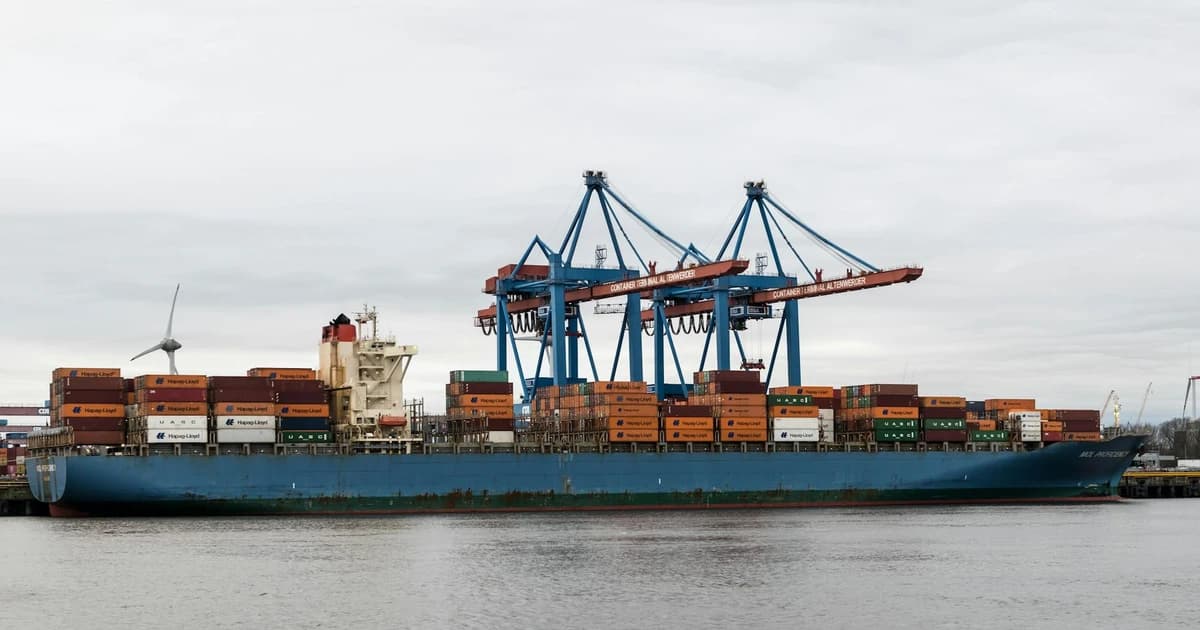
Your Prescription Drugs Come Through the Strait of...
The Board · Mar 30, 2026

The Chevron Plant That Broke the Fertilizer Market — And...
The Board · Mar 30, 2026

Australia Ran Out of Gas — And Nobody Noticed
The Board · Mar 26, 2026

Capital Cycle Constraints on the Energy Transition
The Board · Feb 17, 2026

90-Day Famine Clock: The Global Food Crisis Nobody Sees
The Board · Mar 25, 2026

The Future of Global Energy and AI Power Demand
The Board · Feb 17, 2026
Trending on The Board

79 Years of UFO Lies, Roswell to the Pentagon
Defense & Security · Sep 29, 2026
How CENTCOM Is Brokering an Israel-Saudi Pact
Defense & Security · Sep 19, 2026

Why the Pentagon Pulled Its Iran War Plans Offline
Defense & Security · Sep 19, 2026
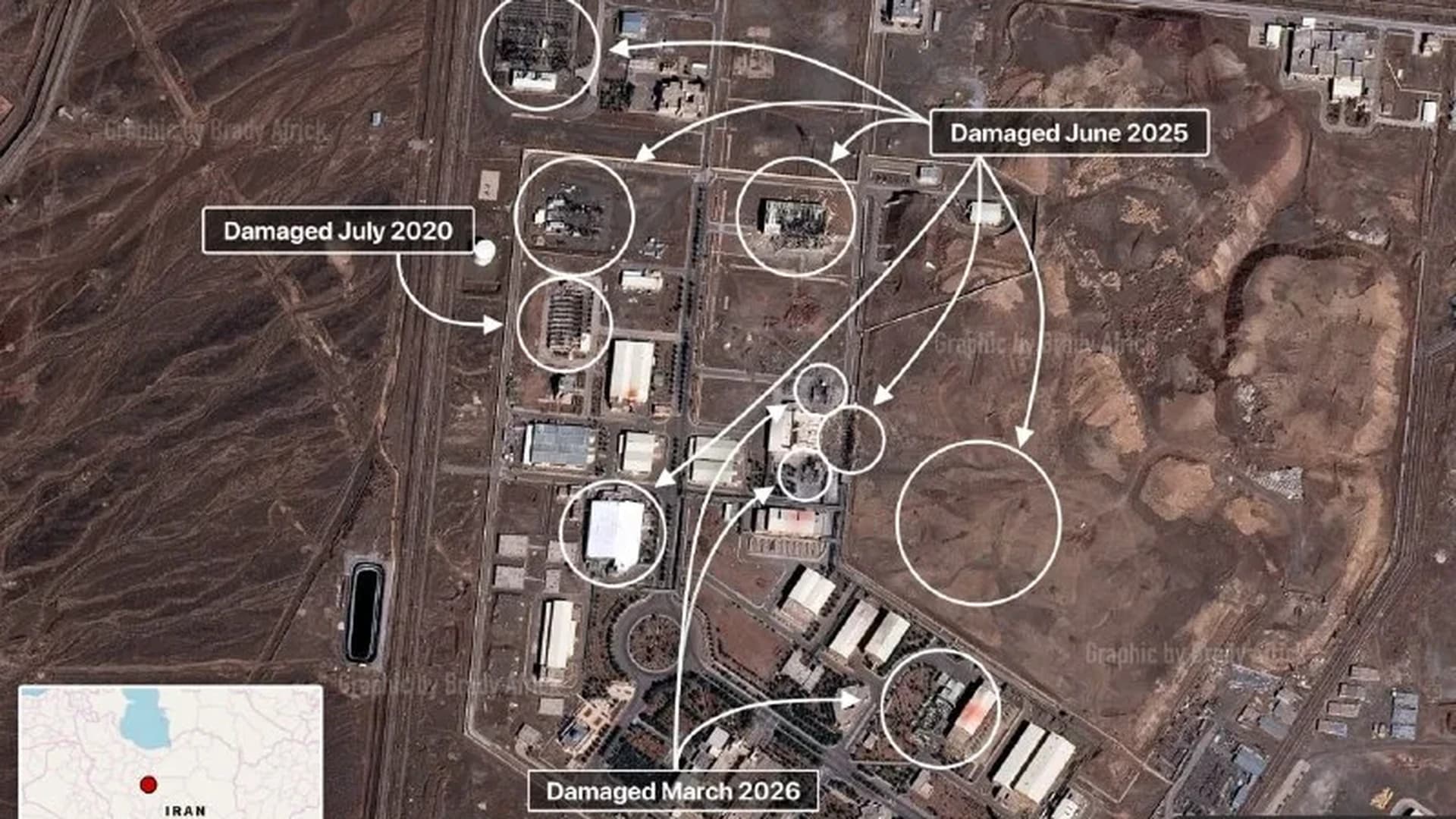
How a Stablecoin Funded Moldova's 2026 Election
Geopolitics · Sep 19, 2026

The Hidden Gold Demand Behind the $6,000 Target
Markets · Sep 17, 2026
Latest from The Board
79 Years of UFO Lies, Roswell to the Pentagon
Defense & Security · Sep 29, 2026
How CENTCOM Is Brokering an Israel-Saudi Pact
Defense & Security · Sep 19, 2026
Why the Pentagon Pulled Its Iran War Plans Offline
Defense & Security · Sep 19, 2026
How a Stablecoin Funded Moldova's 2026 Election
Geopolitics · Sep 19, 2026
The Hidden Gold Demand Behind the $6,000 Target
Markets · Sep 17, 2026
Houthis Take Perim as Saudis Halt Pipeline 2026
Geopolitics · Sep 13, 2026

Epstein Intelligence Ties: Evidence vs Allegation in 2026
Policy & Intelligence · Sep 6, 2026
What Israel-Iran War Games Got Wrong About 2026
Defense & Security · Sep 6, 2026