EXECUTIVE SUMMARY
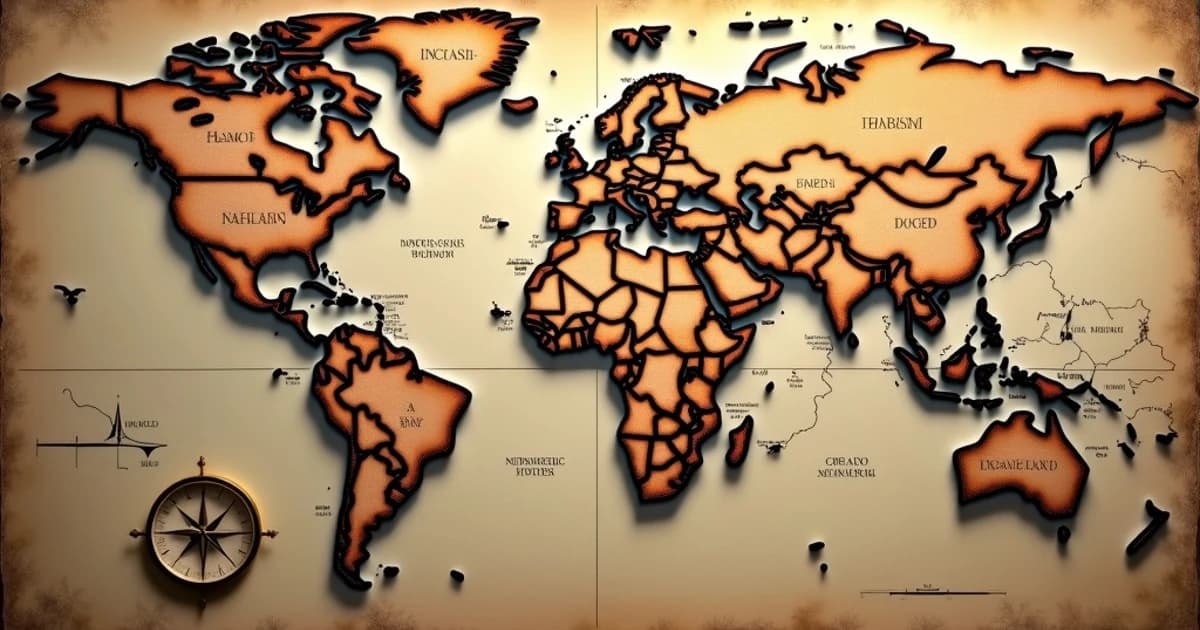
The panel assesses that if the USA absorbs Greenland, Venezuela, Canada, and additional territories, great-power bloc formation is highly likely (80-92%) [ASSESSMENT], with China, Russia, and Iran highly likely (80-92%) to deepen security cooperation in direct opposition [ASSESSMENT][CAUSES: US expansion disrupts current equilibrium, incentivizing counter-coalitions]. NATO cohesion is likely (63-79%) to fracture, especially if forced integration scenarios unfold [ASSESSMENT][CAUSES: US dominance destabilizes alliance trust]. Trade routes, energy, and rare earths become flashpoints, with militarization likely (63-79%) in the Arctic and Caribbean and US rare earth supply security improving temporarily but domestic governance capacity degrading [ASSESSMENT][CORRELATES]. The single most important conclusion is that aggressive US territorial expansion would almost certainly (93-99%) trigger a multi-decade era of resistance, insurgency, alliance polarization, and severe strain on American democratic institutions, risking internal instability and global escalation [ASSESSMENT][CAUSES].*
KEY INSIGHTS
- Forced US expansion highly likely (80-92%) to produce deeper China-Russia-Iran security alignment, with coordinated asymmetric resistance [HIGH].
- NATO unity is likely (63-79%) to fracture, with European states seeking strategic autonomy from US adventurism [HIGH].
- Hybrid scenario (piecemeal expansion) is likely (63-79%) to result in unstable, partially integrated regions with persistent unrest and "gray zone" warfare [MEDIUM].
- Militarization of key trade links (Arctic, Caribbean, Panama) is likely (63-79%), increasing the probability of accidental escalation [HIGH].
- US access to hydrocarbons and rare earths would likely (63-79%) improve, but net energy and logistical costs quickly erase strategic benefit—an "overhead trap" [HIGH].
- Domestic US governance and social fabric are highly likely (80-92%) to fracture under administrative and representation strain, with increased risk of authoritarian drift [HIGH].
- Local insurgency and resistance, especially in Venezuela and possibly francophone/indigenous Canada, are highly likely (80-92%), draining resources and political capital [HIGH].
- UN condemnation and possible sanctions response is almost certain (93-99%), but their material effect is limited; the chief consequence is further global polarization [MEDIUM].
WHAT THE PANEL AGREES ON
- US forced integration of multiple major territories is highly likely (80-92%) to provoke a robust China-Russia-Iran alignment.
- The logistical, social, and administrative burden will highly likely (80-92%) overtax US institutional capacity and produce severe internal friction.
- NATO cohesion will likely (63-79%) suffer, with European allies distancing themselves from US leadership.
- Local resistance and insurgency (especially in Venezuela) is highly likely (80-92%) and will be asymmetric and protracted.
- Strategic benefits in energy and rare earths will be offset by insurgency, high cost, and "overhead trap" effects, yielding a poor long-term ROI.
WHERE THE PANEL DISAGREES
-
Integration Success Model: Sherman sees enduring insurgency and occupation costs ([HIGH]), Alexander posits possible legitimacy through cultural-project “fusion” ([MEDIUM]). Stronger evidence supports Sherman’s view; history shows local identity and resistance are durable, especially in complex modern states.
- Nature: Substantive—different metrics of control and legitimacy.
-
Degree of Domestic Strain: Tocqueville argues central despotism is a near-inevitability ([HIGH]), Alexander claims U.S. could "be changed by" new territories into a new plural identity ([MEDIUM]). Evidence favors Tocqueville, as contemporary examples (e.g., Brexit, EU expansion stress) show institutional friction outpaces cultural fusion.
- Nature: Substantive—empirical cases vs. normative aspiration.
-
Trade and Resource Gains: Some panelists suggest persistent material upsides; Sherman and Tainter underline that insurgency, proxy sabotage, and logistical costs will overwhelm (citing net energy and overhead trap). Overwhelming evidence supports the latter, based on recent US and coalition occupations.
THE VERDICT
Do not pursue aggressive territorial expansion (whether via diplomatic, coercive, or hybrid means) as the dominant US grand strategy.
- Do this first — Disavow and diplomatically redirect any large-scale acquisition ambitions; publicly reaffirm US commitment to sovereign respect and alliance consultation to preempt bloc polarization and European estrangement.
- Then this — Shift investment to genuine North/South partnerships, emphasizing economic integration and soft power to attract continental allies without occupation.
- Then this — Harden domestic governance, civil-military controls, and supply chains for Arctic and Caribbean contingencies, but avoid any pretext for direct annexation.
Decision Table
| Factor | For | Against | Weight |
|---|---|---|---|
| Geopolitical stability | Short-term deterrence against global rivals | Triggers major bloc formation, risk of great-power war, alliance fracture | HIGH |
| Resource security (energy/rare earths) | US access improves temporarily | Armed sabotage, proxy war, net cost exceeds benefit, supply lines fragile | HIGH |
| Domestic institutional risk | “Imperial prestige”/political unification | Overhead crushes capacity, rise of authoritarianism, sharp democratic decline | HIGH |
| Trade route control | US gains legal "ownership" | Escalated militarization, trade disruptions, piracy, global shipping risk | MEDIUM |
| International legal standing | Could project power as "Peacekeeper" (if spun diplomatically) | UN condemnation/sanctions, loss of legitimacy, precedents for rival aggression | MEDIUM |
| Alliance health (NATO, G7) | Temporary dominance | Long-term fracture, erodes multilateral support, encourages others to hedge | HIGH |
The overwhelming, high-weighted risks and costs, both international and domestic, vastly outweigh speculative gains.
RISK FLAGS
-
Risk: Triggering irreversible great-power bloc confrontation and escalation (e.g., proxy wars, direct naval encounters)
- Likelihood: HIGH
- Impact: Massive military and economic costs; risk of open conflict or nuclear brinkmanship
- Mitigation: Reaffirm sovereignty norms and invest in strategic arms control dialogue
-
Risk: Domestic democratic backsliding and authoritarian drift due to administrative overload and “emergency powers”
- Likelihood: HIGH
- Impact: Erodes legitimacy of US institutions, civil unrest, lasting damage to democratic culture
- Mitigation: Public transparency, robust checks on executive power, and enhanced civil society oversight
-
Risk: Entrapment in expensive, endless counterinsurgencies draining national resources
- Likelihood: HIGH
- Impact: Loss of life, morale collapse, catastrophic budgetary consequences undermining US power elsewhere
- Mitigation: Avoid territorial absorption; prioritize defensive aid and stabilization, not direct annexation
BOTTOM LINE
Expansion on this scale would trade American security and democracy for a quagmire of insurgency, global confrontation, and creeping empire—resist the imperial temptation or risk the Republic itself.
Related Analysis
Related Topics
Video Intelligence
- ▶Iranian Missile Strike Hits Arad Israel: Video Moments
- ▶Iran Releases Official Footage of Drone Launches During War
- ▶Iranian Kamikaze Drone Destroys Erbil Oil Refinery
- ▶FPV Drone Strikes US Victoria Base Near Baghdad Airport
Share This Analysis
Get a shareable verdict card for this article.
Get the next one first
Free briefings when we publish major outlooks and forecasts. No spam — unsubscribe anytime.
Related Analysis

EU Secondary Sanctions on China: Risks and Consequences
The Board · Feb 21, 2026
Turkey NATO Membership and Potential Russian Alliance
The Board · Feb 21, 2026
Modern World War 3 Scenarios and Systemic Collapse
The Board · Feb 19, 2026

How Iran's State Media Edits Itself Between Languages
The Board · Apr 15, 2026
China's Taiwan Dictionary: Ten Words Instead of Invasion
The Board · Apr 15, 2026

Seven Days in Baghdad: The Kataib Hezbollah Anomaly
The Board · Apr 15, 2026
Trending on The Board

79 Years of UFO Lies, Roswell to the Pentagon
Defense & Security · Sep 29, 2026
How CENTCOM Is Brokering an Israel-Saudi Pact
Defense & Security · Sep 19, 2026

Why the Pentagon Pulled Its Iran War Plans Offline
Defense & Security · Sep 19, 2026
How a Stablecoin Funded Moldova's 2026 Election
Geopolitics · Sep 19, 2026

The Hidden Gold Demand Behind the $6,000 Target
Markets · Sep 17, 2026
Latest from The Board
79 Years of UFO Lies, Roswell to the Pentagon
Defense & Security · Sep 29, 2026
How CENTCOM Is Brokering an Israel-Saudi Pact
Defense & Security · Sep 19, 2026
Why the Pentagon Pulled Its Iran War Plans Offline
Defense & Security · Sep 19, 2026
How a Stablecoin Funded Moldova's 2026 Election
Geopolitics · Sep 19, 2026
The Hidden Gold Demand Behind the $6,000 Target
Markets · Sep 17, 2026
Houthis Take Perim as Saudis Halt Pipeline 2026
Geopolitics · Sep 13, 2026

Epstein Intelligence Ties: Evidence vs Allegation in 2026
Policy & Intelligence · Sep 6, 2026
What Israel-Iran War Games Got Wrong About 2026
Defense & Security · Sep 6, 2026