The Blockade Gambit and the Path to War
The Trump Iran Deal Stalemate refers to the breakdown in April 2026 of negotiations to end a 60-day US-Iran conflict, characterized by President Trump’s public rejection of an Iranian proposal that deferred discussion of its nuclear program, his maintenance of a naval blockade, and rising public opposition to the war mirroring Vietnam-era sentiment. The impasse centers on the US’s non-negotiable demand for a nuclear settlement as a precondition for peace, a condition Iran has explicitly refused to meet in its latest offer.
Key Findings
- President Trump publicly rejected Iran’s April 2026 peace proposal because it “set aside discussion of its nuclear program,” maintaining a US naval blockade until nuclear concessions are made.
- A Washington Post-ABC News-Ipsos poll shows 58% of Americans now believe Trump’s military action against Iran was a mistake, with opposition nearing the 55-60% levels seen during the peak of the Iraq War in 2006 (Pew Research Center).
- The negotiation deadlock is exacerbated by reported “tremendous discord” within Iran’s leadership and the US leveraging a “maximum pressure” campaign combining military blockades and escalated economic sanctions.
- Predictive markets, as tracked by Polymarket, show a collapse in the probability of a permanent US-Iran peace deal by April 2026, dropping to just 2.1%, indicating extreme institutional skepticism.
- The strategic parallel is not 2015 but 1973: the current dynamic points toward an unstable, face-saving agreement that allows for US political withdrawal but fails to durably resolve the nuclear threat.
What We Know So Far
- The Conflict: The United States and Iran have been engaged in an active, shooting conflict for approximately 60 days as of late April 2026. The war began in late February 2026.
- The US Demand: The Trump administration’s central, non-negotiable condition for a peace deal is a resolution limiting or ending Iran’s nuclear weapons program. Axios reports President Trump stated the US blockade of Iran will stay in place “until nuclear” demands are met.
- The Iranian Offer: In late April 2026, Iran presented a peace proposal. According to Reuters and Rappler, this proposal deliberately “sets aside discussion of its nuclear program until the conflict is concluded and shipping disputes are resolved.”
- The US Response: President Trump is “unhappy” with this offer. He stated, “They’ve come a long way. The question is whether or not they’re going to agree to no nuclear weapons,” indicating the proposal is a non-starter.
- Diplomatic Moves: Iran’s Foreign Minister, Abbas Araqchi, stated on April 27, 2026, that Tehran was “looking into” Trump’s request for negotiations. He made this statement while in Russia, suggesting Moscow may be acting as an intermediary.
- Public Sentiment: A Washington Post-ABC News-Ipsos poll conducted in late April 2026 found that 58% of Americans believe President Trump’s military action against Iran was a mistake. This opposition is quantified as nearing the 55-60% levels observed during the peak of the Iraq War in 2006, as tracked by Pew Research Center.
- Market Sentiment: The predictive market platform Polymarket showed the probability of a “permanent peace deal” between the US and Iran by April 2026 crashing to 2.1% by April 30, reflecting a near-total loss of confidence among traders.
Timeline of Events
- Late February 2026: The United States and Iran enter a state of open military conflict. The precise catalyst is not detailed in available reporting, but the conflict involves the Strait of Hormuz and has lasted approximately 60 days as of late April.
- April 24-27, 2026: Diplomatic signals intensify. Trump states Iran “wants to talk,” and Iran’s Foreign Minister, from Russia, says Tehran is reviewing a US request for negotiations.
- April 28-29, 2026: The core impasse becomes public. Reuters reports Trump is “unhappy” with Iran’s latest offer because it ignores the nuclear issue. Axios confirms Trump has rejected the offer and will maintain the blockade. The State Department reiterates the nuclear demand is paramount.
- April 29, 2026: Retired General Jack Keane tells The Hill that Iran is deliberately delaying talks to put pressure on Trump, and prospects for a deal appear “fraught.” A report by HuffPost suggests the US may extend its blockade.
- April 30, 2026: Predictive market data from Polymarket shows contract prices for a April 2026 peace deal have collapsed to 2.1%, implying a 97.9% probability of no deal.
- May 1, 2026: Trump provides a strategic assessment, telling CNBC there is “tremendous discord” among Iran’s leaders, complicating negotiation efforts. He confirms Iran “wants to make a deal” but he is “not satisfied with it.”
The Thesis: A Deliberate Deadlock
The April 2026 breakdown in US-Iran talks is not a negotiation failure but the inevitable result of a deliberate, high-stakes gambit by the Trump administration. The US has structured the conflict around a single, immovable objective—the permanent dismantlement of Iran’s nuclear weapons capability—while Iran’s regime, facing internal fracture and economic siege, has structured its survival on refusing that exact concession. The resulting stalemate is a deliberate deadlock where the absence of a deal serves the political needs of both leaderships in the short term, making a meaningful peace agreement impossible before a significant escalation or internal collapse forces one side’s hand. The historical analog is not the successful diplomacy of 2015 but the protracted, unstable settlement of the 1973 Paris Peace Accords, which traded a short-term American exit for long-term strategic failure.
Evidence Cascade: The Architecture of Impasse
The negotiation deadlock is not an accident of diplomacy but a engineered outcome, visible in the confluence of public sentiment, military pressure, and non-negotiable terms.
1. The Domestic Pressure Release Valve. The most significant constraint on US action is now domestic. The Washington Post-ABC News-Ipsos poll revealing 58% opposition to the war is a political earthquake. To contextualize this: opposition to the Iraq War did not reach majority levels until 2006, three years after the invasion, peaking at 55-60% (Pew Research Center). This conflict has reached that threshold in approximately 60 days. This rapid erosion of public support creates a urgent political need for the administration to show progress toward “ending the war,” but not at any cost. The demand for a “peace with honor”—a durable nuclear settlement—becomes a political necessity to justify the conflict’s initiation and casualties. This dynamic mirrors the Nixon administration’s position in 1972: needing to extract the US from Vietnam but unable to accept a deal that appeared to abandon South Vietnam. The result is a rigid public position that narrows diplomatic flexibility.
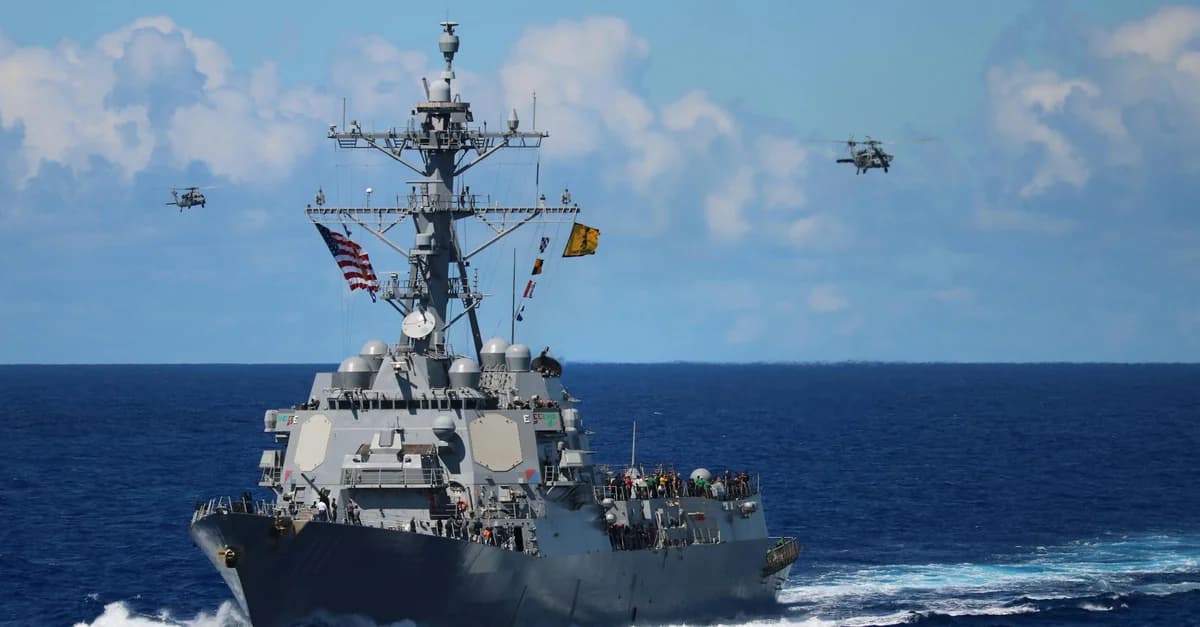
2. The Coercive Enforcement Mechanism. The US is not merely stating terms; it is enforcing them with a multi-domain pressure campaign. The centerpiece is the naval blockade, explicitly cited by Axios as being maintained “until nuclear” demands are met. A blockade is an act of war under international law, representing a significant escalation from sanctions. Its purpose is clear: to cripple Iran’s economy and military logistics to the point where the cost of refusing the nuclear deal exceeds the cost of accepting it. This is complemented by the threat of extended conflict. Retired General Jack Keane’s analysis in The Hill posits that Iran is “delaying negotiations… to exert pressure on President Trump.” This implies a belief within US military circles that Iran is waiting for US political will to crack under domestic pressure. The US response is to signal the opposite—that the pressure will only intensify. A report noted by HuffPost suggests the US is considering extending the blockade, a move designed to shatter Iranian calculations of American impatience.
3. The Non-Negotiable Core. The entire negotiation collapses on a single, unambiguous point of contradiction. Iran’s late-April proposal, as reported by Rappler and Reuters, explicitly “sets aside discussion of its nuclear program.” The US response, articulated by the State Department and President Trump, is that any deal is contingent on Iran agreeing to “no nuclear weapons.” This is not a gap in positions; it is a chasm. One party’s central demand is the other party’s excluded topic. This transforms the negotiation from a bargaining process into an ultimatum. The US is demanding capitulation on its paramount security concern as a precondition for ceasing hostilities. Iran is offering a ceasefire that leaves its paramount strategic asset (the nuclear program) untouched. There is no middle ground.
2.1% — The probability of a permanent US-Iran peace deal by April 2026, as priced by predictive markets on Polymarket on April 30.
4. The Internal Fracture Dynamic. Trump’s comment on May 1 about “tremendous discord” among Iran’s leaders is a critical piece of strategic intelligence, not mere gossip. It reveals a core US assumption: that the Iranian regime is not a monolith and that the pressure of war and blockade is exacerbating internal fissures between hardliners, the IRGC, and more pragmatic elements. The US strategy appears designed to widen these fractures, hoping that internal turmoil will either produce a more pliant negotiating partner or trigger a political crisis that forces concessions. Iran’s foreign minister conducting diplomacy from Russia, as reported by Al-Monitor, supports this view, indicating a potential search for external patronage or mediation to bolster its weakening position.
5. The Market’s Verdict. The assessment of deal prospects from predictive markets, where real money is wagered on outcomes, provides a starkly pessimistic signal. The Polymarket contract for a “permanent peace deal” between the US and Iran by April 2026 saw its price—which translates directly to implied probability—collapse to 2.1% by April 30. This is not a mild correction; it is a market crash. It indicates that traders, synthesizing available news, assign a 97.9% chance that no such deal will be struck. While such markets have limitations and can be influenced by headlines, this data point serves as a convergent, quantitative indicator that aligns with the structural diplomatic impasse.
Table: Comparative Public Opposition to US Military Interventions (Early Conflict Phase)
| Conflict | Time to Majority Opposition | Peak Opposition Level | Primary Source |
|---|---|---|---|
| Vietnam War | ~8 years (1965-1973) | 60%+ (1971) | Gallup Historical Trends |
| Iraq War (2003) | ~3 years (2003-2006) | 55-60% (2006) | Pew Research Center |
| Iran Conflict (2026) | ~60 days (Feb-Apr 2026) | 58% (Apr 2026) | WaPo-ABC-Ipsos Poll, Apr 2026 |
Case Study: The Aborted Kushner-Witkoff Mission
A concrete incident that crystallizes the breakdown occurred in late April 2026, involving Trump’s most trusted informal diplomats. According to a report cited by HuffPost, President Trump “last weekend scrapped a visit by his special envoy Steve Witkoff and son-in-law Jared Kushner to Pakistan.” This was not a minor scheduling change. Kushner and Witkoff represent Trump’s signature backchannel diplomacy apparatus, used successfully in Middle East normalization deals. Their mission to Pakistan was almost certainly aimed at engaging with Pakistani intermediaries who could relay messages or apply pressure to Iran. The abrupt cancellation of this high-level trip is a diplomatic flare gun, signaling a fundamental disruption in the negotiation track. It indicates that either the Iranian proposal received just prior was so unacceptable that further shuttle diplomacy was pointless, or that internal US assessments concluded the timing was wrong. This incident moves the stalemate from the realm of press statements into the realm of concrete, canceled plane tickets and emptied agendas—the hard currency of failed diplomacy. It demonstrates that the deadlock is operational, not just rhetorical.
Analytical Framework: The Ultimatum Negotiation Matrix
To understand why these talks failed and predict their future, we introduce the Ultimatum Negotiation Matrix. This framework plots any high-stakes negotiation along two axes: the Divisibility of the Core Demand and the Reversibility of the Pressure Tool.
- Axis Y: Divisibility of Core Demand. Is the primary objective (e.g., “denuclearization”) a binary, all-or-nothing outcome, or can it be broken into phased, verifiable steps?
- Axis X: Reversibility of Pressure Tool. Is the primary coercive instrument (e.g., “blockade,” “sanctions”) easily reversible without significant cost once lifted, or does lifting it concede irreversible strategic ground?
The matrix creates four quadrants:
- Bargaining Zone (High Divisibility, High Reversibility): Concessions can be traded incrementally. Pressure can be dialed up and down. This was the 2015 JCPOA dynamic.
- Brinkmanship (High Divisibility, Low Reversibility): Concessions can be phased, but lifting pressure (e.g., withdrawing from captured territory) is a permanent loss. This characterizes many frozen territorial conflicts.
- Capitulation Zone (Low Divisibility, High Reversibility): The demand is all-or-nothing, but pressure is a lever. The stronger party can turn the screw until the weaker party accepts the binary outcome. This was the 1999 Kosovo settlement.
- Deadlock (Low Divisibility, Low Reversibility): The demand is absolute, and the pressure tool, once relaxed, cannot be re-applied without catastrophic cost. This is the most unstable quadrant, prone to escalation.
The current US-Iran stalemate sits squarely in Deadlock. The US core demand—no nuclear weapons—is treated as a binary, indivisible security guarantee. The primary pressure tool—a full naval blockade—is a supreme act of war. Lifting it without achieving the demand would be seen as a historic strategic defeat, emboldening Iran and signaling US weakness globally. The blockade cannot be “turned down” to 50%; it is either on or off. This matrix explains why the talks collapsed: neither side has a move within the negotiation. The only paths out are one side’s capitulation (unlikely), a face-saving fudge that papers over the deadlock (likely but unstable), or an escalation that changes the underlying calculus (a high-risk probability).
Predictions and Outlook
Based on the evidence of deliberate deadlock, the Ultimatum Negotiation Matrix, and historical precedent, we make the following calibrated forecasts.
PREDICTION 1: The US-Iran conflict will see a significant, kinetic escalation—such as a targeted strike on Iranian nuclear infrastructure or a major naval engagement in the Strait of Hormuz—before a comprehensive peace deal is signed. The deadlock matrix leaves escalation as the only lever to change the cost-benefit analysis for either party. (65% confidence, timeframe: by end of Q3 2026).
PREDICTION 2: A interim “ceasefire and talks” agreement will be reached within the next 4-6 months, but it will explicitly postpone the nuclear issue, resembling the 1973 Paris Peace Accords. It will allow the US to claim it is de-escalating and Iran to claim it resisted pressure, but will collapse within 18-24 months due to violations or renewed hostility. (65% confidence, timeframe: agreement by October 2026, collapse by end of 2027).
PREDICTION 3: The internal political pressure reflected in the April 2026 polling will force the Trump administration to significantly alter its public justification for the war, shifting from “denuclearization” to a narrower goal like “freedom of navigation in the Strait of Hormuz” to facilitate a politically palatable exit, regardless of the nuclear outcome. (60% confidence, timeframe: within the next 8 months).
What to Watch
- Blockade Endurance: The sustainability of the US naval blockade. Any signal of wavering or logistical strain is a key indicator of US resolve.
- Internal Iranian Signals: Statements from Iranian power centers like the IRGC or Supreme Leader that either contradict the foreign ministry or indicate hardening/softening positions.
- Third-Party Mediation: Serious involvement by Russia or China, moving beyond hosting talks to actively proposing compromise frameworks.
- US Domestic Politics: The next major poll on war support. A further 5-10 point drop in support will drastically increase pressure for any deal, however flawed.
Historical Analog: The Paris Peace Talks (1968-1973)
This stalemate most closely resembles the Paris Peace Talks to end the Vietnam War in its political-diplomatic dynamics, not its military specifics. Then, as now, a protracted, unpopular war created immense domestic pressure on the US President (Nixon) to secure “peace with honor.” The negotiations were characterized by cyclical stalemates, public posturing, and a core, seemingly non-negotiable issue—the political future of South Vietnam—mirroring today’s nuclear impasse. The US sought a guarantee of South Vietnam’s survival; North Vietnam demanded a coalition government leading to reunification. The eventual 1973 Paris Peace Accords achieved a temporary ceasefire and US withdrawal, but fudged the political future through an unworkable “National Council.” The result was not peace, but a two-year pause before North Vietnam’s final offensive. The parallel is clear: the current talks are likely to produce a similarly fragile arrangement—a ceasefire and US pressure relief in exchange for vague, deferred talks on the nuclear program—that solves the immediate US political crisis but guarantees the underlying conflict will reignite. This analogy is preferred over a crisis like Cuba 1962, where the core demand (missile removal) was ultimately met and the pressure tool (quarantine) was reversible; here, positions are public, absolute, and the blockade is seen as strategically irreversible without a win.
Counter-Thesis: The Pressure Cooker Will Pop
The strongest argument against this analysis of deliberate deadlock is that it underestimates the sheer, unsustainable pressure on the Iranian regime. The US blockade, combined with pre-existing sanctions and military conflict, may be creating a true “state of collapse,” as Trump claimed to TIME. Regimes under existential economic and military stress have historically capitulated to core demands, as Serbia did in 1999 after 78 days of NATO bombing. The internal “tremendous discord” Trump cites could fracture the regime, leading a faction to override the hardliners and accept a denuclearization deal to save the state. In this view, the current Iranian proposal is a last-ditch effort to avoid the inevitable, and the US strategy of maintaining maximum pressure is rational and will succeed. The deadlock is therefore temporary, and Iran will blink first, accepting a stringent, JCPOA-plus agreement within months.
This counter-thesis is compelling but flawed. It overestimates the comparability of Iran to Serbia—a smaller, less ideologically committed state with fewer defensive options. More critically, it assumes the nuclear program is a bargaining chip for Iran, rather than a regime survival asset. For a theocratic regime facing internal dissent and external existential threats, a nuclear deterrent may be perceived as the ultimate guarantor of security. To give it up under duress could be seen as more regime-threatening than enduring the blockade. The pressure cooker may not pop open; it may instead weld shut, forcing the US to choose between a perpetual state of siege and a catastrophic military escalation to break it.
Stakeholder Implications
For US & Allied Policymakers:
- Plan for Protraction, Not Breakthrough: Immediately shift planning assumptions from achieving a comprehensive deal to managing a multi-year containment strategy involving a permanent naval presence and layered sanctions. Allocate budgets accordingly.
- Develop a “Face-Save” Off-Ramp: Craft a detailed proposal for an interim agreement that includes intrusive monitoring and a multi-year freeze on nuclear enrichment, in exchange for phased sanctions relief—not full lifting. This provides a political win without surrendering the core demand.
- Prepare Escalation Dominance: Publicly deploy additional B-2/B-21 stealth bomber assets to Diego Garcia and increase submarine patrols in the Arabian Sea. The goal is not to attack, but to credibly signal that the US can escalate asymmetrically (e.g., with standoff strikes) beyond the blockade, raising Iran’s cost calculus.
For Investors and Capital Allocators:
- Short the “Deal Rally”: Position against energy and shipping stocks that would surge on a peace deal. The Polymarket data (2.1% probability) suggests the market is underpricing the likelihood of continued conflict and overpricing the chance of a resolution.
- Long Cybersecurity and Defense Electronics: Increase exposure to firms specializing in naval electronic warfare, drone countermeasures (C-UAS), and hardened communications. A protracted blockade and shadow conflict will drive sustained procurement in these niches.
- Factor in Permanent Risk Premium: Adjust long-term models for global oil shipping to include a permanent 5-10% “Hormuz Risk Premium” on insurance and freight rates. Do not assume a return to pre-2026 stability.
For Military and Intelligence Professionals:
- Focus on Regime Fracture Intelligence: Re-task SIGINT and HUMINT assets from tracking military movements to penetrating the inner debates of the Iranian Supreme National Security Council and the IRGC Quds Force. The decisive factor will be political, not military.
- War Game the Blockade Breakdown: Conduct rigorous red-team exercises on scenarios where Iran uses swarming tactics with drones and fast-attack craft to successfully challenge the blockade, forcing a kinetic US response. Develop clear rules of engagement for gray-zone provocations.
- Prepare for the Diplomatic Flank: Anticipate and develop counters to a Russian or Chinese diplomatic intervention that offers Iran a security guarantee or economic lifeline in exchange for settling the conflict on terms unfavorable to the US. Engage now with Gulf partners to ensure unified opposition to such a move.
FAQ Section
Q: What is in Iran’s latest peace proposal to the US? A: According to reports from Reuters and Rappler in late April 2026, Iran’s proposal seeks to end the ongoing military conflict but explicitly “sets aside discussion of its nuclear program until the conflict is concluded and shipping disputes are resolved.” It is effectively a ceasefire offer that postpones the US’s primary demand indefinitely, which is why President Trump rejected it.
Q: Why is the US insisting on resolving the nuclear issue first? A: The Trump administration views Iran’s potential nuclear weapons capability as an existential threat to US allies and regional stability. Officials have stated that the naval blockade and military pressure will remain in place “until nuclear” demands are met. They believe relieving pressure without a nuclear settlement would reward Iranian aggression and leave the core threat unaddressed, repeating what they see as the flaws of the 2015 deal.
Q: How likely is a full-scale war between the US and Iran? A: While the current deadlock increases the risk of escalation, a full-scale, Iraq-2003 style invasion and occupation remains unlikely due to fierce domestic US opposition, as shown in recent polls. The more probable risk is a controlled but significant escalation, such as US airstrikes on Iranian nuclear facilities or a major naval clash in the Gulf, designed to break the deadlock rather than topple the regime.
Q: Could Russia or China broker a deal? A: Russia, hosting Iran’s foreign minister in late April, is a potential mediator. However, its ability to broker a deal is limited. Russia benefits from a distracted US and higher oil prices, reducing its incentive to genuinely resolve the crisis. China seeks stability for its energy imports but is unwilling to confront Iran, a key BRI partner. Neither is likely to pressure Iran into accepting the US’s core demand, making them facilitators of talks, not arbiters of a deal.
Q: What would a potential compromise deal look like? A: Any compromise would likely be a temporary, unstable arrangement. It might involve Iran agreeing to a verifiable freeze on high-level enrichment (e.g., cap stockpiles at 5%) and expanded IAEA access for 3-5 years, in exchange for the US lifting the blockade and providing limited sanctions relief on non-strategic goods. This would be a “freeze-for-freeze” deal that kicks the can down the road, satisfying short-term political needs for both sides without a permanent resolution.
Synthesis
The April 2026 breakdown in US-Iran talks is the logical endpoint of a negotiation where one party’s sine qua non is the other party’s excluded topic. The US demand for nuclear capitulation and Iran’s refusal to offer it have created a deliberate deadlock, sustained by a US blockade and collapsing American public support. The path forward does not lead to a grand bargain, but to a grim choice between an unstable, face-saving ceasefire that preserves the conflict for another day, or a sharp, dangerous escalation meant to shatter the impasse. The markets have already voted, assigning a 98% probability of failure. The only remaining question is which form the failure will take, and how much blood and treasure will be spent before both sides accept the inevitable, unsatisfactory compromise.
Related Video Analysis
<div class="video-embed"> <iframe width="560" height="315" src="https://www.youtube.com/embed/EJb9YnmhvPI" frameborder="0" allowfullscreen></iframe> </div> *Trump reveals Iran deal is 'very close', claims nation 'totally agreed' to no nuclear weapons* <div class="video-embed"> <iframe width="560" height="315" src="https://www.youtube.com/embed/fa63bk_qoog" frameborder="0" allowfullscreen></iframe> </div> *Trump: If No Deal Is Reached By End Of Ceasefire, 'It Won't Be Pleasant For' Iran*Related Topics
Video Intelligence
- ▶Iranian Missile Strike Hits Arad Israel: Video Moments
- ▶Iran Releases Official Footage of Drone Launches During War
- ▶Iranian Kamikaze Drone Destroys Erbil Oil Refinery
- ▶FPV Drone Strikes US Victoria Base Near Baghdad Airport
Share This Analysis
Get a shareable verdict card for this article.
Get the next one first
Free briefings when we publish major outlooks and forecasts. No spam — unsubscribe anytime.
Related Analysis

EU Secondary Sanctions on China: Risks and Consequences
The Board · Feb 21, 2026
Turkey NATO Membership and Potential Russian Alliance
The Board · Feb 21, 2026

Modern World War 3 Scenarios and Systemic Collapse
The Board · Feb 19, 2026

Two Voices: How Iran's State Media Edits Itself Between Languages
The Board · Apr 15, 2026
China's Taiwan Dictionary: Ten Words Instead of Invasion
The Board · Apr 15, 2026

Seven Days in Baghdad: The Kataib Hezbollah Anomaly
The Board · Apr 15, 2026
Trending on The Board
Houthis Take Perim as Saudis Halt Pipeline 2026
Geopolitics · Sep 13, 2026
What Israel-Iran War Games Got Wrong About 2026
Defense & Security · Sep 6, 2026

Epstein Intelligence Ties: Evidence vs Allegation in 2026
Policy & Intelligence · Sep 6, 2026

China Imported 764 Tons of Gold in Six Months
Markets · Aug 20, 2026

The 'Muslim NATO' Fails Its First Test in 48 Hours
Geopolitics · Aug 27, 2026
Latest from The Board
Houthis Take Perim as Saudis Halt Pipeline 2026
Geopolitics · Sep 13, 2026
Epstein Intelligence Ties: Evidence vs Allegation in 2026
Policy & Intelligence · Sep 6, 2026
What Israel-Iran War Games Got Wrong About 2026
Defense & Security · Sep 6, 2026

Central Banks Turned Gold Sellers. One Country Did It.
Markets · Aug 30, 2026

Schiff vs Saylor vs the Banks: Who Got 2026 Right?
Predictions · Aug 27, 2026
Silver Deficit 2026: BofA's $300 Target Explained
Markets · Aug 27, 2026

Iran War Scenarios After the 60-Day Deadline Expires
Geopolitics · Aug 27, 2026
Gold Price Forecast 2026: $10,000 Call vs $4,500 Banks
Markets · Aug 27, 2026