Subtitle: Thin geopolitical markets are not oracles. They are price feeds for information that has not been cleared for the rest of you yet.
Cold open
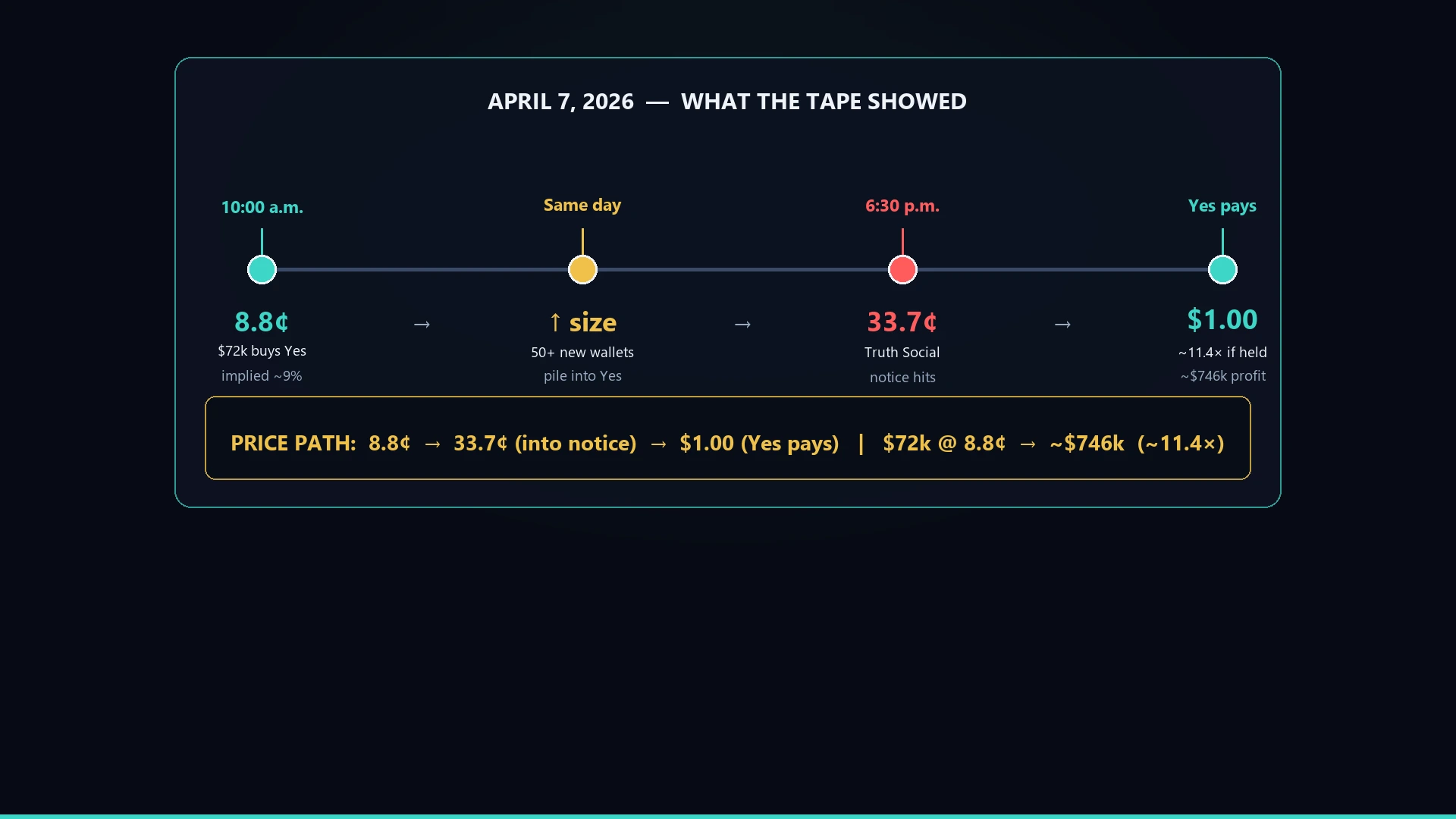
At 10:00 a.m. ET on April 7, 2026, a freshly created wallet put roughly $72,000 into a U.S.–Iran ceasefire contract at 8.8¢. About eight and a half hours later, President Trump posted the deal on Truth Social. The wallet’s run printed on the order of $200,000.
That is not “the crowd saw it coming.” That is a receipt: anonymous USDC first, official notice second.
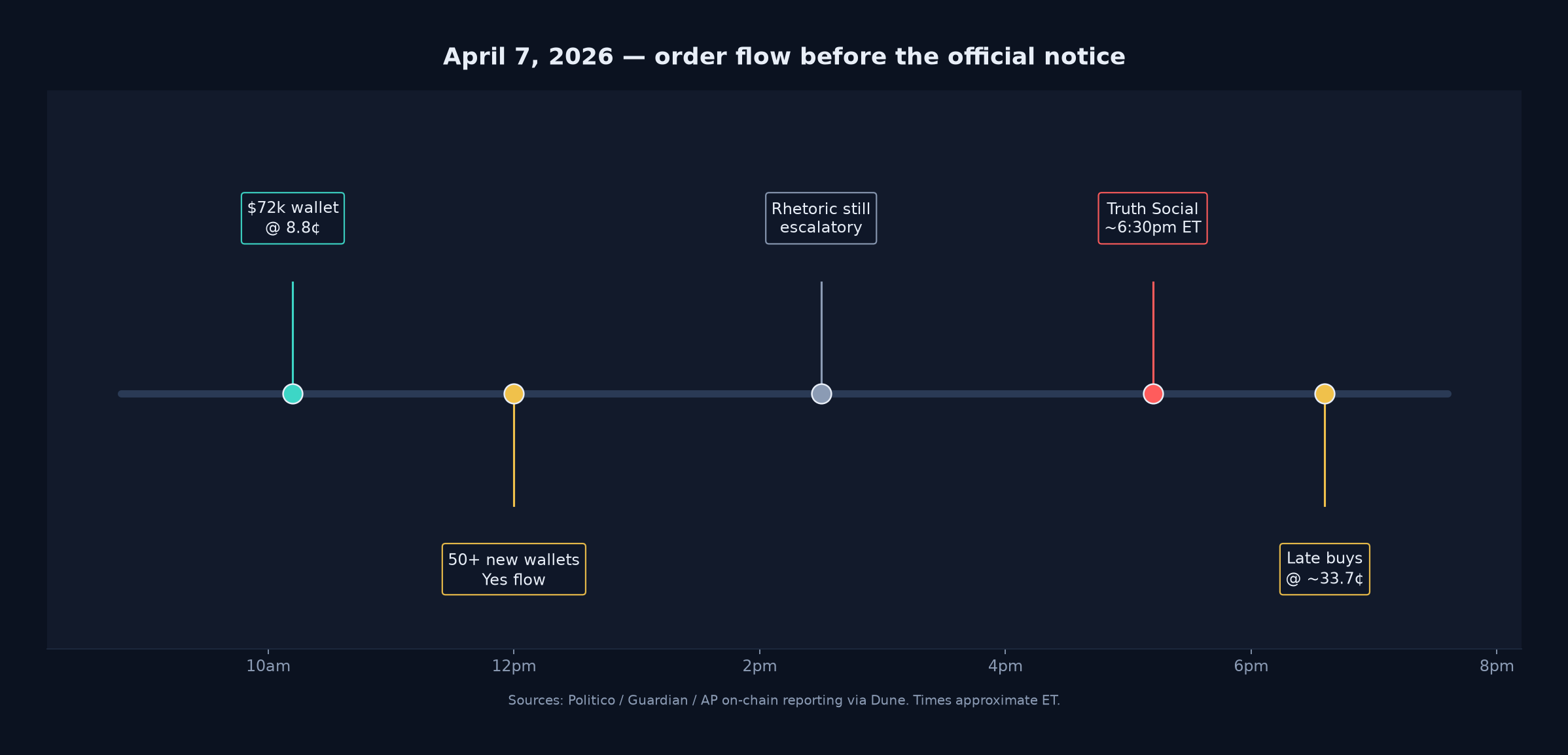
Figure 1 — April 7 clock. Sources: Politico / Guardian / AP (Dune). Times approximate ET.
Key takeaways
| # | Fact | Why it matters |
|---|---|---|
| 1 | ≥50 new wallets bought Yes on a same-day ceasefire before ~6:30 p.m. ET Truth Social | First-trade wallets ≠ seasoned “wisdom of crowds” |
| 2 | One morning wallet: ~$72k @ 8.8¢ → ~$200k | Pure form: cheap longshot → notice → cash |
| 3 | Bubblemaps: 9 linked accounts, $2.4M+, 80+ bets, ~98% win rate on U.S. military-linked outcomes | Desk behavior, not lottery tickets |
| 4 | ACDC: military longshots (≥$2.5k at ≤35¢) win ~52% vs ~14% platform-wide | Fair books do not look like this |
| 5 | March 23 oil: >$800M notional ~15 min before “productive talks” post | Same information class, different venue |
| 6 | Reader alpha: treat sub-20¢ geo flow from brand-new wallets as a risk notice that has not been typed — not free money. Late retail is often exit liquidity. |
8.8¢: The Price of a Leak
Prediction-market marketing sells a clean story: many minds, real money, better odds than cable.
Geopolitical date contracts break that story.
In a thick book — a presidential race with nine-figure volume — a whale still has to fight liquidity and other sharks. In a thin book — will a ceasefire be announced by Tuesday? — a single cluster can own the probability surface and still look like “the market” to a casual scroller.
On April 7, that surface mattered.
Public chain data (Dune analyses carried by Politico, The Guardian, AP, and others) showed at least fifty wallets placing substantial Yes bets that day before the ~6:30 p.m. ET announcement. These were first trades for those wallets — not accounts that had been grinding elections for two years.
| Wallet (as reported) | Entry | Result (approx.) |
|---|---|---|
| Created ~10:00 a.m. ET Apr 7 | ~$72k @ 8.8¢ avg | ~$200k profit |
| Joined Apr 6 | Yes on same event | ~$125.5k won |
| Created ~12 min before TS post | ~$32k @ 33.7¢ | ~$48.5k profit |
Pull quote
At 8.8¢, the market says one-in-eleven. The wallets say: we read the memo.
That gap — public price vs. private clock — is timestamp alpha. Order flow before the official risk notice.
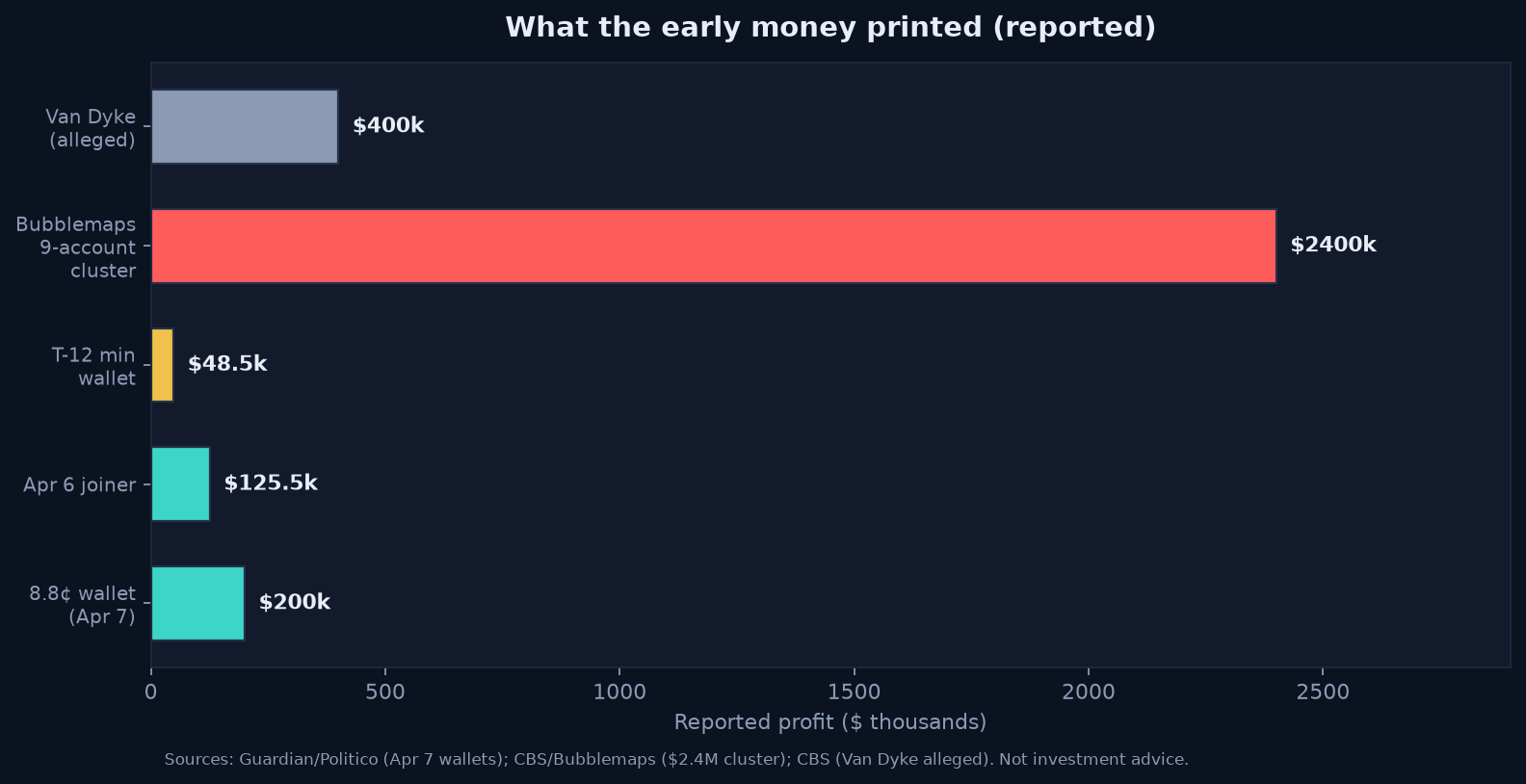
Figure 2 — Early money printed (as reported). Sources: Guardian/Politico; CBS/Bubblemaps; CBS Van Dyke (alleged).
The 12¢ Tip-Off
A cheap share is not automatically smart. Most longshots die.
The Anti-Corruption Data Collective’s April 2026 brief on Polymarket political markets is the chart that ends the oracle pitch:
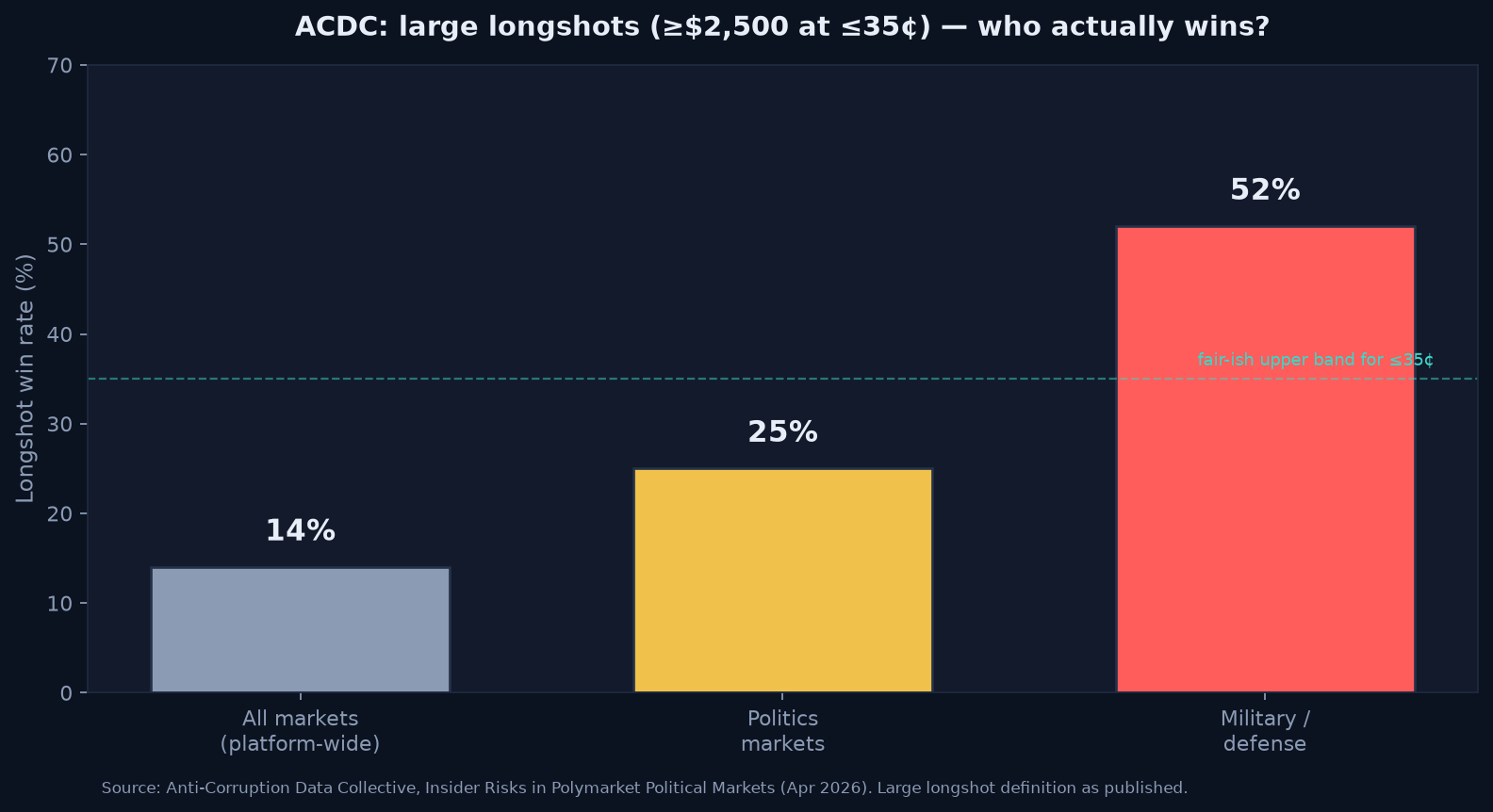
Figure 3 — Large longshots (≥$2,500 at ≤35¢). Source: ACDC Apr 2026.
| Slice | Longshot win rate |
|---|---|
| All markets (platform-wide) | ~14% |
| Politics-focused | ~25% |
| Military / defense | ~52% |
If longshots were priced fairly, large bets at ≤35¢ would not win half the time in any category. Military markets are the outlier — and the category where outcomes often hinge on a handful of principals, not a diffuse electorate.
The op (for observers — not a trading system)
- New wallets (<48h)
- First trade is size on a date-bound military/diplomatic contract
- Price still low (sub-20–35¢) while public narrative still escalates
- Cluster: many accounts, same side, same hour
- Then Truth Social / wire / NOTAM / CENTCOM
When those stack, the book is less an oracle and more a laundering desk with a price feed: non-public conviction enters as USDC, exits as “Polymarket called it,” and secondary buyers become unpaid PR.
Scroll hook
When new wallets buy 12¢ war contracts, start your stopwatch.
The 98% Hit Squad
Bubblemaps (findings shared first with 60 Minutes / CBS, May 2026) linked nine Polymarket accounts that:
- Bet almost exclusively on U.S. military-linked Iran-window outcomes
- Timed first strikes, leadership removal, and ceasefire moments
- Across 80+ bets, posted ~98% win rate
- Generated >$2.4 million
- Often entered while odds were still low
Bubblemaps co-founder Nicolas Vaiman: luck alone cannot explain the pattern. Four accounts reportedly took on the order of ~$400k each around the February 28 strike prediction.
That is not a sportsbook lottery ticket. That is a desk.
On-chain work cited around the February strike window also described rails funded days ahead, then bets fired in a tight UTC window the day before kinetic action — prepare, then shoot.
Not the same animal: the French election whale
The 2024 French whale (~$80M on Trump election contracts) is a thick-market capital concentration story. Important for structure. Not the same pattern as brand-new wallets buying 8¢ same-day military date contracts hours before a state announcement.
Pull quote
The French whale had conviction. The 8.8¢ wallets had clocks.
Case file: the soldier and the open UI
Insider risk is not only foreign clusters.
U.S. Army Master Sgt. Gannon Ken Van Dyke was charged (pleaded not guilty) over alleged use of nonpublic information around a special operations mission involving former Venezuelan leader Nicolás Maduro. Reporting: roughly $34,000 in wagers including a half-dozen the day before the raid; >$400,000 netted; then withdrawal and attempted account deletion. Polymarket says it identified activity, referred authorities, and cooperated.
Capability is the point: people inside the planning graph can reach a consumer prediction UI with a VPN and a few thousand dollars.
March 2026: White House staff memo — do not bet nonpublic information on prediction markets. The memo exists because the incentive is obvious and the surveillance lag is real.
Case file: oil moved first
Prediction markets are not sealed.
March 23, 2026 — multi-week Iran fighting, quiet oil session — LSEG-linked reporting described >$800 million notional stacked toward lower oil around 6:50 a.m. ET. About fifteen minutes later, Trump posted “very good and productive” talks. Oil sold off hard (order-of-magnitude ~10% moves reported in the window). 60 Minutes sources flagged federal interest in oil-side flow; no charges public at time of that reporting.
Polymarket + oil + new-wallet clusters rhyming in the same minutes is a cross-venue risk notice. Polymarket alone can be noise. The cousin print is the tell.
Six Ways Thin Geo Markets Lie
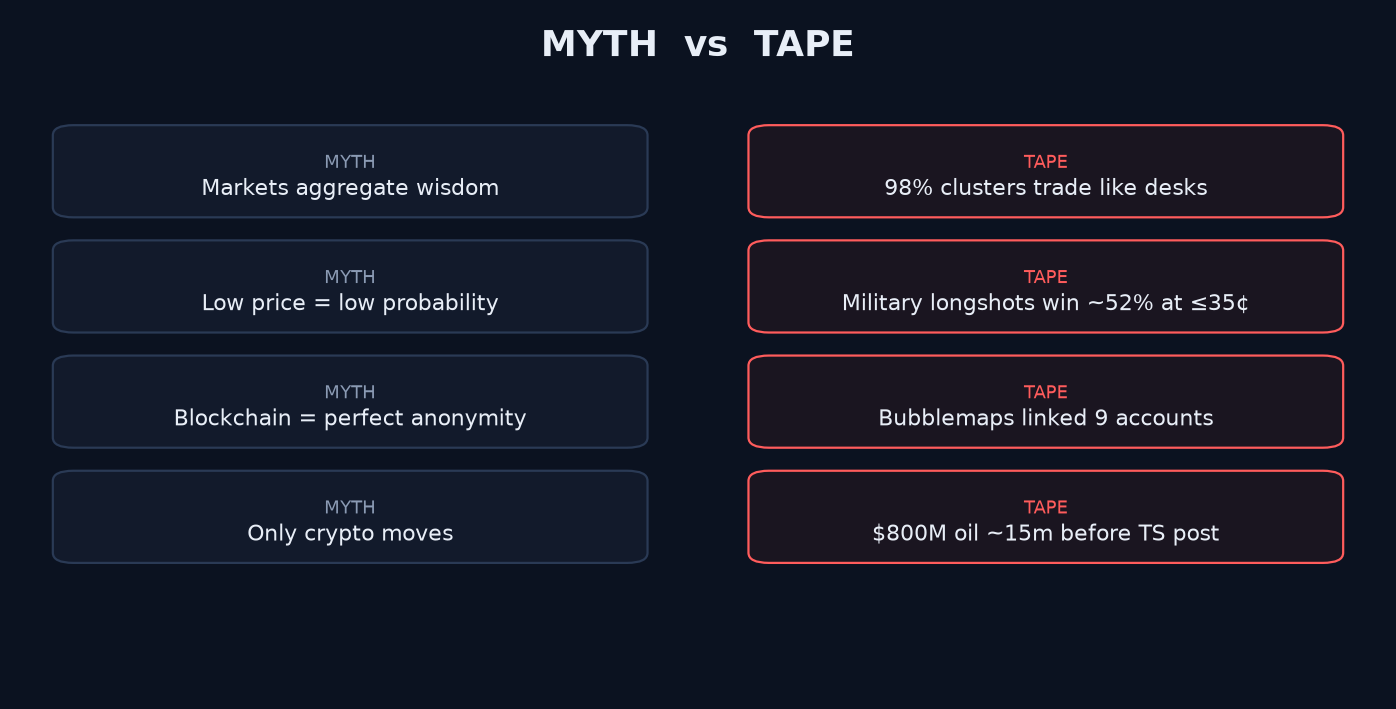
Figure 4 — Marketing story vs observed tape.
| Myth | Tape |
|---|---|
| Markets aggregate wisdom | 98% clusters trade like desks |
| Low price = low probability | Military longshots win ~52% at ≤35¢ |
| Blockchain = anonymity | Bubblemaps linked 9 accounts |
| Only crypto moves | $800M oil ~15m before TS post |
| Resolution is clean | Ceasefire books go disputed while Hormuz friction continues |
| It’s just entertainment | Journalists threatened over resolution-moving reporting (Times of Israel case, ~$900k claimed losses in messages) |
Add national security: if open-source analysts see the cluster, opposing staffs can too. Price discovery on strike timing is not a parlour game when OPSEC assumes the other side is blind.
How to read the tape
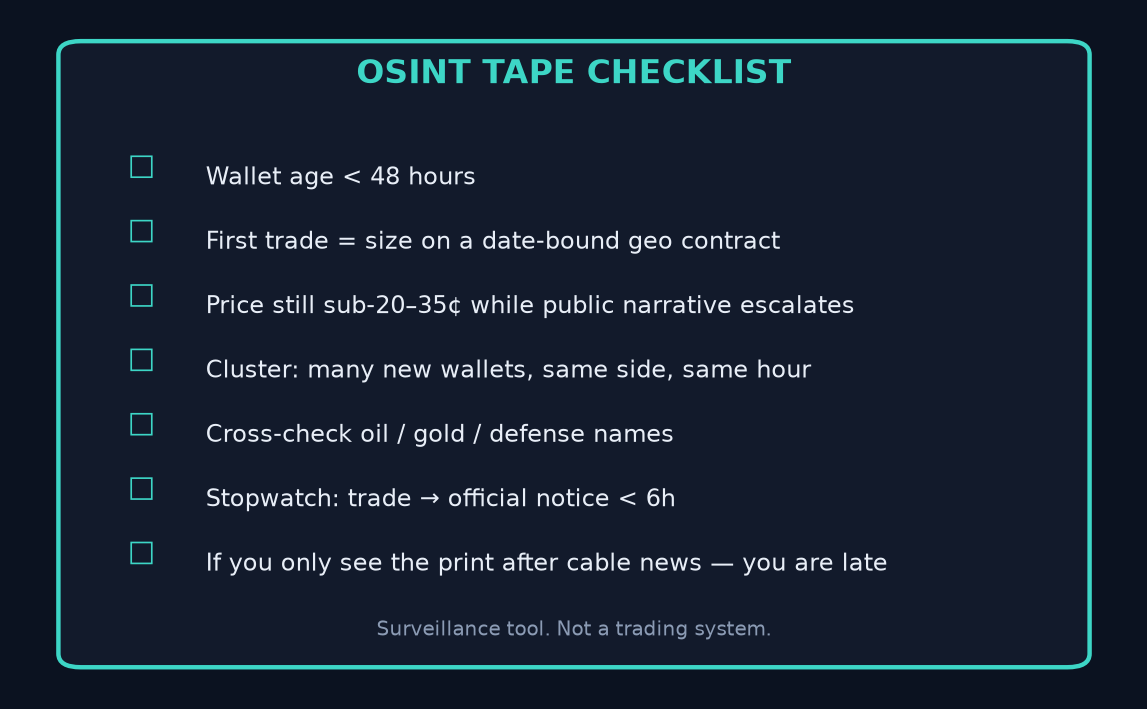
Figure 5 — Surveillance checklist. Not a trading system.
Wallet flags
| Flag | Why |
|---|---|
| Age < 48h | Rails built for one shot |
| First trade = the geo contract | No skill baseline |
| Size vs book | Certainty, not lottery |
| Many wallets, same side, same hour | One operator or a pod |
| Fresh bridge / shared parent funding | Cluster glue |
| Instant withdraw after win | Extract, don’t compound |
Clock log (copy this)
| Time (ET) | Event |
|---|---|
| T−N h | Cluster enters at X¢ |
| T−30m | Public rhetoric still escalatory |
| T−0 | Official notice |
| T+ | “Markets predicted it” explainers |
If column one is always full before column three, you are watching information with a delay.
Legal line
Public chain + public timestamps = OSINT.
Nonpublic operational knowledge used to trade = different legal category (see Van Dyke). Board’s interest is reading the surface.
What platforms and Washington did
- Polymarket: tighter insider/integrity rules; surveillance + forensics; says it refers cases (points to Van Dyke process).
- CFTC: U.S. event-contract perch; capacity/politics contested.
- Congress: letters after April 7 clusters on national-security-adjacent markets.
- White House staff memo (March window): no nonpublic bets.
- Industry volume: reporting through spring 2026 put >$1B staked on military outcomes.
Rules change slower than wallets. Thickness does not magically appear in a Tuesday ceasefire book.
The Board read
Treat geopolitical prediction markets as a parallel wire:
- Useful when you timestamp flow against notices and oil/defense.
- Dangerous when you treat mid-teen prices as true probability.
- Adversarial when new wallets and 98%-class clusters show up — closer to a leaky SCIF with a chart than a poll.
The French whale proved markets can concentrate capital.
The 8.8¢ wallets and the 98% cluster suggest concentration of time-sensitive state-adjacent information.
Final graf
Prediction markets did not foresee the April 7 ceasefire — they laundered the lag between classified reality and public acknowledgment. The lesson is written in blockchain timestamps: the market is not predicting violence. It is pricing the delay.
If you trade these books, assume you are liquidity for someone who read the memo you have not seen.
If you analyze them for strategy, energy, defense, or OSINT — ask every morning what Wall Street already asks of unusual options prints:
Who knew early, how thin was the book, and what printed after?
That is the alpha. The oracle story is marketing.
Bottom line: Treat thin geo books as a delayed risk wire — timestamp the cluster, cross-check oil, and never confuse a 12-cent print with a public forecast.
Related analysis
- Kelly utilization on prediction markets
- Kelly criterion and bet sizing
- World War 3 probability and forecasting markets
- Strait of Hormuz crisis: strategic analysis
- Dark fleet tankers and sanctions evasion
Related Analysis
Related Topics
Video Intelligence
- ▶Iranian Missile Strike Hits Arad Israel: Video Moments
- ▶Iran Releases Official Footage of Drone Launches During War
- ▶Iranian Kamikaze Drone Destroys Erbil Oil Refinery
- ▶FPV Drone Strikes US Victoria Base Near Baghdad Airport
Share This Analysis
Get a shareable verdict card for this article.
Get the next one first
Free briefings when we publish major outlooks and forecasts. No spam — unsubscribe anytime.
Related Analysis

Schiff vs Saylor vs the Banks: Who Got 2026 Right?
The Board · Aug 27, 2026

Prediction Markets Iran 2026: Forecasting Odds & Expert Analysis
The Board · Mar 17, 2026
WW3 Odds 2026: Markets Say 12%, Experts 8% - Why They Differ
The Board · Mar 17, 2026

Oil Below $60: What the Crude Price Collapse Signals for
The Board · Mar 10, 2026
Trending on The Board
Houthis Take Perim as Saudis Halt Pipeline 2026
Geopolitics · Sep 13, 2026
What Israel-Iran War Games Got Wrong About 2026
Defense & Security · Sep 6, 2026

Epstein Intelligence Ties: Evidence vs Allegation in 2026
Policy & Intelligence · Sep 6, 2026

China Imported 764 Tons of Gold in Six Months
Markets · Aug 20, 2026

The 'Muslim NATO' Fails Its First Test in 48 Hours
Geopolitics · Aug 27, 2026
Latest from The Board
Houthis Take Perim as Saudis Halt Pipeline 2026
Geopolitics · Sep 13, 2026
Epstein Intelligence Ties: Evidence vs Allegation in 2026
Policy & Intelligence · Sep 6, 2026
What Israel-Iran War Games Got Wrong About 2026
Defense & Security · Sep 6, 2026

Central Banks Turned Gold Sellers. One Country Did It.
Markets · Aug 30, 2026
Schiff vs Saylor vs the Banks: Who Got 2026 Right?
Predictions · Aug 27, 2026

Silver Deficit 2026: BofA's $300 Target Explained
Markets · Aug 27, 2026

Iran War Scenarios After the 60-Day Deadline Expires
Geopolitics · Aug 27, 2026
Gold Price Forecast 2026: $10,000 Call vs $4,500 Banks
Markets · Aug 27, 2026