
Kelly utilization calculator
Enter the market price, your own probability estimate and your bankroll. Kelly utilization is the share of the full Kelly stake you actually put on. Most traders run well under 100%, because full Kelly assumes your probability estimate is exactly right.
| Utilization | Share of bankroll | Stake |
|---|---|---|
| Full Kelly (100%) | 25.0% | $2,500 |
| Half Kelly (50%) | 12.5% | $1,250 |
| Quarter Kelly (25%) | 6.3% | $625 |
| Tenth Kelly (10%) | 2.5% | $250 |
Full Kelly maximises long-run growth only if your probability is correct. Overestimate the edge and full Kelly overbets badly, which is why fractional utilization is the norm rather than the exception. This is a sizing tool, not financial advice.
Kelly Utilization Meaning: Bet Sizing for Prediction Markets
Kelly utilization is how hard you press edge: actual risk fraction used ÷ full Kelly fraction suggested by your model. If full Kelly says risk 10% of bankroll and you risk 2.5%, utilization is 0.25 (quarter-Kelly).
Searchers looking up "Kelly utilization", Kelly criterion trading, and prediction-market bet sizing need that definition first — then the math. Event-contract venues scaled into multi-billion monthly volumes through 2025–2026; desks needed a language for position pressure, not just direction.
This article defines Kelly utilization, shows the classic Kelly criterion, adapts it to binary forecasting-market contracts, and explains why serious operators almost never run full Kelly.
What "Kelly utilization" means
| Scenario | Full Kelly fraction | Actual risk | Utilization (actual / full) |
|---|---|---|---|
| A — full press | 0.10 of bankroll | 0.10 | 1.0 (full Kelly) |
| B — half Kelly | 0.10 of bankroll | 0.05 | 0.5 (half Kelly) |
| C — quarter Kelly | 0.10 of bankroll | 0.025 | 0.25 (quarter Kelly) |
| D — over-Kelly bug | 0.08 of bankroll | 0.12 | 1.5 (usually a bug or ego) |
In plain English: Kelly utilization is how much of the theoretically “optimal growth” bet you are willing to take after fees, uncertainty, and risk of ruin.
Traders say “we run about a quarter to two-fifths Kelly utilization” the way quant funds say “we run half-Kelly.” It is a discipline label, not a magic multiplier that creates edge.
The Kelly criterion (core formula)
John L. Kelly’s classic result: if you have a true edge, the bankroll fraction that maximizes long-run logarithmic growth is:
[ f^* = \frac{p \cdot b - q}{b} ]
Where:
- (p) = your estimated probability of winning
- (q = 1 - p)
- (b) = net decimal odds received on a winning unit stake (profit per $1 risked)
If (f^* \le 0), you have no bet under Kelly — walk away.
Binary forecasting-market form
On YES/NO event contracts priced at price (c) (in dollars, e.g. (c = 0.40)):
- If you buy YES at (c), you risk (c) to make (1 - c) profit per share if YES resolves.
- Net odds (b = \frac{1 - c}{c}).
- If your true probability is (p), then:
[ f^* = \frac{p - c}{1 - c} ]
(when buying YES; the symmetric form applies when buying NO).
Interpretation: full Kelly is proportional to edge over the residual price. A model probability of 0.55 on a 0.40 contract has a large (f^*); a model probability of 0.42 on a 0.40 contract has a small one.
This is the same structure discussed in technical work on applying Kelly to prediction markets (arXiv:2412.14144) and in practitioner sizing guides for binary event contracts.
Worked example (July 2026 framing)
Assume a single contract in mid-2026:
- Contract: “Event X resolves by year-end”
- Market price (c = 0.35) (YES)
- Your calibrated model: (p = 0.48)
- Bankroll: $10,000
- Fees ignored first
Full Kelly:
[ f^* = \frac{0.48 - 0.35}{1 - 0.35} = \frac{0.13}{0.65} \approx 0.20 ]
That is one-fifth of bankroll → $2,000 at full Kelly.
| Policy | Utilization | Dollar risk on this one name |
|---|---|---|
| Full Kelly | 1.0 | $2,000 |
| Half Kelly | 0.5 | $1,000 |
| Quarter Kelly | 0.25 | $500 |
| Desk hard-cap (two cents on the dollar) | n/a | $200 max regardless of Kelly |
Most professional and semi-pro forecasting-market operators live near quarter- to half-Kelly utilization, then further hard-cap any single name (often around one to three hundredths of bankroll) so one bad calibration cannot end the account.
Why full Kelly is usually wrong in live markets
- Probability error. Kelly assumes (p) is true. Your model is not. Overconfident (p) → explosive overbetting.
- Fee and spread drag. Fees shrink effective (b). Ignore them and you systematically oversize.
- Correlation. Ten “independent” political contracts often share the same regime factor. Kelly on each name independently overstates total risk.
- Liquidity. Large (f^*) may move the book or may not fill.
- Path variance. Full Kelly maximizes asymptotic growth but produces brutal drawdowns. Humans and funds with external capital constraints rarely survive the path.
Hence fractional Kelly (utilization well below 1.0) is the industry default.
How desks talk about utilization in 2026 markets
Forecasting-market volume scaled hard into 2025–2026 (industry trackers such as TRM Labs put monthly volumes in the tens of billions at peaks). That growth pulled in:
- market makers running high-frequency, small average size flow
- directional bettors with models
- retail using calculators labeled “Kelly” without calibration discipline
Serious process looks like:
- Estimate (p) with a written model or base-rate + update log.
- Compute full Kelly (f^*).
- Apply utilization (commonly between one-quarter and one-half).
- Apply name cap and gross exposure cap.
- Log outcome vs (p) for calibration (Brier / reliability diagrams).
Without step 5, “Kelly utilization” is cosplay.
Forward look (what changes next)
As regulated and offshore event-contract venues keep growing, expect three sizing pressures: tighter fee schedules, more correlated political portfolios, and retail calculators that advertise full Kelly. Desks that keep utilization fractional and log calibration will outlast desks that treat Kelly as a green-light multiplier.
Kelly utilization vs related terms
| Term | Meaning |
|---|---|
| Kelly criterion | Formula for full-Kelly fraction (f^*) |
| Fractional Kelly | Fixed share of (f^*) (e.g. half-Kelly = 0.5 utilization) |
| Kelly utilization | Observed or policy ratio actual/(f^*) |
| Edge | (p - c) (or EV after fees) |
| Risk of ruin | Probability bankroll hits a floor under your sizing rule |
If a dashboard shows utilization near 0.8, ask: utilization of what model? Garbage (p) makes high utilization suicidal.
Common mistakes
- Using market price as (p). Then edge is zero by definition; Kelly says bet nothing.
- Sizing on excitement, labeling it Kelly later. Retroactive branding is not process.
- Ignoring binary inventory rules — YES/NO structure changes inventory math versus equities (see academic prediction-market Kelly work).
- Stacking correlated contracts each at “half Kelly.” Portfolio Kelly ≠ sum of single-name Kellys.
- Chasing after losses by raising utilization. Optimal response to a losing streak is usually recalibrate (p), not press harder.
Practical starter policy (retail / small desk)
- Never above half-Kelly on any single contract.
- Hard cap about two hundredths of bankroll per name until you have 100+ graded forecasts with known calibration.
- If fees + spread eat more than half your raw edge, skip.
- Track predicted (p) vs outcomes monthly; if you’re poorly calibrated, cut utilization before you cut research time.
Bottom line
Kelly utilization answers one question only: relative to the Kelly fraction implied by my probability model, how hard am I pressing?
It does not create edge. It meters edge. In a 2026 forecasting-market stack measured in tens of billions of monthly notional, the traders who last are not the ones who found a secret Kelly multiplier — they are the ones who combined calibrated probabilities, fractional utilization, and hard risk caps.
Sources
- arXiv — Application of the Kelly Criterion to Prediction Markets (2024)
- TRM Labs — How Prediction Markets Scaled to USD 21B Monthly Volume (2026)
- CRS — Prediction Markets: Policy Issues for Congress (2026)
- The Board — Prediction market trading strategies
- The Board — Kelly criterion explained (bet sizing)
Related Analysis
- Kelly Criterion Explained: Optimal Bet-Sizing Formula
- Will BRICS Replace the Dollar? A Reality-Check Scorecard (2026)
- 2026 AI Chip Rally: The Bottleneck Nobody's Pricing
- Strategy's $64bn Bitcoin Bet: The Warning and What Saylor's Filings Show
- Blackstone Sells $7.8bn Virginia Data Centers in 2026 — Top Signal?
Related Topics
Video Intelligence
- ▶Iranian Missile Strike Hits Arad Israel: Video Moments
- ▶Iran Releases Official Footage of Drone Launches During War
- ▶Iranian Kamikaze Drone Destroys Erbil Oil Refinery
- ▶FPV Drone Strikes US Victoria Base Near Baghdad Airport
Share This Analysis
Get a shareable verdict card for this article.
Get the next one first
Free briefings when we publish major outlooks and forecasts. No spam — unsubscribe anytime.
Related Analysis
2026 Economic Crisis: Why Central Banks May Fail
The Board · Feb 22, 2026

Copper Price Forecast 2029-2031: Supply vs Green Demand
The Board · Feb 22, 2026

US Inflation Outlook and Fed Interest Rate Strategy
The Board · Feb 20, 2026

Will AI Replace White-Collar Jobs in 10 Years
The Board · Feb 22, 2026
When to Hire a VP of Sales vs Investing in PLG
The Board · Feb 22, 2026

ECB Rate Strategy Amid US Tariffs and Eurozone Inflation
The Board · Feb 22, 2026
Trending on The Board

79 Years of UFO Lies, Roswell to the Pentagon
Defense & Security · Sep 29, 2026

How CENTCOM Is Brokering an Israel-Saudi Pact
Defense & Security · Sep 19, 2026

Why the Pentagon Pulled Its Iran War Plans Offline
Defense & Security · Sep 19, 2026
How a Stablecoin Funded Moldova's 2026 Election
Geopolitics · Sep 19, 2026

The Hidden Gold Demand Behind the $6,000 Target
Markets · Sep 17, 2026
Latest from The Board
79 Years of UFO Lies, Roswell to the Pentagon
Defense & Security · Sep 29, 2026
How CENTCOM Is Brokering an Israel-Saudi Pact
Defense & Security · Sep 19, 2026
Why the Pentagon Pulled Its Iran War Plans Offline
Defense & Security · Sep 19, 2026
How a Stablecoin Funded Moldova's 2026 Election
Geopolitics · Sep 19, 2026
The Hidden Gold Demand Behind the $6,000 Target
Markets · Sep 17, 2026
Houthis Take Perim as Saudis Halt Pipeline 2026
Geopolitics · Sep 13, 2026

Epstein Intelligence Ties: Evidence vs Allegation in 2026
Policy & Intelligence · Sep 6, 2026
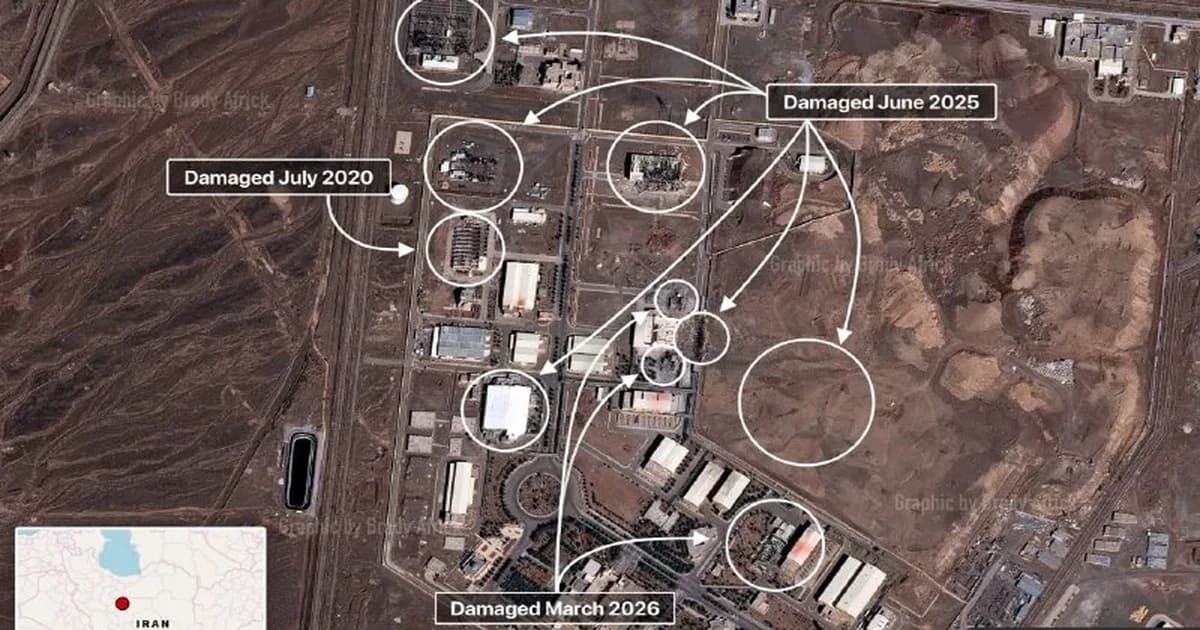
What Israel-Iran War Games Got Wrong About 2026
Defense & Security · Sep 6, 2026