
Oil markets are flashing a signal that few expected this soon: Brent crude has broken below $65 per barrel, its lowest level since the pandemic recovery, and technical analysts see support crumbling toward $55. The catalyst is a convergence of supply shocks and demand destruction that is rewriting the energy playbook for 2026 and beyond.
The G7 Supply Bomb
The most immediate driver is the G7's coordinated decision to release 400 million barrels from strategic petroleum reserves — the largest coordinated drawdown in history, dwarfing the 2022 release that totaled 180 million barrels. The stated rationale is "energy security amid Middle East uncertainty," but the timing — months before the US midterm elections — has drawn accusations of political manipulation from OPEC+ members.
The release is structured to maximize market impact: 60 million barrels per month over approximately seven months, with the US contributing 180 million barrels from the Strategic Petroleum Reserve, Japan 30 million, and European members pooling the remainder. At current global consumption of approximately 103 million barrels per day, the release represents roughly four days of total global demand — but its psychological impact far exceeds its physical volume.
Markets trade on marginal supply changes, not absolute quantities. The G7 release effectively adds 2 million barrels per day of supply to a market that was already balanced on a knife's edge between surplus and deficit. Combined with softer Chinese demand growth and rising non-OPEC production from the US, Brazil, and Guyana, the release has tipped the market into surplus.
The OPEC Fracture
The G7 release has exposed and accelerated fractures within OPEC+ that have been building for months. Saudi Arabia, which has shouldered the largest voluntary production cuts — reducing output by over 1 million barrels per day since 2023 — is losing patience with members who cheat on their quotas while Riyadh bears the cost of market management.
The data tells the story. Iraq has consistently exceeded its OPEC+ quota by 200,000-400,000 barrels per day. Kazakhstan's production from the expanded Tengiz field has pushed it well above agreed levels. The UAE has demanded a higher baseline quota to reflect its expanded production capacity — a request that Saudi Arabia has resisted because it would legitimize quota-busting.
Saudi Arabia's dilemma is acute. The kingdom's fiscal breakeven oil price — the price needed to balance its government budget — is approximately $85 per barrel, reflecting the enormous spending commitments of Crown Prince Mohammed bin Salman's Vision 2030 economic diversification program. At $60, Saudi Arabia runs a deficit exceeding $50 billion annually. Riyadh can sustain this for several years using its $400 billion in foreign reserves, but not indefinitely.
The historical parallel is 2014-2016, when Saudi Arabia launched a price war to crush US shale producers by flooding the market. That strategy failed — shale operators cut costs and survived, while Saudi reserves declined by over $100 billion. Whether Riyadh has the stomach for another extended price war is the key variable in every oil market scenario.
Demand Destruction Is Structural
The supply side of the equation is dramatic, but the demand side may be more consequential. Global oil demand growth is decelerating in ways that suggest structural change rather than cyclical weakness.
Electric vehicle adoption. Global EV sales reached 20 million units in 2025, representing 25% of all new car sales. China — which accounts for 60% of global EV sales — has passed the tipping point where EVs are cheaper than equivalent internal combustion vehicles before subsidies. BloombergNEF estimates that EVs displaced approximately 2.5 million barrels per day of oil demand in 2025, a figure that is growing at 20-25% annually. By 2030, EV-related demand displacement could reach 6-8 million barrels per day — roughly equivalent to the entire output of Saudi Arabia.
Chinese economic deceleration. China has been responsible for over 50% of global oil demand growth over the past two decades. That engine is sputtering. China's GDP growth has slowed from the 6-8% rates of the 2010s to approximately 4% in 2025-2026, driven by the property sector crisis, demographic contraction, and the government's deliberate shift toward a consumption-driven economy that is less energy-intensive. Chinese oil demand grew by only 200,000 barrels per day in 2025, compared to average annual growth of 500,000-800,000 barrels per day over the previous decade.
Efficiency gains. The global economy is becoming less oil-intensive. Oil consumption per unit of GDP has declined by approximately 1.5% per year over the past decade, driven by improvements in fuel efficiency, industrial electrification, and the shift toward service-based economies in developed nations. This trend is accelerating as heat pumps replace oil-fired heating in Europe and industrial processes increasingly use electricity or hydrogen.
What $55 Oil Means
If prices settle in the $55-60 range for an extended period, the consequences ripple through every sector of the global economy.
US shale. The breakeven cost for new drilling in the Permian Basin — the heart of the US shale revolution — averages approximately $48-52 per barrel for tier-1 acreage. At $55, only the most efficient operators remain profitable on new wells. Rig counts, which have already declined from a 2022 peak of over 760 to approximately 580, would likely fall further. But existing wells continue producing, and the industry's focus on capital discipline (returning cash to shareholders rather than drilling aggressively) means production declines slowly even as prices fall.
Renewable energy. Paradoxically, sustained low oil prices could slow the energy transition. When gasoline is cheap, consumer incentive to switch to EVs diminishes — particularly in markets like the US where range anxiety and charging infrastructure remain barriers. Government subsidies for renewable energy become politically harder to justify when fossil fuels are affordable. However, the EV cost curve is now below internal combustion in several major markets regardless of fuel prices, limiting this effect.
Petrostates. Countries dependent on oil revenue face fiscal crises of varying severity. Russia, already under severe sanctions, needs approximately $70 per barrel to fund its war budget. Nigeria's government budget assumes $75 oil. Venezuela, Iran, Iraq, and Libya all face escalating fiscal pressure. The geopolitical consequences of petrostate fiscal distress are historically destabilizing: the 2014-2016 oil crash contributed to Venezuela's economic collapse and increased Russia's willingness to pursue aggressive foreign policy to distract from domestic economic pain.
Inflation. Lower energy prices act as a deflationary force that could accelerate central bank rate-cutting cycles. The Federal Reserve, European Central Bank, and Bank of England have all indicated that energy prices are a key variable in their inflation models. Brent at $55 would remove approximately 0.5-0.8 percentage points from headline inflation in developed economies, potentially enabling faster monetary easing than currently priced into bond markets.
Three Scenarios for Year-End
Scenario 1: Managed Decline to $55-60 (40% probability). OPEC+ holds together with modest production adjustments. The G7 release runs its course. Chinese demand stabilizes. Prices settle in a range that is uncomfortable for producers but not catastrophic. This is the "soft landing" scenario.
Scenario 2: Price War to $45-50 (25% probability). Saudi Arabia abandons output restraint, floods the market, and attempts to force high-cost producers and quota cheaters to capitulate. Reminiscent of 2014-2016 but with a faster timeline because the demand outlook is weaker. Extremely disruptive for global markets and petrostates.
Scenario 3: Geopolitical Spike to $90+ (35% probability). The Middle East conflict escalates beyond current parameters — a Strait of Hormuz disruption, Iranian infrastructure strike, or major terrorist attack on Gulf oil facilities — and erases the supply surplus overnight. This scenario becomes more likely as low prices reduce investment in spare production capacity, making the supply system more fragile and more vulnerable to shocks.
The Signal in the Noise
The oil price collapse of 2026 is not a repeat of previous cycles. It is occurring against a backdrop of structural demand destruction that previous downturns lacked. EVs, efficiency gains, and the decarbonization imperative mean that each price recovery reaches a lower peak than the last. The "supercycle" thesis — that underinvestment in fossil fuels would produce chronically high prices — is being invalidated by the speed of the demand-side transition.
For investors, policymakers, and ordinary consumers, the message is the same: the oil age is not ending with a dramatic rupture, but with a slow, grinding repricing of the world's most important commodity. The transition will not be smooth, it will not be linear, and it will produce winners and losers on a civilizational scale. But the direction is now unmistakable.
The era of oil as the master commodity of the global economy is drawing to a close. What replaces it — and who controls the supply chains of the successor energy system — is the defining economic question of the next decade.
Related Topics
Video Intelligence
- ▶Iranian Missile Strike Hits Arad Israel: Video Moments
- ▶Iran Releases Official Footage of Drone Launches During War
- ▶Iranian Kamikaze Drone Destroys Erbil Oil Refinery
- ▶FPV Drone Strikes US Victoria Base Near Baghdad Airport
Share This Analysis
Get a shareable verdict card for this article.
Get the next one first
Free briefings when we publish major outlooks and forecasts. No spam — unsubscribe anytime.
Related Analysis

Schiff vs Saylor vs the Banks: Who Got 2026 Right?
The Board · Aug 27, 2026
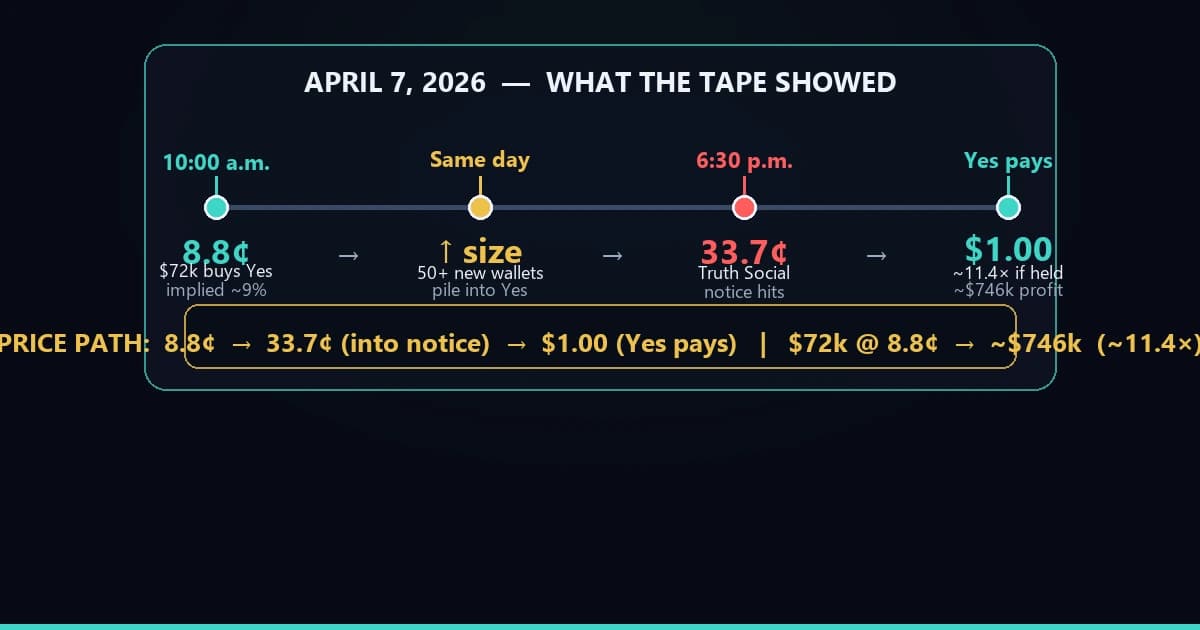
8.8-Cent Ceasefire Wallets Beat Official Notices, 2026
The Board · Aug 3, 2026

Prediction Markets Iran 2026: Forecasting Odds & Expert Analysis
The Board · Mar 17, 2026

WW3 Odds 2026: Markets Say 12%, Experts 8% - Why They Differ
The Board · Mar 17, 2026
Trending on The Board
Houthis Take Perim as Saudis Halt Pipeline 2026
Geopolitics · Sep 13, 2026
What Israel-Iran War Games Got Wrong About 2026
Defense & Security · Sep 6, 2026

Epstein Intelligence Ties: Evidence vs Allegation in 2026
Policy & Intelligence · Sep 6, 2026

China Imported 764 Tons of Gold in Six Months
Markets · Aug 20, 2026

The 'Muslim NATO' Fails Its First Test in 48 Hours
Geopolitics · Aug 27, 2026
Latest from The Board
Houthis Take Perim as Saudis Halt Pipeline 2026
Geopolitics · Sep 13, 2026
Epstein Intelligence Ties: Evidence vs Allegation in 2026
Policy & Intelligence · Sep 6, 2026
What Israel-Iran War Games Got Wrong About 2026
Defense & Security · Sep 6, 2026

Central Banks Turned Gold Sellers. One Country Did It.
Markets · Aug 30, 2026
Schiff vs Saylor vs the Banks: Who Got 2026 Right?
Predictions · Aug 27, 2026

Silver Deficit 2026: BofA's $300 Target Explained
Markets · Aug 27, 2026

Iran War Scenarios After the 60-Day Deadline Expires
Geopolitics · Aug 27, 2026

Gold Price Forecast 2026: $10,000 Call vs $4,500 Banks
Markets · Aug 27, 2026