We cannot substantiate a single numerical probability of World War III in 2026 from the sources reviewed for this article. A useful forecast needs a defined event, a deadline and a reproducible estimate. A number about war before 2050 cannot answer a question about the remainder of 2026, and a regional conflict is not automatically a world war.
Correction note — September 27, 2026: The earlier article reported a 12% market estimate, an 8.3% Metaculus estimate, precise regional escalation ranges and correlation coefficients without reproducible question links and calculations. Those figures are withdrawn. The historical probability table, attributed testimony and unsupported incident details are also removed. This article offers a sourced interpretation framework; it does not replace unsupported precision with a new proprietary risk score.
Define the outcome before reading the percentage
The following distinctions are analytical categories for this explainer, not the resolution rules of any particular forecasting platform:
| Question | What would need to be specified? |
|---|---|
| Does a regional war expand? | Additional belligerents, geographical boundaries and what counts as direct participation |
| Do major powers fight directly? | Named states, qualifying military acts and any duration or fatality threshold |
| Is there a world war? | Participants, theatres, scale and an explicit resolution procedure |
| Is a nuclear weapon used? | What counts as use, by whom, where and before which deadline |
These events overlap but are not interchangeable. A conflict could have global economic effects without satisfying a forecast's military criteria. Nuclear use and a multi-theatre conventional war also require separate questions. Definitions need to be written before outcomes are known, so they cannot be adjusted to make a prediction look successful.
What the reviewed platform page actually says
The Metaculus question Will there be a “World War Three” before 2050? has a different deadline from this article's 2026 question. The accessible view did not expose the full resolution criteria or a precise estimate-update timestamp, so we do not reproduce a percentage or use it for a comparable 2026 calculation. Metaculus question 2534.
This example illustrates the problem with headline odds. Before comparing two forecasts, record each question's event, deadline, observation time, aggregation method and resolution rules. For a traded contract, also inspect whether the displayed number is a last trade or a current bid/ask, and whether trading is sufficiently active to make it informative. A community forecast and a contract price are different measurements.
Even with fully documented rules, one cannot simply divide a long-horizon probability by the number of years to obtain annual odds. That would impose assumptions about how risk evolves over time. Such assumptions need a model and a reason to believe it, not just arithmetic.
What primary threat assessments support
The US Intelligence Community's 2026 Annual Threat Assessment distinguishes military capability from a decision to fight. Its China–Taiwan section assesses that Beijing would likely pursue conditions for unification short of conflict, while continuing to develop military options. It also states that Chinese leaders did not then have a fixed unification timeline or a current plan to invade in 2027. Its Russia section identifies escalation into direct hostilities, potentially including nuclear exchanges, as a serious danger. These are attributed US intelligence judgments, not independently measured world-war probabilities. ODNI 2026 assessment, China–Taiwan and Eurasia sections.
Our inference is limited: tracking intent, readiness, direct encounters and crisis-management decisions is more informative than treating every exercise or warning as a countdown. The assessment does not justify assigning invented percentages to individual theatres or assuming that developments in different regions are statistically independent.
Alliances do not provide an automatic escalation formula
NATO explains that, under Article 5, each ally determines the assistance it considers necessary; that response may or may not involve armed force. This does not make the commitment trivial. It means that a forecast cannot assume an identical military response by every ally simply because it invokes “Article 5.” NATO's explanation of collective defence.
Likewise, support for a partner, direct combat and a treaty obligation should be recorded separately. A scenario must state the additional decisions needed for one stage to become the next. Without that sequence, an escalation narrative can hide its most uncertain assumptions.
Why historical data do not supply ready-made WW3 odds
The Correlates of War project supplies documented conflict datasets with different definitions and coverage. Its interstate-war series and Militarized Interstate Disputes series are not interchangeable; the latter includes threats and displays of force as well as its defined uses of force. COW war datasets, COW dispute datasets.
A historical estimate would require a declared outcome definition, a justified denominator, a treatment of ongoing versus newly beginning wars, and reproducible code. Selecting a few conflicts and dividing by years does not establish a calibrated probability for a differently defined future event. We have not performed that analysis here.
A practical way to monitor changes
Treat the following as questions for evidence collection, not mechanical triggers that produce a percentage:
- Have named opposing states moved from threats or support roles into verified direct combat?
- Has a government announced a concrete mobilization or deployment, and is implementation independently documented?
- Is a reported diplomatic arrangement merely proposed, accepted by the parties, or operating in practice?
- Does a forecast update reflect new evidence, changed wording, a new deadline, or a thinly traded price?
- Are sources reporting independently, or repeating one initial claim?
For Iran-specific chronology, see our bounded account of February 28–March 15. That account establishes selected historical events; it is not evidence for current military conditions or a numerical forecast of wider war.
The defensible answer to “What are the odds of WW3 in 2026?” in this review is not established. That describes the limits of the evidence assembled here, not a claim that risk is zero or that forecasting is impossible. Corrections should identify the specific question, date and primary source; send them to hello@theboard.world.
Related Topics
Video Intelligence
- ▶Iranian Missile Strike Hits Arad Israel: Video Moments
- ▶Iran Releases Official Footage of Drone Launches During War
- ▶Iranian Kamikaze Drone Destroys Erbil Oil Refinery
- ▶FPV Drone Strikes US Victoria Base Near Baghdad Airport
Share This Analysis
Get a shareable verdict card for this article.
Get the next one first
Free briefings when we publish major outlooks and forecasts. No spam — unsubscribe anytime.
Related Analysis

Schiff vs Saylor vs the Banks: Who Got 2026 Right?
The Board · Aug 27, 2026
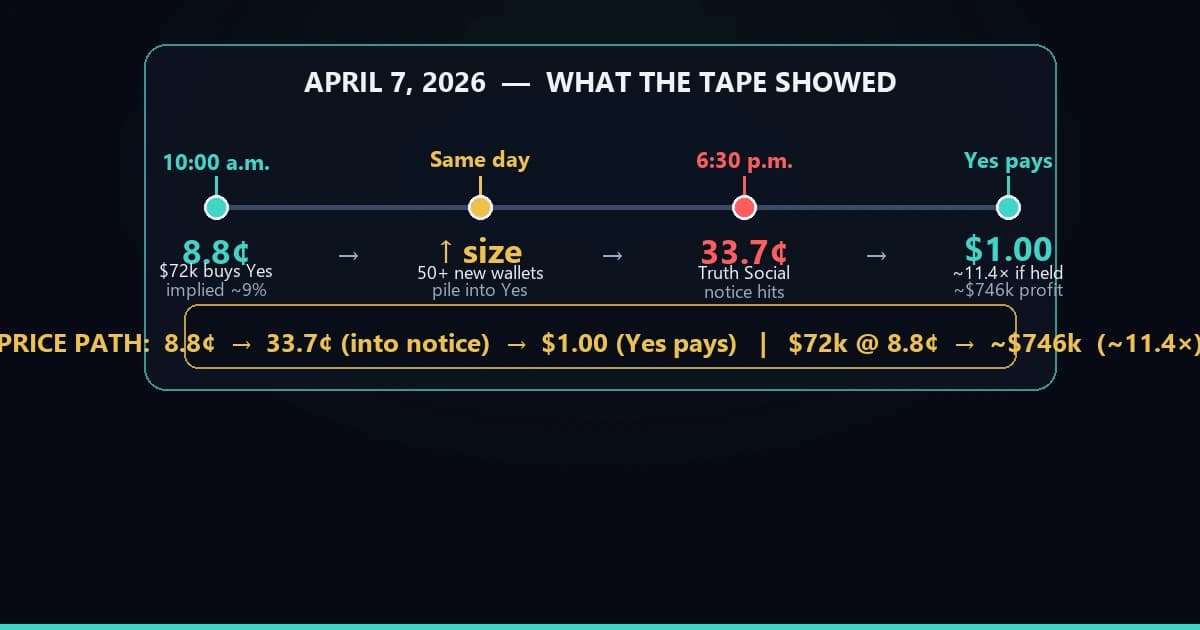
8.8-Cent Ceasefire Wallets Beat Official Notices, 2026
The Board · Aug 3, 2026

Prediction Markets Iran 2026: Forecasting Odds
The Board · Mar 17, 2026

Oil Below $60: What the Crude Price Collapse Signals for
The Board · Mar 10, 2026
Latest from The Board

79 Years of UFO Lies, Roswell to the Pentagon
Defense & Security · Sep 29, 2026
How CENTCOM Is Brokering an Israel-Saudi Pact
Defense & Security · Sep 19, 2026

Why the Pentagon Pulled Its Iran War Plans Offline
Defense & Security · Sep 19, 2026
How a Stablecoin Funded Moldova's 2026 Election
Geopolitics · Sep 19, 2026

The Hidden Gold Demand Behind the $6,000 Target
Markets · Sep 17, 2026
Houthis Take Perim as Saudis Halt Pipeline 2026
Geopolitics · Sep 13, 2026

Epstein Intelligence Ties: Evidence vs Allegation in 2026
Policy & Intelligence · Sep 6, 2026
What Israel-Iran War Games Got Wrong About 2026
Defense & Security · Sep 6, 2026