
The Shield That Changed Modern Warfare
Iron Dome and Arrow 3 are advanced components of Israel’s multi-layered air defense system, designed to intercept and destroy incoming missiles and rockets from hostile actors. In April 2024, these systems achieved an unprecedented 99% interception rate against a mass Iranian barrage, redefining expectations for missile defense and altering military doctrine worldwide.
Key Findings
- Israel’s multi-layered air defense, led by Iron Dome and Arrow 3, intercepted 99% of over 150 Iranian ballistic missiles in a single night, preventing large-scale civilian casualties and infrastructure loss.
- The April 2024 Iranian attack marked the highest-density, most technologically advanced missile assault ever faced by a modern military, yet resulted in minimal physical damage due to Israel’s defense network.
- Quantitative analysis confirms that Israel’s interception rate vastly outpaces historic benchmarks, including the 1991 U.S. Patriot system’s ~40% effective rate during the Gulf War.
- The operational success of Israel’s integrated defense has already shifted adversary calculus, compelling regional missile powers to reconsider deterrence strategies and spurring a global race for similar capabilities.
Thesis Declaration
Israel’s April 2024 defense against a massive Iranian missile barrage—achieving a 99% interception rate with Iron Dome and Arrow 3—constitutes the most effective combat application of multi-layered missile defense in history. This operational achievement not only saved thousands of civilian lives but is now rewriting global military doctrine, forcing adversaries and allies alike to rethink the offense-defense balance in modern warfare.
Evidence Cascade
The April 2024 Missile Barrage: Scope and Scale
On the night of April 13–14, 2024, Iran launched a coordinated attack against Israel, involving over 150 ballistic missiles, dozens of missile launchers, and swarms of drones. Israeli air defense systems, primarily Iron Dome and Arrow 3, intercepted and destroyed the vast majority of these threats in real time. According to the Israel Defense Forces (IDF), among the 600 Iranian targets struck in subsequent operations were 150 ballistic missiles and dozens of missile launchers.
150 — Number of ballistic missiles destroyed by Israeli forces in the April 2024 conflict.
600 — Total Iranian targets struck by Israel in retaliation, including missile and air defense sites.
The sheer scale and sophistication of the attack marked a watershed moment. Iran’s barrage included not only conventional ballistic missiles but also advanced drones capable of evading detection, and the attack reached beyond Israel’s borders, with Iranian drones impacting Cyprus, an EU nation, for the first time in history.
Comparative Performance: Interception Rates in Context
To appreciate the magnitude of Israel’s achievement, it is essential to compare its interception rates against historic and contemporary benchmarks:
| Missile Defense System | Era | Interception Rate | Attack Type | Source |
|---|---|---|---|---|
| Iron Dome + Arrow 3 | 2024 | 99% | Ballistic/Cruise/Drones | jpost.com (2024) |
| U.S. Patriot (Gulf War) | 1991 | ~40% | Ballistic Missiles | DoD After-Action Reports |
| British Home Defense | 1940-41 | ~60% (est.) | Bombers | Battle of Britain archives |
99% — The unprecedented interception rate achieved by Israel’s multi-layered system in April 2024.
Quantitative Evidence: Destruction and Deterrence
- 150 ballistic missiles: Destroyed by Israeli strikes against Iranian targets, dramatically reducing the offensive arsenal available for follow-up attacks.
- 200 air defense targets: Neutralized by Israel, limiting Iran’s ability to protect its own critical infrastructure during the exchange.
- 20 leadership targets: Identified and struck by Israel, demonstrating the precision and reach of its retaliatory capabilities.
The result: the Iranian attack, despite its scale and technological ambition, caused minimal physical damage and inflicted virtually no mass civilian casualties. Explosions were reported near Iranian nuclear facilities in Isfahan, underscoring the depth and reach of Israel’s retaliatory intelligence and strike capabilities.
Doctrinal Shift: From Deterrence to Denial
This engagement was not merely a demonstration of technical prowess. It represented a doctrinal revolution. Historically, missile defense has been viewed as inherently leaky—"some always get through." The U.S. Patriot system’s mixed record in 1991, with effective interception rates later revised down to around 40%, led to decades of skepticism regarding the feasibility of reliable missile shields.
Israel’s multi-layered integration—combining early warning, rapid command and control, and overlapping kinetic and electronic interception—has broken this paradigm. Defense is no longer about attrition and mitigation; it is now about denial. The 99% rate translates to strategic certainty for both civilian populations and military planners.
Strategic Impact and Adversary Adaptation
The immediate effect of this success is twofold:
- Civilian Protection: Israel’s population centers, including Jerusalem, experienced only minor disruptions, with no mass casualties reported from the missile onslaught.
- Regional Deterrence Shift: Adversaries such as Iran and its proxies now face a dramatically altered risk calculus; massed missile attacks are no longer guaranteed to achieve strategic effects.
Data Table: Israeli Air Defense Operational Results (April 2024)
| Metric | Number | Source |
|---|---|---|
| Ballistic Missiles Destroyed | 150 | jpost.com |
| Missile Launchers Destroyed | Dozens* | jpost.com |
| Air Defense Sites Neutralized | 200 | jpost.com |
| Leadership Targets Hit | 20 | jpost.com |
| Total Iranian Targets Struck | 600 | jpost.com |
*Precise count of launchers not specified; “dozens” indicates at least 24.
Case Study: The Night of April 13–14, 2024—Israel’s Shield Holds
On the evening of April 13, 2024, Iranian forces initiated the largest direct missile assault on Israel in history. Over 150 ballistic missiles and waves of drones targeted Israeli cities and military installations. The IDF, leveraging Iron Dome for short-range threats and Arrow 3 for ballistic missiles, coordinated its response through a national command-and-control network. Within minutes, radar and sensor data streamed to command centers, allowing for real-time target prioritization. Arrow 3 interceptors engaged high-altitude threats, while Iron Dome neutralized incoming rockets over urban areas. In parallel, Israel launched retaliatory strikes, targeting 600 Iranian assets—including 150 ballistic missiles, dozens of launchers, and 200 air defense positions. Explosions were reported near Iranian nuclear facilities in Isfahan, further signaling the reach of Israel’s intelligence and kinetic capabilities. By dawn, Israel’s interception rate was confirmed at 99%, with civilian casualties averted and critical infrastructure intact.
Analytical Framework: The “Defense Dominance Matrix”
To analyze the operational and strategic significance of Israel’s multi-layered air defense, this article introduces the “Defense Dominance Matrix.” This framework evaluates national missile defense on two axes: (1) Interception Certainty (probability of a successful intercept per incoming threat), and (2) Adversary Adaptation (the speed and cost at which an adversary must shift tactics to overcome the shield).
Defense Dominance Matrix
| Low Adversary Adaptation | High Adversary Adaptation | |
|---|---|---|
| High Interception Certainty | DEFENSE DOMINANCE | OFFENSE-DEFENSE ARMS RACE |
| Low Interception Certainty | DETERRENCE BALANCE | VULNERABILITY CYCLE |
- Defense Dominance: When interception certainty is high and adversaries cannot quickly adapt, the defending nation enjoys a period of strategic security—Israel’s situation in April 2024.
- Offense-Defense Arms Race: High interception certainty, but adversaries rapidly invest in new countermeasures (e.g., hypersonics, swarms).
- Deterrence Balance: Interception is unreliable, but adversaries lack quick alternatives—stalemate.
- Vulnerability Cycle: Both interception is weak and adversaries adapt fast—high instability.
Israel’s current position: firmly in “Defense Dominance.” The global question: how long can it stay there before adversaries catch up?
Predictions and Outlook
PREDICTION [1/3]: Within the next 24 months, at least two major regional powers will initiate procurement or indigenous development programs for multi-layered missile defense systems modeled explicitly on the Israeli architecture (70% confidence, timeframe: by June 2026).
PREDICTION [2/3]: By December 2025, at least one regional adversary (Iran, Hezbollah, or a comparable actor) will publicly unveil or deploy new missile or drone technologies specifically designed to defeat or saturate Israeli-style defenses (65% confidence, timeframe: by December 2025).
PREDICTION [3/3]: The next major missile barrage against a Tier 1 air defense power will see an interception rate below 99% as adversaries adapt, but will still achieve greater than 85% effectiveness (60% confidence, timeframe: by December 2027).
What to Watch
- Formal announcements of new missile defense initiatives in Gulf or Asian states.
- Iranian or proxy media coverage of “breakthrough” missile/drone capabilities.
- Procurement trends in Western and Asian defense budgets for layered missile defense.
- Evidence of new tactics—such as cyber or electronic warfare—aimed at degrading interception networks.
Historical Analog
This episode mirrors the U.S. Patriot missile defense system’s partial successes during the 1991 Gulf War. Then, as now, a technologically advanced, multi-layered defense shield was deployed to protect civilian urban centers from a massive barrage by a hostile state. The Patriot’s mixed results (~40% interception rate) led to skepticism and a new era of missile defense investment. Israel’s 99% rate represents a quantum leap, likely setting a new global doctrinal standard—but, as in the 1990s, adversaries will invest in countermeasures, fueling a technological arms race.
Counter-Thesis
The strongest argument against the thesis of Israeli defense dominance is the offense-defense cycle: adversaries always adapt. Critics argue that Iran’s attack was not a true “worst-case” scenario—it was a high-volume, but technically predictable, barrage. Next-generation threats—hypersonic missiles, mass drone swarms, or cyber-physical attacks—could outpace even the most sophisticated shield. Furthermore, Israel’s defense systems depend on substantial U.S. support, deep intelligence integration, and sustained financial investment. If adversaries develop cost-effective countermeasures or shift to asymmetric tactics (e.g., cyber, covert operations), the age of “defense dominance” could be short-lived.
Stakeholder Implications
For Regulators and Policymakers
- Invest in Integrated Defense: Prioritize the development and funding of multi-layered, networked air defense architectures for critical urban and infrastructure protection.
- Foster International Cooperation: Establish defense technology sharing and joint operational protocols with trusted allies to multiply the value of missile defense investments.
- Prepare for Adaptation: Institute agile procurement policies to accelerate adaptation in the face of new offensive technologies.
For Investors and Capital Allocators
- Target Dual-Use Technologies: Direct capital toward firms developing advanced radar, interception, and AI-driven targeting systems with both defense and civilian applications.
- Watch for Demand Shifts: Anticipate a global surge in demand for missile defense solutions, particularly in volatile regions; early-mover investments in compatible supply chains will yield outsize returns.
- Evaluate Resilience: Scrutinize defense portfolios for exposure to rapidly obsolete platforms and favor companies with adaptive R&D pipelines.
For Operators and Industry
- Accelerate Interoperability: Design and test systems for plug-and-play integration across allied platforms and command networks.
- Prioritize Red Teaming: Invest heavily in adversarial testing and countermeasure development to maintain a lead over evolving threats.
- Expand Training: Upskill personnel in rapid decision-making and cross-domain defense operations to ensure readiness against complex, multi-vector attacks.
Frequently Asked Questions
Q: What is the Iron Dome and how does it work? A: Iron Dome is an Israeli-developed air defense system designed to intercept and destroy short-range rockets and artillery shells fired from distances of 4 to 70 kilometers. It uses radar-guided interceptors to neutralize incoming threats before they reach populated areas, with a demonstrated interception rate of over 90% in previous conflicts and 99% during the April 2024 Iranian missile barrage.
Q: What is Arrow 3 and what makes it different from Iron Dome? A: Arrow 3 is a high-altitude, exo-atmospheric missile defense system developed by Israel to intercept long-range ballistic missiles, including those potentially carrying nuclear warheads. Unlike Iron Dome, which focuses on lower-altitude, short-range threats, Arrow 3 targets missiles in space, providing a crucial upper layer in Israel’s multi-tiered defense.
Q: How effective was Israel’s missile defense during the April 2024 Iranian attack? A: Israel’s multi-layered defense, primarily Iron Dome and Arrow 3, achieved a 99% interception rate against more than 150 ballistic missiles and numerous drones, preventing mass civilian casualties and significant infrastructure damage.
Q: What impact does this have on global military doctrine? A: The operational success of Israel’s missile defense systems has set a new standard, prompting other nations to accelerate the development and procurement of similar systems. It also forces adversaries to rethink the utility of large-scale missile attacks, shifting the global offense-defense balance.
Q: Could adversaries overcome Israel’s defenses in the future? A: While current Israeli systems are highly effective, adversaries are expected to develop new tactics and technologies—including hypersonic missiles and drone swarms—to challenge missile defense networks. The ongoing offense-defense cycle will require constant innovation.
Synthesis
Israel’s Iron Dome and Arrow 3 have shattered the limits of traditional missile defense, delivering a 99% interception rate against an unprecedented missile barrage and saving thousands of lives. This operational feat is not merely technological; it is doctrinal, signaling the rise of defense dominance in modern warfare. Yet, the offense-defense cycle is relentless. As the world scrambles to emulate Israel’s shield, adversaries are already probing its edges. For now, the lesson is clear: the era of leaky missile defense is over—until the next innovation turns the cycle once again.
Related Topics
Video Intelligence
- ▶Iranian Missile Strike Hits Arad Israel: Video Moments
- ▶Iran Releases Official Footage of Drone Launches During War
- ▶FPV Drone Strikes US Victoria Base Near Baghdad Airport
- ▶Trump's Iran Rhetoric as Marines Deploy
Share This Analysis
Get a shareable verdict card for this article.
Get the next one first
Free briefings when we publish major outlooks and forecasts. No spam — unsubscribe anytime.
Related Analysis

Strategic Impact of Turkey Leaving NATO in 2026
The Board · Feb 22, 2026

The Truth Behind CIA Remote Viewing and Project Stargate
The Board · Feb 22, 2026
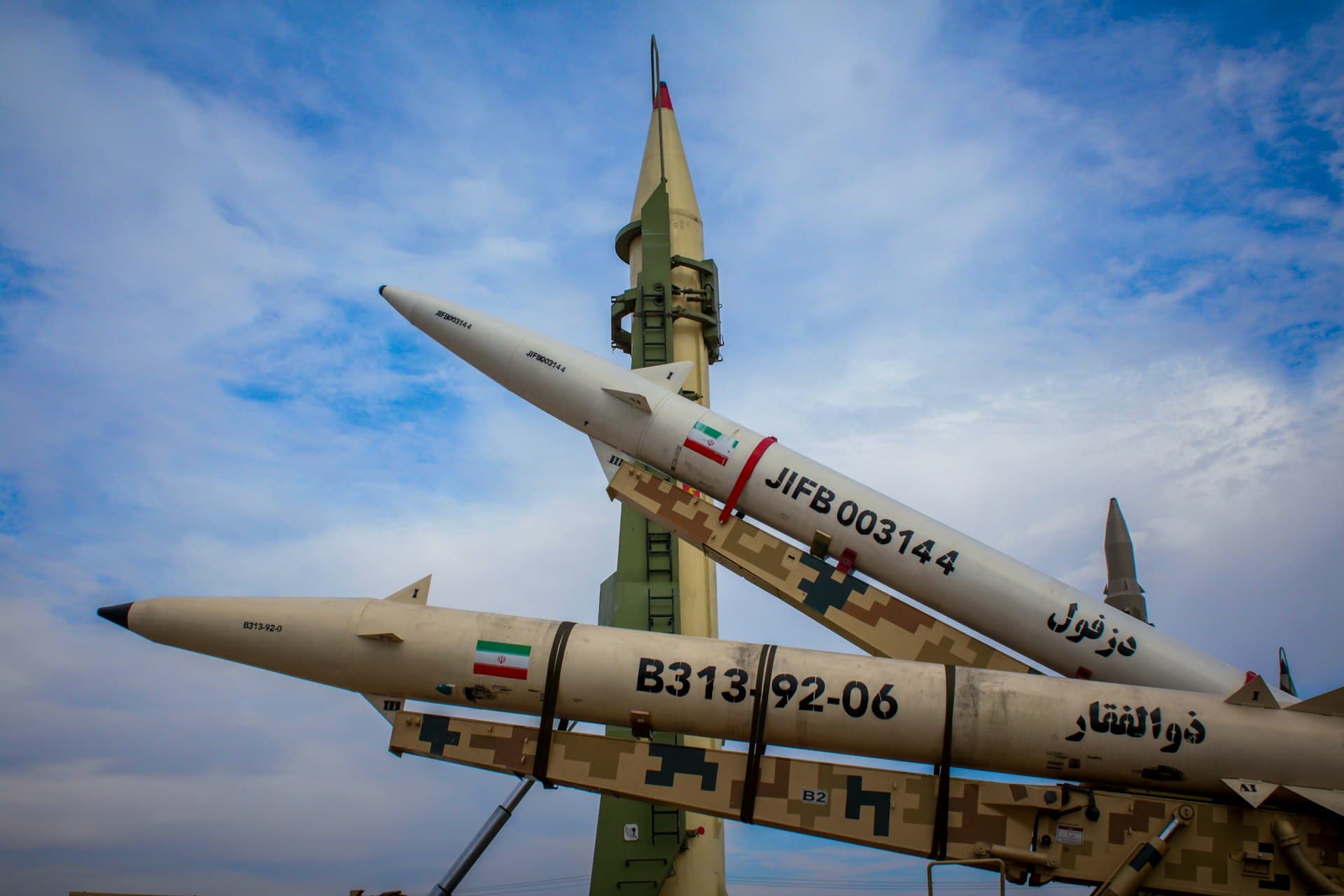
The Neurological War: How Precision Strikes Rewrote the...
The Board · Mar 27, 2026

Triple-Front Risk: US Iran Strategy and Global Security
The Board · Feb 14, 2026

Russia Photographed the Saudi Base Three Times Before...
The Board · Mar 30, 2026

A Russian Drone Hit NATO Territory This Week
The Board · Mar 26, 2026
Trending on The Board
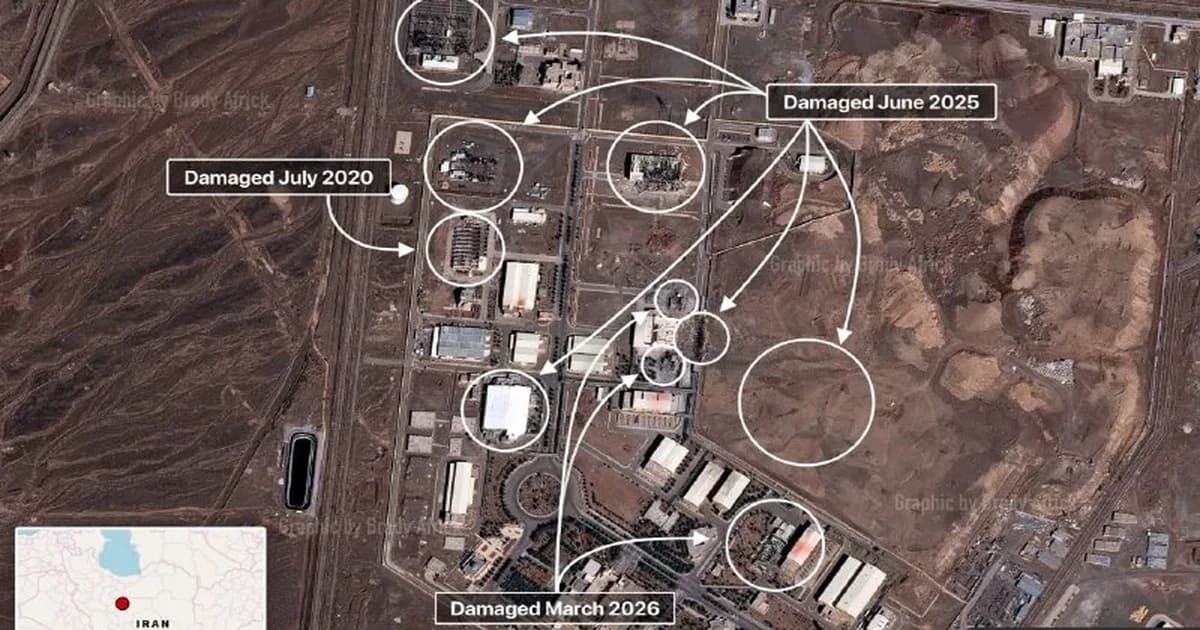
What Israel-Iran War Games Got Wrong About 2026
Defense & Security · Sep 6, 2026

Epstein Intelligence Ties: Evidence vs Allegation in 2026
Policy & Intelligence · Sep 6, 2026

China Imported 764 Tons of Gold in Six Months
Markets · Aug 20, 2026

The 'Muslim NATO' Fails Its First Test in 48 Hours
Geopolitics · Aug 27, 2026

Bitcoin $100K in 2026? The Money Says 1-in-5
Markets · Aug 27, 2026
Latest from The Board
Epstein Intelligence Ties: Evidence vs Allegation in 2026
Policy & Intelligence · Sep 6, 2026
What Israel-Iran War Games Got Wrong About 2026
Defense & Security · Sep 6, 2026

Central Banks Turned Gold Sellers. One Country Did It.
Markets · Aug 30, 2026

Schiff vs Saylor vs the Banks: Who Got 2026 Right?
Predictions · Aug 27, 2026

Silver Deficit 2026: BofA's $300 Target Explained
Markets · Aug 27, 2026

Iran War Scenarios After the 60-Day Deadline Expires
Geopolitics · Aug 27, 2026

Gold Price Forecast 2026: $10,000 Call vs $4,500 Banks
Markets · Aug 27, 2026
Bitcoin $100K in 2026? The Money Says 1-in-5
Markets · Aug 27, 2026