Executive Summary
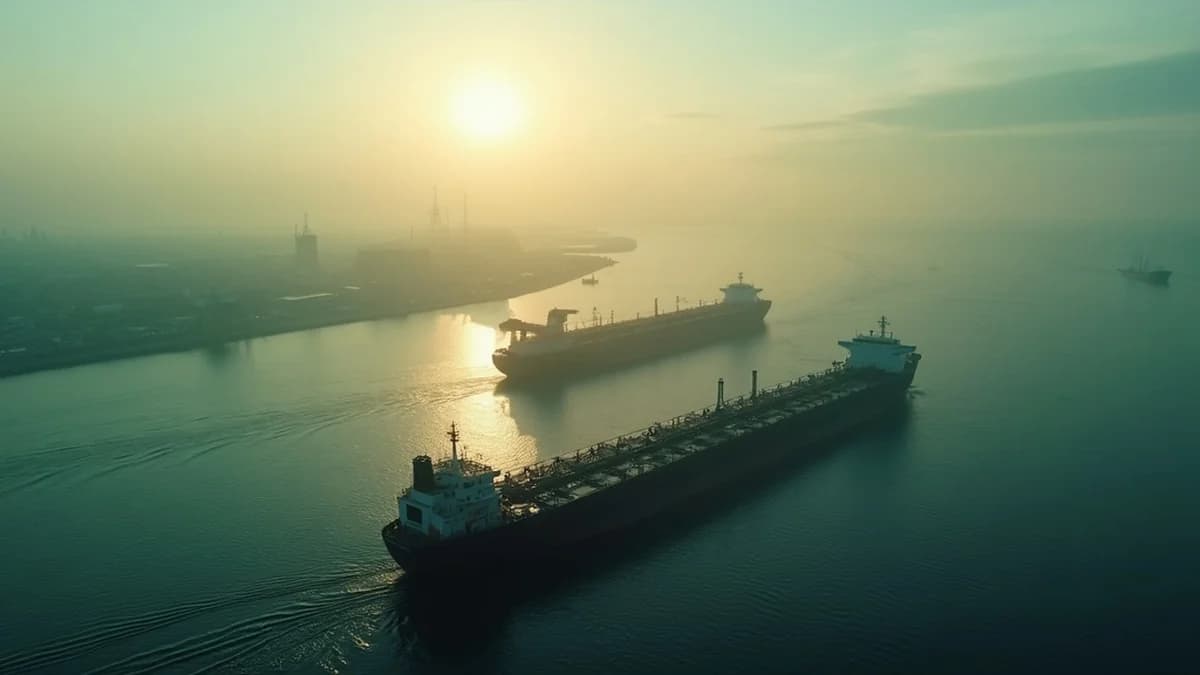
The 60-day sanctions waiver that Washington issued in late June 2026 — General License X, authorizing dollar payments for Iranian crude through August 21 — was supposed to be a lifeline for Tehran. Iran treated it that way, loading crude at a pace Nikkei Asia estimates could earn $8.5 billion and pushing exports through the Strait of Hormuz to a wartime high by late June. Yet by July 2, the trade had inverted: fully laden tankers are stacking up off the Chinese coast with no buyers. The mechanism is brutally simple. Sanctioned crude sells because it is cheap. A waiver that legitimizes dollar payments narrows the discount — and China's independent "teapot" refiners, who bought Iranian barrels only for that discount, have quietly stepped back. The instrument designed to help Iran monetize its oil may be destroying the one commercial advantage its oil ever had. Meanwhile Saudi Arabia has surged into the reopened strait — four Bahri supertankers carrying roughly 8 million barrels exited the Gulf — and crude prices have settled back to pre-war levels, with Brent August futures near $73.34 and WTI dipping below $70 before recovering toward $74.
The Waiver That Worked Too Well
General License X, issued around June 23, gave Iranian cargoes something they had not had in years: a legal channel for USD settlement. Tehran's response was immediate and rational — load everything. Export volumes through Hormuz hit levels not seen even during the shooting war, and President Pezeshkian publicly credited recent agreements with sustaining oil exports and easing financial restrictions.
But the waiver changed the pricing logic of the trade, not just its legality. For years, Iranian crude cleared the market through a shadow architecture — non-dollar settlement, obscured shipping, and above all a steep discount that compensated buyers for sanctions risk. Strip out the risk and the discount narrows with it. Iranian sellers, sensing legitimacy, priced closer to benchmark. And at near-benchmark prices, Iranian crude is just crude — competing head-on with Saudi, Iraqi, and Russian barrels, without the logistics networks, term contracts, or quality guarantees the majors offer.
Teapots Don't Buy Legitimacy — They Buy Discounts
China's independent refiners in Shandong were never ideological customers. They are margin machines: small, privately run plants that survive on cheap feedstock, and Iranian crude's discount was their edge against state-owned competitors. Per Nikkei Asia's reporting, the narrowed discount is precisely why they have stopped bidding. The waiver removed the compensation without removing the complications — teapots still face domestic quota constraints, and in seven weeks the license expires anyway.
That expiry date matters more than the license itself. A 60-day window is too short to build a legitimate trade and long enough to break the illegitimate one. No refiner restructures payment channels, insurance, and term supply around an authorization that dies on August 21. So the teapots wait — and the tankers sit. The result is the image now defining this market: full VLCCs idling off China, cargo loaded under a waiver, unsellable at waiver-era prices.
Riyadh Takes the Lane
While Iran's barrels float, Saudi Arabia's move. The reopening of Hormuz released a surge of Saudi supply — four Bahri supertankers, roughly 8 million barrels, exiting the Gulf in short order, the largest crude flow through the strait since the US-Iran truce. This is the second blade of the scissors closing on Tehran: just as Iranian crude lost its price advantage, the market was flooded with fully legitimate, fully insured, term-contracted alternatives.
The price action confirms the glut dynamic. WTI's slide below $70 in late June, its recovery toward $74, and Brent holding near $73.34 all point to a market that has fully unwound its war-risk premium. Oil at pre-war levels means every seller competes on fundamentals — the single worst environment for a producer whose only differentiator was a risk discount that no longer exists.
The Structural Read: Sanctions Relief as a Trap
Cross-referencing the export surge, the floating inventory build, and the teapot pullback yields a conclusion that quantitative modeling of discount elasticity supports: Iranian crude demand was a function of the discount, not of the oil. Relief that compresses the discount compresses demand with it.
This creates a genuinely perverse endgame. If Iran holds near-benchmark pricing, cargoes float unsold and the $8.5 billion stays theoretical. If Iran restores the deep discount to move volume, it forfeits most of the waiver's financial benefit — selling legally but cheaply, which is roughly where it started. And when General License X lapses on August 21, any buyer who re-entered the trade faces renewed exposure, likely demanding an even steeper discount than before as compensation for whiplash risk.
The signal for markets watchers: track the floating storage off Shandong and the offer prices on Iranian grades through early August. A sudden re-widening of the discount would confirm Tehran has capitulated to its own market structure. Prediction markets and multi-source corroboration both suggest the waiver is more likely to expire quietly than be extended — which would leave Iran with the worst of both worlds: a broken shadow trade, a failed legitimate one, and Saudi barrels occupying the lane it vacated.
The paradox is complete. Washington's most conciliatory oil move of 2026 may prove more commercially damaging to Iran than the sanctions it suspended — because you cannot legitimize a product whose entire value proposition was illegitimacy.
Related Analysis
- Gold Forecast 2026-2027: Central Bank Record Buying
- Bitcoin ETF Flows April 2026: Fund-by-Fund Breakdown
- Salesforce's Agentforce Math Has a Fatal Flaw
- Powell Spoke at Harvard Today. The Bond Market Did Not...
- Turkey Dumped More Gold in Two Weeks Than Every ETF on Earth Combined
- Trump Iran Deal Stalemate: Naval Blockade Impact
- US-Iran Talks: What's at Stake for the US?
- Strait of Hormuz Blockade: Is Iran Provoking War?
Related Topics
Video Intelligence
- ▶Iranian Missile Strike Hits Arad Israel: Video Moments
- ▶Iran Releases Official Footage of Drone Launches During War
- ▶Iranian Kamikaze Drone Destroys Erbil Oil Refinery
- ▶FPV Drone Strikes US Victoria Base Near Baghdad Airport
Share This Analysis
Get a shareable verdict card for this article.
Get the next one first
Free briefings when we publish major outlooks and forecasts. No spam — unsubscribe anytime.
Related Analysis

2026 Economic Crisis: Why Central Banks May Fail
The Board · Feb 22, 2026

Copper Price Forecast 2029-2031: Supply vs Green Demand
The Board · Feb 22, 2026

US Inflation Outlook and Fed Interest Rate Strategy
The Board · Feb 20, 2026

Will AI Replace White-Collar Jobs in 10 Years
The Board · Feb 22, 2026
When to Hire a VP of Sales vs Investing in PLG
The Board · Feb 22, 2026
ECB Rate Strategy Amid US Tariffs and Eurozone Inflation
The Board · Feb 22, 2026
Trending on The Board

79 Years of UFO Lies, Roswell to the Pentagon
Defense & Security · Sep 29, 2026

How CENTCOM Is Brokering an Israel-Saudi Pact
Defense & Security · Sep 19, 2026

Why the Pentagon Pulled Its Iran War Plans Offline
Defense & Security · Sep 19, 2026
How a Stablecoin Funded Moldova's 2026 Election
Geopolitics · Sep 19, 2026

The Hidden Gold Demand Behind the $6,000 Target
Markets · Sep 17, 2026
Latest from The Board
79 Years of UFO Lies, Roswell to the Pentagon
Defense & Security · Sep 29, 2026
How CENTCOM Is Brokering an Israel-Saudi Pact
Defense & Security · Sep 19, 2026
Why the Pentagon Pulled Its Iran War Plans Offline
Defense & Security · Sep 19, 2026
How a Stablecoin Funded Moldova's 2026 Election
Geopolitics · Sep 19, 2026
The Hidden Gold Demand Behind the $6,000 Target
Markets · Sep 17, 2026
Houthis Take Perim as Saudis Halt Pipeline 2026
Geopolitics · Sep 13, 2026

Epstein Intelligence Ties: Evidence vs Allegation in 2026
Policy & Intelligence · Sep 6, 2026
What Israel-Iran War Games Got Wrong About 2026
Defense & Security · Sep 6, 2026