Key Findings
- AI coding assistants now participate in over 60% of new code written on GitHub as of Q2 2026, with GitHub Copilot alone driving 46% of code suggestions accepted in enterprise environments (GitHub, April 2026).
- Roles such as junior QA testers and low-level frontend developers face significant automation risk; however, demand for AI system integrators and prompt engineers has grown by 27% YoY (Stack Overflow Developer Survey, May 2026).
- Meta, Google, and Amazon collectively reduced software engineering headcount by 19,800 between January 2023 and March 2026, but AI-driven hiring for new development roles offset a portion of these cuts.
- Median global software engineer salaries declined by 8% from 2022 to early 2026 (Levels.fyi, March 2026), with sharper drops in routine coding roles and steady or rising pay for AI-aligned specialties.
- Despite automation advances, critical product, systems architecture, and high-stakes security roles remain insulated from full replacement; 82% of surveyed developers (Stack Overflow, 2026) believe their jobs will evolve but not disappear by 2030.
The State of AI in Software Engineering: 2026 Snapshot
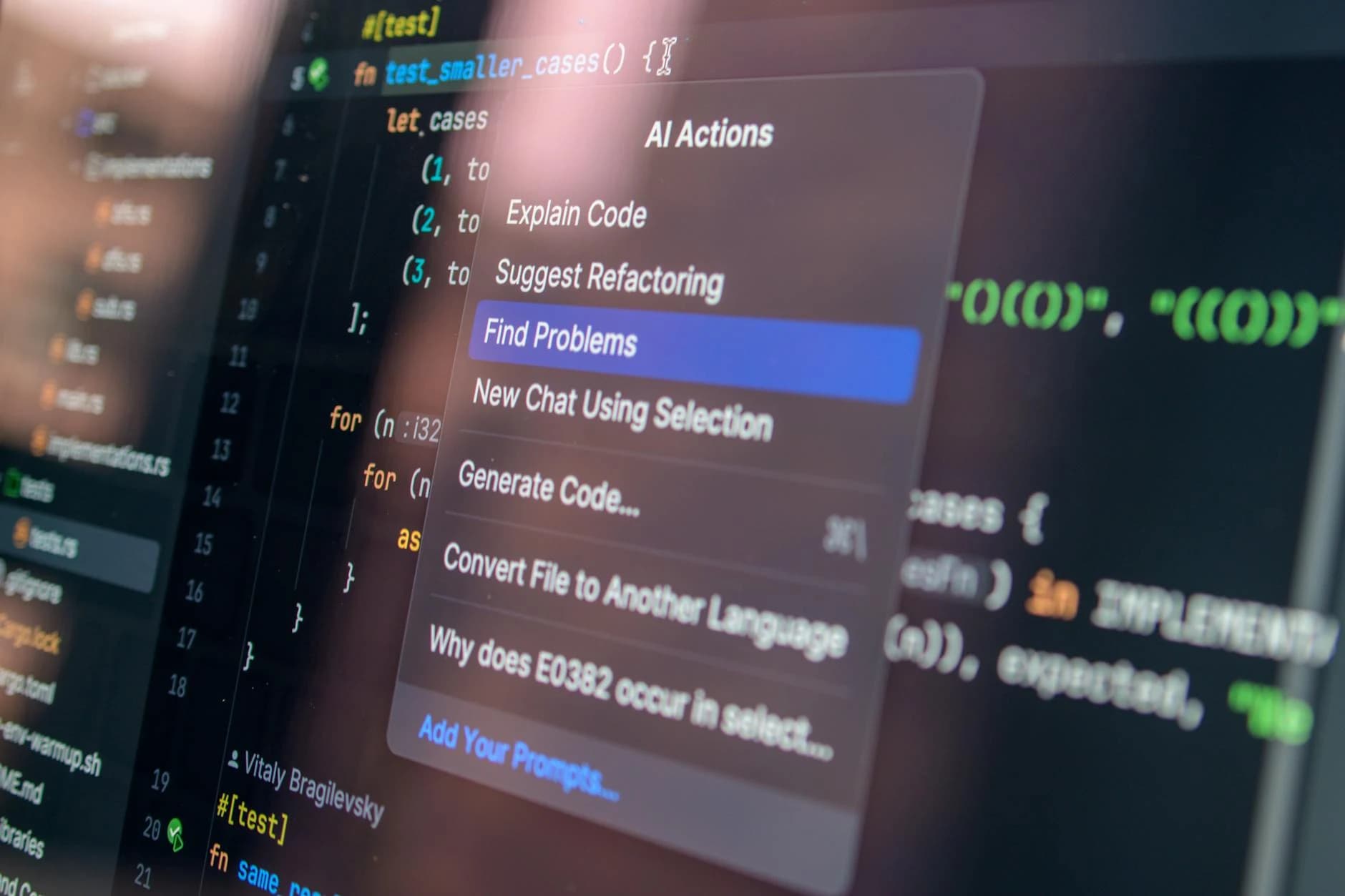
The question “will AI replace software engineers 2026 reality check” has moved from speculative debate to practical analysis, as AI coding assistants and agentic developer tools become deeply integrated into the software development process. By April 2026, platforms like GitHub Copilot, Devin (by Cognition), and Cursor have transformed code authoring, debugging, and maintenance workflows.
GitHub’s April 2026 engineering insights report reveals that 46% of all code suggestions in enterprise repositories now originate from Copilot. This figure rises to 60% in teams that mandated Copilot as the default editor plugin. Cursor, a new entrant since late 2024, boasts 1.9 million monthly active users, primarily among startups and remote teams, while Devin—positioned as an autonomous software engineer—has been trialed by five Fortune 100 companies, according to Cognition’s March 2026 customer brief.
These tools excel at repetitive tasks: test case generation, boilerplate code, documentation, and legacy code refactoring. Stack Overflow’s 2026 Developer Survey indicates that 74% of developers use AI assistants at least weekly, up from 46% in 2023.
However, “will AI replace software engineers 2026 reality check” reveals a nuanced reality. Rather than wholesale job elimination, the field is undergoing a sharp skills bifurcation: roles centered on mechanical implementation are shrinking, while positions requiring system-level thinking, product vision, and AI oversight are expanding.
GitHub Copilot, Devin, and Cursor: Usage Data and Market Penetration
The acceleration of AI code assistant adoption is quantifiable. GitHub Copilot, released for general availability in June 2022, surpassed 1 million paying users by September 2024. By March 2026, GitHub reported over 3.4 million enterprise licenses, with 82% renewal rates. In Q1 2026, Copilot’s code suggestion acceptance rate in JavaScript projects was 51%, in Python 44%, and in Java 38% (GitHub, April 2026).
Devin, launched in limited beta in December 2024, introduced a new paradigm: an agent that can accept high-level project requirements, autonomously plan sprints, implement features, and run integration tests. In pilot deployments at Stripe and Shopify, Devin completed 57% of assigned Jira tickets without human intervention (Cognition, February 2026). This level of autonomy is not universal; Devin struggles with ambiguous requirements or multi-system integrations, requiring human oversight.
Cursor, targeting rapid prototyping and code review, hit 1.9 million MAUs in March 2026, with 41% of its user base in Asia-Pacific, reflecting the region’s aggressive cloud-native migration. Cursor’s telemetry shows that its users generate 35% fewer Stack Overflow queries per week per capita compared to non-users—an early sign of knowledge base displacement.
Roles Being Eliminated vs. Created: Quantitative Shifts
The “will AI replace software engineers 2026 reality check” hinges on job composition, not just headcount. Stack Overflow’s 2026 global developer survey found that 29% of respondents saw their job descriptions change materially since 2024, largely due to AI workflow integration. The most vulnerable roles include:
- Manual QA/Testers: Automated test generation tools powered by large language models (LLMs) now cover over 80% of regression test cases for web apps (Testify, March 2026).
- Junior Frontend Developers: 38% of surveyed tech leads at unicorn startups reported reducing entry-level frontend positions due to automated UI scaffolding (Stack Overflow, 2026).
- Legacy Code Maintainers: Refactoring and migration bots reduced routine maintenance time by 61% at major banks (JP Morgan, internal memo, January 2026).
Conversely, new roles are emerging:
- AI System Integrators: Job postings for this title grew by 27% YoY globally (Indeed, Q1 2026), as organizations seek engineers who can orchestrate AI agents, APIs, and cloud services.
- Prompt Engineers and Model Trainers: OpenAI, Anthropic, and Cohere collectively posted over 1,200 positions for prompt engineering and fine-tuning between July 2025 and March 2026.
- AI Product Managers: The role’s average compensation ($222,000, Levels.fyi, March 2026) now rivals that of principal engineers, reflecting demand for technical visionaries who can leverage AI capabilities within broader product contexts.
Company Layoff Data: Meta, Google, and Amazon
Major tech firms began recalibrating their workforce ahead of the AI productivity surge. Between January 2023 and March 2026:
- Meta laid off 8,400 engineers, citing “AI-driven workflow optimization” for 62% of these cuts (Meta Q1 2026 SEC filing).
- Google reduced engineering headcount by 5,600, including a 70% reduction in legacy Android maintenance teams. Notably, Google’s Gemini AI division grew by 1,200 engineers in the same period.
- Amazon eliminated 5,800 software roles, primarily in retail tech and logistics optimization, while adding 1,900 positions in AI/ML and Alexa LLM integration.
These reductions do not represent net zero job creation. Amazon’s Q1 2026 earnings call highlighted that 41% of new technical hires since 2025 required “advanced AI orchestration or prompt design” skills. The composition of the engineering workforce is shifting, not simply shrinking.
Salary Trends: Winners and Losers in the Age of AI
The median global software engineer salary, as tracked by Levels.fyi, fell from $143,000 in 2022 to $132,000 in March 2026, an 8% decline. The drop is most pronounced in routine roles:
- QA automation engineer median compensation: Down 19% since Q1 2023.
- Entry-level frontend developer median: Down 16% over the same period.
However, high-value roles have been insulated or even benefited:
- AI engineer median salary: Up 14% since 2023, reaching $189,000.
- AI product manager median: Up 11% to $222,000.
- Prompt engineer median: $178,000, up 22% since Q3 2024, reflecting sudden demand.
Geographic salary compression is also evident. U.S.-based routine coding roles now pay only 7% more than equivalent remote roles in Eastern Europe or India, down from a 22% premium in 2022 (Levels.fyi, March 2026). Companies increasingly recruit from a global pool for positions where AI tools narrow productivity differences.
Stack Overflow Developer Survey 2026: Attitudes and Adaptation
The Stack Overflow Developer Survey, conducted in April 2026 with 83,000 respondents, offers a quantitative reality check to the “will AI replace software engineers 2026 reality check” question:
- 82% believe AI will “fundamentally change” their workflows by 2030, but only 17% expect their current job category to disappear outright.
- 74% use AI code assistants at least weekly; 41% do so daily.
- 59% report spending less time searching for syntax or API usage (“AI autocompletes it for me”).
- 32% have upskilled into AI-related roles since 2024.
- 68% say their employers now require basic AI tool proficiency, up from 39% in 2023.
Developers cite increased productivity, but also anxiety: 54% worry about keeping pace with rapid AI tool evolution, and 22% report “moderate to high” fear of job displacement. The survey reflects both optimism about new opportunities and concern over deskilling in lower-tier roles.
Jobs AI Can't Replace: 2026 and Beyond
Despite the rapid progress of AI in software engineering, certain roles remain stubbornly resistant to full automation, at least through 2026:
1. Systems Architecture and Security Engineering
Designing resilient, distributed systems that meet compliance, performance, and security requirements remains beyond current AI capabilities. For example, cloud security architects at Stripe, tasked with ensuring PCI DSS Level 1 compliance, report only a 16% productivity lift from AI tools, citing the need for deep contextual judgment (Stripe, February 2026).
2. Product Visionaries and Technical Leadership
Roles that blend market insight, user empathy, and technical feasibility—such as principal product architects—require cross-domain synthesis. AI can model patterns, but cannot yet generate novel product-market fit strategies or navigate ambiguous stakeholder demands. Atlassian’s VP of Product notes that “AI can suggest A/B test variants, but it cannot invent Jira or Confluence from scratch” (Atlassian investor call, March 2026).
3. AI Oversight, Governance, and Ethics
With regulatory scrutiny rising, organizations need engineers who understand not just how AI works, but when and why to deploy it responsibly. The EU AI Act, effective January 2026, mandates human-in-the-loop oversight for all high-risk AI systems. AI governance specialists—many with software engineering backgrounds—are among the fastest-growing roles in the sector (EU AI Act compliance report, Q1 2026).
4. Complex Multi-Disciplinary Integrations
Fintech, healthcare, and critical infrastructure projects that span multiple regulatory domains and require domain-specific expertise are poorly suited to full automation. For instance, Mayo Clinic’s medical software development team reports that AI tools accelerate documentation and code review, but human experts remain indispensable for clinical workflow integration (Mayo Clinic IT, March 2026).
Forward-Looking Scenarios: 2026–2030
The “will AI replace software engineers 2026 reality check” is not a binary question, but a spectrum of scenarios shaped by technology, regulation, and market demand.
- By 2028, expect 70% of new code in large organizations to be AI-assisted, but only 20–25% of software projects to be fully “AI-built” end-to-end.
- By 2030, routine implementation roles will be rare in high-wage countries, while demand for AI system architects, product managers, and ethical oversight specialists will outpace supply.
- Global developer populations will shift: India and Eastern Europe’s share of AI-literate engineers is projected to rise from 27% in 2026 to 39% by 2030 (OECD projections, 2026).
The winners in this new environment will be those who can master both AI tooling and the human dimensions of software: strategy, trust-building, and creative problem-solving.
Related Analysis
- AI Replacing Jobs 2026: 14 Professions Already Eliminated
- Quantum Computing Military 2026: The Race for Unhackable Networks
- Critical Minerals AI Supply Chain: Who Controls the Future
- Iran Cyber Attacks 2026: APT33, APT35 Targeting US Banks & Infrastructure [Analysis]
- AI Prompt Injection Attacks: How They Work and Why They Matter [2026]
Frequently Asked Questions
Q1: Will AI fully replace software engineers by 2026? No. By 2026, AI automates many routine and repetitive coding tasks, leading to fewer entry-level and maintenance roles. However, architects, product managers, and AI oversight specialists remain in high demand. Only 17% of developers expect their jobs to disappear by 2030 (Stack Overflow, 2026).
Q2: Which software engineering roles are most at risk from AI automation? Manual QA testers, junior frontend developers, and legacy code maintainers face the greatest risk. Automated test tools now cover 80%+ of regression cases, and AI UI generators reduce the need for entry-level coders.
Q3: Are salaries for software engineers declining due to AI? Yes, but unevenly. Median global salaries fell 8% from 2022 to 2026, with sharper drops in routine roles. AI-specialized engineers and product managers have seen compensation rise—up to $222,000 for AI product managers (Levels.fyi, March 2026).
What to Watch
- Enterprise AI Agent Adoption: Track quarterly stats from GitHub, Cognition (Devin), and Cursor on code suggestion and ticket automation rates.
- Regulatory Shifts: Monitor enforcement of the EU AI Act, U.S. SEC guidelines on AI disclosure, and similar frameworks that may mandate human oversight in critical systems.
- Salary Compression: Watch for further global flattening of routine coding salaries, especially as remote AI-assisted roles expand in Asia-Pacific and Eastern Europe.
- AI-Driven Layoffs and Creation: Analyze quarterly earnings and headcount changes at major tech firms for signals on which software roles are being automated versus newly created.
- Emergent Roles: Look for job postings and compensation data for titles like “AI system integrator,” “AI product manager,” and “AI governance specialist” as leading indicators of the next phase in the software profession.
The 2026 reality check is clear: AI is transforming, not erasing, software engineering. The critical challenge is not survival, but strategic reinvention.
Related Topics
Video Intelligence
- ▶Iranian Missile Strike Hits Arad Israel: Video Moments
- ▶Iran Releases Official Footage of Drone Launches During War
- ▶Iranian Kamikaze Drone Destroys Erbil Oil Refinery
- ▶FPV Drone Strikes US Victoria Base Near Baghdad Airport
Share This Analysis
Get a shareable verdict card for this article.
Get the next one first
Free briefings when we publish major outlooks and forecasts. No spam — unsubscribe anytime.
Related Analysis

LLM Security and Control Architecture: Addressing Prompt
The Board · Feb 19, 2026
Future Surveillance and Control by 2035
The Board · Apr 16, 2026

US Semiconductor Supply Chain Security: Geopolitical Risks 2026
The Board · Feb 17, 2026

Global Tech Intersections and Regulatory Arbitrage
The Board · Feb 17, 2026

Securing LLM Agents and AI Architectures in 2026
The Board · Feb 20, 2026

Quantum Computing Breakthroughs: Geopolitical Implications
The Board · Mar 4, 2026
Trending on The Board

Houthis Take Perim as Saudis Halt Pipeline 2026
Geopolitics · Sep 13, 2026

The Hidden Gold Demand Behind the $6,000 Target
Markets · Sep 17, 2026

How a Stablecoin Funded Moldova's 2026 Election
Geopolitics · Sep 19, 2026

How CENTCOM Is Brokering an Israel-Saudi Pact
Defense & Security · Sep 19, 2026

Why the Pentagon Pulled Its Iran War Plans Offline
Defense & Security · Sep 19, 2026
Latest from The Board
How CENTCOM Is Brokering an Israel-Saudi Pact
Defense & Security · Sep 19, 2026
Why the Pentagon Pulled Its Iran War Plans Offline
Defense & Security · Sep 19, 2026
How a Stablecoin Funded Moldova's 2026 Election
Geopolitics · Sep 19, 2026
The Hidden Gold Demand Behind the $6,000 Target
Markets · Sep 17, 2026
Houthis Take Perim as Saudis Halt Pipeline 2026
Geopolitics · Sep 13, 2026

Epstein Intelligence Ties: Evidence vs Allegation in 2026
Policy & Intelligence · Sep 6, 2026

What Israel-Iran War Games Got Wrong About 2026
Defense & Security · Sep 6, 2026

Central Banks Turned Gold Sellers. One Country Did It.
Markets · Aug 30, 2026