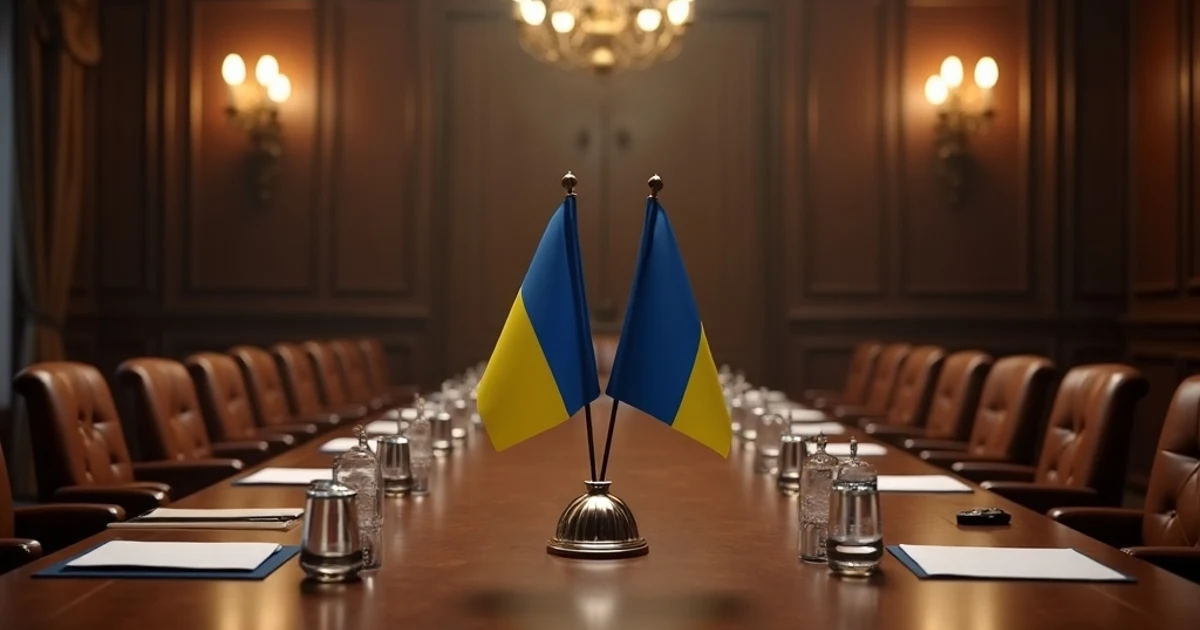
I have synthesized the full record of the panel. Here is the verdict.
EXECUTIVE SUMMARY
The panel largely agrees that neither side can achieve decisive military victory, making this a contest of exhaustion. However, a stable end within 24 months is unlikely (21-39%) under current leadership because both Putin and Zelenskyy face existential political threats from making the required concessions [ASSESSMENT]. The single set of conditions is a simultaneous leadership transition in Russia and a binding financial architecture that makes peace cheaper than war for the successor regime. The most important conclusion is: This war ends when a new Russian leader, unburdened by the invasion's narrative, faces a frozen-asset lever worth $300 billion and a domestic elite that has lost faith in victory.
KEY INSIGHTS
- Neither Russia nor Ukraine can achieve a decisive military breakthrough, making a negotiated settlement the only path, but current leaders are trapped by their own narratives. [HIGH]
- A Russian leadership transition within 12-18 months is the single highest-leverage event to break the deadlock, as a successor could frame territorial concessions as "loss minimization." [HIGH]
- $300 billion in frozen Russian reserves, returned conditionally for a verifiable ceasefire, is the most powerful financial tool to incentivize Moscow to negotiate in good faith. [HIGH]
- Tightening the oil price cap to $50/barrel could force Russia to choose between military spending and domestic stability, but this leverage disappears if Brent crude stays above $80. [MEDIUM]
- Ukraine's drone revolution extends the war tactically but does not change the strategic stalemate required for a settlement. [MEDIUM]
- A direct US-Iran military conflict is the highest-impact external risk, as it could reconstitute Russia's "victim of the West" narrative and buy the regime 24-36 more months. [MEDIUM]
WHAT THE PANEL AGREES ON
- Neither side can achieve decisive military victory; the conflict is a stalemate of exhaustion.
- The war's end requires one or both current leaders to be replaced by figures who can credibly accept territorial concessions.
- Financial pressure—particularly frozen Russian reserves and tighter oil price caps—is a critical lever, but only effective if there is a willing counterparty in Moscow.
- The scaled-back Victory Day parade in Moscow is a key signal of internal regime stress and a failing narrative.
WHERE THE PANEL DISAGREES
- Cause of a settlement: Thiel argues leadership transition is the only variable that matters (causal). Bismarck and Morgan argue financial and alliance architecture can engineer conditions for a settlement (causal). This is a perspectival disagreement: both sides could be right sequentially—architecture creates leverage that a new leader can use. The evidence, per Thiel, that China has already rejected Western pressure [WIRE-2] weakens Bismarck's alliance thesis until direct enforcement is proven.
- Strength of the oil price cap lever: Morgan sees it as a major tool. Thiel and Toynbee implicitly treat it as secondary to political will. The disagreement is substantive: Morgan has specific pricing data ($25-30 billion revenue drop); the others have no counter-evidence, making Morgan's position stronger here.
THE VERDICT
Focus relentlessly on accelerating a leadership transition in Russia. Diplomatic and financial tools are necessary but insufficient—they create the pressure, but only a new Kremlin leader can accept the deal.
- First: Use the $300 billion frozen-reserve card as a public negotiating offer with a 12-month deadline: "Returned in full for a verifiable ceasefire and withdrawal to 2022 lines. Zero for continued war." This prices peace and war for the Russian elite.
- Second: Publicly signal receptivity to any Russian leadership figure who accepts that deal, reducing their political risk of being seen as "Western puppets."
- Third: Maintain oil price cap pressure but do not bet on it—it is temporary leverage, not a structural solution.
Decision Table: Bet on Leadership Transition
| Factor | For | Against | Weight |
|---|---|---|---|
| Leader trapped by own narrative | High (Putin cannot concede) | — | HIGH |
| $300B incentive viable for successor | High (new leader frames as "recovery") | — | HIGH |
| Oil price cap pressure | Medium (temporary) | Weak if oil >$80 | MED |
| Escalation risk (US-Iran) | — | Could reconstitute Putin's narrative | MED |
The verdict is determined by the high weight of the leadership trap factor. A new leader is necessary and, with the $300B incentive, may be sufficient.
RISK FLAGS
- Risk 1: US-Iran military conflict escalates.
- Likelihood: MEDIUM
- Impact: High — Russia's narrative resets; regime gets 24-36 more months.
- Mitigation: Establish a backchannel to Moscow signaling the US aims to contain Iran, not invade, reducing Putin's "anti-Western crusade" framing.
- Risk 2: China openly arms Russia.
- Likelihood: LOW
- Impact: Very High — Ukraine may be partitioned.
- Mitigation: Preempt with a public "red line" on Russian military aid to China's top trading partners.
- Risk 3: Ukraine's leadership collapses before Russia's.
- Likelihood: MEDIUM
- Impact: Ukraine forced into a bad deal.
- Mitigation: Offer Ukraine a NATO security guarantee as a bridge to negotiations, stabilizing Zelenskyy's domestic position.
BOTTOM LINE
The war ends when a Russian successor trades a frozen $300 billion reality for the narrative of a lost empire.
Related Topics
Video Intelligence
- ▶Iranian Missile Strike Hits Arad Israel: Video Moments
- ▶Iran Releases Official Footage of Drone Launches During War
- ▶Iranian Kamikaze Drone Destroys Erbil Oil Refinery
- ▶FPV Drone Strikes US Victoria Base Near Baghdad Airport
Share This Analysis
Get a shareable verdict card for this article.
Get the next one first
Free briefings when we publish major outlooks and forecasts. No spam — unsubscribe anytime.
Related Analysis

EU Secondary Sanctions on China: Risks and Consequences
The Board · Feb 21, 2026
Turkey NATO Membership and Potential Russian Alliance
The Board · Feb 21, 2026
Modern World War 3 Scenarios and Systemic Collapse
The Board · Feb 19, 2026

Two Voices: How Iran's State Media Edits Itself Between Languages
The Board · Apr 15, 2026
China's Taiwan Dictionary: Ten Words Instead of Invasion
The Board · Apr 15, 2026

Seven Days in Baghdad: The Kataib Hezbollah Anomaly
The Board · Apr 15, 2026
Trending on The Board
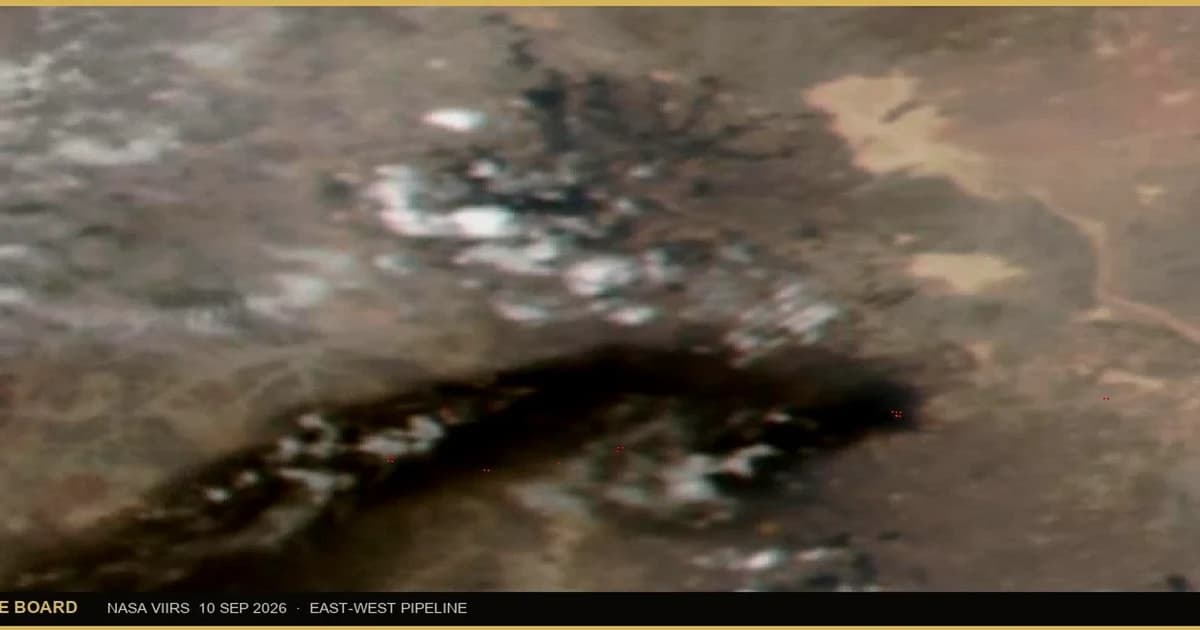
Houthis Take Perim as Saudis Halt Pipeline 2026
Geopolitics · Sep 13, 2026
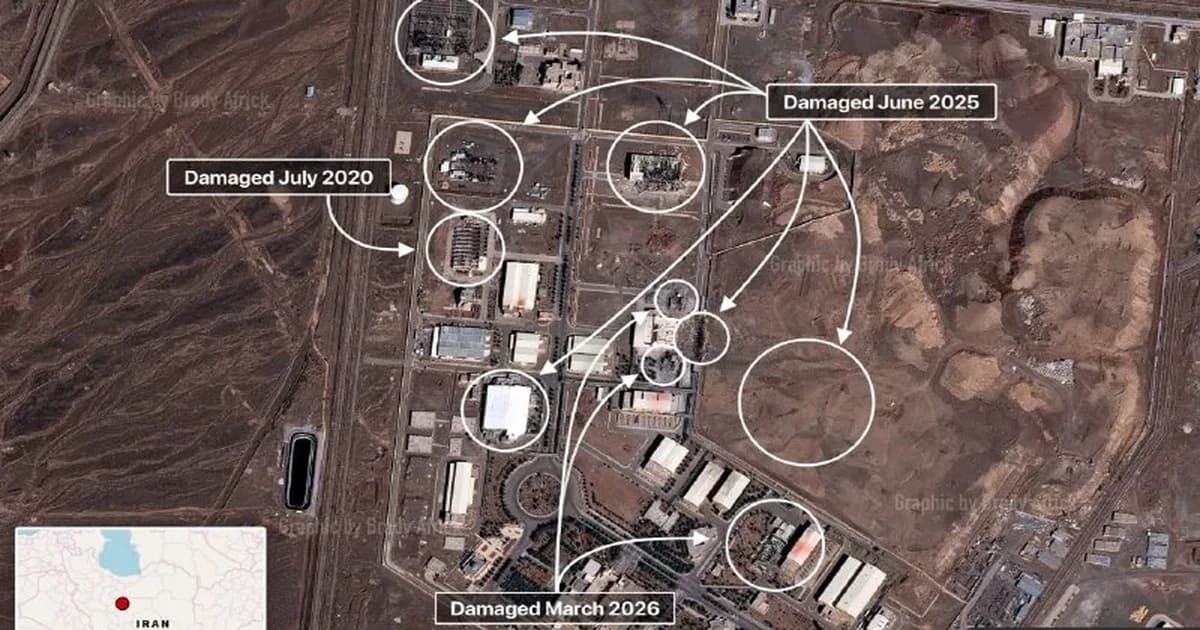
What Israel-Iran War Games Got Wrong About 2026
Defense & Security · Sep 6, 2026

Epstein Intelligence Ties: Evidence vs Allegation in 2026
Policy & Intelligence · Sep 6, 2026
China Imported 764 Tons of Gold in Six Months
Markets · Aug 20, 2026
The 'Muslim NATO' Fails Its First Test in 48 Hours
Geopolitics · Aug 27, 2026
Latest from The Board
Houthis Take Perim as Saudis Halt Pipeline 2026
Geopolitics · Sep 13, 2026
Epstein Intelligence Ties: Evidence vs Allegation in 2026
Policy & Intelligence · Sep 6, 2026
What Israel-Iran War Games Got Wrong About 2026
Defense & Security · Sep 6, 2026

Central Banks Turned Gold Sellers. One Country Did It.
Markets · Aug 30, 2026

Schiff vs Saylor vs the Banks: Who Got 2026 Right?
Predictions · Aug 27, 2026
Silver Deficit 2026: BofA's $300 Target Explained
Markets · Aug 27, 2026
Iran War Scenarios After the 60-Day Deadline Expires
Geopolitics · Aug 27, 2026
Gold Price Forecast 2026: $10,000 Call vs $4,500 Banks
Markets · Aug 27, 2026