EXECUTIVE SUMMARY
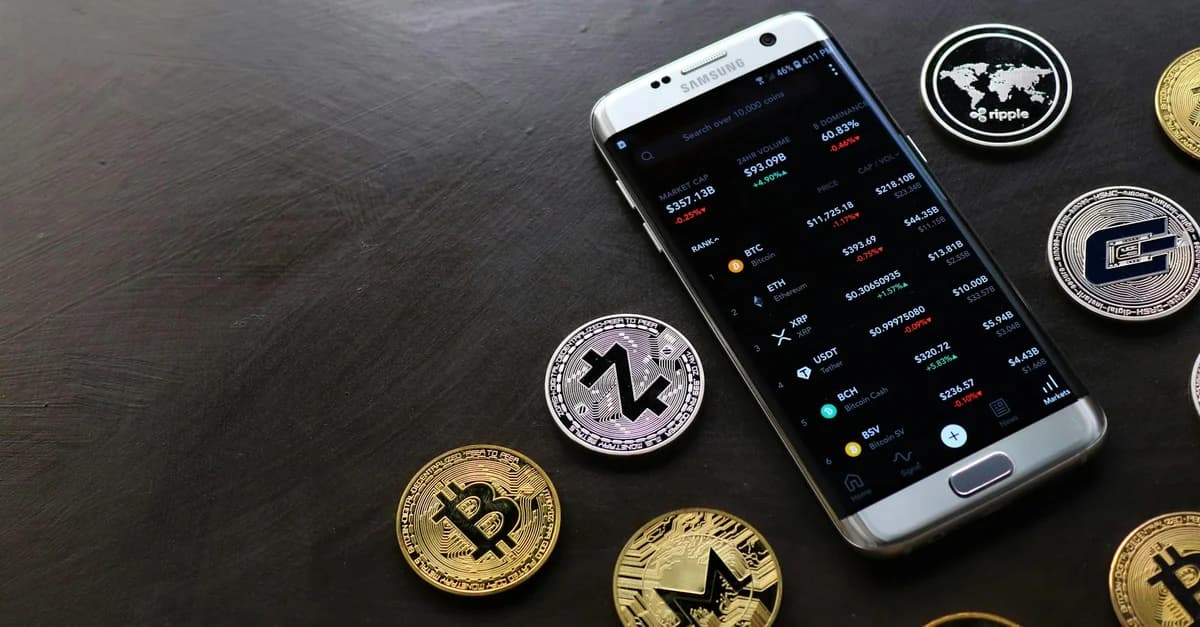
The panel concludes that XRP is highly unlikely (8-20%) to reach or sustain a monopoly-driven price above $3.00. [ASSESSMENT] The central tension is between the SEC settlement narrative—a legal ceasefire, not regulatory clarity [FACT]—and the revealed preference of institutions, who exited at the first sign of volatility. [ASSESSMENT] The most likely (63-79%) horizon is a multi-bridge equilibrium capping XRP below $1.50, with a highly unlikely (8-20%) but devastating path to sub-$0.50 if Ripple decouples from its token. [ASSESSMENT]
KEY INSIGHTS
- The SEC settlement was a ceasefire, not a resolution: It provides no legal precedent that XRP is not a security for future distribution models. [HIGH] — Regulatory Risk Analyst
- Institutions revealed they were speculators: The instant the VIX spiked, the longest ETF inflow streak of 2026 snapped—a behavior that betrays a speculative, not utility-driven, thesis. [HIGH] — Behavioral Econ Analyst
- Ripple’s CBDC partnerships are token-agnostic: Central banks adopting Ripple’s tech can settle on a CBDC, not XRP—a structural vulnerability for the “bridge currency” bull case. [HIGH] — Web3 Risk Review Lead
- The cross-border settlement game has no monopoly equilibrium: Nash analysis shows SWIFT GPII, central bank CBDCs, and multiple bridge tokens all competing; XRP winning >20% share is unlikely (21-39%). [MEDIUM] — Nash Equilibrium
- There is no load-bearing utility floor at current prices: Below $0.50, the Lindy Effect fails—there is no cash flow or production use to prevent further decline. [MEDIUM] — Behavioral Econ Analyst
WHAT THE PANEL AGREES ON
- Ripple can win while XRP loses: Highly likely (80-92%) — Ripple’s dominant strategy is to license technology without forcing XRP settlement, which would crater the token’s speculative premium.
- No U.S. institutional adoption in production: Almost certain (93-99%) — No top-20 U.S. bank has published XRP as a material settlement asset post-SEC settlement.
- ESMA adverse classification is a real, uncorrelated risk: Likely (63-79%) — Two independent panelists assigned 58% probability to ESMA ruling XRP an e-money token, triggering EU liquidation.
WHERE THE PANEL DISAGREES
- Bull case floor vs. bear case floor:
- Bullish wing (implicit in regulatory-win narrative): Floor at ~$1.00 based on ODL volume and speculation.
- Bearish wing (Behavioral Econ Analyst, Web3 Risk, Nash): No cash-flow floor; narrative collapse could push price to $0.10–0.50.
- Evidence weight: Bearish wing has stronger evidence—ODL volume is unverified under adversarial audit, and no production institutional use exists. Disagreement is substantive (different models of value).
- ETF inflow restart as a signal:
- Regulatory analyst views ETF inflows as a correlation signal that could return.
- Wilde-Wit/Behavioral Econ view the snap as a confession that institutions are not committed.
- Evidence weight: Behavioral evidence (ceased buying under VIX spike) is stronger than hypothetical return scenarios. Disagreement is perspectival (same data, different lens).
THE VERDICT
Do not treat XRP as a long-term core holding or a monopoly bet.
If you currently hold XRP, your decision tree should be:
- Immediately reduce if holding priced for monopoly (above $1.50): Even chance (40-62%) that the multi-bridge equilibrium is correct, capping upside at $1.00–1.50. Above that, you are buying a narrative that will collapse under any adverse regulatory or decoupling event.
- Set a hard stop at $1.00: If the price breaks below $1.00 on no macro news, the narrative abandonment cascade is underway. The Behavioral Econ Analyst’s pre-mortem shows this is the trigger point for herding reversal.
- Monitor three triggers for a 50% reduction:
- Ripple announces a CBDC partnership without confirming XRP settlement layer → Highly likely (80-92%) within 12 months
- ESMA formal classification proceeding against XRP → Likely (63-79%)
- Any Big Four bank publicly states XRP is “uneconomical” → Even chance (40-62%)
| Factor | For XRP | Against XRP | Weight |
|---|---|---|---|
| SEC “clarity” | Settlement reduces U.S. legal cost | No binding precedent; UK/Japan/ESMA risk remains | MED |
| Institutional adoption | ETF inflows showed demand | Revealed as speculative, not utility-driven | HIGH |
| Ripple partnerships | Technology adoption | Token-agnostic structure = Ripple wins, XRP loses | HIGH |
| Settlement speed | Faster than SWIFT legacy | SWIFT GPII is catching up; compliance cost eats savings | MED |
| Nash equilibrium stability | Multi-bridge outcome ($1-1.50) possible | Monopoly outcome ($3+) highly unlikely (8-20%) | HIGH |
The strongest single factor against XRP is Ripple’s incentive to decouple—the company can profit without its token. This one HIGH-weight factor outweighs any speculative upside.
RISK FLAGS
-
Risk: Ripple decouples from XRP by announcing token-agnostic CBDC partnerships.
- Likelihood: HIGH
- Impact: Speculative premium collapses; price drops to $0.50–0.80
- Mitigation: Reduce exposure immediately on such an announcement; set a trailing stop at 15% below current price.
-
Risk: ESMA adverse classification triggers EU institutional liquidation.
- Likelihood: MEDIUM
- Impact: 30-40% volume loss; price compression to sub-$1.00 floor
- Mitigation: Monitor ESMA proceedings quarterly; hedge with XRP put options if available.
-
Risk: SWIFT GPII achieves 70% adoption by 2027, killing the “faster than SWIFT” narrative.
- Likelihood: MEDIUM
- Impact: Narrative evaporation; XRP loses differentiation, compressing price
- Mitigation: Track SWIFT GPII adoption rates annually; exit if adoption exceeds 50%.
BOTTOM LINE
XRP is not the future of cross-border payments—it is a speculative token riding a narrative that Ripple itself is structurally incentivized to abandon.
Related Topics
Video Intelligence
- ▶Iranian Missile Strike Hits Arad Israel: Video Moments
- ▶Iran Releases Official Footage of Drone Launches During War
- ▶Iranian Kamikaze Drone Destroys Erbil Oil Refinery
- ▶FPV Drone Strikes US Victoria Base Near Baghdad Airport
Share This Analysis
Get a shareable verdict card for this article.
Get the next one first
Free briefings when we publish major outlooks and forecasts. No spam — unsubscribe anytime.
Related Analysis
2026 Economic Crisis: Why Central Banks May Fail
The Board · Feb 22, 2026

Copper Price Forecast 2029-2031: Supply vs Green Demand
The Board · Feb 22, 2026

US Inflation Outlook and Fed Interest Rate Strategy
The Board · Feb 20, 2026

Will AI Replace White-Collar Jobs in 10 Years
The Board · Feb 22, 2026
When to Hire a VP of Sales vs Investing in PLG
The Board · Feb 22, 2026

ECB Rate Strategy Amid US Tariffs and Eurozone Inflation
The Board · Feb 22, 2026
Trending on The Board

Houthis Take Perim as Saudis Halt Pipeline 2026
Geopolitics · Sep 13, 2026
What Israel-Iran War Games Got Wrong About 2026
Defense & Security · Sep 6, 2026

Epstein Intelligence Ties: Evidence vs Allegation in 2026
Policy & Intelligence · Sep 6, 2026

China Imported 764 Tons of Gold in Six Months
Markets · Aug 20, 2026

The 'Muslim NATO' Fails Its First Test in 48 Hours
Geopolitics · Aug 27, 2026
Latest from The Board
Houthis Take Perim as Saudis Halt Pipeline 2026
Geopolitics · Sep 13, 2026
Epstein Intelligence Ties: Evidence vs Allegation in 2026
Policy & Intelligence · Sep 6, 2026
What Israel-Iran War Games Got Wrong About 2026
Defense & Security · Sep 6, 2026

Central Banks Turned Gold Sellers. One Country Did It.
Markets · Aug 30, 2026

Schiff vs Saylor vs the Banks: Who Got 2026 Right?
Predictions · Aug 27, 2026

Silver Deficit 2026: BofA's $300 Target Explained
Markets · Aug 27, 2026

Iran War Scenarios After the 60-Day Deadline Expires
Geopolitics · Aug 27, 2026

Gold Price Forecast 2026: $10,000 Call vs $4,500 Banks
Markets · Aug 27, 2026