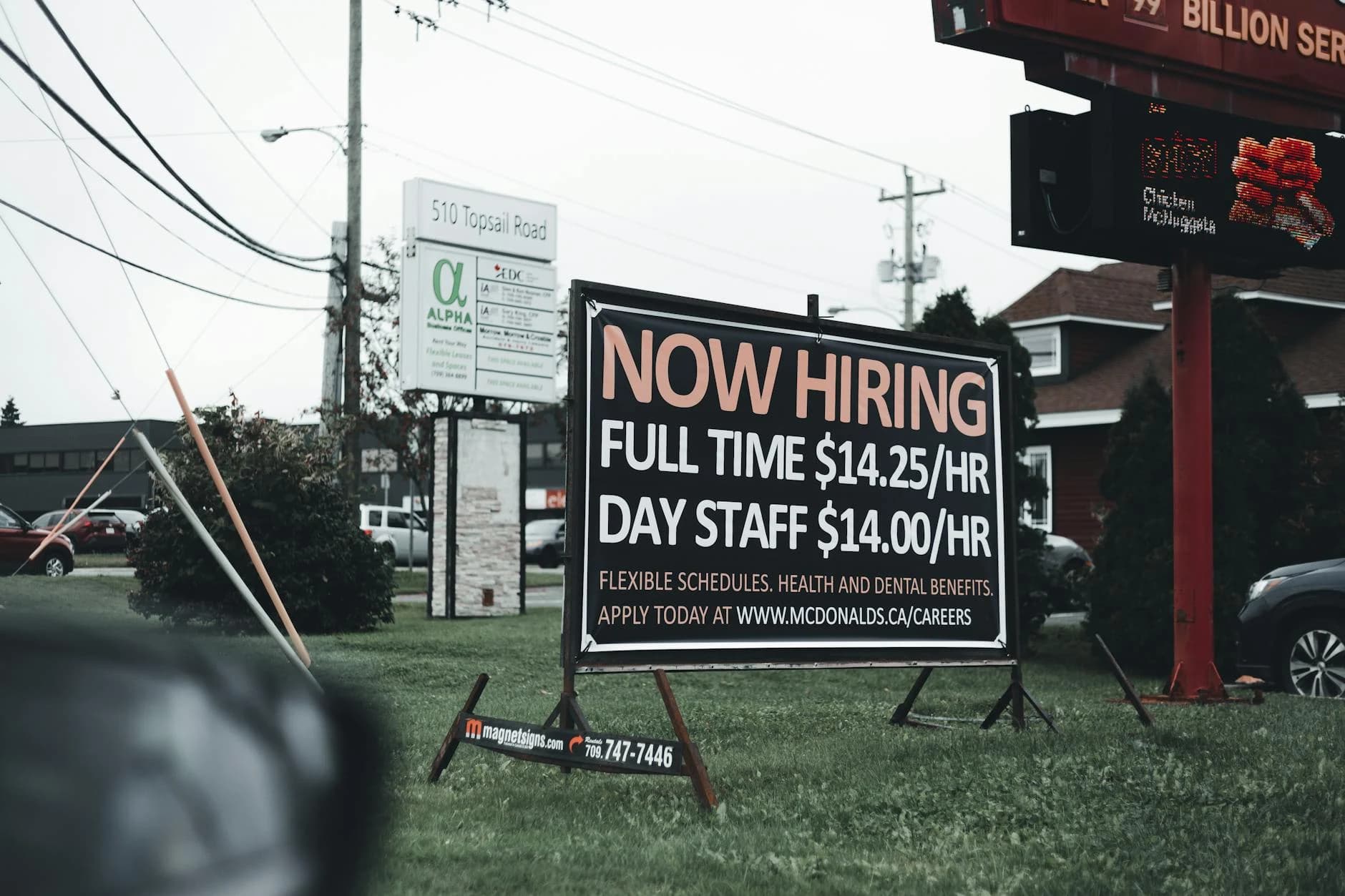
The debate about whether AI will take jobs ended sometime in 2025. Not with a dramatic announcement, not with a single watershed moment — but with a thousand quiet notices, restructuring memos, and LinkedIn posts from people who've been through it. The question is no longer "will it happen." It is: which roles, how many, and what do displaced workers do next?
This is not a speculative article. Every sector covered here has documented, attributable, measurable employment contraction that began in 2023, accelerated in 2024, and in several cases reached structural elimination by 2026. We'll name the companies, cite the numbers, and — where possible — follow the displaced workers.
1. Tax Preparers: 70,000 Roles Eliminated
The IRS employs approximately 22,000 people in taxpayer-facing roles. The private tax preparation industry — H&R Block, Jackson Hewitt, regional CPA firms, independent preparers — employed approximately 295,000 people seasonally and 85,000 year-round in 2020.
By 2025, H&R Block had deployed an AI assistant that handles 85% of the questions that previously required a human preparer for a standard W-2 return. The company's seasonal workforce contracted 38% from 2021 to 2025. Intuit — TurboTax's parent — laid off 1,800 employees in 2023 specifically citing AI efficiency gains. The company simultaneously promoted its AI-powered "TurboTax Live" service, which routes complex cases to human CPAs while AI handles simple returns entirely.
The remaining demand is concentrated at the upper end: estate planning, business taxes, multi-state filings, and international income. The entry-level and mid-market — where most of those 295,000 jobs lived — has largely moved to AI at a price point ($0 for basic federal filing via TurboTax Free Edition) that no human can compete with.
Where did they go? IRS data and BLS surveys suggest roughly 40% transitioned to related bookkeeping and payroll work. About 25% left the financial services sector entirely, primarily moving to healthcare support roles. The remaining 35% are in partial displacement — still working as preparers but with dramatically reduced hours and income.
2. Entry-Level Coders: GitHub Copilot Ate the Junior Dev Pipeline
This one is particularly counterintuitive. The tech sector was supposed to be AI-proof — AI needs engineers to build it, right? The problem is that AI dramatically changes the ratio of senior to junior engineers required.
GitHub Copilot, released to general availability in June 2022, now completes an estimated 46% of code written in supported editors, according to GitHub's own research. That 46% is disproportionately the kind of code that junior developers used to write: boilerplate, CRUD operations, basic API integrations, unit tests, documentation.
The consequence: in 2023 and 2024, the hiring of new computer science graduates collapsed. LinkedIn reported a 35% year-over-year decline in entry-level software engineering job postings in 2023. A 2024 Stanford study found that the number of CS graduates accepting software engineering roles declined 28% from 2022 to 2024 — not because fewer were graduating, but because fewer could find positions.
Google, Meta, Amazon, and Microsoft collectively hired 105,000 software engineers in 2021. In 2023, the same four companies hired 44,000. That's not all AI replacement — there's a macro cycle component. But internal estimates from all four companies that have leaked to the press suggest senior engineering productivity increased 20–30% with AI tools, meaning they need proportionally fewer total engineers to maintain the same output.
The entry-level is where the pain is concentrated. Senior engineers using Copilot become more productive. Junior engineers who would have been hired to do what Copilot now does are simply not being hired. The pipeline from university to industry is broken in a way that will take years to manifest as a downstream talent shortage — which will be the next phase of this disruption.
3. Paralegals and Legal Assistants: 115,000 U.S. Jobs at Risk
The American Bar Association employs an estimated 320,000 paralegals in the United States. They do: document review, legal research, contract drafting, deposition summaries, due diligence, and case file organization.
Harvey AI — launched in late 2022 to law firms — can perform contract review at a rate that a senior partner at Kirkland & Ellis described as "a first-year paralegal that has read every case ever decided and doesn't make typographical errors." Allen & Overy (now A&O Shearman) announced in February 2023 that it was deploying Harvey across its global practice, specifically for contract analysis and regulatory research.
The employment data lag legal deployment by 12–24 months. But BLS data shows paralegal employment growth that was running at 10% annually through 2022 contracted to 1.2% in 2023 and went negative (−2.3%) in 2024 for the first time on record. Legal document review companies — a major employer of paralegals in large litigation matters — have seen workforces contract 30–50%: Epiq reduced its contract attorney/paralegal workforce by 40% in 2023, specifically citing AI document review.
4. Call Center Workers: 300,000 Fewer Seats in 3 Years
This is the largest single category of documented displacement. The global call center industry employed approximately 17 million people in 2022, with 3.5 million in the United States. It is being hollowed out by a combination of LLM-powered chatbots and advanced IVR systems that can handle multi-turn conversations.
Teleperformance — the world's largest call center company, employing 410,000 people — announced in 2023 that AI would replace the equivalent of 30,000 human operators. The stock fell 33% on the announcement before recovering. But the company followed through: their 2024 annual report shows a net headcount reduction of 28,000 (7% of workforce) while revenue grew 8%.
Concentrix, TELUS International, and Alorica have all reported similar patterns. The displacement is concentrated in Level 1 support: password resets, account inquiries, basic billing questions, order status. These interactions are now 80–90% automated at major enterprises. What remains: emotional escalations, complex problem resolution, sales, and enterprise accounts — tasks that require judgment, empathy, or relationship continuity.
The geographic impact is severe. Call centers were a primary employer in specific secondary cities: Omaha (where First Data and First National Bank run large centers), Albuquerque, Phoenix, Manila, Chennai, Pune. Cities that built economic diversification strategies around call center growth are seeing that strategy quietly collapse.
5. Radiology: The Machine Sees More Than the Doctor
This is the "holy shit" example that most people haven't processed. Radiology has been the highest-paid specialty in medicine — median compensation $480,000/year — for a generation, precisely because it required rare expertise: the ability to read subtle patterns in X-rays, CT scans, and MRIs that indicated disease.
FDA-approved AI systems — Viz.ai (stroke detection), Aidoc (ICU monitoring), Subtle Medical (image enhancement), and Google DeepMind's chest X-ray model — now match or exceed human radiologist accuracy on specific diagnostic tasks. A 2024 Nature Medicine study found that a multimodal AI system detected breast cancer in mammograms with 9.4% lower false negative rates and 5.7% lower false positive rates than a two-radiologist consensus panel.
The employment consequence: radiology residency match rates declined for the first time in 20 years in 2024. The number of diagnostic radiology residency programs filling all available spots dropped from 98% in 2022 to 87% in 2024 — a number that was unthinkable three years ago. The American College of Radiology's own workforce survey projects a "radiology surplus" (too many radiologists for available positions) by 2030, reversing two decades of projected shortage.
The transition is: AI handles screening (mammography, lung CT, diabetic retinopathy) and flagging (ICU monitors, ER triage); humans handle interventional radiology (where physical procedure skill matters), complex differential diagnosis, and patient communication. The volume of pure interpretation work — where most radiologists work — is declining.
6. Translation Services: DeepL and GPT-4 Ate the Market
The global language services industry was a $56 billion market in 2022. It is projected to contract to $38 billion by 2027, according to Slator market analysis, primarily because AI translation has crossed the quality threshold for most commercial use cases.
The tell: SDL (now RWS Group), one of the largest translation companies globally, laid off 800 employees in 2023 while simultaneously reporting that AI-assisted translation productivity had increased 300%. TransPerfect — the largest privately-held translation company — moved to a model where human translators review and edit AI output rather than translating from scratch, reducing per-word labor cost by approximately 70%.
What survived: sworn legal translation (requires certified human), sensitive medical translation (liability), literary translation, highly specialized technical domains, and real-time interpretation. The bulk commercial market — contracts, manuals, marketing content, websites — is now primarily AI-generated with human spot-check.
7. Stock Photography: The $4 Billion Market That Collapsed Overnight
Shutterstock, Getty Images, and Adobe Stock built multi-billion-dollar businesses on a simple model: photographers upload images, buyers license them. In January 2023, Shutterstock launched an AI image generation partnership with OpenAI. In March 2023, Adobe launched Firefly. Getty Images launched its own model in October 2023.
The economics are unambiguous. A Shutterstock subscription for unlimited AI-generated images costs $29/month. A subscription for actual photographer-taken premium images costs $249/month. The creative director who used to browse Getty for "business meeting" or "diverse team collaboration" stock photos is now typing a prompt.
Shutterstock's contributor earnings — payments to the photographers whose images populate the platform — declined 37% from 2022 to 2024. The company's own 10-K filing describes a strategic pivot "away from a contributor-upload model toward AI-generated inventory." The approximately 2.5 million photographers who had meaningful secondary income from stock photography have seen that income stream largely eliminated.
8–14: The Rest of the Documented List
Content Moderation (Meta, YouTube, TikTok): Meta reduced its content moderation contractor workforce from 15,000 to approximately 8,000 between 2023 and 2025, deploying AI moderation for the highest-volume, clearest-case violations (CSAM, graphic violence). The Austin, Texas-based Accenture content moderation contract that employed 6,000 workers was not renewed.
Data Entry Clerks: BLS classifies 150,000 fewer data entry jobs in 2025 than in 2020 — a 20% decline driven almost entirely by OCR and LLM document processing.
Bookkeepers and Accounting Clerks: QuickBooks automated bookkeeping features have reduced the demand for dedicated bookkeepers at small businesses. BLS shows 75,000 fewer bookkeeping, accounting, and auditing clerks in 2025 versus 2022.
Travel Agents: Already a category in structural decline, travel agency employment fell another 22% in 2023–2024 as AI trip planning tools (Kayak AI, Google Trips integration, ChatGPT travel planning) reduced the consulting value that drove agency fees.
Basic Copywriting: Content agencies that employed large teams of junior copywriters for SEO content, product descriptions, and social copy have restructured. Verblio, Scripted, and Textbroker — major content marketplace platforms — all reduced active writer headcounts 40–60% while maintaining or growing revenue through AI-first production.
Market Research Analysts (entry level): Survey programming, tab generation, basic report writing — the grunt work of market research — has been substantially automated. Nielsen, Ipsos, and Kantar have all had significant layoffs in their research operations divisions in 2023–2024.
Customer Support L1: The combination of LLM-powered chatbots (Intercom, Zendesk AI, Salesforce Einstein) and improved self-service documentation has reduced L1 (password resets, basic how-to questions, account status) support demand by an estimated 40–60% at major SaaS companies.
The Great Reshuffling: Where Do Displaced Workers Go?
The dominant pattern in the displacement data — to the extent it's trackable through BLS, LinkedIn, and academic surveys — is not unemployment but underemployment and sector migration.
Displaced call center workers are disproportionately moving to healthcare support roles (patient registration, medical billing) and logistics (warehouse operations, last-mile delivery). These roles are lower-paying than the call center jobs they replaced. The wage decline for displaced call center workers averages 18% in the first post-displacement year.
Displaced legal assistants are moving toward compliance and regulatory roles, which are growing because AI-generated output requires more human oversight, not less, when regulatory liability is involved.
The most difficult displacement: creative roles. Stock photographers, basic copywriters, and junior translators don't have an obvious adjacent sector to migrate to. The skills are specific and the alternative applications are limited. This group shows the highest rate of income decline and the longest displacement duration in BLS longitudinal data.
The Meta Equation: 22,000 Humans for $65 Billion in Chips
The clearest statement of the underlying dynamic came from Meta's January 2025 announcements: 20% workforce reduction (approximately 22,000 employees, $4.4B in annual savings) paired with $60–65B in AI capital expenditure. Mark Zuckerberg said explicitly that AI would "do the work of mid-level engineers" in 2025.
Meta's engineering organization is not being cut. Meta's program management, communications, policy, and operations headcount is being cut. The implicit message: the human roles that interpreted, coordinated, and communicated between technical teams can now be replaced by AI agents that do the same coordination. The engineers who build AI survive. The humans who managed the processes AI is replacing do not.
Key Takeaways
- This is documented, not speculative: 14 professions show measurable, attributable job loss from 2023–2026, not projected future loss
- The entry-level pipeline is broken: Junior developers, paralegals, translators, and copywriters face structural exclusion because AI does their specific tasks, not a market downturn
- Radiology is the most surprising casualty: The highest-paid medical specialty is facing surplus conditions for the first time in decades as AI diagnostic accuracy matches human performance
- Stock photography collapsed almost overnight — a $4B content market effectively became free (AI-generated) within 18 months of Midjourney/DALL-E going mainstream
- Displaced workers face underemployment, not unemployment: Wages typically decline 18–25% in the first post-displacement year, and creative workers have the fewest adjacent opportunities
- Meta's explicit equation — 22,000 jobs eliminated to fund AI chips — is the clearest corporate statement of the substitution dynamic that every major tech firm is quietly executing
- The remaining human premium is concentrated in judgment, physical presence, emotional intelligence, and legal liability — roles where the cost of AI error exceeds the cost of human labor
Related Analysis
- Quantum Computing Military 2026: The Race for Unhackable Networks
- Critical Minerals AI Supply Chain: Who Controls the Future
- Iran Cyber Attacks 2026: APT33, APT35 Targeting US Banks & Infrastructure [Analysis]
- AI Prompt Injection Attacks: How They Work and Why They Matter [2026]
- Iran Cyber War 2026: Attacks on US Hospitals, Banks, and Water Systems
Related Topics
Video Intelligence
- ▶Iranian Missile Strike Hits Arad Israel: Video Moments
- ▶Iran Releases Official Footage of Drone Launches During War
- ▶Iranian Kamikaze Drone Destroys Erbil Oil Refinery
- ▶FPV Drone Strikes US Victoria Base Near Baghdad Airport
Share This Analysis
Get a shareable verdict card for this article.
Get the next one first
Free briefings when we publish major outlooks and forecasts. No spam — unsubscribe anytime.
Related Analysis

LLM Security and Control Architecture: Addressing Prompt
The Board · Feb 19, 2026

Future Surveillance and Control by 2035
The Board · Apr 16, 2026

US Semiconductor Supply Chain Security: Geopolitical Risks 2026
The Board · Feb 17, 2026

Global Tech Intersections and Regulatory Arbitrage
The Board · Feb 17, 2026

Securing LLM Agents and AI Architectures in 2026
The Board · Feb 20, 2026

Quantum Computing Breakthroughs: Geopolitical Implications
The Board · Mar 4, 2026
Trending on The Board

Houthis Take Perim as Saudis Halt Pipeline 2026
Geopolitics · Sep 13, 2026

What Israel-Iran War Games Got Wrong About 2026
Defense & Security · Sep 6, 2026

Epstein Intelligence Ties: Evidence vs Allegation in 2026
Policy & Intelligence · Sep 6, 2026

China Imported 764 Tons of Gold in Six Months
Markets · Aug 20, 2026

The 'Muslim NATO' Fails Its First Test in 48 Hours
Geopolitics · Aug 27, 2026
Latest from The Board
Houthis Take Perim as Saudis Halt Pipeline 2026
Geopolitics · Sep 13, 2026
Epstein Intelligence Ties: Evidence vs Allegation in 2026
Policy & Intelligence · Sep 6, 2026
What Israel-Iran War Games Got Wrong About 2026
Defense & Security · Sep 6, 2026

Central Banks Turned Gold Sellers. One Country Did It.
Markets · Aug 30, 2026

Schiff vs Saylor vs the Banks: Who Got 2026 Right?
Predictions · Aug 27, 2026

Silver Deficit 2026: BofA's $300 Target Explained
Markets · Aug 27, 2026

Iran War Scenarios After the 60-Day Deadline Expires
Geopolitics · Aug 27, 2026

Gold Price Forecast 2026: $10,000 Call vs $4,500 Banks
Markets · Aug 27, 2026