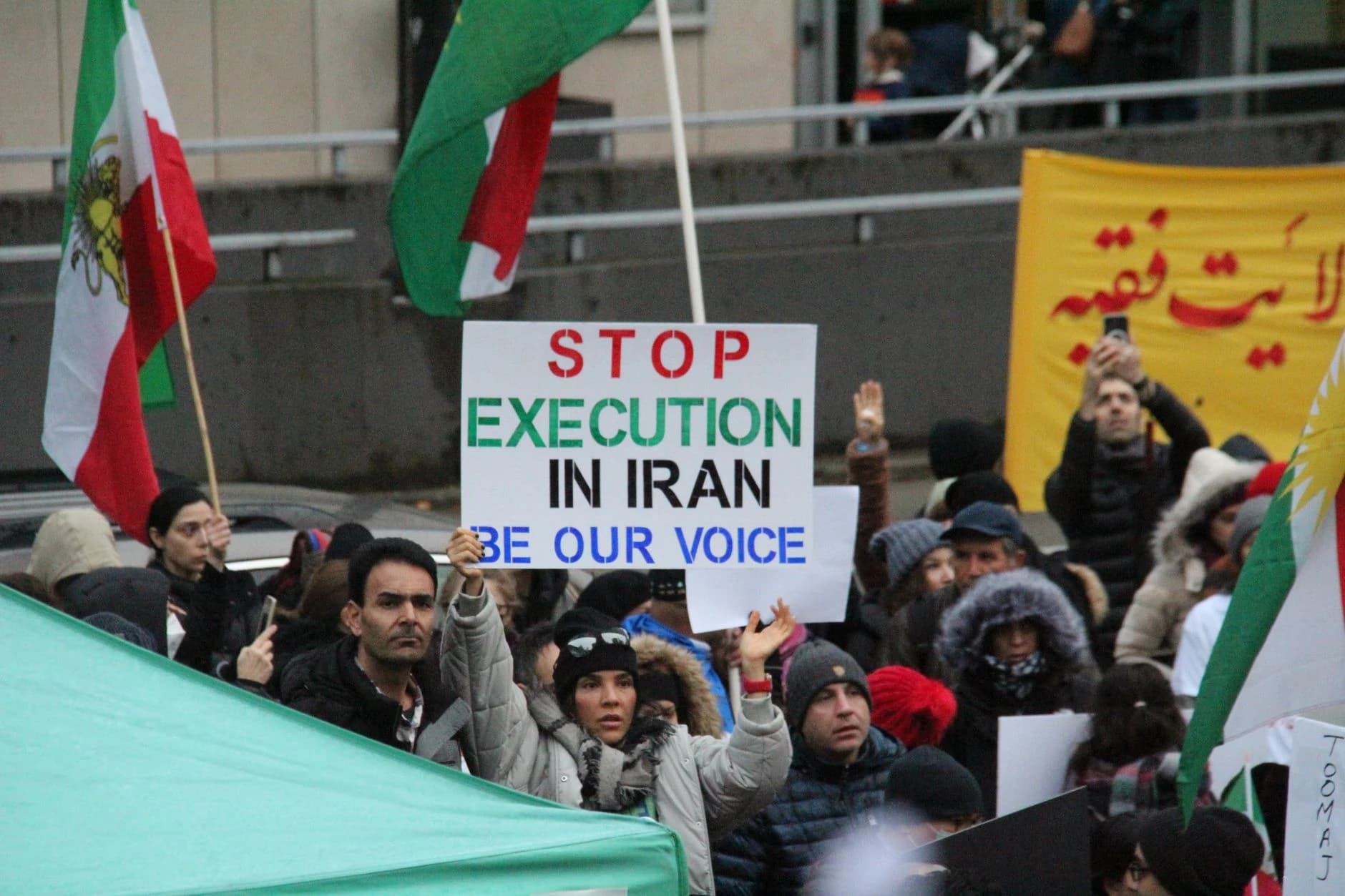
Iranian state media runs different content in Farsi and English. The 10-point ceasefire plan of April 2026 is the clearest documented case — and it should change how Western officials read every subsequent PressTV headline.
On April 8, 2026, nuclear weapons researcher David Albright — founder of the Institute for Science and International Security and a former IAEA inspector — posted a thread on X that most of the international press missed. He had obtained both the Farsi and English versions of Iran's 10-point ceasefire proposal. They were not the same document.
Iran's first point of the plan, in English, read: "A binding guarantee that the U.S. and allies will not strike Iran again." Nothing about nuclear issues. Nothing about enrichment.
In Farsi, the same first point had a phrase tacked on the end: namely the acceptance of Iran's uranium enrichment. The Farsi version framed the guarantee as requiring a U.S. commitment already made — a precondition, not a subject for negotiation.
Albright's finding was confirmed hours later by PBS NewsHour, which noted: "Iran has released a series of 10-point plans to guide negotiations, with many of the versions differing slightly, often seemingly depending on whether they were written in English or Farsi." Al Jazeera reported the same divergence. The White House reportedly told the Times of Israel that Iran had submitted at least two materially different plans in the space of days.
This is the kind of finding that should make every Western reporter who quotes Iranian state media pause. Iran's Foreign Ministry and state media have been running — and continue to run — two different narratives simultaneously, calibrated to two different audiences. Western journalists read the English edition. The policy conversation inside Iran happens in Farsi. The gap between the two is where the actual Iranian position lives.
Two editions, two audiences
Iran's three big state media brands are not a single monolithic voice. Each one has a specific institutional patron and a specific mission:
PressTV (launched 2007, owned by Islamic Republic of Iran Broadcasting, with IRIB's head personally appointed by Supreme Leader Khamenei) was designed as a counter-CNN, counter-BBC international English/French broadcaster. It was meant to be Iran's foreign-facing voice, modeled partly on RT and partly on Al Jazeera English. PressTV's stated mission, according to former CEO Mohammad Sarafraz, is to "give a second eye to Western audiences." Its actual editorial practice is more specific: anti-U.S., anti-Israel, anti-Western-imperialism content calibrated to Western left-skeptic and far-right anti-establishment communities. The UK Ofcom revoked its broadcast license in 2012. It was added to OFAC's Specially Designated Nationals list in 2023. Australia designated it a foreign government entity in 2025.
Tasnim News Agency (launched 2012, founded by IRGC commanders, owned by the Islamic Ideology Dissemination Organization) is the IRGC's largest media outlet. It is the most hardline and most operationally tied to the military. Its English edition is produced by translating selected Persian articles — not by an independent English-language editorial team. OFAC sanctioned it in September 2023 for, among other things, helping the IRGC crowdsource the identities of protesters for arrest. The EU sanctioned it the same month for publishing forced confessions.
Mehr News Agency (founded 2003, owned by the Islamic Development Organization, director selected by the Supreme Leader) is the semi-official "establishment" voice. It broadcasts in six languages — Persian, English, Arabic, Turkish, Urdu, Kurdish — and has over 300 reporters across 30 Iranian provinces. Mehr's positioning is slightly more institutional and less operational than Tasnim; during diplomatic periods its coverage can be marginally more moderate in tone. Both still promote state narratives.
Budget context matters here. In 2025, Iran tripled IRIB's annual budget to 240 trillion rial (roughly $480 million) — the largest single-year budget jump in the broadcaster's history — even as domestic Iranian TV viewership collapsed from 57% to 11%, with Iranians migrating to satellite and social media. Tripling international broadcasting investment while domestic viewership crashes tells you exactly what the investment is for. It is not for Iranians. It is for the audience outside Iran.
The GDELT day-by-day
The strongest quantitative evidence of deliberate bifurcation published so far is an AI-assisted comparative analysis by the GDELT Project, dated March 27, 2026. GDELT ran Gemini 3.1 Pro across same-day broadcast transcripts of IRINN (the Persian-language domestic TV channel) and PressTV (the English international channel) for coverage of the US-Iran conflict on March 26, 2026. The contrasts are stark enough that they need no interpretation:
- Economic framing. IRINN covered poultry prices at wholesale markets, factory operations, and solar plant openings. PressTV covered oil surging to $107 per barrel, threats to the petrodollar, and the rise of BRICS. One audience was reassured about the price of chicken. The other was briefed on the imminent collapse of dollar hegemony.
- Justification for conflict. IRINN invoked religious rhetoric — the Battle of Karbala, Imam Hussein, martyrdom as sacred duty. PressTV used secular anti-imperialist language, connecting Iran's struggle to transatlantic slavery, colonialism, and Global South liberation. Same event, two completely different moral frames aimed at two completely different communities.
- Domestic normalcy. IRINN covered cinema releases, highway construction, tourism, weather alerts. PressTV covered UN slavery resolutions, UAE labor exploitation, and Western tech harms. IRINN showed life going on. PressTV showed the West failing.
- Casualty treatment. IRINN framed martyrdom as sacred duty with religious pride. PressTV highlighted civilian casualties to expose Western hypocrisy on international law.
- Register on Trump. IRINN used قمارباز (qomârbâz, "gambler") and "dirty yellow dog" — harsh Persian idiomatic insults. PressTV used "lazy and ignorant lunatic" — different register, Western-style pejorative. Same hostility, different dictionary.
GDELT's conclusion: "a deliberate bifurcated approach ... to serve two distinct geopolitical and domestic imperatives."
Tasnim's "10 Signs of Victory" that didn't make English
Here is a cleaner example of what happens at the per-story level. After the ceasefire announcement of April 8, 2026, Tasnim News published a list titled ده نشانه پیروزی بزرگ و شکست دشمن — "10 signs of the great defeat of the enemy and Iran's victory." The list claimed: "There is no trace of [missile capability limitations] in the 10-point plan that Trump was forced to accept." Tasnim quoted a Supreme Leader's representative, Mohammad Hassan Rahimian, saying the agreement demonstrated "the historical and unique greatness of Iran" despite "calamity and loss." Tasnim also attributed a Hezbollah statement claiming the group was "on the verge of a great historic victory."
PressTV's English-language coverage of the same ceasefire, from the same 24-hour window, was strikingly different. The framing was a "fragile ceasefire" with "maximalist U.S. demands casting shadow." Less triumphalist. More internationally calibrated. Still aligned with the regime — but aimed at a Western audience that would be alienated by the outright victory claims Tasnim was feeding the Iranian domestic base.
Hamidreza Azizi, a Visiting Fellow at the German Institute for International and Security Affairs, noted on X that the initial reaction of Iranian state media had been to frame the ceasefire as evidence that "Iran's power forced Trump into agreement" — a narrative aimed at domestic audiences. Trump's reference to the "10-point Iranian plan" was being interpreted inside Iran as proof that the agreement was happening on Iran's terms. Nothing in PressTV's English coverage pushed that frame as hard.
This is the architecture. Tasnim Persian and IRINN tell the Iranian people: we won, we forced them to the table, the enemy broke. PressTV English tells Western readers: the ceasefire is fragile, maximalist demands persist, freedom of navigation threatened, Western civilization is in structural decline. Both messages serve the regime, but they are not the same message. A Western reader taking PressTV at face value gets a version of Iran that is sober, aggrieved, and reasonable. A Persian reader taking Tasnim at face value gets a version of Iran that is triumphant, divinely guided, and already victorious. Neither reader is seeing the same country.
The December 2025 protest playbook
The December 2025 – January 2026 protest wave inside Iran provides a second documented case, analyzed by ICT analyst Daniel Haberfeld in February 2026. Haberfeld identified four narrative phases in Iran's messaging:
- Partial acknowledgment of economic grievances — domestic channels only
- Pivot to blaming foreign agents (U.S., Israel) — both domestic and international
- A "victory" narrative stressing national unity against the plot — domestic only
- Framing the unrest as part of the ongoing U.S.–Israel war — international channels
The critical observation: domestic IRGC-linked Telegram channels emphasized arrests, forced confessions, and documentary videos showing alleged Mossad recruitment. These claims did not appear on PressTV's international feeds. Instead, PressTV simultaneously pushed anti-U.S. narratives about systemic Western instability — Minneapolis protests, U.S. economic weakness — unrelated to Iranian protest coverage. Western viewers were told the West was in crisis. Iranian viewers were told a foreign plot had been defeated domestically.
The counterarguments (fair read)
The case is not airtight. Two important caveats keep the thesis honest:
One, divergence is often in emphasis rather than in kind. An Atlantic Council study from 2020 by Brooking and Kianpour found no evidence of "fundamentally different messages" between Persian and English audiences — rather "varied distribution channels and presentation methods" for identical underlying state content. The 10-point plan enrichment phrase is an exceptionally clean case; most routine divergence is less dramatic. The regime is running the same playbook in different registers, not always contradicting itself.
Two, Tasnim's English edition is a translation shop, not an independent editorial team. Tasnim English is produced by selecting Persian articles and translating them. This means the absence of "10 signs of victory" from Tasnim English may partly reflect editorial selection and resource limits — what didn't get translated — not just strategic bifurcation. Some divergences are lazy rather than deliberate.
Three, the enrichment discrepancy itself has a partial rebuttal. Iran's embassy in India posted an X version of the 10-point plan in English that did include the enrichment clause, suggesting the omission was inconsistent across Iranian channels rather than perfectly coordinated. The White House publicly stated that Iran submitted at least two materially different plans in the space of days. Some of the discrepancy may reflect internal coordination failure among Iranian government channels rather than deliberate dual-messaging. Multiple versions existed in both languages.
A reasonable person can read this dossier and conclude either "Iran runs a coordinated bifurcated communications operation" or "Iran has two audiences and sloppy coordination between the branches trying to talk to them." Both readings support a common operational recommendation: treat the English editions with the same skepticism you'd bring to any government press release from a state that also runs Tasnim, and never assume you are seeing what Iran is saying about a story until you have seen it in Farsi.
The practical thing Western desks should do
The policy implication is not complicated. Western outlets that cover Iran — newspapers, wire services, think tanks, foreign ministries — should treat PressTV and Tasnim English as one data point, not the full picture. Any Iran story that originates from or is cited to "Iranian state media" should specify which edition in which language. The U.S. State Department's Open Source Enterprise and equivalent services in the UK and Europe already do this kind of comparison routinely. Their findings almost never surface in English-language journalism.
The rougher version of the same advice: when you quote "Iran's state-run Tasnim reported," assume you are reading a version of the story that was selected for foreign consumption. The Persian original may say more. It may say something different. And during a negotiation as consequential as the April 2026 framework process, that gap is where the actual Iranian position lives.
David Albright is a nuclear weapons proliferation expert who happened to be doing translation work on a fifteen-hour deadline. He caught it because he reads both editions. Most of the U.S. policy apparatus — and almost all of the U.S. press — does not.
Sources
- David Albright — X post on 10-point plan Farsi/English divergence
- Times of Israel — Albright 10-point plan analysis liveblog
- PBS NewsHour — Iran ceasefire deal depends on which side you talk to, Apr 8, 2026
- Al Jazeera — Has Iran's 10-point plan changed? Apr 9, 2026
- Hamidreza Azizi — X post on ceasefire framing, Apr 8, 2026
- Jerusalem Post — Ceasefire and victory claims coverage, Apr 8, 2026
- GDELT Project — IRINN vs PressTV comparative analysis, Mar 27, 2026
- ICT — Haberfeld on Iran's information warfare during December 2025–January 2026 protests
- INSS — Citrinowicz on Iran's tripled IRIB budget, Oct 2025
- DFRLab (Atlantic Council) — PressTV post-deplatforming strategy, Feb 2025
- Atlantic Council — Brooking & Kianpour: Iranian digital influence, Feb 2020
- The Media Line — Hadi Zonouzi on Iran's psychological warfare, Jan 27, 2026
- The Conversation — Sanam Mahoozi on Iran's divided media landscape, Mar 2026
- U.S. Treasury OFAC — PressTV, Tasnim, Fars sanctions press release, Sep 2023
- Wikipedia — Press TV | Tasnim News Agency | Mehr News Agency
- MEMRI — Khamenei nuclear fatwa analysis | Iranian officials call for nuclear weapons, Apr 2025
Related Analysis
Related Topics
Video Intelligence
- ▶Iranian Missile Strike Hits Arad Israel: Video Moments
- ▶Iran Releases Official Footage of Drone Launches During War
- ▶Iranian Kamikaze Drone Destroys Erbil Oil Refinery
- ▶FPV Drone Strikes US Victoria Base Near Baghdad Airport
Share This Analysis
Get a shareable verdict card for this article.
Get the next one first
Free briefings when we publish major outlooks and forecasts. No spam — unsubscribe anytime.
Related Analysis
EU Secondary Sanctions on China: Risks and Consequences
The Board · Feb 21, 2026
Turkey NATO Membership and Potential Russian Alliance
The Board · Feb 21, 2026
Modern World War 3 Scenarios and Systemic Collapse
The Board · Feb 19, 2026
China's Taiwan Dictionary: Ten Words Instead of Invasion
The Board · Apr 15, 2026
Seven Days in Baghdad: The Kataib Hezbollah Anomaly
The Board · Apr 15, 2026
Impact of 25% US Tariffs on the EU and Euro Stability
The Board · Feb 22, 2026
Trending on The Board
79 Years of UFO Lies, Roswell to the Pentagon
Defense & Security · Sep 29, 2026
How CENTCOM Is Brokering an Israel-Saudi Pact
Defense & Security · Sep 19, 2026

Why the Pentagon Pulled Its Iran War Plans Offline
Defense & Security · Sep 19, 2026
How a Stablecoin Funded Moldova's 2026 Election
Geopolitics · Sep 19, 2026
The Hidden Gold Demand Behind the $6,000 Target
Markets · Sep 17, 2026
Latest from The Board
79 Years of UFO Lies, Roswell to the Pentagon
Defense & Security · Sep 29, 2026
How CENTCOM Is Brokering an Israel-Saudi Pact
Defense & Security · Sep 19, 2026
Why the Pentagon Pulled Its Iran War Plans Offline
Defense & Security · Sep 19, 2026
How a Stablecoin Funded Moldova's 2026 Election
Geopolitics · Sep 19, 2026
The Hidden Gold Demand Behind the $6,000 Target
Markets · Sep 17, 2026
Houthis Take Perim as Saudis Halt Pipeline 2026
Geopolitics · Sep 13, 2026

Epstein Intelligence Ties: Evidence vs Allegation in 2026
Policy & Intelligence · Sep 6, 2026
What Israel-Iran War Games Got Wrong About 2026
Defense & Security · Sep 6, 2026