
EXECUTIVE SUMMARY
A definitive cessation of hostilities in the Russia-Ukraine conflict is highly unlikely (8-20%) [ASSESSMENT] without a convergence of multiple catalysts across geopolitical, military, and economic dimensions. The panel agrees that no single "peace plan" or military event will suffice; what is required is a structural shift where ongoing combat no longer serves the core interests or regime stability of either Moscow or Kyiv. The most important conclusion is: Cessation hinges on a simultaneous, visible exhaustion of Russia's fiscal/military capacity, a credible US-China understanding, and a postwar order that preserves minimal sovereignty for both Ukraine and Russia, enforced by automated and permanent security mechanisms. Attempts to short-circuit these preconditions will almost certainly fail. Panel insights correlate logistical exhaustion, oil revenue pressure, and legitimacy crises with future negotiation windows, but do not identify a single causal "trigger event." Black Swan risks remain present.
KEY INSIGHTS
- The war will likely (63-79%) persist until Russia’s oil revenue is critically impaired, either via secondary sanctions on Chinese "teapot" refineries or sustained Ukrainian strikes on export infrastructure [HIGH].
- A stable cessation is highly unlikely (8-20%) without a permanent Western-backed defense architecture on Ukraine’s border—far more than any time-limited security guarantee [HIGH].
- Major settlement requires tacit buy-in from China; US and EU efforts to force peace without Beijing’s cooperation are unlikely (21-39%) to succeed [MEDIUM].
- The freezing and conditional repayment of Russian central bank assets could act as a credible economic lever, provided principal release is strictly tied to ongoing nonviolence [MEDIUM].
- A viable peace will highly likely (80-92%) demand a "shared dissatisfaction" compromise: Ukraine must cede formal NATO ambitions (not sovereignty), and Russia must abandon expansionist objectives [HIGH].
- Internal Russian legitimacy is fragile, as evidenced by scaled-down Victory Day parades and visible regime anxiety—but a regime collapse is still highly unlikely (8-20%) over the next year without a major financial/emotional shock [MEDIUM].
- Western support fatigue—logistical or political—correlates strongly with the risk of renewed Russian offensives and regional destabilization [HIGH].
- Black Swan risks, including dramatic escalation or internal collapse, are ever-present, with a combined probability of major disruption near 58% over the coming year [ASSESSMENT][TALeb].
WHAT THE PANEL AGREES ON
- The end of hostilities requires simultaneous fulfillment of military exhaustion, economic suffocation (especially of Russian oil revenue), and a minimum mutually-recognized sovereignty for both states—enforced structurally, not by trust.
- No "15-point plan" or tactical diplomatic gesture will suffice without durable verification and buy-in from all primary external powers, including China.
- Failure to address gray zones like Kaliningrad/Suwalki, and to harden nuclear command and control (NC2), leaves Europe exposed even if a Ukraine ceasefire is signed.
- The demographic/industrial math makes an open-ended high-intensity conflict unsustainable by 2027.
WHERE THE PANEL DISAGREES
-
Interpretation of Russian "fragility":
- Taleb sees scaling back of parades as a signal of imminent regime fragility and risk of sudden collapse [substantiated by market stress indicators/empirical precedent].
- Zhukov and Archimedes interpret it as resource preservation, not proof of regime near-collapse.
- Taleb’s evidence (Lindy effect, market-level signals, tail risk modeling) presents a stronger argument due to recent financial markers [substantive disagreement].
-
Efficacy of economic levers versus legitimacy dynamics:
- Archimedes foregrounds the power of direct economic mechanisms (oil, sanctions, asset freeze) as war-stoppers.
- Kissinger insists only legitimacy and balance-of-interest can produce true, enforceable peace.
- Kissinger’s historical precedents are strong, but mechanical levers are shown to move short-term incentives faster; evidence is mixed [perspectival disagreement].
-
Likelihood and impact of Black Swan events:
- Taleb assigns meaningful probability to Black Swan events radically shifting the course of war; others see structural logics as dominant.
- Taleb’s scenario analysis is compelling for risk management, but not for day-to-day planning [perspectival].
THE VERDICT
To achieve a true cessation of hostilities, prioritize these actions—in order:
-
Intensify and internationalize secondary sanctions on Russian oil exports, particularly targeting Chinese "teapot" refineries, to accelerate fiscal exhaustion of Russia’s war effort and create a credible crisis of regime survival.
- This is the only lever with both rapid and tangible effect.
-
Build (now) a permanent, multilayered Western-border defense architecture for Ukraine—automated, sensor-to-shooter, and resistant to sabotage—with ongoing support explicitly insulated from domestic US/EU political cycles.
- Without visible and enduring security infrastructure, no ceasefire will hold.
-
Begin structured US-China diplomacy that offers Beijing a stake in regional security (e.g., co-guarantee on asset escrow or phased sanction relief), ensuring Chinese buy-in to any order that stops escalation but does not seek Russian collapse.
- Any attempt to end the conflict without China’s assent will fail.
-
Tie the phased release of frozen Russian assets to the strict absence of renewed aggression; principal held in trust, interest disbursed to Ukraine.
- This economically deters recidivism, translating violations into direct material loss.
Weighted Decision Table
| Factor | For | Against | Weight |
|---|---|---|---|
| Economic exhaustion of Russia (oil/sanctions) | Greatest leverage; can provoke regime action quickly [FACT] | China could provide backdoor; requires multilateral buy-in | HIGH |
| Permanent defense infrastructure in Ukraine | Deters future attack; enables credible peace [FACT] | Expensive; can escalate Russia’s insecurity | HIGH |
| US-China synchronization (security/energy focus) | Eliminates Russian fallback; leverages true global power [FACT] | May require US concessions on other fronts | HIGH |
| Asset freeze as lever | Creates automatic penalties for renewed aggression [ASSESSMENT] | Difficult to enforce; risk of gaming the system | MEDIUM |
| Public diplomatic "peace plan" | Can create momentum/optics [ASSESSMENT] | Without structural levers, it’s hollow | LOW |
The weighted balance strongly favors using economic, security, and diplomatic levers in tandem; optics-only solutions are insufficient.
RISK FLAGS
-
Risk: Russia circumvents oil sanctions using covert trade routes or unpoliced Chinese refineries
- Likelihood: HIGH
- Impact: Major; prolongs war, increases European destabilization
- Mitigation: Intensify maritime/financial surveillance, use multilateral enforcement, pressure Beijing via G20 channels.
-
Risk: Western support fragmentation due to US/EU political cycles
- Likelihood: MEDIUM
- Impact: High; exposes Ukraine, encourages Russian escalation
- Mitigation: Lock in multi-year, nonpartisan defense agreements with automated resupply triggers.
-
Risk: Black Swan event—sudden Russian regime collapse or inadvertent escalation (e.g., tactical nuclear use)
- Likelihood: LOW to MEDIUM
- Impact: Extreme; regional/global market and security shock
- Mitigation: Tighten intelligence liaison channels, deconflict nuclear C2 protocols, maintain rapid-reaction diplomatic teams.
BOTTOM LINE
No peace in Ukraine is possible until both Russia’s war machine is structurally disabled and a credible, permanent defense order is created with US-China buy-in—focus on squeezing Russia’s oil revenues, hardening Ukraine’s security, and securing Chinese cooperation.
Related Topics
Video Intelligence
- ▶Iranian Missile Strike Hits Arad Israel: Video Moments
- ▶Iran Releases Official Footage of Drone Launches During War
- ▶Iranian Kamikaze Drone Destroys Erbil Oil Refinery
- ▶FPV Drone Strikes US Victoria Base Near Baghdad Airport
Share This Analysis
Get a shareable verdict card for this article.
Get the next one first
Free briefings when we publish major outlooks and forecasts. No spam — unsubscribe anytime.
Related Analysis

EU Secondary Sanctions on China: Risks and Consequences
The Board · Feb 21, 2026
Turkey NATO Membership and Potential Russian Alliance
The Board · Feb 21, 2026
Modern World War 3 Scenarios and Systemic Collapse
The Board · Feb 19, 2026

Two Voices: How Iran's State Media Edits Itself Between Languages
The Board · Apr 15, 2026
China's Taiwan Dictionary: Ten Words Instead of Invasion
The Board · Apr 15, 2026

Seven Days in Baghdad: The Kataib Hezbollah Anomaly
The Board · Apr 15, 2026
Trending on The Board
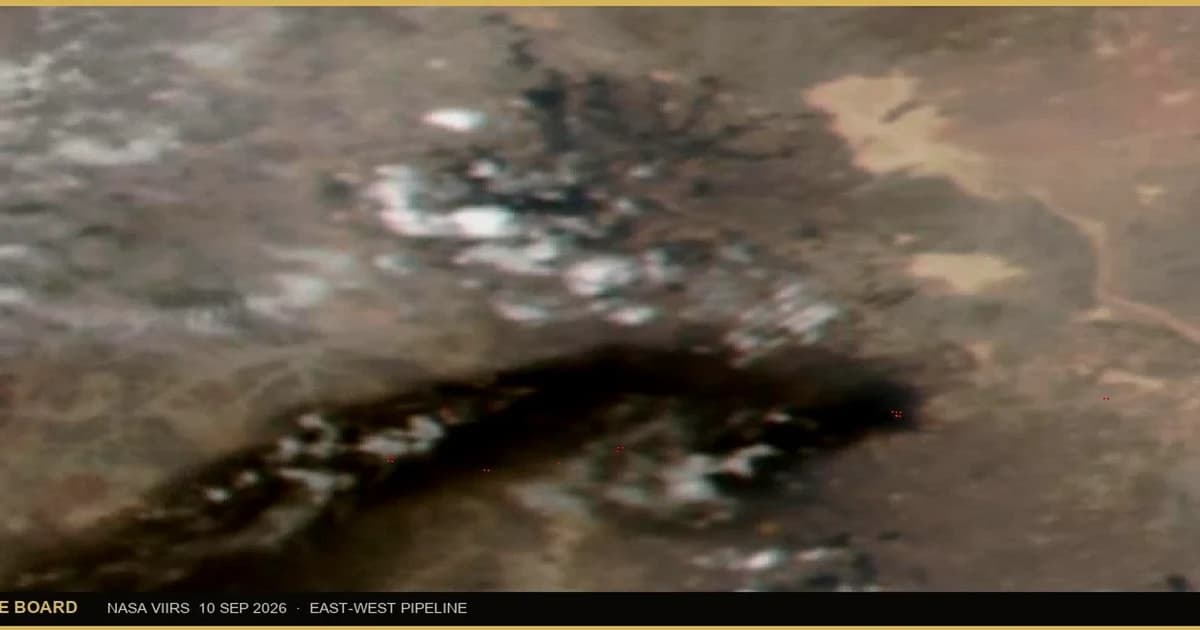
Houthis Take Perim as Saudis Halt Pipeline 2026
Geopolitics · Sep 13, 2026
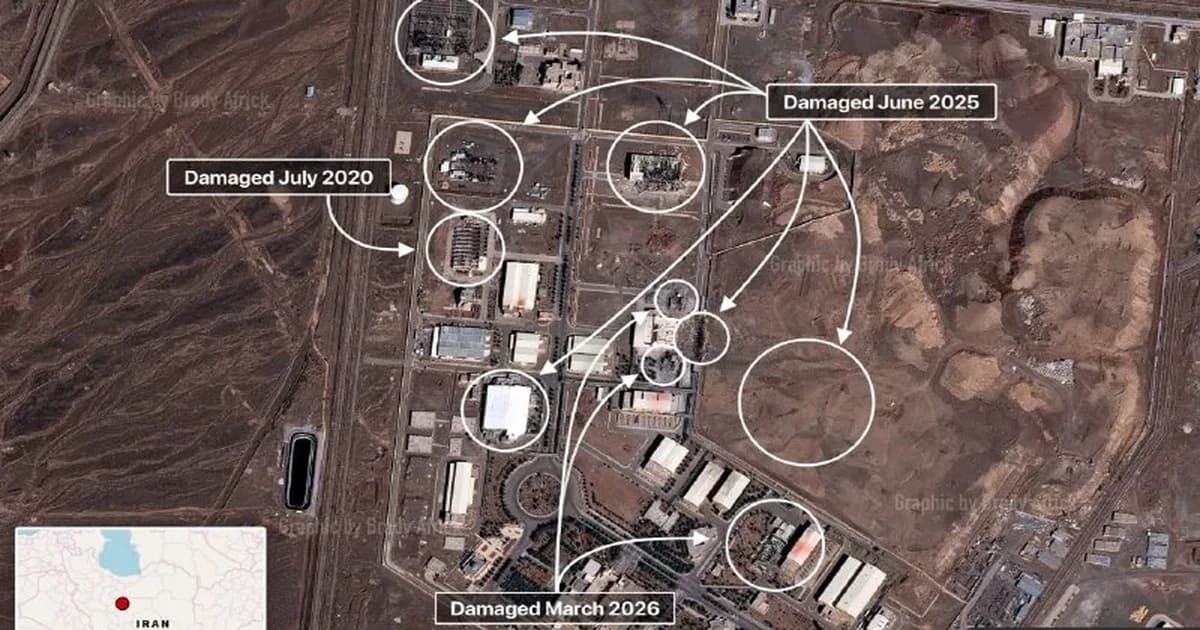
What Israel-Iran War Games Got Wrong About 2026
Defense & Security · Sep 6, 2026

Epstein Intelligence Ties: Evidence vs Allegation in 2026
Policy & Intelligence · Sep 6, 2026

China Imported 764 Tons of Gold in Six Months
Markets · Aug 20, 2026
The 'Muslim NATO' Fails Its First Test in 48 Hours
Geopolitics · Aug 27, 2026
Latest from The Board
Houthis Take Perim as Saudis Halt Pipeline 2026
Geopolitics · Sep 13, 2026
Epstein Intelligence Ties: Evidence vs Allegation in 2026
Policy & Intelligence · Sep 6, 2026
What Israel-Iran War Games Got Wrong About 2026
Defense & Security · Sep 6, 2026

Central Banks Turned Gold Sellers. One Country Did It.
Markets · Aug 30, 2026

Schiff vs Saylor vs the Banks: Who Got 2026 Right?
Predictions · Aug 27, 2026
Silver Deficit 2026: BofA's $300 Target Explained
Markets · Aug 27, 2026
Iran War Scenarios After the 60-Day Deadline Expires
Geopolitics · Aug 27, 2026

Gold Price Forecast 2026: $10,000 Call vs $4,500 Banks
Markets · Aug 27, 2026