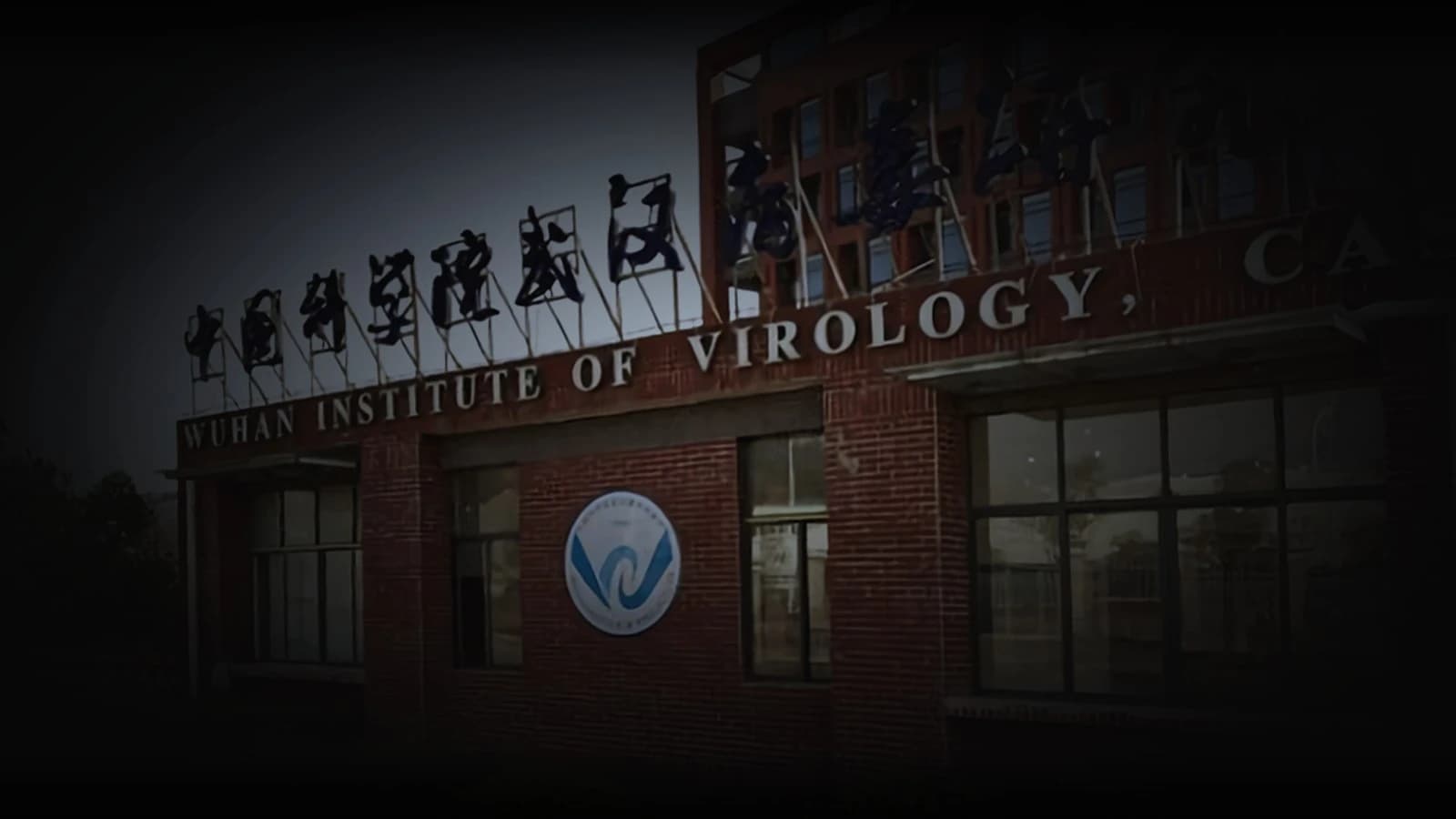
One name in the indictment matters more than the headlines admit.
The Department of Justice unsealed a 29-page indictment on April 28, 2026, charging David M. Morens — Anthony Fauci's senior scientific adviser at NIAID for sixteen years — with conspiracy against the United States, falsification of federal records, and concealment. The press lede wrote itself: Fauci aide indicted in COVID origins cover-up. The wine. The Gmail. The kickbacks. The Wuhan grant.
That framing buries the most important name in the document.
★ Key findings
- The indictment names "Co-Conspirator 2" by identifying details only; reporters working from those details have identified her as Margaret "Marg" Moore, NIAID's career FOIA officer — the federal employee whose statutory job was to fulfill the records requests she is now accused of helping to suppress.
- "Co-Conspirator 1," similarly identified by reporters from the indictment's details, is Peter Daszak, the EcoHealth Alliance president debarred by HHS in January 2025.
- The Biden preemptive pardon issued January 19, 2025 covers Fauci through that date — but does not cover Morens, Daszak, or Moore, and pardons eliminate Fifth Amendment protection for the pardoned conduct, meaning Fauci can now be compelled to testify about it under oath.
- Chinese state media — Xinhua, People's Daily, CCTV, Global Times, the Foreign Ministry — appears to have published nothing on the indictment in any language as of this writing. The same outlets that aggressively defended the Wuhan Institute of Virology in 2021-2023 have gone silent on the most damaging US legal action in the entire origins debate.
Every other outlet is running this as a Fauci-aide-with-a-secret-Gmail story. The indictment, read carefully, is a story about something more uncomfortable: the federal transparency machinery itself was compromised, and the cover-up required a participating civil servant to function.
What the indictment actually alleges
Strip out the wine and read the structure. Per the DOJ press release, Morens, Co-Conspirator 1, and Co-Conspirator 2 agreed in writing to conduct official NIH business over Morens's personal Gmail account "in anticipation that their communications would be requested through a FOIA Request." That phrase does the work. It is not a description of carelessness. It is a description of premeditation.
The reason a federal records officer matters in that sentence is that the FOIA system has a single chokepoint per agency: the person who receives the request, searches the relevant accounts, and decides what gets released. If the person searching the system is also the person hiding the records, the system has no integrity.
That is what the indictment alleges. The House Select Subcommittee on the Coronavirus Pandemic previously documented that Morens described Moore in his own emails as "the FOIA lady" who would handle his requests. Morens told colleagues, in writing, "I learned how to make emails disappear after I am foia'd" and "I will delete anything I don't want to see in the New York Times." Those statements only function operationally if the FOIA officer cooperates.
This is not a scandal about a senior scientist hiding emails. This is a scandal about the procedural firewall that the public was told would catch him.
The kickbacks were laundered through peer review
The most uncomfortable allegation in the indictment is not the Gmail account. It is the consideration.
According to the Washington Examiner's reporting, Morens received wine and offers of meals at Michelin-starred restaurants in Paris, New York, and Washington from Co-Conspirator 1 (Daszak). The indictment alleges he proposed to "deserve" those gifts by writing a scientific commentary in a prominent medical journal asserting that COVID-19 had natural origins.
The deliverable, if prosecutors prove the charge, was a peer-reviewed publication.
After the August 2020 award of a fresh $7.5 million NIH grant to EcoHealth, Morens emailed Daszak: "do I get a kickback??" Daszak's reply: "Of course there's a kick-back." Morens later told Congress that the line was "black humor." Federal prosecutors, in a grand jury indictment, appear to have declined to read it that way.
The implication for the scientific record is the part nobody is writing about. Morens was an associate editor of the CDC's Emerging Infectious Diseases journal and had bylines across major journals during the relevant period. If even one of those commentaries is the one alleged to have been written for the wine, then a peer-reviewed natural-origin paper is the corpus delicti of a federal bribery case. That is unprecedented territory for medical publishing. No journal has yet announced a review.
The pardon Fauci doesn't want anymore
President Biden issued a preemptive pardon for Fauci on January 19, 2025, covering any federal offenses he may have committed between January 1, 2014, and the date of the pardon. The pardon was framed as a shield against retaliatory prosecution. It functions, post-Morens, as something else.
Pardons narrow the Fifth Amendment privilege against self-incrimination for the specific conduct they cover. The Supreme Court reasoned in Brown v. Walker (1896) that a witness whose criminal jeopardy has been removed by immunity or pardon cannot use the Fifth to refuse testimony about that same conduct. The privilege survives for adjacent matters not covered by the pardon — anything outside the January 2014-to-January 2025 window, anything beyond the pardon's enumerated scope of NIAID and Task Force work — and it survives entirely for any post-pardon perjury exposure.
Apply that to the Morens prosecution. Fauci is the most material living witness to Morens's conduct. He was the principal recipient of the "secret back channel" Morens described in his emails. He participated in the February 1, 2020 teleconference that produced the Proximal Origin paper. He directed NIAID during the period the indictment covers. Prosecutors can subpoena him on the pardoned conduct, and the pardon is precisely what strips his ability to refuse. Anything he says under oath that contradicts his prior congressional testimony — much of it already disputed by Republican investigators — exposes him to fresh perjury charges that the 2025 pardon does not reach.
The shield is a leash.
Beijing's silence is a tell
In 2021 and 2022, when Western intelligence agencies and journalists raised the lab-leak hypothesis, Chinese state media responded with volume. The Foreign Ministry issued multiple white papers. The Chinese embassy in Washington published a "lies vs. facts" page. Global Times ran daily op-eds. People's Daily ran an overseas edition piece titled "May the Faucis lose their dignity no more".
The Morens indictment is, on its face, a propaganda gift to that machine. A senior US scientist criminally charged for hiding evidence on the natural-origin theory China has spent five years promoting. Searches across Xinhua, People's Daily, CCTV, Global Times, the MFA, and embassy outlets in Chinese return no coverage of the indictment as of April 28, 2026. Neither does Zhihu's politics-and-policy stream, which is normally aggressive on US political stories.
The silence has only one plausible read. The discovery process that follows a federal indictment of this size — DEFUSE proposal documents, the 22,000-record WIV database that went offline on September 12, 2019, the three WIV researchers reportedly hospitalized in November 2019, the deployment of PLA Major General Chen Wei to take operational control of WIV on January 26, 2020 — is exactly the evidence Beijing would least want surfaced under oath in a US courtroom. A natural-origin propaganda win is not worth it if the price is a transcript of cross-examination on the chain-of-custody for the deleted database.
When the Chinese government has nothing useful to say about a story they have spent half a decade engineering a position on, they say nothing. That is the tell.
The deletions, on both sides of the Pacific
The Morens indictment is one branch of a larger pattern: in the years on either side of the pandemic's start, the records that would clarify what happened kept disappearing, on both sides of the Pacific, on schedules that were not coincidental.
On the China side, the Wuhan Institute of Virology's main sample-and-sequence database went offline at 02:00 UTC on September 12, 2019 — months before the first acknowledged COVID case. According to DRASTIC's investigation, the database held metadata on roughly 22,000 samples, 1,400 viral strains, and about 500 bat coronaviruses, including the Mojiang mineshaft samples that produced RaTG13. Eventually all 16 of WIV's virus databases came offline. Shi Zhengli's explanations have moved: she told the BBC in December 2020 the takedown was a response to cyber attacks; subsequent statements acknowledged the database stayed offline through the pandemic. Both can be true. They cannot both be the original explanation.
On the US side, in June 2021 Bloomberg confirmed that NIH had complied with a request from Wuhan University researchers to delete a set of early SARS-CoV-2 sequences from its Sequence Read Archive. A Chinese institution reached into a US government database, asked for records to be deleted, and the agency hosting them said yes. Fred Hutchinson's Jesse Bloom recovered 13 of the deleted sequences from Google Cloud cache files NIH had not realized were preserved — work that pushed the inferred SARS-CoV-2 progenitor closer to bat-coronavirus relatives than the Huanan market sequences. The deletions did not erase the science. They erased the chain of custody.
This is the pattern the FOIA-officer indictment fits inside. Records officers, on both sides of the Pacific, helped evidence disappear: a Chinese database administrator pressing the takedown button on September 12, 2019; an NIH archive maintainer honoring a deletion request from Wuhan in 2021; an NIAID FOIA officer in Bethesda allegedly running cover for her boss's adviser through 2022. Three different chokepoints. Same outcome.
The threads still hanging
Three pieces of the underlying record remain unresolved. Any one of them is a follow-on investigation.
The September 2019 database deletion. WIV's main bat-coronavirus sample database — 22,000 records, ~1,400 viral strains, ~500 bat coronaviruses including RaTG13 and its Mojiang mineshaft sister samples — went offline three months before the first acknowledged COVID case. The data were collected partly under NIH funding routed through EcoHealth. By the terms of those grants, the data are owed to US taxpayers. Six years on, no US administration has formally demanded their restoration. The Morens indictment doesn't mention them. The deletion remains the largest unaddressed evidence-destruction event in pandemic history.
Jeremy Farrar. The former Wellcome Trust director — the man the Proximal Origin authors testified under oath had organized the February 1, 2020 teleconference at Fauci's request and personally edited the paper from "unlikely" to "improbable" — is now Chief Scientist of the World Health Organization. The same WHO that put Daszak on its 2021 origin investigation. Neither the UK nor the WHO has investigated him. He is the only major participant in the Feb 1 call who was promoted during the period covered by the indictment.
The custody of EcoHealth's archive. Per Paul Thacker's reporting, post-debarment EcoHealth is being run by a real-estate investor who sits as a senior adviser to the Atlantic Council. The organization holds an internal archive of Daszak's correspondence with WIV, draft DEFUSE materials, sample-shipment records, and grant-compliance files. With the indictment of Morens active, the archive is now evidence in an ongoing federal criminal matter. If DOJ has not yet served preservation letters and litigation holds, it should. If EcoHealth disposes of records during the Morens case, it is obstruction.
The institutional question
The press has it as a story about a 78-year-old scientist who got caught hiding emails. The indictment is a story about something different: a federal employee whose job was to enforce transparency law helped circumvent it, and was allegedly paid for the cooperation in journal bylines and dinner reservations.
That problem is bigger than HHS. Across the 27 NIH institutes, plus State, USDA, DoD, EPA, and the intelligence community, federal FOIA officers sit on every records request — and there is no public evidence anyone has audited whether the chokepoint is being used the way Moore is alleged to have used it. GAO hasn't surveyed FOIA-officer email retention. No inspector general has mapped grant-correspondence Gmail use across NIH. The structural question has never been asked.
Morens is one indictment. The architecture that made him operational is much larger, and it is still in place.
Sources
Primary documents
- DOJ Press Release: Former Senior NIAID Official Indicted
- Comer commends DOJ on Morens indictment — House Oversight
- House Select Subcommittee Memo on Morens wrongdoing
- HHS formally debars EcoHealth and Daszak
- Wenstrup report on Proximal Origin authors and NIH suppression
News reporting
- Newsweek: Who Is David Morens?
- Washington Examiner: Concealing COVID-19 records
- Washington Times: Feds charge top Fauci aide
- NPR: House committee grills Morens
- The Hill: GOP probe into EcoHealth gets results
Pardon and legal context
- NPR: Biden pardons Fauci, Milley, Jan. 6 panel
- Lawfare: Preemptive pardons — Milley, Fauci, others
- Brown v. Walker, 161 U.S. 591 (1896)
WIV / lab origins
- Independent Science News: Chinese PhD thesis on Mojiang miners
- The Intercept: Patient zero linked to US-funded Wuhan research
- The Intercept: Leaked DEFUSE DARPA proposal
- Disinformation Chronicle: EcoHealth now run by real estate investor
Chinese-language sources (silence check)
- Sina Mil: Chen Wei deployed to Wuhan front line
- Chinese MFA: science-based origin tracing
- China Embassy DC: lies vs facts on COVID origins
- People's Daily Overseas: "May the Faucis lose their dignity no more"
Related Analysis
Related Topics
Video Intelligence
- ▶Iranian Missile Strike Hits Arad Israel: Video Moments
- ▶Iran Releases Official Footage of Drone Launches During War
- ▶Iranian Kamikaze Drone Destroys Erbil Oil Refinery
- ▶FPV Drone Strikes US Victoria Base Near Baghdad Airport
Share This Analysis
Get a shareable verdict card for this article.
Get the next one first
Free briefings when we publish major outlooks and forecasts. No spam — unsubscribe anytime.
Related Analysis
Roman History Lessons for Ending Political Polarization
The Board · Feb 17, 2026
Epstein Files: Legal Exposure and Potential Charges
The Board · Feb 16, 2026

Teaching Children the Value of Money in Wealthy Families
The Board · Feb 16, 2026
Trump Fires Attorney General: What Happens Next?
The Board · Apr 2, 2026
Great Britain 2050: Demographic Shifts and Sharia Law Debate
The Board · Feb 14, 2026
The TikTok Ban Debate: Security, Economics, and Free Speech
The Board · Feb 13, 2026
Trending on The Board
Houthis Take Perim as Saudis Halt Pipeline 2026
Geopolitics · Sep 13, 2026
What Israel-Iran War Games Got Wrong About 2026
Defense & Security · Sep 6, 2026

Epstein Intelligence Ties: Evidence vs Allegation in 2026
Policy & Intelligence · Sep 6, 2026
China Imported 764 Tons of Gold in Six Months
Markets · Aug 20, 2026
The 'Muslim NATO' Fails Its First Test in 48 Hours
Geopolitics · Aug 27, 2026
Latest from The Board
Houthis Take Perim as Saudis Halt Pipeline 2026
Geopolitics · Sep 13, 2026
Epstein Intelligence Ties: Evidence vs Allegation in 2026
Policy & Intelligence · Sep 6, 2026
What Israel-Iran War Games Got Wrong About 2026
Defense & Security · Sep 6, 2026

Central Banks Turned Gold Sellers. One Country Did It.
Markets · Aug 30, 2026
Schiff vs Saylor vs the Banks: Who Got 2026 Right?
Predictions · Aug 27, 2026
Silver Deficit 2026: BofA's $300 Target Explained
Markets · Aug 27, 2026
Iran War Scenarios After the 60-Day Deadline Expires
Geopolitics · Aug 27, 2026
Gold Price Forecast 2026: $10,000 Call vs $4,500 Banks
Markets · Aug 27, 2026