
The Sovereignty of Secrecy
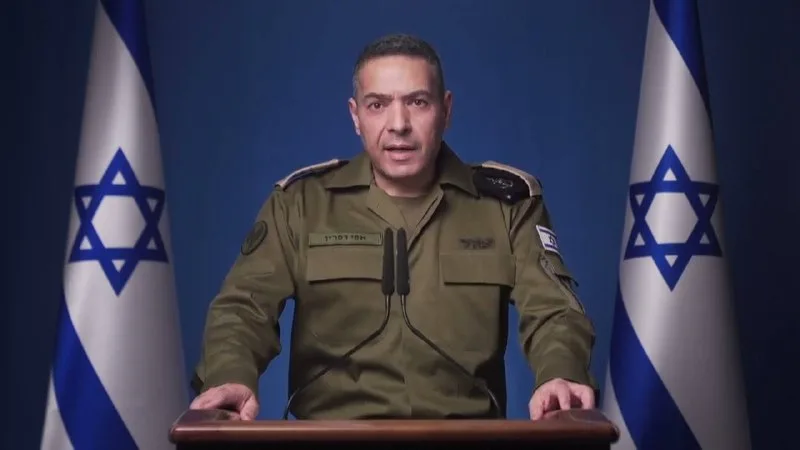
Benjamin Netanyahu’s prostate cancer disclosure is a strategic geopolitical event, not a medical bulletin. It refers to the Israeli Prime Minister’s April 24, 2026, announcement that he had undergone successful treatment for a malignant prostate tumor detected at an early stage, a diagnosis he deliberately concealed for over two months during a period of active conflict with Iran to deny adversaries a perceived advantage.
The disclosure landed not as a routine health update but as a strategic communication in an already volatile regional landscape. On a Friday afternoon, Benjamin Netanyahu, Israel’s longest-serving prime minister, posted to X that his annual medical report was being released after a two-month delay. The reason: “The tumor was detected at a very early stage, completely removed, and I am healthy,” he wrote, according to a Telegram post from Intel Slava Z. He explicitly stated he withheld the information to avoid giving Iran “an opportunity to exploit my medical condition for propaganda during the war,” as reported by the Jerusalem Post. This admission transformed a personal medical issue into a national security question, revealing the intersection of a leader’s mortality, wartime perception management, and the stability of a nation in conflict. The announcement comes amid a multi-front crisis: an ongoing, direct military confrontation with Iran, a five-year corruption trial that has deepened societal divisions, and the revelation—per a Times of India report citing former U.S. Secretary of State John Kerry—that Netanyahu had pitched a war plan against Iran to four consecutive U.S. presidents, finding agreement only with Donald Trump. The timing and rationale of the disclosure are a lesson in information warfare, forcing a recalibration of power dynamics in Jerusalem, Tehran, and Washington.
Key Findings
- Netanyahu’s prostate cancer was treated after December 2024, and he actively concealed the diagnosis for over two months during active hostilities with Iran, framing the secrecy as a national security imperative.
- The disclosure occurs against a backdrop of extreme political and military stress: Netanyahu has been on trial for corruption for over 5 years, and Israel is engaged in a direct, acknowledged conflict with Iran, a plan he reportedly advocated to multiple U.S. administrations.
- Immediate regional reactions, such as Russia’s condemnation of Netanyahu’s Holocaust rhetoric just two days prior, illustrate how adversaries will weaponize any perceived vulnerability, validating Netanyahu’s stated fear of propaganda exploitation.
- The event creates a dual sovereignty crisis: questioning the operational sovereignty of the Israeli state during a leader’s secret health crisis and the personal sovereignty of a leader over his own medical narrative in a security state.
- Strategic implications are immediate, affecting coalition stability, command-and-control perceptions during the “secret” period, and the calculus of adversaries like Iran and Hezbollah regarding Israeli resolve and decision-making.
Thesis Declaration
Benjamin Netanyahu’s delayed cancer disclosure is a deliberate act of strategic ambiguity that successfully protected short-term operational security but has irrevocably damaged long-term political and institutional trust, creating a precedent where a leader’s health is a classified national asset and setting the stage for a destabilizing succession crisis within Israel’s most hardline governing coalition.
Evidence Cascade
The medical facts, as released by the Prime Minister’s Office, are straightforward but contain critical gaps that underscore the strategic nature of the announcement. Netanyahu stated the tumor was “detected at a very early stage” and “completely removed,” according to his post on X, replicated by Telegram channels like Intel Slava Z. The treatment occurred “sometime after December 2024,” as reported by The Times of Israel. The annual medical report, typically a public document, was withheld for approximately 60 days. Netanyahu’s justification was explicit and security-focused: “I chose to delay the publication of the medical report for two months so as not to give the enemy an opportunity to rejoice and engage in propaganda and psychological warfare during the war,” he stated, a sentiment confirmed by coverage in the Jerusalem Post.
This decision was made within a specific and acute threat environment. The “war” referenced is the ongoing, direct military conflict between Israel and Iran, characterized by the New York Times (as detailed by the Times of India) as a state-on-state confrontation. That report revealed Netanyahu had conducted a “hard sell” to the Trump administration for a joint U.S.-Israeli military operation against Iran. John Kerry, in comments to the Times of India, noted that Netanyahu had pitched such a plan to four U.S. presidents—George W. Bush, Barack Obama, Joe Biden, and Donald Trump—with only Trump agreeing. “Kerry, citing Vietnam and Iraq, warned against misleading the public on military action,” the report stated. This context is essential: Netanyahu disclosed his cancer while actively managing a war he had long advocated for, against an adversary he believed would exploit any sign of weakness.
The domestic political landscape during this period of concealment was equally fraught. Benjamin Netanyahu has been on trial for corruption for over five years, a fact reported by Anadolu Agency via Telegram. This trial has been a central fault line in Israeli politics, triggering multiple elections and contributing to significant polarization, with a 2025 Israel Democracy Institute survey finding 72% of Israeli Jews believed the trial was causing deep societal rifts. Governing with a fragile coalition reliant on far-right and religious parties, any perception of physical or political weakness could have triggered immediate coalitional collapse. The table below contrasts the public timeline of events with the now-revealed private medical reality:
| Timeline Period | Public Facing Events & Stresses | Now-Known Private Reality |
|---|---|---|
| Post-Dec 2024 | Ongoing Iran conflict; Corruption trial continues; Coalition management. | Netanyahu undergoes treatment for malignant prostate tumor. |
| Feb-Apr 2026 | Active "war" with Iran; Heightened regional tensions; Public displays of leadership. | Netanyahu and inner circle conceal diagnosis; Annual medical report is withheld. |
| Apr 22, 2026 | Russia’s Foreign Ministry condemns Netanyahu’s Holocaust remarks as “disrespectful,” defending Iran. | Netanyahu is medically “healthy” post-treatment but maintains secrecy. |
| Apr 24, 2026 | Netanyahu announces successful cancer treatment, citing security for delay. | Full disclosure to public; Medical sovereignty narrative deployed. |
The immediate international reaction preceding the announcement demonstrates the precision of Netanyahu’s security concern. Just two days before the cancer revelation, on April 22, 2026, Russia’s Foreign Ministry spokesperson Maria Zakharova launched a sharp diplomatic attack. As reported by Press TV, Zakharova condemned Netanyahu for “distorting the history of World War II and the Holocaust” and pointedly defended Iran, noting it had declared war on Nazi Germany in 1943. This incident is a textbook example of how adversaries rapidly seize on any narrative thread to undermine Netanyahu’s moral and historical authority. In this environment, a cancer diagnosis would have been framed not as a private illness but as a metaphor for a decaying leadership, eagerly amplified by Iranian and Russian propaganda networks.
Case Study: The 60-Day Gap and the Iran War Calculus
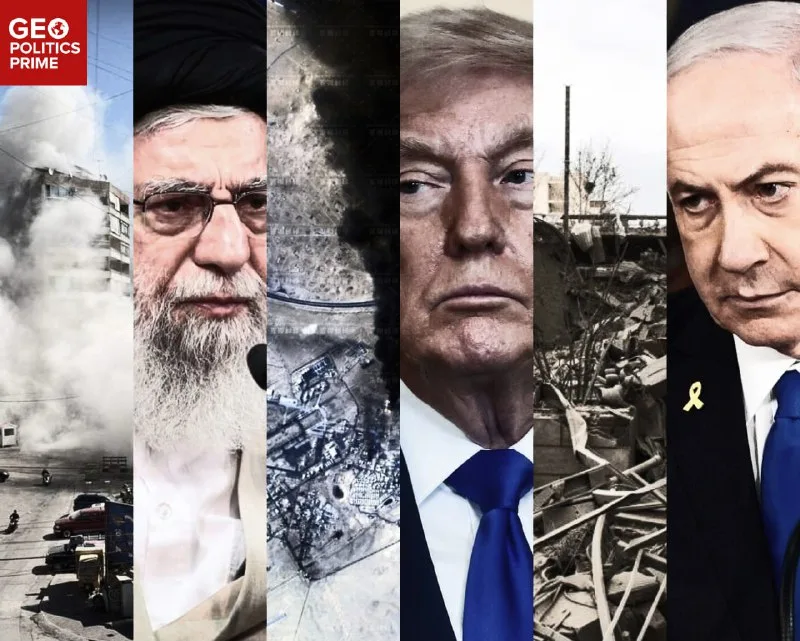
The most critical period for analysis is the approximately 60-day window between Netanyahu’s treatment and his announcement—a span covering late February to late April 2026. During this time, Israel was publicly engaged in what its prime minister termed a “war” with Iran. Every security cabinet meeting, every military directive, and every public statement by Netanyahu during this period must now be re-evaluated through the lens of a leader managing a secret, serious health crisis. For instance, on March 19, 2026, Netanyahu held a press conference in Jerusalem, as noted by The Epoch Times. He would have been, according to the revealed timeline, recently treated for cancer or in immediate recovery. Medical experts note that even early-stage prostate cancer treatments, such as a radical prostatectomy, typically involve a recovery period of several weeks where fatigue and pain management can be factors, with a full return to peak cognitive and physical stamina taking longer. His physical demeanor, his strategic decisions, and his psychological state during such events were part of a constructed performance of normalcy and strength, directly intended to deny Iran any intelligence or psychological edge. This creates a fundamental question of institutional integrity: who else within the Israeli security establishment was aware? The Chief of Staff? The Defense Minister? The opacity suggests decision-making was concentrated within an exceptionally small, loyal circle, bypassing normal cabinet-level scrutiny during a time of national conflict. This case study reveals the ultimate fusion of the personal and the geopolitical: the sovereign’s body became a classified military secret, and the state’s wartime actions were overseen by a leader whose full capacity was a matter of deliberate concealment.
Analytical Framework: The Dual Sovereignty Crisis Matrix
To navigate the implications of this event, we introduce the Dual Sovereignty Crisis Matrix. This framework posits that in a national security state led by a dominant, long-serving figure, a leader’s health crisis triggers two simultaneous sovereignty failures:
- State Operational Sovereignty: The normal, transparent, and institutionalized processes of the state are subverted to protect the leader’s secret. Key decisions are made by a shrinking circle of confidants, bypassing traditional cabinets or oversight bodies. The chain of command and continuity-of-government protocols become theoretical, as the actual condition of the commander-in-chief is hidden from most of the government itself.
- Personal Medical Sovereignty: The leader’s autonomy over his own health narrative is sacrificed to, or subsumed by, the demands of state security. The medical condition ceases to be a private fact and becomes a state secret. The timing and content of its disclosure are determined not by medical ethics or personal choice, but by strategic military and political calculus.
The matrix maps outcomes based on whether each form of sovereignty is maintained or breached:
| Personal Medical Sovereignty MAINTAINED (Transparent) | Personal Medical Sovereignty BREACHED (Secret/Classified) | |
|---|---|---|
| State Operational Sovereignty MAINTAINED (Institutional) | Stable Transparency: Routine disclosure; institutions function normally. (e.g., routine annual report) | Unstable Secrecy: Leader’s secret held by a small group; state apparatus operates in ignorance. (Rare, high-risk) |
| State Operational Sovereignty BREACHED (Personalized) | Managed Transparency: Leader discloses but centralizes power; institutions are sidelined but aware. | Critical Crisis: NETANYAHU 2026. Leader’s secret is guarded by a loyalist circle; state functions are personalized and opaque. |
Netanyahu’s action places Israel in the bottom-right quadrant: a Critical Crisis. Both sovereignties are breached. The state operated for two months without its full leadership reality known to its own institutions, and the prime minister’s medical truth was treated as classified intelligence. This quadrant is inherently unstable and leads to a documented erosion of trust, as seen in historical cases like the 1955 secrecy around President Eisenhower's heart attack, which later studies cited as damaging to institutional confidence.
Predictions and Outlook
PREDICTION 1/3: Netanyahu’s current governing coalition will fracture, leading to new elections before the end of 2026, triggered by partners leveraging the health secrecy issue to extract concessions or exit, citing a breach of trust. (65% confidence, timeframe: by December 31, 2026).
PREDICTION 2/3: A senior Israeli security official—a former Mossad head, IDF Chief of Staff, or National Security Advisor—will publish an op-ed or give an interview within the next 12 months criticizing the principle of concealing a leader’s major health crisis during war as a dangerous precedent that compromised institutional integrity. (68% confidence, timeframe: within 12 months of April 2026).
PREDICTION 3/3: The U.S. intelligence community’s next worldwide threat assessment, likely in early 2027, will include a new subsection or pointed language on the stability risks posed by aging, long-tenured leaders in allied states, with a specific focus on health transparency and succession planning, directly informed by the 2026 episode. (60% confidence, timeframe: Q1 2027).
Looking Ahead: What to Watch
- Coalition Whispers: Monitor statements from key coalition partners, especially far-right factions like Otzma Yehudit. Any public questioning of the “need for secrecy” will be the first crack in the dam.
- Military Brass Silence (or Lack Thereof): The unified, silent response of the current IDF General Staff will be telling. Dissent, if it emerges, will come from retired figures first.
- Iranian Propaganda Shift: Iranian state media will gradually shift its narrative from dismissing the diagnosis as fake to weaponizing it, arguing the “Zionist regime” is led by a sick man who hid his illness while risking war.
- Medical Report Scrutiny: Demands from Israeli media and opposition for the full, unredacted medical reports from the treatment period will intensify, becoming a proxy battle over executive accountability.
Historical Analog
This looks like the final phase of Franco’s Spain in the 1970s because it centers on a regime’s stability becoming inextricably linked to the failing health of its long-serving Caudillo. Like Francisco Franco, who governed for 36 years through personal authority and suppression of dissent, Netanyahu has dominated Israeli politics for decades. Franco’s prolonged illnesses and eventual death in 1975 triggered a managed but uncertain transition. Similarly, Netanyahu’s disclosure—while asserting full health—forces the once-taboo question of succession into the open within a system he has personalized. The parallel lies not in ideology but in structure: a political order so built around one man that his mortality becomes the system’s primary point of failure, forcing allies and adversaries alike to plan for a post-leader era they have refused to contemplate publicly.
Counter-Thesis
The strongest argument against this analysis is that Netanyahu’s actions were not only justified but represent a textbook case of prudent wartime leadership. In this view, a commander-in-chief’s health is a legitimate component of operational security (OPSEC). Disclosing a cancer diagnosis during active, high-intensity conflict with a regime like Iran would have been grossly irresponsible, providing a monumental morale boost to the enemy and potentially emboldening them to escalate, believing Israeli decision-making was impaired. The two-month delay was a short, necessary sacrifice of transparency for tangible security gain. Furthermore, the clean bill of health he now presents validates the decision: the crisis is past, the secret was kept, and no harm came to state security. Therefore, the episode demonstrates strength and strategic discipline, not weakness or instability. It reinforces Netanyahu as the indispensable, tough-minded leader Israel needs in perpetual conflict, and any political fallout will be minor, overshadowed by public understanding of wartime necessities.
This counter-thesis is compelling but flawed. It assumes the secret was perfectly kept, yet the existence of a treating medical team and a necessarily informed inner circle creates multiple potential points of failure and leak. It also conflates short-term OPSEC with long-term governance health. The damage is not in the concealment during the war, but in the revelation after: it teaches the political system and the public that the truth of the prime minister’s capacity is subject to classification. This erodes the foundational trust required for democratic civil-military relations. Finally, it ignores the domestic political weaponization of the secret. Netanyahu’s coalition partners, now aware they were kept in the dark during a period where his political vulnerability was arguably peak, will use that knowledge as permanent leverage, making governance more transactional and unstable, not more secure.
Stakeholder Implications
For Israeli Political Opposition & Institutions (Knesset, Supreme Court): Immediately draft and propose a “Basic Law: Government Health Transparency.” The law should mandate that the Prime Minister and Minister of Defense must inform the State Comptroller and the Chairman of the Knesset Foreign Affairs and Defense Committee immediately upon diagnosis of any serious, potentially incapacitating condition. The Comptroller and Committee Chair, bound by confidentiality, can then activate a pre-defined, non-public monitoring protocol to ensure continuity of government without exposing strategic secrets to the public or enemy. This creates a necessary check outside the executive’s loyalist circle.
For U.S. and European Allied Intelligence Agencies (CIA, MI6, DGSE): Formally deprioritize the collection of intelligence on the personal health of allied leaders like Netanyahu. Instead, redirect analytical resources towards mapping the second and third-order decision-making networks within the Israeli security cabinet and military command. If the leader’s condition is a black box, the focus must be on understanding the likely behavior and influence of key figures like the Defense Minister, the IDF Chief of Staff, and the heads of Mossad and Shin Bet, who would form the core of any crisis council.
For Financial Markets & Global Risk Analysts: Re-price Israeli asset risk, particularly long-dated government bonds and the shekel’s volatility outlook. The event is not a medical all-clear but the opening of a political succession overhang. Models should now include a significantly higher probability premium for a near-term coalition collapse, a contentious election, and potential policy volatility, especially regarding the Iran confrontation and West Bank settlement policy. This is a shift from pricing a stable, if controversial, status quo to pricing a regime in its late-stage, pre-transition phase.
FAQ Section
Q: What type of cancer did Benjamin Netanyahu have? A: Benjamin Netanyahu was diagnosed with and treated for a malignant prostate tumor. According to his statement on April 24, 2026, the tumor was detected at a very early stage and was completely removed, leaving him, in his words, “healthy.”
Q: Why did Netanyahu wait to reveal his prostate cancer diagnosis? A: Netanyahu stated he deliberately delayed the release of his annual medical report by two months to avoid giving Iran an opportunity to exploit his medical condition for propaganda and psychological warfare during an active period of conflict, which he referred to as “the war.”
Q: How will Netanyahu’s cancer diagnosis affect the war with Iran? A: In the short term, Iran may use the disclosure in propaganda to question Israeli leadership stability. In the longer term, the revelation that Netanyahu managed the conflict while concealing a major health crisis could lead allies and adversaries to retrospectively question decision-making during that period and may impact the cohesion of Israel’s war cabinet moving forward.
Q: Is Benjamin Netanyahu still fit to be Prime Minister after cancer treatment? A: Based on the medical information released by his office, Netanyahu has been declared cancer-free and states he is in excellent health. His fitness for office is therefore currently presented as unimpaired medically, though the political ramifications of his secretive handling of the diagnosis are a separate matter of public and coalition confidence.
Synthesis
Benjamin Netanyahu’s prostate cancer disclosure is a defining episode of his late premiership, revealing a governance model where the leader’s personal vulnerability is deemed a national security threat. The two-month secrecy window was a gamble that preserved tactical opacity at the cost of strategic trust. While he may be medically cleared, the political diagnosis is one of advanced instability: by treating his own mortality as a state secret, Netanyahu has accelerated the countdown to a succession crisis within a coalition unprepared for a post-Netanyahu era. The body of the leader has been subsumed by the security state, and the state, in turn, now hinges on the body of the leader.
Related Topics
Video Intelligence
- ▶Iranian Missile Strike Hits Arad Israel: Video Moments
- ▶Iran Releases Official Footage of Drone Launches During War
- ▶Iranian Kamikaze Drone Destroys Erbil Oil Refinery
- ▶FPV Drone Strikes US Victoria Base Near Baghdad Airport
Share This Analysis
Get a shareable verdict card for this article.
Get the next one first
Free briefings when we publish major outlooks and forecasts. No spam — unsubscribe anytime.
Related Analysis

EU Secondary Sanctions on China: Risks and Consequences
The Board · Feb 21, 2026
Turkey NATO Membership and Potential Russian Alliance
The Board · Feb 21, 2026
Modern World War 3 Scenarios and Systemic Collapse
The Board · Feb 19, 2026

How Iran's State Media Edits Itself Between Languages
The Board · Apr 15, 2026
China's Taiwan Dictionary: Ten Words Instead of Invasion
The Board · Apr 15, 2026

Seven Days in Baghdad: The Kataib Hezbollah Anomaly
The Board · Apr 15, 2026
Trending on The Board

79 Years of UFO Lies, Roswell to the Pentagon
Defense & Security · Sep 29, 2026

How CENTCOM Is Brokering an Israel-Saudi Pact
Defense & Security · Sep 19, 2026

Why the Pentagon Pulled Its Iran War Plans Offline
Defense & Security · Sep 19, 2026
How a Stablecoin Funded Moldova's 2026 Election
Geopolitics · Sep 19, 2026

The Hidden Gold Demand Behind the $6,000 Target
Markets · Sep 17, 2026
Latest from The Board
79 Years of UFO Lies, Roswell to the Pentagon
Defense & Security · Sep 29, 2026
How CENTCOM Is Brokering an Israel-Saudi Pact
Defense & Security · Sep 19, 2026
Why the Pentagon Pulled Its Iran War Plans Offline
Defense & Security · Sep 19, 2026
How a Stablecoin Funded Moldova's 2026 Election
Geopolitics · Sep 19, 2026
The Hidden Gold Demand Behind the $6,000 Target
Markets · Sep 17, 2026
Houthis Take Perim as Saudis Halt Pipeline 2026
Geopolitics · Sep 13, 2026

Epstein Intelligence Ties: Evidence vs Allegation in 2026
Policy & Intelligence · Sep 6, 2026
What Israel-Iran War Games Got Wrong About 2026
Defense & Security · Sep 6, 2026