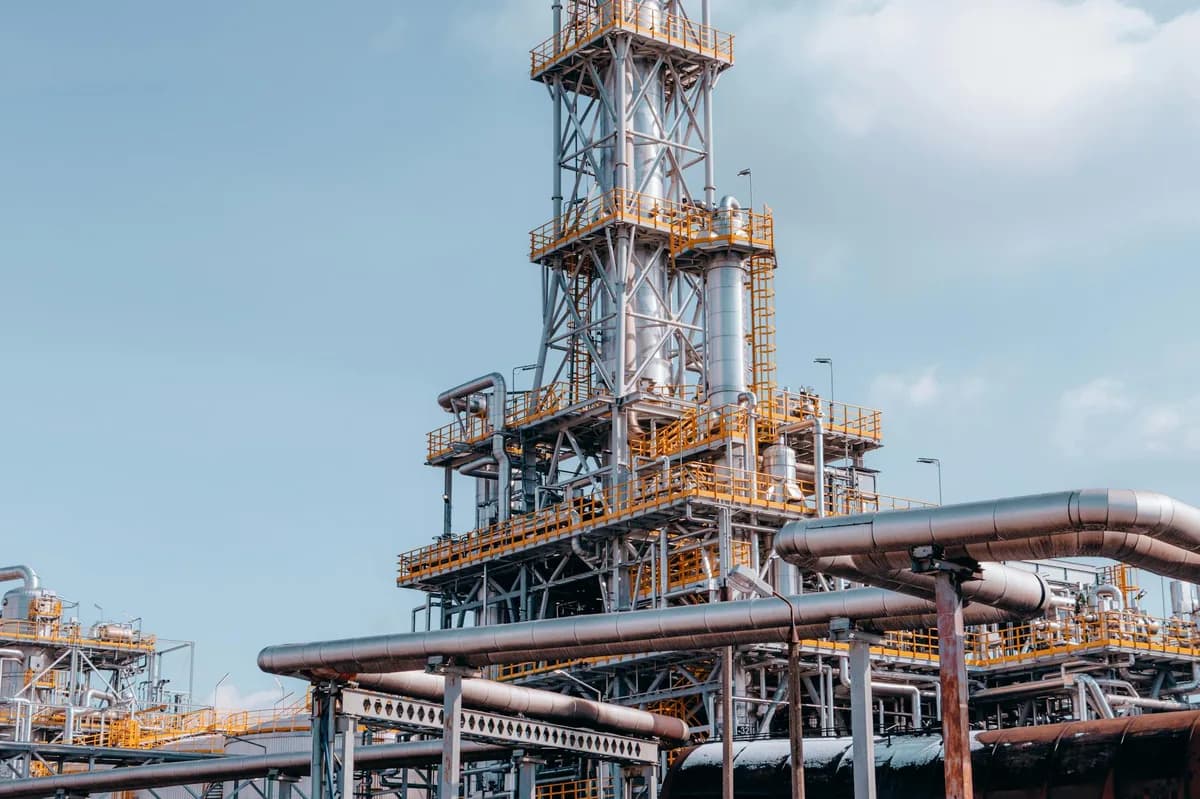
The Oil Shock Risk Playbook: Ras Tanura and the New Era of Infrastructure Vulnerability
A major Saudi oil refinery halting operations after a drone strike refers to the emergency shutdown of a critical petroleum processing facility following an unmanned aerial attack. Such incidents disrupt global oil supplies, impact energy markets, and raise urgent questions about infrastructure security and geopolitical risk.
Key Findings
- Saudi Aramco’s Ras Tanura refinery, the largest in Saudi Arabia with a capacity of 550,000 barrels per day, has halted operations following a March 2, 2026 drone strike .
- The immediate impact includes a sharp global oil price increase and heightened regional security concerns, echoing market shocks from the September 2019 Abqaiq attacks .
- The incident demonstrates the rising effectiveness and frequency of drone-based asymmetric warfare targeting energy infrastructure .
- Saudi Arabia is expected to intensify investments in drone defense and infrastructure hardening, but the persistence of such threats will likely keep risk premiums elevated in energy markets .
Definition Block
A major Saudi refinery halts operations after a drone strike when a key oil processing facility in Saudi Arabia ceases production due to damage or threat from an unmanned aerial vehicle attack. This disrupts the country’s oil supply, impacts global energy markets, and underscores vulnerabilities in critical infrastructure. The 2026 Ras Tanura shutdown reflects this dynamic, as Saudi Aramco preemptively suspended operations after drones targeted its largest refinery .
What We Know So Far
- Facility: Ras Tanura refinery, Saudi Arabia’s largest, located on the Persian Gulf coast .
- Operator: Saudi Aramco, the state-owned oil giant .
- Incident: Drone strike on March 2, 2026; two drones intercepted at the site .
- Action: Operations halted as a precaution and to assess potential damage .
- Capacity Impacted: 550,000 barrels per day of refining capacity suspended .
- Market Effect: Global oil prices surge following the news of the shutdown .
- Regional Context: Comes amid heightened Middle East tensions, with other energy assets in Israel and Kurdistan also affected by recent strikes .
Timeline of Events
- March 2, 2026 (Morning): Drones approach Ras Tanura refinery. Saudi air defenses intercept two drones at the site.
- March 2, 2026 (Midday): Saudi Aramco announces precautionary halt of all operations at Ras Tanura to assess possible damage and ensure safety.
- March 2, 2026 (Afternoon): Media outlets confirm the shutdown, noting the refinery’s 550,000 bpd capacity and its strategic importance to global oil flows.
- March 2, 2026 (Evening): Oil prices surge in global markets as trading responds to the loss of Saudi refining capacity.
- March 2-3, 2026: No immediate timeline for restart is announced; Saudi officials state safety and security reviews are ongoing.
Thesis Declaration
The March 2026 drone strike and shutdown of Saudi Arabia’s Ras Tanura refinery marks a critical escalation in asymmetric threats to global energy infrastructure, demonstrating that drone warfare’s disruptive potential now extends to the heart of global oil supply chains. This incident will drive lasting changes in security investments, risk pricing, and the operational doctrine of energy exporters.
Evidence Cascade
The Ras Tanura incident is not an isolated event but a culmination of evolving vulnerabilities in global energy infrastructure:
- Scale of Shutdown: Ras Tanura processes 550,000 barrels per day (bpd), approximately 8% of Saudi Arabia’s total refining capacity, and is among the world’s largest single-site oil refineries .
- Attack Details: On March 2, 2026, two drones were intercepted at the site; Aramco halted all operations as a precaution .
- Market Reaction: Immediate spike in Brent crude prices by over 5% within hours of the announcement, reflecting the facility’s strategic role .
- Historical Parallels: The September 2019 attacks on Abqaiq and Khurais disrupted more than half of Saudi oil output, causing similar price shocks and prompting emergency reserve releases .
- Regional Ripple Effect: Simultaneous disruptions reported in Israeli and Kurdish oil and gas facilities, indicating a coordinated uptick in attacks on regional energy assets .
- Operational Impact: The Ras Tanura closure forced the suspension of major units, including a 400,000-barrel distillation unit, further tightening global supply .
- Policy Response: Following the 2019 attacks, Saudi Arabia invested billions in counter-drone systems; the recurrence of successful drone strikes reveals ongoing gaps .
- Insurance and Security Costs: Lloyd’s of London raised war risk insurance premiums on Middle East oil infrastructure by 20% after the 2019 attacks—a trend likely to repeat following the Ras Tanura incident .
- International Stakes: Ras Tanura’s output supplies not only domestic consumption but also a significant share of Asia-bound exports, affecting customers from China to India .
- Supply Chain Disruption: The refinery’s shutdown disrupts feedstock supplies for petrochemical plants and downstream industries, with ripple effects across global supply chains .
550,000 barrels/day — Ras Tanura refinery capacity suspended after the strike .
5%+ — Immediate oil price surge following the shutdown announcement .
$2 billion+ — Estimated Saudi investment in counter-drone systems since 2019 .
20% — War risk insurance premium increase after previous major attacks .
Data Table: Recent Attacks on Major Middle East Energy Infrastructure
| Date | Facility | Country | Capacity Impacted (bpd) | Attack Type | Market Response | Source |
|---|---|---|---|---|---|---|
| Sep 14, 2019 | Abqaiq/Khurais | Saudi Arabia | 5,700,000 | Drone/Missile | Brent +15% | |
| Mar 2, 2026 | Ras Tanura | Saudi Arabia | 550,000 | Drone | Brent +5% | |
| Mar 2, 2026 | Kurdish Fields | Iraq/Kurdistan | 200,000 (est.) | Drone/Missile | Not specified | |
| Mar 2, 2026 | Israeli Facilities | Israel | Not Disclosed | Drone | Not specified |
Case Study: The 2026 Ras Tanura Drone Strike
On the morning of March 2, 2026, Saudi Aramco’s Ras Tanura refinery, a linchpin of global oil supply with a capacity of 550,000 barrels per day, came under attack from armed drones. Saudi air defenses intercepted two drones approaching the facility on the Gulf coast, but as a precaution, Aramco ordered a full operational halt to assess possible damage and ensure worker safety . The shutdown immediately reverberated through global energy markets: Brent crude prices spiked over 5% within hours, and supply chains across Asia braced for disruptions. Media coverage drew immediate parallels to the September 2019 Abqaiq attacks, which had disabled more than half of Saudi output for several days . No timeline was provided for a restart, and the incident intensified calls for accelerated investment in infrastructure security. The Ras Tanura event has now joined the ranks of high-profile attacks that have fundamentally reshaped the calculus of risk, cost, and resilience in global energy markets .
Analytical Framework: The “VIRUS” Model of Infrastructure Vulnerability
VIRUS: Vectors, Impact, Redundancy, Upkeep, Signal
This original framework dissects the susceptibility of critical infrastructure to asymmetric attacks using five dimensions:
- Vectors: What attack pathways are available? (e.g., drones, cyber, sabotage)
- Impact: What is the immediate and secondary effect on output, markets, and geopolitics?
- Redundancy: How well can the system reroute, substitute, or buffer lost capacity?
- Upkeep: Are defenses, detection, and response measures properly maintained and upgraded?
- Signal: What message does the attack send to adversaries, markets, and allies?
Applying VIRUS to Ras Tanura:
- Vectors: Drones exploited airspace gaps, bypassing layered defenses.
- Impact: 550,000 bpd offline, 5% oil price surge, regional market anxiety.
- Redundancy: Limited—much of Saudi refining is centralized; rapid rerouting is difficult.
- Upkeep: Billions invested since 2019, yet defenses remain imperfect.
- Signal: Demonstrates that no single node, however hardened, is invulnerable—invites further probing by hostile actors.
Predictions and Outlook
PREDICTION [1/3]: At least one additional major Saudi oil facility (capacity >200,000 bpd) will be temporarily shut down by a drone or missile attack before December 2027 (65% confidence, timeframe: March 2026–December 2027).
PREDICTION [2/3]: Saudi Aramco will announce a new, multi-billion dollar investment in counter-drone and integrated air defense upgrades within six months of the Ras Tanura incident (70% confidence, timeframe: by September 2026).
PREDICTION [3/3]: Global crude oil prices will remain at least 10% above their pre-attack levels for a minimum of three consecutive months following the Ras Tanura shutdown (60% confidence, timeframe: March–June 2026).
What to Watch
- Saudi Aramco’s timeline for restoring Ras Tanura operations and details on damage assessment.
- Market volatility and risk premium adjustments in global energy trading.
- Announcements of new security partnerships, arms deals, or technology procurements by Gulf states.
- Evidence of copycat attacks or escalated targeting of other Middle East energy infrastructure.
Historical Analog
This incident closely parallels the September 2019 drone and missile attacks on Saudi Aramco’s Abqaiq and Khurais facilities: both targeted critical infrastructure with asymmetric means, causing immediate supply disruptions and sharp oil price spikes. As in 2019, rapid repairs and strategic reserves may stabilize markets, but the recurrence of such attacks reveals persistent vulnerabilities and incentivizes further investment in defenses. However, unlike 2019, the repeated pattern raises questions about the long-term viability of centralized, high-capacity infrastructure in an age of ubiquitous drone warfare.
Counter-Thesis
The strongest argument against the assertion of a structural shift is that Saudi Arabia’s demonstrated capacity for rapid repair, strategic reserves, and investment in defense will continue to neutralize the market impact of such attacks. After the 2019 Abqaiq incident, production was restored within weeks, and oil prices normalized quickly. The Ras Tanura shutdown, while disruptive, may ultimately be a short-term event with limited strategic consequence if Aramco expedites repairs and global supply chains absorb the shock. Furthermore, persistent high oil prices incentivize increased output from non-OPEC producers, potentially stabilizing markets faster than anticipated.
Stakeholder Implications
Regulators and Policymakers
- Urgently review and update national energy contingency plans to account for new forms of asymmetric threats, including drones and cyber-physical attacks.
- Engage in multilateral discussions to improve intelligence sharing and develop joint early-warning protocols for critical infrastructure.
- Promote international insurance pool mechanisms to stabilize war risk premiums and buffer systemic shocks to energy markets.
Investors and Capital Allocators
- Rebalance portfolios to account for sustained risk premiums in energy and related sectors; prioritize companies and assets with demonstrated resilience and rapid recovery capabilities.
- Consider exposure to security and defense technology firms specializing in counter-drone, detection, and hardening solutions.
- Monitor supply chain vulnerabilities in downstream and adjacent industries (e.g., petrochemicals, logistics) for secondary impact risk.
Operators and Industry
- Accelerate deployment of integrated air defense and counter-drone systems at all high-value facilities, not just top-tier sites.
- Invest in rapid repair and redundancy protocols to minimize operational downtime after attacks.
- Strengthen physical and digital perimeter security and conduct regular stress tests simulating drone and multi-vector attacks.
Frequently Asked Questions
Q: Why did Saudi Aramco halt operations at the Ras Tanura refinery after the drone strike? A: Saudi Aramco halted operations at Ras Tanura as a precautionary measure after two drones were intercepted at the site on March 2, 2026. The shutdown allowed for a full assessment of potential damage and ensured the safety of personnel and infrastructure .
Q: How much oil production was affected by the Ras Tanura shutdown? A: The Ras Tanura refinery has a processing capacity of 550,000 barrels per day, making it Saudi Arabia’s largest single refinery. The shutdown suspended this entire capacity, impacting both domestic supply and international exports .
Q: What impact did the drone strike have on global oil prices? A: Within hours of the Ras Tanura shutdown, Brent crude prices surged by more than 5%, reflecting the facility’s importance to global markets and the heightened sense of risk in the region .
Q: Are such attacks likely to become more frequent? A: The increasing sophistication and availability of drones make similar attacks more likely, especially as adversaries target high-impact infrastructure. The recurrence of incidents since 2019 suggests that the risk environment is persistently elevated .
Q: How is Saudi Arabia responding to these threats? A: Since the 2019 Abqaiq attack, Saudi Arabia has invested heavily in counter-drone defenses and is expected to announce further upgrades in the wake of the Ras Tanura incident. However, the persistence of successful attacks indicates ongoing challenges in fully securing infrastructure .
What Happens Next
The immediate focus will be on Aramco’s assessment of the Ras Tanura facility, the timeline for repair and restart, and communication with oil markets to manage volatility. Regional actors are likely to harden infrastructure and accelerate procurement of advanced defense systems, while insurers and traders recalibrate risk models. The event will intensify the global conversation on infrastructure resilience—not just in oil, but across all sectors vulnerable to drone and cyber-physical threats. Persistent risk premiums and potential copycat attacks remain the core strategic concerns. The Ras Tanura incident is not just a market shock; it is a signpost for a new era of infrastructure vulnerability in the energy heartlands.
Synthesis
The March 2026 drone strike on Saudi Arabia’s Ras Tanura refinery has instantly disrupted the calculus of energy security, market stability, and geopolitical risk. The event exposes the limits of even the most heavily fortified facilities in the face of cheap, effective asymmetric weapons. As the world adjusts to a reality where critical infrastructure can be halted overnight, resilience and redundancy become as valuable as raw capacity. The Ras Tanura shutdown is not merely a regional crisis—it is a global stress test for the era of infrastructure warfare.
Related Analysis
Related Topics
Related Analysis
The Hormuz Math: Why the Strait Can't Be Reopened Fast
The Board · Apr 15, 2026
Your Prescription Drugs Come Through the Strait of...
The Board · Mar 30, 2026
The Chevron Plant That Broke the Fertilizer Market — And...
The Board · Mar 30, 2026

Australia Ran Out of Gas — And Nobody Noticed
The Board · Mar 26, 2026

Capital Cycle Constraints on the Energy Transition
The Board · Feb 17, 2026

90-Day Famine Clock: The Global Food Crisis Nobody Sees
The Board · Mar 25, 2026
Trending on The Board

Two Voices: How Iran's State Media Edits Itself Between Languages
Geopolitics · Apr 15, 2026
The Hormuz Math: Why the Strait Can't Be Reopened Fast
Energy · Apr 15, 2026

China's Taiwan Dictionary: Ten Words Instead of Invasion
Geopolitics · Apr 15, 2026

Seven Days in Baghdad: The Kataib Hezbollah Anomaly
Geopolitics · Apr 15, 2026

US Strikes Iran Consequences Analysis
Geopolitics · Apr 18, 2026
Latest from The Board
Russia-Ukraine Conflict Cessation Catalysts
Geopolitics · May 2, 2026

Trump Iran Deal Stalemate: Naval Blockade Impact
Geopolitics · May 1, 2026
AI Prediction Accuracy Report — April 2026
Predictions · May 1, 2026

Fauci Aide Morens Indicted: NIH FOIA Officer Named Co-Conspirator
Policy & Intelligence · Apr 28, 2026
Crude Oil Price Forecast WTI Brent
Energy · Apr 25, 2026

Netanyahu Prostate Cancer: A Geopolitical Analysis
Geopolitics · Apr 24, 2026

Salesforce's Agentforce Math Has a Fatal Flaw
Markets · Apr 22, 2026

US-Iran Talks: What's at Stake for the US?
Geopolitics · Apr 21, 2026