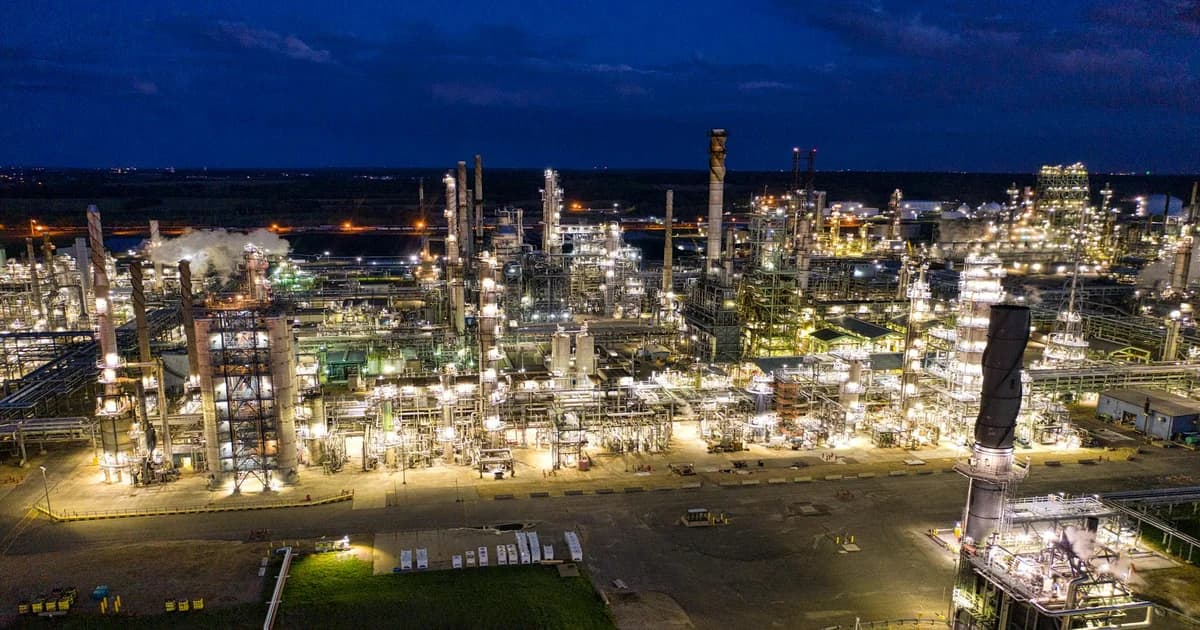
Oil's 2027 outlook depends on whether restored exports can rebuild depleted inventories. EIA's September forecast puts Brent at about $90 a barrel for the second half of 2026 and $74 on average in 2027. Those are conditional forecasts, not current quotes or guaranteed destinations. Its model inputs closed on September 3. EIA, September 9, 2026
The Board's assessment is that export recovery alone is an incomplete test of normalization. Buyers also need evidence that stocks are rebuilding and refined-fuel shortages are easing. A ceasefire announcement can change expectations quickly; confirming the physical recovery takes longer.
The dated evidence behind the outlook
| Source and cutoff | What it says | How to use it |
|---|---|---|
| EIA, published September 9; inputs through September 3 | Brent averages around $90/b in July–December 2026 and $74/b in 2027; regional production remains below pre-conflict averages until Q2 2027 | A conditional baseline, not an end-2027 target |
| IEA, published September 11 | Observed global inventories fell 95 million barrels in August; cumulative draws since February reached 507 million barrels | Evidence that the market was consuming its buffers |
| IEA, September report | Global demand falls 2.5 million barrels a day in 2026, then recovers 2.6 million in 2027 | Demand weakness and supply stress can coexist |
Sources: EIA Short-Term Energy Outlook; IEA September Oil Market Report. These are agency estimates and projections, subject to revision. The reports have different cutoffs and methodologies; their inventory estimates should not be spliced into one continuous series.
Why Brent can fall while fuel remains expensive
A crude benchmark is only one part of a delivered fuel bill. Refinery availability, the mix of products produced, transport and inventories also matter. The IEA's September report identifies particular tightness in diesel and other refined products, rather than treating every oil product as equally scarce. IEA September report
Our interpretation: a recovery in crude exports could lower Brent before it fully lowers diesel costs. For businesses budgeting fuel, the relevant question is whether the product they buy is becoming more available in their region. A change in the global crude headline cannot answer that by itself.
Three scenarios to monitor
These are analytical conditions, not a calibrated probability model. We assign no numerical likelihoods and no invented quarterly price bands.
| Scenario | Evidence that would support it | Price implication | What would weaken it |
|---|---|---|---|
| Export recovery becomes inventory recovery | Sustained physical export gains followed by reported stock rebuilding | Supports movement toward a lower 2027 Brent average | Renewed stock draws despite higher exports |
| Disruption persists | Repeated interruptions, continuing stock depletion and persistent product shortages | Prices can stay above the recovery baseline; abrupt spikes remain possible | Durable restoration of deliveries and inventories |
| Recovery meets weak consumption | Supply restoration outpaces recovery in refinery demand and final consumption | Prices can undershoot the baseline | Faster demand recovery or renewed supply restraint |
The distinction between the first and third cases matters. Both can produce falling prices, but one reflects improving supply security and the other a weaker economy. Treating every oil-price decline as good news obscures that difference.
The scenarios are not mutually exclusive phases. A market can move from interruption to partial recovery and back again. That is why we would revise the assessment using observed changes rather than attach a fixed probability to a diplomatic narrative.
What this means for WTI
This review does not publish a separate numerical WTI forecast. It would be misleading to generate one by subtracting the same few dollars from every Brent scenario. A usable comparison needs a named benchmark, the same forecast period and a documented treatment of the spread.
For readers comparing another forecast with this one, check whether it describes spot Brent, WTI, a futures contract or a delivered regional crude. Also distinguish an annual average from a year-end level. A temporary spike and a much lower annual average can both occur; they are not competing measurements.
A practical update test
For each subsequent monthly outlook, ask:
- Did physical supply improve? Compare actual reported production and exports with the previous forecast, rather than treating an announced capacity figure as delivered supply.
- Did inventories respond? Check whether reported stocks continue falling or begin rebuilding, using a consistent source and coverage.
- Did product tightness ease? Separate the crude balance from shortages in the fuels consumers and businesses purchase.
- Did the agency change its assumptions? Record forecast vintage and horizon before declaring that a previous call was right or wrong.
The Board would become more confident in normalization when those indicators improve together. If exports rise but inventories keep falling, the evidence for a durable price decline remains incomplete. This is an analytical decision rule, not a trading signal or personalized investment advice.
Correction and methodology note
This replacement withdraws the earlier article's unsupported scenario probabilities, quarterly Brent/WTI bands, attributed quotations and exact price-response rules. It also removes chart placeholders and operational claims that could not be traced to a public source. The earlier estimates are not being silently presented as successful forecasts.
The numerical baseline above is attributed to EIA, with its original information cutoff. The scenario comparison is The Board's qualitative analysis, not an EIA or IEA forecast. No September 27 spot quote, independently calibrated probability model or proprietary sell-side research was verified for this revision.
For related geopolitical context, see our geopolitical risk outlook.
For a separate assessment of reserve demand and monetary assumptions, see our long-term gold outlook. Oil supply stress alone does not establish a gold-price forecast.
Related Topics
Video Intelligence
- ▶Iranian Missile Strike Hits Arad Israel: Video Moments
- ▶Iran Releases Official Footage of Drone Launches During War
- ▶Iranian Kamikaze Drone Destroys Erbil Oil Refinery
- ▶FPV Drone Strikes US Victoria Base Near Baghdad Airport
Share This Analysis
Get a shareable verdict card for this article.
Get the next one first
Free briefings when we publish major outlooks and forecasts. No spam — unsubscribe anytime.
Related Analysis

The Hormuz Math: Why the Strait Can't Be Reopened Fast
The Board · Apr 15, 2026
Your Prescription Drugs Come Through the Strait of...
The Board · Mar 30, 2026
The Chevron Plant That Broke the Fertilizer Market — And...
The Board · Mar 30, 2026

Australia Ran Out of Gas — And Nobody Noticed
The Board · Mar 26, 2026

Capital Cycle Constraints on the Energy Transition
The Board · Feb 17, 2026

90-Day Famine Clock: The Global Food Crisis Nobody Sees
The Board · Mar 25, 2026
Latest from The Board

79 Years of UFO Lies, Roswell to the Pentagon
Defense & Security · Sep 29, 2026

How CENTCOM Is Brokering an Israel-Saudi Pact
Defense & Security · Sep 19, 2026

Why the Pentagon Pulled Its Iran War Plans Offline
Defense & Security · Sep 19, 2026
How a Stablecoin Funded Moldova's 2026 Election
Geopolitics · Sep 19, 2026

The Hidden Gold Demand Behind the $6,000 Target
Markets · Sep 17, 2026
Houthis Take Perim as Saudis Halt Pipeline 2026
Geopolitics · Sep 13, 2026

Epstein Intelligence Ties: Evidence vs Allegation in 2026
Policy & Intelligence · Sep 6, 2026
What Israel-Iran War Games Got Wrong About 2026
Defense & Security · Sep 6, 2026