Executive Summary
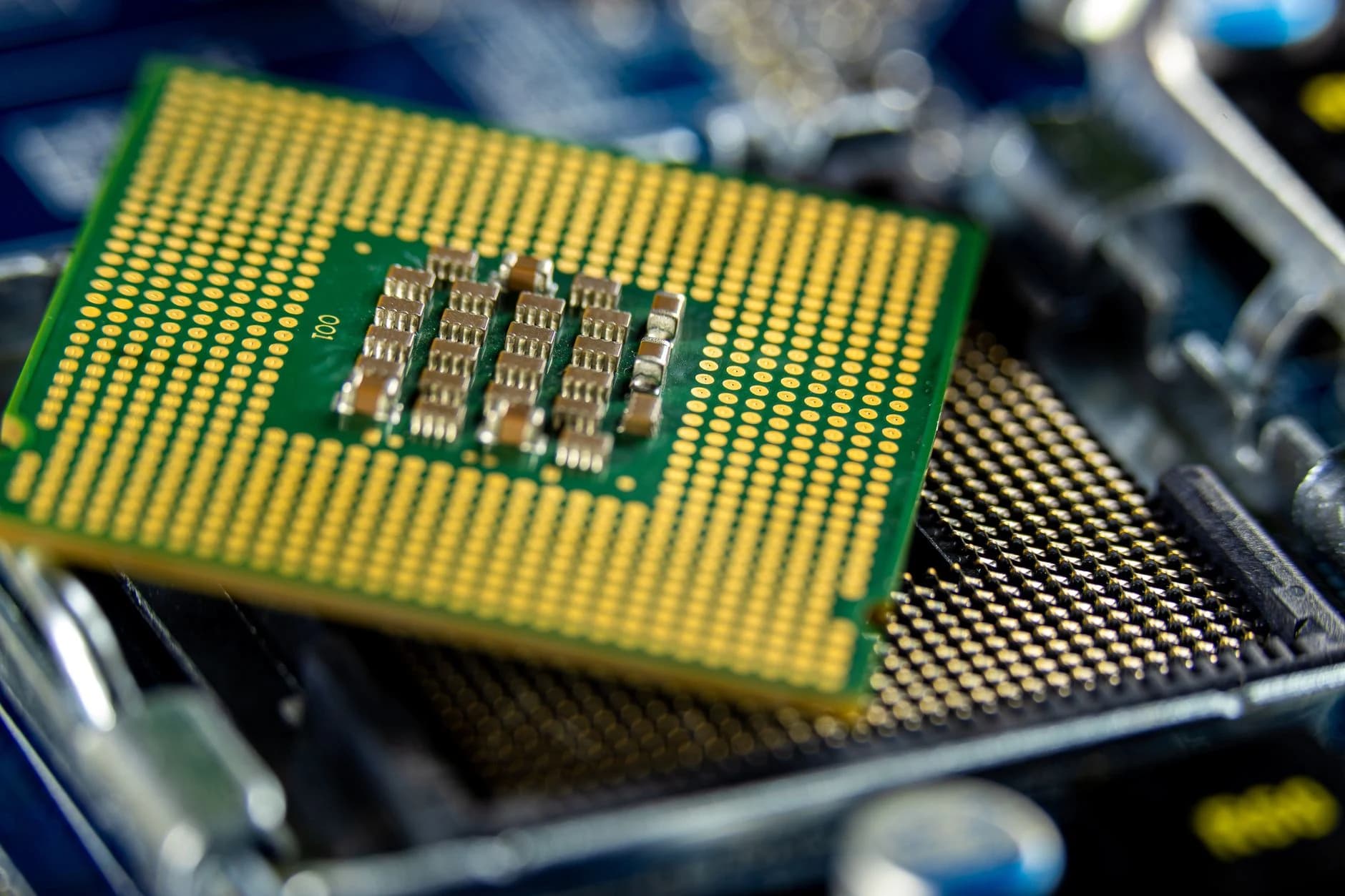
AI-chip stocks have added roughly $2 trillion in market value this year and the Philadelphia Semiconductor Index has surged about 104% — but Michael Burry is now short Micron, wagering that a rally built on capacity that cannot physically arrive before 2028 is about to break. The demand is real. The timeline is the problem.
Every "fix" announced in 2026 lands years after the shortage it is meant to solve. Qualcomm's memory-light accelerators, Korea's half-trillion-dollar fab plan, TSMC's expanded Arizona build — all target 2027 through 2029. The binding constraints of today (high-bandwidth memory, advanced packaging, and power) stay tight through at least 2027. And beneath the whole stack sits a mineral dependency that Beijing has already weaponized once, on a truce clock that expires in November.
The Melt-Up, By the Numbers
The rally, still running hot in July 2026, is larger than the round numbers suggest. As of June 23, the SOX was up 104% year-to-date and about 181% over twelve months, according to Yahoo Finance. Its volatility signature is the unsettling part: nine single-day moves of 5% or more in 60 sessions — a clustering last matched around the 2008–09 and dot-com-era dislocations, not during calm bull markets.
| Metric | Figure (2026) |
|---|---|
| SOX index, YTD | +104% |
| SOX, trailing 12 months | +181% |
| Micron / Intel / AMD, Q2 gains | +240% / +216% / +186% |
| Global chip sales, 2026 (proj.) | ~$975bn |
| Generative-AI chips (proj.) | ~$500bn |
| Qualcomm data-center target | >$15bn by FY2029 |
| Korea cluster commitment | ~$576bn |
| TSMC cumulative Arizona investment | ~$44bn |
Micron, Intel, and AMD alone added roughly $2 trillion in combined value in the second quarter, per MEXC News. Against that, Burry disclosed a short on Micron, noting it traded further above its 200-day moving average than at any point since 1984 — a span that includes the dot-com peak — according to The Motley Fool. The bull and bear cases are both quantitative, and both can be right about different clocks: demand now, air pocket later.
The Bottleneck Nobody's Pricing
The demand is not in dispute — Deloitte estimates global chip sales near $975 billion in 2026, with generative-AI silicon around $500 billion of it. Supply is. High-bandwidth memory is reportedly sold out across SK Hynix, Samsung, and Micron for all of 2026, and TSMC's advanced-packaging lines are booked into 2027, echoing the memory-chip shortage this publication mapped earlier in 2026.
From silicon to substations
Increasingly, the ceiling is not the chip at all. A modern AI rack can draw 120–140 kilowatts against 10–15 for a legacy server, and grid-interconnection queues in Northern Virginia, Phoenix, and Dallas now run four to seven years — enough to put 30–50% of planned 2026 data-center capacity at risk of slipping to 2028. That is why the capital-spending wave, catalogued in this publication's forensic breakdown of AI infrastructure spending, keeps colliding with a physical world measured in years, not quarters.
The Challengers Betting Against Nvidia's Model
The most interesting corporate bet is architectural. At its June investor day, Qualcomm set a target to grow data-center revenue from about $0.3 billion to more than $15 billion by fiscal 2029, using accelerators that stack memory directly on the compute die rather than routing high-bandwidth memory through a packaging interposer, per ServeTheHome. Meta signed on as an early customer. It is a genuine attempt to route around the packaging bottleneck — but Qualcomm's own 2029 target is a fraction of Nvidia's dominant accelerator share, so it hedges the constraint rather than dissolving it.
The supply-side answers are equally multi-year. South Korea, Samsung, and SK Hynix unveiled a combined roughly $576 billion plan for new fabs, packaging, and AI data centers through 2029, per MLQ.ai; TSMC won approval for a further $20 billion in Arizona; AMD committed up to £2 billion to UK AI research. Each is real. None arrives in time to relieve the 2026 crunch.
The Minerals Lever Under All of It
The deepest, least-priced risk is not competition between chipmakers — it is what sits beneath every one of them. China holds roughly 98% of global refined-gallium capacity and a dominant share of rare-earth processing, and it suspended its December-2024 export controls on gallium, germanium, and related materials only until November 27, 2026, per Tom's Hardware. That date sits squarely inside the capex window every major player is now betting on — the same supply-chain vulnerability that defines U.S. semiconductor security. The heavy rare earths feeding that chain trace back to conflict zones such as Myanmar, tying a Wall Street melt-up to a Kachin dry-season offensive most investors will never see.
Even Beijing is not exempt from the physics. Huawei's plan to nearly double output of its Ascend AI chip in 2026 is reportedly capped well below target by the same domestic high-bandwidth-memory scarcity constraining the West, though the exact figures could not be independently verified. That suggests the bottleneck is structural to the technology, not merely an artifact of export controls either side can out-build.
Key Findings
- The rally is bigger than the standard telling — SOX +104% YTD, with a dot-com-era volatility signature.
- Demand is real; the timeline isn't. HBM is sold out through 2026 and packaging into 2027; announced fabs land 2027–2029.
- Power is the new ceiling. Grid queues of four to seven years threaten a third to half of 2026 data-center plans.
- Minerals are the unpriced lever. China's ~98% refined-gallium share and a November 27 truce expiry sit inside the capex window.
What to Watch
The date to circle is November 27, 2026 — the expiry of China's export-control suspension, a hard test of whether the minerals truce holds. Shorter term, watch HBM and advanced-packaging lead times as the honest gauge of the crunch, and grid-interconnection approvals as the constraint migrates from fab to substation. If the rally's timeline stays years ahead of the bottleneck's resolution, a de-rating would not require the AI thesis to be wrong — only early. Either way, one thing is certain: this bottleneck is measured in years, not quarters.
Sources
- Yahoo Finance — semiconductor surge, SOX +104% YTD: https://finance.yahoo.com/markets/stocks/articles/semiconductor-stocks-see-rare-surge-070916646.html
- MEXC News — Micron/Intel/AMD add ~$2tn in Q2 2026: https://www.mexc.com/news/1187040
- The Motley Fool — Michael Burry shorts Micron: https://www.fool.com/investing/2026/07/04/big-short-investor-michael-burry-is-now-betting-ag/
- ServeTheHome — Qualcomm data-center accelerators: https://www.servethehome.com/qualcomm-investor-day-2026-data-center-announcements-cpus-ai-accelerators-and-more/
- MLQ.ai — Samsung/SK Hynix ~$576bn Korea push: https://mlq.ai/news/samsung-and-sk-hynix-commit-518-billion-to-new-chip-fabs-as-south-korea-unveils-576-billion-ai-push/
- Tom's Hardware — China suspends rare-earth/gallium controls to Nov 2026: https://www.tomshardware.com/tech-industry/china-suspends-ban-on-rare-earth-exports-to-us-but-licensing-remains
Related Analysis
- Strategy's $64bn Bitcoin Bet: The Warning and What Saylor's Filings Show
- Blackstone Sells $7.8bn Virginia Data Centers in 2026 — Top Signal?
- Iran Oil Waiver 2026: $8.5bn Loaded, No Buyers in China
- Gold Forecast 2026-2027: Central Bank Record Buying
- Bitcoin ETF Flows April 2026: Fund-by-Fund Breakdown
- Myanmar 2026: China vs India for Ore and Ports
- Europe's 2026 Rearmament: Can the Factories Deliver?
- Oil 2026: Why $72 Brent Misreads the Hormuz Truce
Related Topics
Video Intelligence
- ▶Iranian Missile Strike Hits Arad Israel: Video Moments
- ▶Iran Releases Official Footage of Drone Launches During War
- ▶Iranian Kamikaze Drone Destroys Erbil Oil Refinery
- ▶FPV Drone Strikes US Victoria Base Near Baghdad Airport
Share This Analysis
Get a shareable verdict card for this article.
Get the next one first
Free briefings when we publish major outlooks and forecasts. No spam — unsubscribe anytime.
Related Analysis

2026 Economic Crisis: Why Central Banks May Fail
The Board · Feb 22, 2026

Copper Price Forecast 2029-2031: Supply vs Green Demand
The Board · Feb 22, 2026

US Inflation Outlook and Fed Interest Rate Strategy
The Board · Feb 20, 2026

Will AI Replace White-Collar Jobs in 10 Years
The Board · Feb 22, 2026
When to Hire a VP of Sales vs Investing in PLG
The Board · Feb 22, 2026

ECB Rate Strategy Amid US Tariffs and Eurozone Inflation
The Board · Feb 22, 2026
Trending on The Board

79 Years of UFO Lies, Roswell to the Pentagon
Defense & Security · Sep 29, 2026

How CENTCOM Is Brokering an Israel-Saudi Pact
Defense & Security · Sep 19, 2026

Why the Pentagon Pulled Its Iran War Plans Offline
Defense & Security · Sep 19, 2026
How a Stablecoin Funded Moldova's 2026 Election
Geopolitics · Sep 19, 2026

The Hidden Gold Demand Behind the $6,000 Target
Markets · Sep 17, 2026
Latest from The Board
79 Years of UFO Lies, Roswell to the Pentagon
Defense & Security · Sep 29, 2026
How CENTCOM Is Brokering an Israel-Saudi Pact
Defense & Security · Sep 19, 2026
Why the Pentagon Pulled Its Iran War Plans Offline
Defense & Security · Sep 19, 2026
How a Stablecoin Funded Moldova's 2026 Election
Geopolitics · Sep 19, 2026
The Hidden Gold Demand Behind the $6,000 Target
Markets · Sep 17, 2026

Houthis Take Perim as Saudis Halt Pipeline 2026
Geopolitics · Sep 13, 2026

Epstein Intelligence Ties: Evidence vs Allegation in 2026
Policy & Intelligence · Sep 6, 2026
What Israel-Iran War Games Got Wrong About 2026
Defense & Security · Sep 6, 2026