Executive Summary
Within seventeen days in mid-2026, Myanmar's Min Aung Hlaing was courted in New Delhi and then handed a 21-gun salute in Beijing — a diplomatic surge that accelerated even as his government's writ collapsed to barely a fifth of the country. The dueling visits were read across the region as a China–India "great game" over a failing state. That framing misses the point.
The real contest is over two overlapping chokepoints — and the man being feted controls neither. The first is physical: the Chinese-built deep-sea port at Kyaukphyu and the twin pipelines that let Beijing move oil and gas past the Strait of Malacca. The second is mineral: the Kachin and Shan mines that supply more than half of China's imported dysprosium and terbium, the heavy rare earths behind the magnets in electric vehicles, wind turbines, missile seekers, and fighter jets. Neither Beijing, New Delhi, nor Naypyidaw holds either prize. Armed groups do.
The Port No One Can Afford to Lose
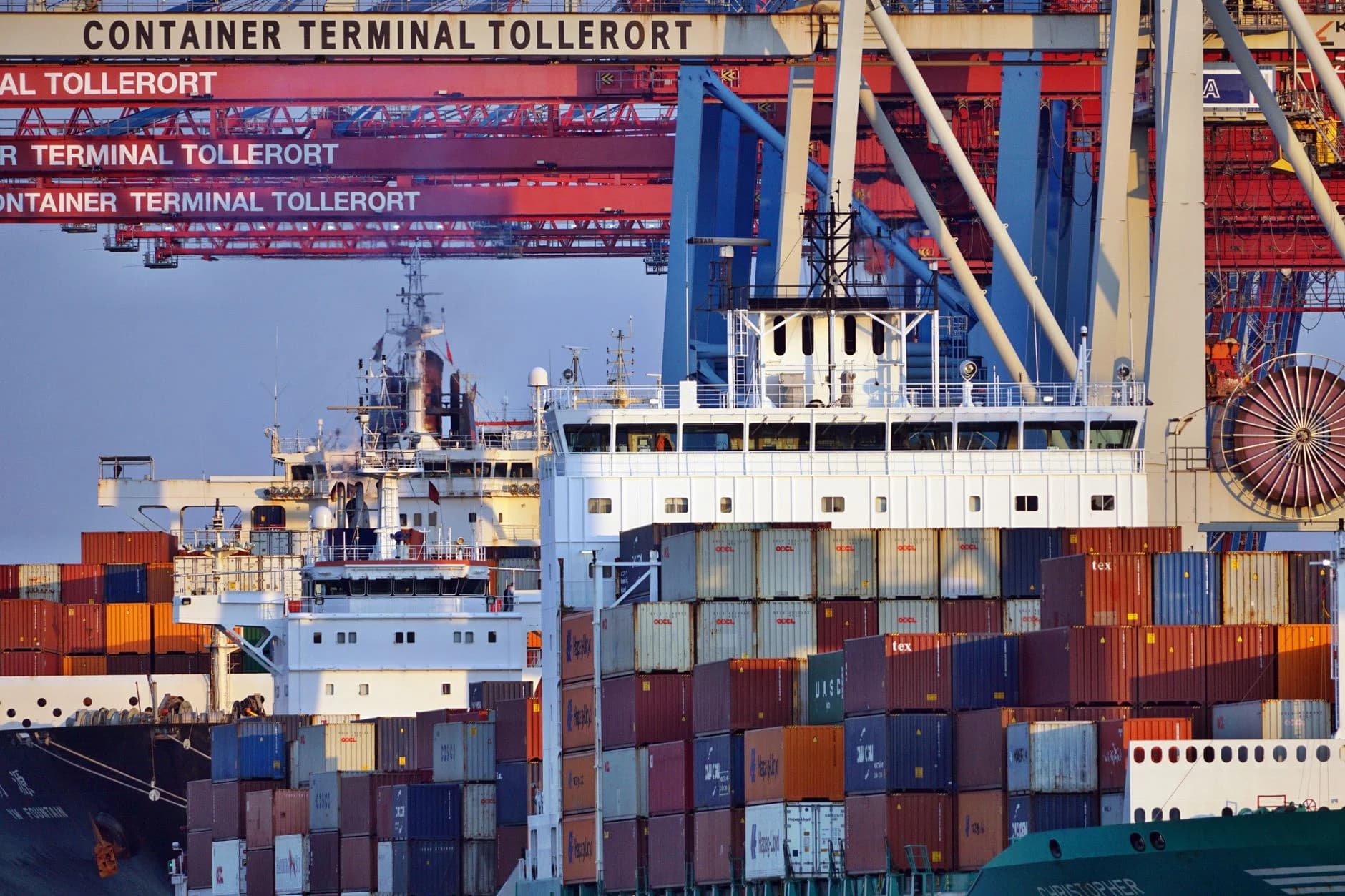
Kyaukphyu is the anchor of the China–Myanmar Economic Corridor. The deep-sea port — 70% owned by China's state-backed CITIC — carries an estimated $7.3 billion total price tag, with a $1.3 billion first phase on Maday Island, according to CSIS. Its strategic value is not throughput. It is insurance.
The pipelines that dodge Malacca
The crude line running from Kyaukphyu into China's Yunnan province can move up to 12 million tonnes a year — roughly 440,000 barrels per day — and a parallel gas line adds up to 12 billion cubic metres annually. That sounds decisive until it is measured against the chokepoint it is meant to relieve: the Strait of Malacca carried an estimated 23.2 million bpd of oil in the first half of 2025, of which China alone imported about 7.9 million bpd, per the U.S. Energy Information Administration. The pipeline replaces under 6% of what Beijing ships through Malacca. It is a hedge, not an exit — the same structural limit that constrains every attempt to engineer around a maritime chokepoint, as with the pipelines that try to bypass the Strait of Hormuz.
India's answer is smaller and slower. The Kaladan Multi-Modal Transit Transport Project — Sittwe port plus a river terminal and a road to India's northeast — costs about $484 million and targets 2027 completion. It runs straight through territory the Arakan Army now controls, which points to the deeper problem for both powers.
The Mineral Chokepoint
Myanmar produced an estimated 22,000 tonnes of rare-earth oxides in 2025, down from 27,000 tonnes in 2024, making it the world's fourth-largest producer behind China and the United States, according to the USGS Mineral Commodity Summaries. The raw tonnage understates the leverage. In the first nine months of 2025, Myanmar shipped roughly $624 million of rare earths to China — about 53% of all Chinese rare-earth imports in that window, per ISP-Myanmar. The concentration in the two heavy elements is tighter still: Myanmar reportedly supplies more than half of China's imported dysprosium and terbium.
Who actually holds the mines
The extraction sits almost entirely outside government hands. Mining sites in Kachin State grew from about 130 in 2020 to at least 370 by 2025. When fighting flared in Kachin in early 2025, Chinese customs data showed Myanmar-origin rare-earth imports falling by roughly half in five months, until Beijing negotiated the reopening of four border gates in late October — a deal struck as much with the Kachin Independence Army as with anyone in Naypyidaw, as Nikkei Asia reported. A supply chain that can be cut in half by a single dry-season offensive is arguably a tighter single point of failure than the semiconductor concentration around Taiwan — and it feeds the same magnet-and-chip contest between Washington and Beijing.
Dueling Diplomacy, Lopsided Numbers
The visit timeline looked symmetric: New Delhi around June 1, Beijing June 15–19. The economics are not.
| Metric | China | India |
|---|---|---|
| Bilateral trade (latest yr) | $19.4 bn (2025) | $2.1 bn (FY2024–25) |
| Approved investment stock | Largest single investor | $782.8 m (39 firms) |
| Flagship corridor | Kyaukphyu / CMEC | Kaladan project |
| Headline project cost | ~$7.3 bn | ~$484 m |
| Energy infrastructure | Oil + gas pipelines live | None operational |
| Rare-earth offtake | ~53% of China's imports | Cooperation agreed only |
China's trade lead over India runs close to nine-to-one, and only Beijing has functioning energy infrastructure on the ground. New Delhi's play appears defensive — securing a restive northeast and denying China uncontested command of the Bay of Bengal — rather than a bid for parity it cannot currently fund.
The Government That Doesn't Hold the Prize
The most telling figures are the ones the summits did not mention. Since the February 2021 coup, Myanmar's civil war has killed more than 100,000 people, a milestone the Irrawaddy marked on July 1, 2026. The junta now governs only about 21% of national territory by ISP-Myanmar's count, while ethnic armed organizations and resistance forces hold close to 38%. In Rakhine State — home to Kyaukphyu — the Arakan Army controls 14 of 17 townships, leaving the government little more than the capital, Sittwe.
Crucially, the Arakan Army has besieged rather than stormed Kyaukphyu, where a small Chinese security detail guards billions in port, pipeline, and power-plant assets. That restraint is the tell: the armed groups treat both chokepoints as leverage to be taxed and negotiated over, not as symbols to be destroyed. Beijing and New Delhi are, in practice, bargaining with the Arakan Army and the Kachin Independence Army as much as with the man they hosted — a reality neither capital will state aloud. It could not be independently verified how long that arrangement holds if the war intensifies.
Key Findings
- Two chokepoints, one weak host. Kyaukphyu's Malacca-bypass pipelines and Kachin's heavy rare earths are the actual stakes; the junta controls neither.
- The pipeline is a hedge, not an exit — it offsets under 6% of China's Malacca crude flow.
- The rare-earth link is the fragile one. A single 2025 offensive halved China's Myanmar imports; the country supplies ~53% of China's rare-earth imports and most of its dysprosium and terbium.
- The "great game" is lopsided — China's trade and investment footprint dwarfs India's by roughly nine-to-one.
What to Watch
The near-term signal is not another state visit but the dry-season fighting: whether the Kachin Independence Army and Arakan Army keep the mines and the port flowing, or use them as bargaining chips again. Washington's stated interest in rare-earth alternatives runs into an inconvenient map — the ore sits in territory already wired into a China-facing export system. If Beijing's supply wobbles a second time, the price signal will show up not in Naypyidaw but in the magnet and maritime-power calculations of every capital that depends on them. The central question is who actually holds the ore when the shooting starts.
Sources
- U.S. Energy Information Administration — Strait of Malacca oil flows: https://www.eia.gov/todayinenergy/detail.php?id=32452
- USGS Mineral Commodity Summaries 2026 (rare earths): https://pubs.usgs.gov/periodicals/mcs2026/mcs2026-rare-earths.pdf
- CSIS — Kyaukphyu: Connecting China to the Indian Ocean: https://www.csis.org/analysis/kyaukpyu-connecting-china-indian-ocean
- Nikkei Asia — China pressures Myanmar rebels over rare earths: https://asia.nikkei.com/business/markets/commodities/china-pressures-myanmar-rebels-in-bid-to-lock-down-rare-earth-supplies
- Al Jazeera — China offers support during Myanmar president's state visit: https://www.aljazeera.com/news/2026/6/16/china-offers-staunch-support-to-myanmar-president-during-his-state-visit
- The Irrawaddy — post-coup death toll hits 100,000: https://www.irrawaddy.com/news/burma/myanmar-mourns-as-post-coup-conflict-death-toll-hits-100000.html
Related Analysis
- Iran After Khamenei 2026: State Funeral, New Supreme Leader, US Deal
- Trump Iran Deal Stalemate: Naval Blockade Impact
- Netanyahu Prostate Cancer: A Geopolitical Analysis
- US-Iran Talks: What's at Stake for the US?
- Strait of Hormuz Blockade: Is Iran Provoking War?
- Europe's 2026 Rearmament: Can the Factories Deliver?
- Oil 2026: Why $72 Brent Misreads the Hormuz Truce
- Blackstone Sells $7.8bn Virginia Data Centers in 2026 — Top Signal?
Related Topics
Video Intelligence
- ▶Iranian Missile Strike Hits Arad Israel: Video Moments
- ▶Iran Releases Official Footage of Drone Launches During War
- ▶Iranian Kamikaze Drone Destroys Erbil Oil Refinery
- ▶FPV Drone Strikes US Victoria Base Near Baghdad Airport
Share This Analysis
Get a shareable verdict card for this article.
Get the next one first
Free briefings when we publish major outlooks and forecasts. No spam — unsubscribe anytime.
Related Analysis

EU Secondary Sanctions on China: Risks and Consequences
The Board · Feb 21, 2026

Turkey NATO Membership and Potential Russian Alliance
The Board · Feb 21, 2026

Modern World War 3 Scenarios and Systemic Collapse
The Board · Feb 19, 2026

Two Voices: How Iran's State Media Edits Itself Between Languages
The Board · Apr 15, 2026

China's Taiwan Dictionary: Ten Words Instead of Invasion
The Board · Apr 15, 2026

Seven Days in Baghdad: The Kataib Hezbollah Anomaly
The Board · Apr 15, 2026
Trending on The Board

79 Years of UFO Lies, Roswell to the Pentagon
Defense & Security · Sep 29, 2026

How CENTCOM Is Brokering an Israel-Saudi Pact
Defense & Security · Sep 19, 2026

Why the Pentagon Pulled Its Iran War Plans Offline
Defense & Security · Sep 19, 2026
How a Stablecoin Funded Moldova's 2026 Election
Geopolitics · Sep 19, 2026

The Hidden Gold Demand Behind the $6,000 Target
Markets · Sep 17, 2026
Latest from The Board
79 Years of UFO Lies, Roswell to the Pentagon
Defense & Security · Sep 29, 2026
How CENTCOM Is Brokering an Israel-Saudi Pact
Defense & Security · Sep 19, 2026
Why the Pentagon Pulled Its Iran War Plans Offline
Defense & Security · Sep 19, 2026
How a Stablecoin Funded Moldova's 2026 Election
Geopolitics · Sep 19, 2026
The Hidden Gold Demand Behind the $6,000 Target
Markets · Sep 17, 2026
Houthis Take Perim as Saudis Halt Pipeline 2026
Geopolitics · Sep 13, 2026

Epstein Intelligence Ties: Evidence vs Allegation in 2026
Policy & Intelligence · Sep 6, 2026
What Israel-Iran War Games Got Wrong About 2026
Defense & Security · Sep 6, 2026