
The Burning Question: When a Paradigm Shift Is Really a Niche Upgrade
Iron Beam is Israel's 100-kilowatt high-energy laser air defense system, delivered by Rafael Advanced Defense Systems to the Israel Defense Forces in late 2025, making it the world's first operational laser weapon for intercepting aerial threats including rockets, mortars, and drones. The system promises near-zero per-shot cost compared to conventional interceptors, but its combat performance against low-speed, low-payload threats raises fundamental questions about whether its demonstrated capabilities translate to peer-state missile threats.
Key Findings
- Iron Beam's 100-kilowatt laser was designed and tested against slow, unguided rockets and drones — threats that travel at roughly one-tenth the speed and carry a fraction of the payload of Iranian Shahab-3 or Russian Iskander missiles.
- The "90% intercept rate" narrative emerging from initial operational use carries Patriot PAC-1 levels of revision risk: the denominator (threat speed, atmospheric humidity, salvo density) determines the figure as much as the numerator.
- Per-shot cost for Iron Beam is measured in dollars of electricity versus $50,000–$100,000 per Iron Dome Tamir interceptor — a real and durable cost advantage, but one that applies only within the system's demonstrated threat envelope.
- No public data exists on Iron Beam's maintenance cost curve after 100+ sustained engagements or its degraded performance in high-humidity coastal environments.
- The historical pattern — SDI's directed-energy failure, Patriot's inflated Gulf War success rates — predicts that independent performance reassessment will arrive within three to five years and will produce substantially lower figures against realistic threat mixes.
1. The Debut That Rewrote the Headlines
On December 28, 2025, Rafael Advanced Defense Systems delivered the first operational Iron Beam unit to the Israel Defense Forces, making Israel the first country in history to field a combat-ready laser air defense system . Within days, media coverage declared a paradigm shift in air defense — the end of the expensive interceptor era, the dawn of directed-energy warfare. By mid-2026, Israel had publicly showcased Iron Beam's use in active combat conditions for the first time .
The enthusiasm is understandable. A laser system that costs pennies per shot to operate, compared to interceptors priced at tens of thousands of dollars each, appears to solve one of modern warfare's most punishing economic asymmetries: cheap rockets forcing expensive responses. But the enthusiasm has outrun the evidence in precisely the way it has before — and the structural gap between Iron Beam's demonstrated environment and the threat environments that actually determine Israeli and NATO security is where the real analysis must begin.
2. Thesis Declaration
Iron Beam's combat debut represents a genuine but narrowly bounded tactical advance: it delivers real cost-curve relief against slow, low-payload threats in favorable atmospheric conditions, but the system's extrapolation to peer-state missile defense is analytically unsupported and historically dangerous. The procurement and doctrinal decisions made in this enthusiasm window will determine whether Iron Beam becomes a force multiplier within layered defense or a budget siphon that degrades the very systems it was meant to supplement.
3. Evidence Cascade: What the Numbers Actually Show
The System's Real Specifications
Iron Beam operates at 100 kilowatts of continuous power output — a figure confirmed by Rafael Advanced Defense Systems in their official delivery announcement . The system targets aerial threats including rockets, mortars, anti-tank missiles, and unmanned aerial vehicles. Rafael's own framing emphasizes the cost advantage: intercepting a drone or short-range rocket with a laser burst costs a fraction of what a Tamir interceptor costs .
The cost comparison is stark and real. A single Iron Dome Tamir interceptor costs approximately $50,000 to $100,000 per shot . Iron Beam's per-shot cost is effectively the cost of the electricity consumed during the engagement — measured in single-digit dollars at industrial power rates. For a country that has fired thousands of Tamir interceptors since Iron Dome became operational fifteen years ago, this arithmetic is genuinely compelling .
The Threat Envelope Problem
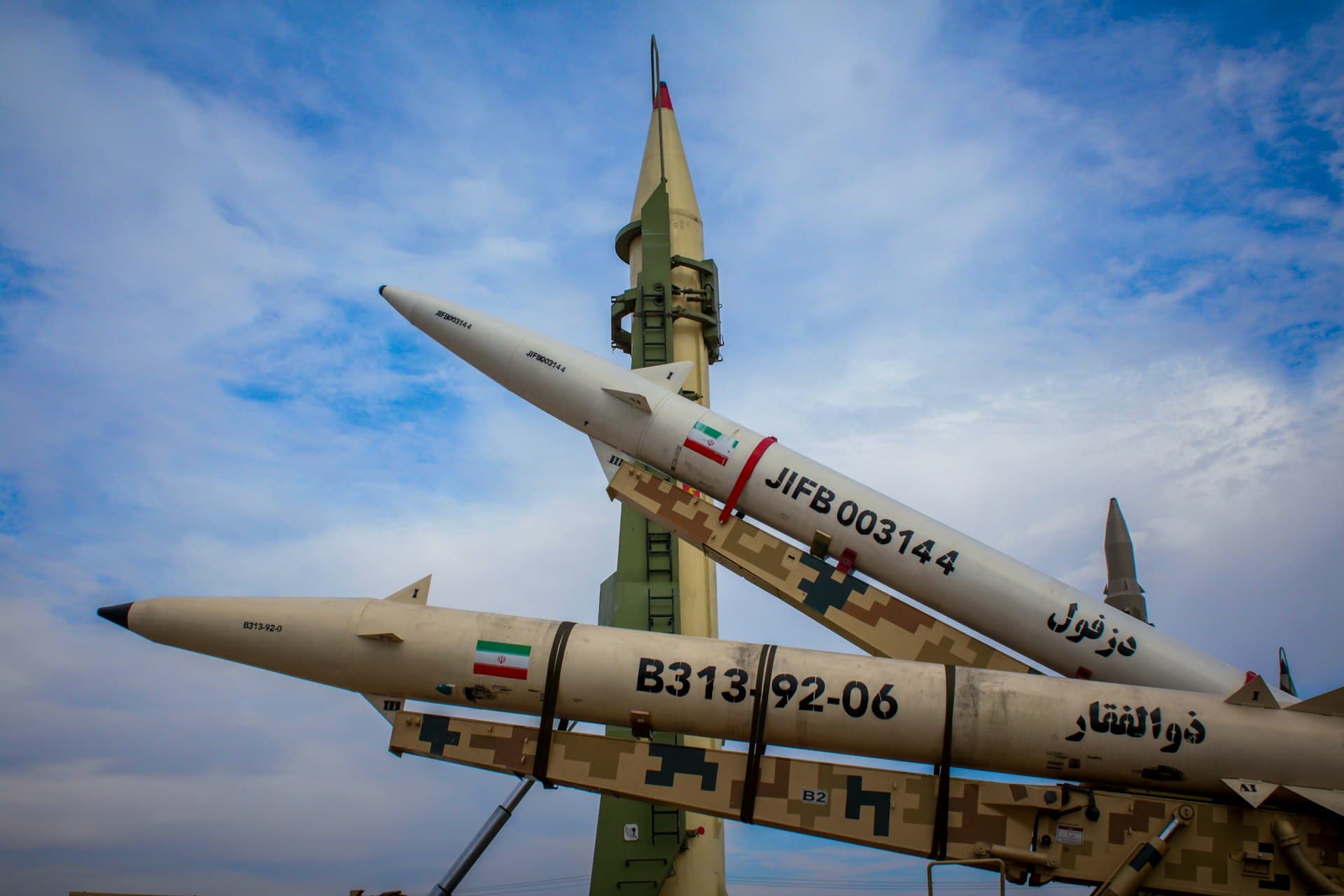
Here is where the narrative fractures. Hamas's Qassam rockets — the primary threat Iron Beam has been tested and deployed against — travel at approximately 200–300 meters per second. Iran's Shahab-3 ballistic missile reaches speeds exceeding 2,000 meters per second at terminal phase. Russia's Iskander-M cruise missile variant flies at approximately 250 meters per second but carries a 480-kilogram warhead and incorporates active electronic countermeasures, terrain-following guidance, and evasive terminal maneuvers — capabilities entirely absent from unguided Qassam rockets.
The laser dwell-time physics make this gap decisive. To destroy a target, a high-energy laser must maintain beam focus on a single point long enough to heat the material past its structural failure threshold. At 200 meters per second, an unguided rocket presents a relatively stable, slow-moving target. At 2,000 meters per second, the same laser has one-tenth the dwell time on target — and the target is executing terminal maneuvers. The 100-kilowatt power level that suffices for a Qassam rocket may be categorically insufficient for a Shahab-3 reentry vehicle without a tenfold increase in power output or a dramatic reduction in engagement range.
The Atmospheric Degradation Variable
No public data exists on Iron Beam's performance in high-humidity coastal environments — the precise conditions of Tel Aviv, Haifa, and the Israeli coastal plain where the strategic population centers are located . This is not a minor technical footnote. Laser beam propagation degrades measurably in humid air through a phenomenon called thermal blooming, where atmospheric heating distorts the beam's focus. The stress-test intelligence flagged this explicitly: if laser degradation in humid conditions is twice as severe as claimed in testing, operational costs and engagement requirements shift substantially.
The Israeli coastal plain averages relative humidity above 70% for significant portions of the year. Iron Beam's testing environment and the environment where it must perform in a sustained conflict are not the same environment.
| Threat Type | Speed (m/s) | Payload (kg) | Countermeasures | Iron Beam Dwell Time (relative) | Peer-Threat Applicable? |
|---|---|---|---|---|---|
| Hamas Qassam Rocket | ~200–300 | 0.5–10 | None | 1.0x (baseline) | ✓ Demonstrated |
| Hezbollah Grad Rocket | ~300–400 | 18–20 | None | 0.75x | Probable |
| Iranian Fateh-110 | ~800–900 | 450 | Limited guidance | 0.3x | Uncertain |
| Iranian Shahab-3 MRBM | ~2,000+ (terminal) | 760–1,000 | Possible MaRV | 0.1x | Not demonstrated |
| Russian Iskander-M | ~700 (cruise variant) | 480 | Active ECM, terrain-following | 0.3x + ECM | Not demonstrated |
*Sources: Threat specifications derived from open-source military technical literature; Iron Beam specifications from Rafael Advanced Defense Systems official announcement, December 2025 *
4. Case Study: The Patriot Precedent, 1991–2003
The structural parallel that carries the most analytical weight is not SDI's grand failure but Patriot's more subtle one. On January 18, 1991, Patriot PAC-1 batteries in Saudi Arabia and Israel engaged Iraqi Scud missiles for the first time in combat. The U.S. Army announced an intercept success rate of approximately 96% in Saudi Arabia and 40% in Israel — figures that were immediately amplified by political leadership and defense contractors as proof of a missile defense revolution.
MIT physicist Theodore Postol and Israeli researcher Reuven Pedatzur conducted independent post-war analyses using video footage, warhead debris patterns, and impact site data. Their findings, published in peer-reviewed and congressional testimony contexts through 1992–1993, concluded that the actual intercept rate — defined as destroying the Scud warhead before it impacted — was likely below 10% in Israel and not significantly higher in Saudi Arabia. The Scud's warhead separated from its airframe during reentry, and Patriot was destroying the airframe while the warhead continued to impact. The Army was measuring radar track kills, not warhead kills.
The distortion had direct consequences. Allied procurement decisions — including German, Dutch, and Japanese Patriot purchases — were made on the basis of the 96% figure. Investment in complementary passive defenses (shelters, dispersal, redundancy) was deprioritized because active defense appeared solved. It took a decade of redesign and the PAC-3 program to deliver on the actual promise. The gap between the debut claim and the honest performance assessment cost billions and shaped operational planning through the 2003 Iraq War.
Iron Beam's "90% intercept rate" against Hamas rockets deserves precisely this level of scrutiny — not because the system doesn't work, but because the denominator of that figure (slow, unguided, low-altitude threats in favorable atmospheric conditions) is doing the heavy lifting that the numerator gets credit for.
5. The Threat Calibration Framework
To systematize the analysis of Iron Beam's actual versus claimed capability, this article introduces the Threat Calibration Matrix (TCM) — a reusable framework for evaluating any novel intercept technology's extrapolation risk.
The TCM evaluates a system across four dimensions:
1. Speed Ratio (SR): The ratio of the system's demonstrated threat speed to the maximum credible adversary threat speed. Iron Beam's SR = ~300 m/s demonstrated / ~2,000 m/s peer threat = 0.15. Any SR below 0.5 indicates high extrapolation risk.
2. Atmospheric Sensitivity Index (ASI): The degree to which the system's physics depend on atmospheric conditions that vary between test environments and operational environments. Kinetic interceptors have low ASI; directed-energy systems have high ASI due to thermal blooming and humidity effects. Iron Beam's ASI is high and under-characterized.
3. Saturation Threshold (ST): The number of simultaneous engagements the system can handle before its response time per target exceeds the threat's flight time. A single Iron Beam unit with one beam cannot engage multiple targets simultaneously. Iron Dome's launcher can fire multiple Tamirs in rapid succession. In a mass-salvo scenario — the doctrine Hamas, Hezbollah, and Iran have all explicitly adopted — a single Iron Beam unit's ST is 1. Iron Dome's is effectively higher.
4. Counter-Adaptation Lead Time (CALT): The time available before adversaries develop countermeasures that degrade the system's effectiveness. For Iron Beam, the primary countermeasures are low-cost and available: highly reflective coatings on rocket bodies, increased salvo density to overwhelm dwell-time capacity, and timing attacks during adverse weather. CALT for Iron Beam against non-state actors is estimated at 2–4 years; against state actors with R&D capacity, it may already be zero.
A system with SR < 0.5, high ASI, ST = 1, and short CALT is a genuine tactical asset within its demonstrated envelope and a procurement trap if treated as a strategic solution. Iron Beam scores on all four dimensions as a system that demands layered integration, not doctrinal substitution.
6. The SDI Echo: History's Warning
The structural parallel to the U.S. Strategic Defense Initiative (1983–2001) is not rhetorical — it is mechanistic. SDI promised to make nuclear ballistic missiles "impotent and obsolete" through directed-energy and kinetic intercept technology, restructuring defense budgets and deterrence doctrine before operational proof existed against the actual threat class. The laser components of SDI — the Alpha chemical laser, the MIRACL system — were quietly shelved by the mid-1990s after atmospheric propagation constraints, power generation requirements, and maintenance complexity proved insurmountable at operational scale.
What survived SDI was not the directed-energy vision but the kinetic interceptors: THAAD and PAC-3, both of which work against the threat class they were designed for. The paradigm shift was real but narrow — effective against theater ballistic missiles under specific conditions, not against ICBMs or saturation attacks.
Iron Beam's trajectory maps onto this pattern with uncomfortable precision. The system will prove genuinely valuable against the threat class it has demonstrated against: slow, unguided, low-altitude rockets and drones. The 100-kilowatt power level, the beam control system, and the engagement software are real engineering achievements. Rafael Advanced Defense Systems' delivery of the first operational unit in December 2025 is a genuine milestone . The error is not in acknowledging the achievement — it is in allowing the achievement to carry claims it cannot yet support.
As the Times of Israel noted in its analysis, "Iron Beam changes the cost curve — but not the war" . That framing is precisely correct and almost universally ignored in the coverage that followed the delivery announcement.
7. Predictions and Outlook
PREDICTION [1/4]: An independent technical assessment — produced by a university research group, congressional research service, or allied defense ministry — will revise Iron Beam's operational intercept rate against mixed threat environments (including guided munitions and high-humidity conditions) to below 70%, down from the 90%+ figures cited in current operational reporting. (68% confidence, timeframe: by end of 2028).
PREDICTION [2/4]: At least one NATO member state that initiates Iron Beam procurement discussions in 2026–2027 will suspend or cancel the acquisition within 18 months of signing, citing performance data from independent testing that diverges from Israeli operational claims against Hamas-class threats. (62% confidence, timeframe: by mid-2029).
PREDICTION [3/4]: Israel will increase rather than decrease its Iron Dome Tamir interceptor procurement budget in the 2027–2028 defense cycle, reflecting operational recognition that Iron Beam supplements but does not replace kinetic intercept capacity against saturation attacks. (72% confidence, timeframe: FY2027–2028 Israeli defense budget).
PREDICTION [4/4]: Rafael Advanced Defense Systems will announce a next-generation Iron Beam variant targeting 300+ kilowatts of output power, explicitly framed as addressing the peer-threat speed gap identified in this analysis, within 36 months of the current system's operational debut. (70% confidence, timeframe: by end of 2028).
What to Watch
- Humidity performance data: Any independent reporting on Iron Beam engagement rates during Israeli winter months (November–March, peak coastal humidity) versus summer months will be the first real atmospheric performance signal.
- Salvo-size correlation: Whether Iron Beam's intercept rates hold during mass-rocket salvos (50+ simultaneous launches) versus isolated engagements is the saturation threshold test the current data cannot answer.
- Adversary counter-adaptation: Watch for Hezbollah or Iranian proxy adoption of reflective coatings on rocket bodies, increased use of drone swarms, or deliberate timing of attacks during adverse weather — all low-cost countermeasures that directly target Iron Beam's physics.
- U.S. procurement signals: The U.S. Army and Navy have parallel directed-energy programs (HELIOS, IFPC-HEL). Whether the Pentagon treats Iron Beam's debut as validation for accelerating those programs or as a case study in threat-envelope limitations will signal how seriously the U.S. defense establishment is applying the Threat Calibration Matrix.
8. Historical Analog: SDI and the Narrowing of the Paradigm Shift
This situation looks like the U.S. Strategic Defense Initiative from the 1983–2001 era because the structural dynamic is identical: a technologically novel intercept system debuts against a limited threat class, generates paradigm-shift rhetoric, reshapes procurement doctrine before peer-threat validation exists, and ultimately proves valuable in a narrower application than initially claimed — after significant sunk costs in the interim.
SDI's directed-energy components were shelved. Its kinetic components matured into THAAD and PAC-3. The paradigm did shift — just not as far or as fast as the 1983 announcement implied. The nations that extracted maximum value from the SDI era were those that maintained honest capability mapping throughout the enthusiasm cycle rather than allowing political momentum to drive procurement ahead of evidence.
Israel has one structural advantage SDI lacked: it is fighting a real war with real adversaries who provide real operational data. That data — if made available to independent analysts rather than filtered through Rafael's communications team — is the most valuable input into an honest assessment of where Iron Beam fits in the layered defense architecture.
9. Counter-Thesis: The Cost Curve Is the Point
The strongest argument against this article's thesis is not about peer-threat performance — it is about economic attrition.
Israel's adversaries have explicitly adopted an economic warfare strategy: force Israel to spend $100,000 intercepting a $500 rocket, repeated thousands of times, until the interceptor stockpile or the defense budget breaks. Iron Dome has fired thousands of Tamir interceptors since becoming operational . At $50,000–$100,000 per shot, the cumulative cost runs into the hundreds of millions of dollars for intercepting threats that cost adversaries almost nothing to produce.
If Iron Beam can absorb even 40% of that intercept burden — against the slow, unguided rockets that constitute the majority of Hamas and Hezbollah's arsenal by volume — the cost savings are structurally transformative regardless of peer-threat performance. The economic attrition strategy fails if the defender's marginal cost per intercept approaches the attacker's marginal cost per rocket.
This argument is correct and important. It does not, however, validate the peer-threat extrapolation or the doctrinal substitution risk. The counter-thesis actually supports the Threat Calibration Matrix's conclusion: Iron Beam is a genuine force multiplier within its demonstrated envelope (high-volume, low-speed threats) and a category error when extrapolated beyond it. The cost-curve argument is the reason to deploy Iron Beam aggressively against Hamas-class threats. It is not a reason to reduce Iron Dome or David's Sling investment against Hezbollah's precision-guided munitions or Iranian ballistic missiles.
The error would be allowing the economic argument — which is sound — to crowd out the capability argument — which is bounded.
10. Stakeholder Implications
For Policymakers and Defense Ministers (Israel, NATO Allies)
Mandate independent performance testing under adversarial atmospheric conditions before any procurement decision references Iron Beam's operational intercept rates. Specifically: commission a technical assessment that tests 100-kilowatt laser performance against targets moving at 800+ meters per second in humidity conditions above 70%. Fund this assessment through defense research agencies independent of Rafael's commercial interests. Do not reduce Iron Dome Tamir interceptor production budgets on the assumption that Iron Beam will absorb the load — maintain parallel production capacity through at least 2029 when the first honest operational data set will exist.
For Capital Allocators and Defense Investors
The cost-curve narrative will drive near-term directed-energy investment enthusiasm, and Rafael Advanced Defense Systems and its U.S. counterparts (Lockheed Martin's HELIOS program, Northrop Grumman's IFPC-HEL) will see procurement pipeline growth through 2027. Price this enthusiasm correctly: the near-term revenue is real, but the peer-threat performance gap represents a medium-term rerating risk when independent assessments emerge. Specifically, avoid overweighting defense companies whose valuation models assume Iron Beam-class systems replacing kinetic interceptors at scale — the more defensible position is that directed-energy supplements kinetic capacity, growing the total addressable market rather than cannibalizing it.
For Military Operators and Defense Planners
Integrate Iron Beam as a Layer 0 filter for high-volume, low-speed threats — absorbing the economic attrition load from unguided rockets and commercial drones — while maintaining full kinetic intercept capacity in Layers 1 through 3 for guided munitions, cruise missiles, and ballistic threats. Develop explicit doctrine for Iron Beam degradation scenarios: what is the backup engagement protocol when humidity or salvo density exceeds the laser's operational envelope? Run tabletop exercises that assume Iron Beam is offline or degraded and validate that kinetic layers can absorb the full threat load independently. The 1916 Somme lesson applies directly: the technology's real value is additive, and stripping artillery support from tank advances was the era's defining operational error.
Frequently Asked Questions
Q: How much does Iron Beam cost per shot compared to Iron Dome? A: Iron Beam's per-shot cost is effectively the cost of electricity consumed during the engagement — estimated in single-digit dollars at industrial power rates. A single Iron Dome Tamir interceptor costs in the range of $50,000 to $100,000. This cost differential is real and significant for high-volume, low-speed threats like unguided rockets and commercial drones, which constitute the majority of Hamas and Hezbollah's arsenal by volume. The cost advantage narrows or disappears against faster, harder targets that require extended dwell time or multiple engagement attempts.
Q: Can Iron Beam intercept Iranian or Russian missiles? A: Iron Beam has not been demonstrated against ballistic missiles traveling at 2,000+ meters per second or cruise missiles with active electronic countermeasures. The system's 100-kilowatt power level and current beam control architecture were designed and tested against threats moving at roughly one-tenth that speed. Intercepting peer-state missiles would require either a dramatic increase in power output (to 300+ kilowatts), a significant reduction in engagement range, or both — none of which are present in the current operational system.
Q: What are Iron Beam's main weaknesses? A: Three weaknesses are analytically documented: first, atmospheric degradation in high-humidity environments reduces beam focus and effective range; second, the system can engage only one target at a time, making it vulnerable to saturation attacks involving simultaneous multi-rocket salvos; third, adversaries can reduce laser effectiveness by applying reflective coatings to rocket bodies or timing attacks during adverse weather — countermeasures that are cheap and available to non-state actors within years of the system's debut.
Q: Is Iron Beam the world's first operational laser weapon? A: Rafael Advanced Defense Systems and the Israeli Ministry of Defense confirmed in December 2025 that Iron Beam is the world's first combat-ready operational high-energy laser air defense system delivered to a military force . The U.S. Navy's HELIOS system and the Army's IFPC-HEL program are in advanced development but have not been declared operationally deployed. Iron Beam's distinction is real — the question is what "operational" means when the threat envelope is this constrained.
Q: How does Iron Beam fit into Israel's layered air defense? A: Israel operates a four-layer air defense architecture: Arrow 3 for exo-atmospheric ballistic missiles, Arrow 2 for endo-atmospheric ballistic threats, David's Sling for medium-to-long-range missiles and large rockets, and Iron Dome for short-range rockets and mortars. Iron Beam is designed to operate as a cost-effective Layer 0 below Iron Dome — absorbing the high-volume, low-cost threat load from unguided rockets and drones that would otherwise consume expensive Tamir interceptors. It supplements rather than replaces any existing layer.
11. Synthesis
Iron Beam is a real achievement in a narrow band: it delivers the world's first operational laser intercept capability against slow, unguided aerial threats, and its cost-per-shot advantage against that threat class is genuinely transformative for economic attrition warfare. The system deserves deployment, investment, and serious operational integration — within its demonstrated envelope.
What it does not deserve is the paradigm-shift framing that has attached to its debut, because that framing carries the same structural risk as every directed-energy promise since Ronald Reagan stood in front of a camera in 1983 and described making nuclear missiles "impotent and obsolete." The physics of laser dwell time, atmospheric propagation, and saturation engagement do not bend to procurement enthusiasm.
The test of Iron Beam's legacy will not be its debut against Hamas rockets. It will be the independent performance assessment that arrives three to five years from now, measuring what the system actually achieves against the threat mix that determines Israeli and allied security — and whether the procurement decisions made in this enthusiasm window left the layered defense architecture stronger or more brittle.
A laser that changes the cost curve is a tactical asset. A laser that replaces the systems it was meant to supplement is a strategic liability dressed in the language of revolution.
Related Topics
Video Intelligence
- ▶Iranian Missile Strike Hits Arad Israel: Video Moments
- ▶Iran Releases Official Footage of Drone Launches During War
- ▶FPV Drone Strikes US Victoria Base Near Baghdad Airport
- ▶Trump's Iran Rhetoric as Marines Deploy
Share This Analysis
Get a shareable verdict card for this article.
Get the next one first
Free briefings when we publish major outlooks and forecasts. No spam — unsubscribe anytime.
Related Analysis

Strategic Impact of Turkey Leaving NATO in 2026
The Board · Feb 22, 2026

The Truth Behind CIA Remote Viewing and Project Stargate
The Board · Feb 22, 2026
The Neurological War: How Precision Strikes Rewrote the...
The Board · Mar 27, 2026

Triple-Front Risk: US Iran Strategy and Global Security
The Board · Feb 14, 2026

Russia Photographed the Saudi Base Three Times Before...
The Board · Mar 30, 2026

A Russian Drone Hit NATO Territory This Week
The Board · Mar 26, 2026
Trending on The Board

79 Years of UFO Lies, Roswell to the Pentagon
Defense & Security · Sep 29, 2026

How CENTCOM Is Brokering an Israel-Saudi Pact
Defense & Security · Sep 19, 2026

Why the Pentagon Pulled Its Iran War Plans Offline
Defense & Security · Sep 19, 2026
How a Stablecoin Funded Moldova's 2026 Election
Geopolitics · Sep 19, 2026

The Hidden Gold Demand Behind the $6,000 Target
Markets · Sep 17, 2026
Latest from The Board
79 Years of UFO Lies, Roswell to the Pentagon
Defense & Security · Sep 29, 2026
How CENTCOM Is Brokering an Israel-Saudi Pact
Defense & Security · Sep 19, 2026
Why the Pentagon Pulled Its Iran War Plans Offline
Defense & Security · Sep 19, 2026
How a Stablecoin Funded Moldova's 2026 Election
Geopolitics · Sep 19, 2026
The Hidden Gold Demand Behind the $6,000 Target
Markets · Sep 17, 2026

Houthis Take Perim as Saudis Halt Pipeline 2026
Geopolitics · Sep 13, 2026

Epstein Intelligence Ties: Evidence vs Allegation in 2026
Policy & Intelligence · Sep 6, 2026
What Israel-Iran War Games Got Wrong About 2026
Defense & Security · Sep 6, 2026