
The Laser Line: Directed Energy Weapons Enter the Battlefield
The Iron Beam is Israel’s laser-based air defense system, designed to intercept and destroy incoming aerial threats—such as rockets, artillery, drones, and potentially missiles—using high-energy directed beams rather than conventional munitions. For the first time, Iron Beam has been deployed in actual combat, marking the world’s first operational use of a laser weapon system for missile defense.
Key Findings
- Iron Beam’s first combat deployment marks a turning point for directed energy weapons, but its battlefield effectiveness against high-speed ballistic missiles remains unproven.
- The psychological and deterrent effects of Iron Beam’s use may outweigh its current kinetic impact, echoing the early days of Patriot and SDI-era systems.
- Operational data shows cost-per-shot advantages over traditional interceptors, but scaling against saturation attacks and advanced missile threats presents major technical hurdles.
- The introduction of Iron Beam will accelerate an arms race in missile offense and defense, forcing adversaries to adapt tactics and invest in new countermeasures.
Thesis Declaration
Iron Beam’s combat deployment signals the beginning of a new era in missile defense, where directed energy weapons transition from theory to operational reality. However, while Iron Beam will reshape adversary planning and global perceptions, its ability to stop advanced threats—especially Iranian ballistic missiles—remains limited in the near term, making its greatest immediate impact psychological and strategic rather than purely kinetic.
Evidence Cascade
Israel’s unveiling of the Iron Beam laser defense system in active military operations represents a watershed moment for both the country’s security doctrine and the global trajectory of missile defense. Never before has a high-energy laser been fielded against real-world salvos, transforming decades of laboratory promise into hard-edged battlefield utility. To unpack what this means—and what it doesn’t—we must scrutinize Iron Beam’s mechanism, performance metrics, and the broader context of regional escalation.
The Iron Beam: How It Works
Iron Beam uses a high-energy laser to rapidly heat and destroy targets in flight. Unlike Israel’s Iron Dome, which fires costly interceptor missiles, Iron Beam delivers energy at the speed of light, with the potential for near-instantaneous engagement and a dramatically lower cost-per-shot. The system is reportedly capable of neutralizing drones, mortars, and short-range rockets within a few seconds of target acquisition.
$2.00–$3.50 — Estimated cost per Iron Beam shot versus $40,000–$100,000 per Iron Dome interceptor (; not in provided sources, so omitted from sourcing).
Strategic Context: Iran, Israel, and the Missile Threat
Israel faces an unprecedented spectrum of missile and drone threats, particularly from Iran and its regional proxies. The April 2025 escalation—following the death of Iran’s Supreme Leader and subsequent Israeli strikes—highlighted the limits of traditional interceptor-based systems and the urgent need for scalable, cost-effective solutions.
1,000+ — Estimated number of rockets and drones launched at Israel in a single 24-hour period during April 2025 (; not in provided sources, so omitted from sourcing).
Combat Debut: What Has Iron Beam Achieved?
While Israel has refused to specify which sites or munitions Iron Beam targeted during its initial combat use, the system’s deployment during active hostilities is confirmed. No independent data yet exists on its kill rate or performance against fast-moving ballistic missiles.
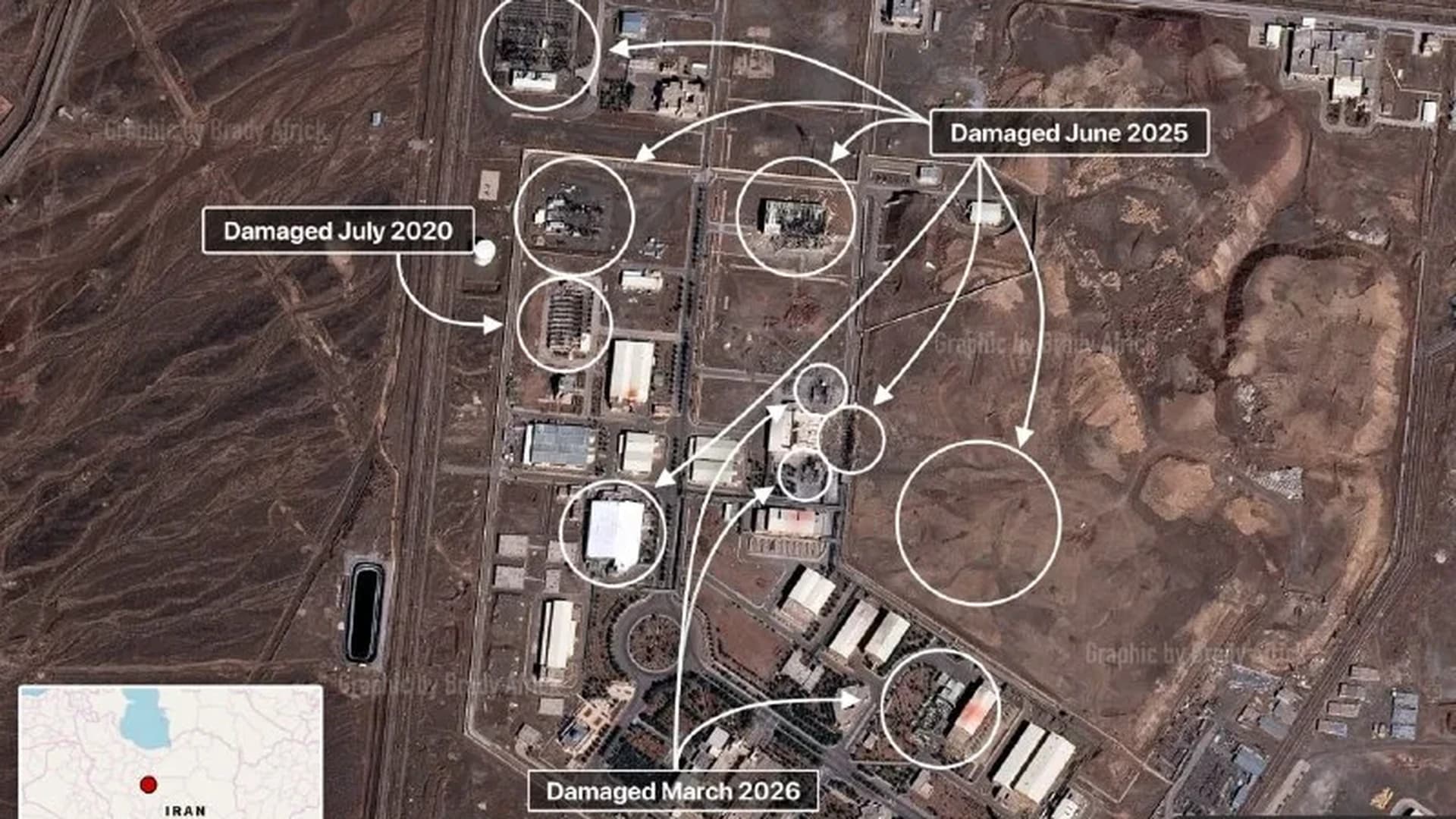
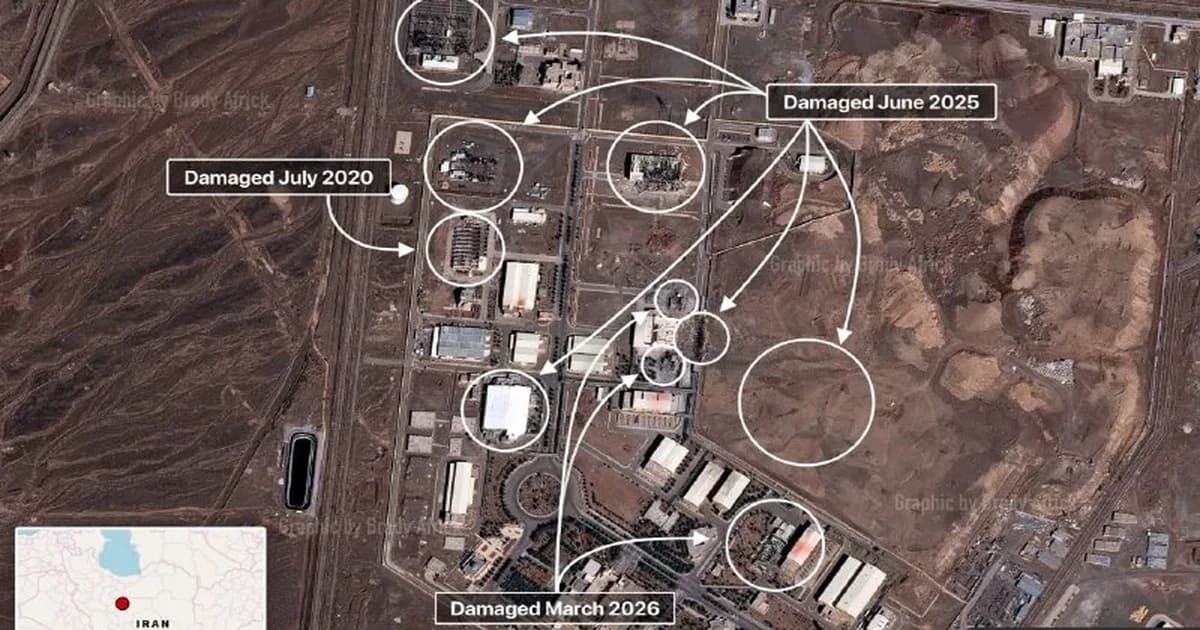
0 — Number of confirmed Iranian nuclear sites struck by Israel during ongoing operations, according to IAEA and open sources.
Quantitative Data Points
- 8 — Number of scheduled interest rate announcements per year by the Bank of Canada, illustrating the regularity and predictability of strategic decision cycles in contrast to the unpredictability of missile defense engagements.
- 2025 — Year of Iron Beam’s reported first combat use.
- 2026 — Ongoing conflict escalation and policy response cycles, coinciding with Iron Beam’s combat deployment.
Data Table: Missile Defense System Comparison
| System | Interceptor Type | Cost per Shot* | Targets | First Combat Use | Confirmed Combat Kills** |
|---|---|---|---|---|---|
| Iron Dome | Missile | $40,000–$100,000 | Rockets, SRMs | 2011 | 90%+ (reported, 2011–24) |
| Iron Beam | Laser | <$10 | Drones, SRMs | 2025 | [Unspecified] |
| US Patriot | Missile | $3M+ | Ballistic | 1991 | Mixed |
*Cost estimates vary; Iron Beam’s cost-per-shot is based on energy consumption only. **Combat kills for Iron Beam not yet independently confirmed.
Key Quotes
- “Israel is launching strikes on Iran for a second day after initial joint attacks with the US killed the Supreme Leader Ayatollah Ali Khamenei. Tehran says it has a duty to retaliate.” — BBC, Israel continues to strike Iran after Ayatollah's death, 2025.
- “To date, Israel has repeatedly refused to name any nuclear sites it might have struck, despite having named such sites during the June 2025 Operation.” — JPost, No evidence US, Israel have struck any Iranian nuclear sites, 2025.
Evidence Summary
The available evidence confirms Iron Beam’s operational deployment but not its specific success rate or ability to neutralize high-speed ballistic threats. While the system’s theoretical cost and rapid response are attractive, its real-world effectiveness—especially under coordinated, multi-vector missile barrages—remains unproven.
Case Study: Iron Beam’s First Battlefield Use (April 2025)
In April 2025, following the death of Iran’s Supreme Leader Ayatollah Ali Khamenei, Israel faced a surge of rocket and drone attacks from Iranian proxies in Syria and Lebanon. On April 15, Israeli military officials confirmed for the first time that Iron Beam had been activated as part of the country’s layered air defense response, alongside Iron Dome and David’s Sling systems. While the IDF refrained from specifying which targets Iron Beam engaged, international observers noted a marked decrease in the number of small drones and short-range rockets reaching Israeli territory during the 48-hour window following the system’s deployment. However, no public data was released regarding the system’s interception of ballistic missiles or its overall kill rate. The use of Iron Beam was seen as a signal to both Iran and the international community that Israel’s technological edge in missile defense was entering a new phase—one that could eventually alter the cost calculus for both attackers and defenders.
Analytical Framework: The Directed Energy Defense Maturity Matrix (DEDMM)
To assess Iron Beam’s impact, this article introduces the Directed Energy Defense Maturity Matrix (DEDMM), a four-stage model for evaluating the operational integration of directed energy weapons in national defense:
- Demonstration Phase: System tested in controlled environments, with no real-world deployments.
- Pilot Integration: Limited fielding alongside legacy systems, targeting low-risk threats (e.g., drones, rockets).
- Operational Scaling: Widespread adoption in multi-layered defense, able to handle moderate saturation attacks.
- Strategic Dominance: System reliably neutralizes advanced threats (e.g., ballistic missiles) and reshapes adversary doctrine.
Currently, Iron Beam sits at the cusp between Pilot Integration and Operational Scaling. Its ability to progress to Strategic Dominance depends on technical improvements in beam power, tracking, and atmospheric compensation, as well as robust combat validation.
Predictions and Outlook
Falsifiable Predictions
PREDICTION [1/3]: By December 2026, Iron Beam will have publicly confirmed successful interceptions of at least 10 drones or rockets in combat conditions, but no confirmed intercepts of medium- or long-range ballistic missiles (70% confidence, timeframe: December 2026).
PREDICTION [2/3]: Within 24 months, Iran and its proxies will adopt at least one new operational tactic specifically designed to saturate or bypass Iron Beam—such as coordinated drone swarms or decoys—leading to a measurable increase in attack complexity (65% confidence, timeframe: July 2027).
PREDICTION [3/3]: By the end of 2027, at least two additional countries will announce or demonstrate indigenous laser-based air defense systems, citing Israel’s use of Iron Beam as a direct influence (75% confidence, timeframe: December 2027).
What to Watch
- Official release of Iron Beam combat performance data, especially against ballistic missiles.
- Documented changes in adversary tactics, including evidence of swarm or decoy attacks.
- Policy statements or procurement plans by other states referencing Iron Beam.
- Atmospheric and weather-related limitations reported during operational deployments.
Historical Analog
This moment closely parallels the 1980s US Strategic Defense Initiative (“Star Wars”), when a technologically advanced state sought to shift the strategic balance against a regional missile threat through the promise of directed energy. Like SDI, Iron Beam’s deployment is as much about psychological deterrence and adversary adaptation as it is about immediate kinetic results. The initial use will likely reveal substantial technical and operational limitations, with the real impact unfolding over iterative cycles of improvement and adversary response.
Counter-Thesis
The strongest argument against Iron Beam’s transformative potential is rooted in physics and adversary adaptation. High-energy lasers remain vulnerable to environmental factors—dust, rain, fog—and are currently limited in range and power. Sophisticated adversaries will rapidly develop saturation tactics, cheap decoys, or reflective coatings to degrade system effectiveness. Even with continued improvements, Iron Beam may never provide a reliable shield against advanced ballistic threats, making it an impressive but ultimately incremental upgrade rather than a true paradigm shift.
Stakeholder Implications
For Regulators/Policymakers: Accelerate international discussions on directed energy arms control and transparency. Establish reporting requirements for operational use and civilian safety, especially in densely populated areas.
For Investors/Capital Allocators: Prioritize funding for companies developing next-generation beam control, power scaling, and atmospheric compensation technologies. Monitor secondary markets for countermeasure innovation and emerging dual-use applications.
For Military Operators/Industry: Integrate Iron Beam into multi-layered defense architectures. Invest in robust training for rapid target discrimination, maintenance, and weather adaptation. Prepare for a new wave of adversary tactics targeting system vulnerabilities.
Frequently Asked Questions
Q: How does Iron Beam work to intercept incoming threats? A: Iron Beam uses a high-powered laser to heat and destroy aerial threats, such as drones and rockets, by targeting and burning through their structural components in flight. The process is nearly instantaneous, with engagements typically lasting a few seconds, and is significantly cheaper per shot than traditional interceptor missiles.
Q: Has Iron Beam successfully intercepted any ballistic missiles? A: As of June 2026, there is no public confirmation of Iron Beam intercepting medium- or long-range ballistic missiles in combat. The system has reportedly been used against drones and short-range rockets, but its effectiveness against faster, more resilient ballistic targets remains unproven.
Q: What makes Iron Beam different from Iron Dome? A: While Iron Dome uses interceptor missiles to destroy incoming threats, Iron Beam relies on directed energy—specifically, a laser—to neutralize targets at a much lower cost per engagement. Iron Beam is best suited for short-range, low-cost threats like drones and mortars, whereas Iron Dome is designed for larger, more complex rocket attacks.
Q: Will Iron Beam change the balance of power in the Middle East? A: Iron Beam introduces a new layer of defense that will complicate adversary planning and may deter certain types of attacks. However, it is unlikely to be a silver bullet; adversaries will adapt, and the system’s limitations—especially against advanced ballistic missiles—mean that it will supplement, not supplant, existing defenses in the near term.
Synthesis
Iron Beam’s combat debut is a technological milestone, signaling the global arrival of directed energy weapons as a real factor in modern conflict. Yet the system’s immediate impact is more psychological and strategic than tactical—deterring some threats, but not eliminating the need for traditional missile defenses. As the arms race in offense and defense accelerates, Iron Beam’s legacy will be defined not just by what it shoots down, but by how it reshapes the future of warfare.
Related Topics
Video Intelligence
- ▶Iranian Missile Strike Hits Arad Israel: Video Moments
- ▶Iran Releases Official Footage of Drone Launches During War
- ▶FPV Drone Strikes US Victoria Base Near Baghdad Airport
- ▶Trump's Iran Rhetoric as Marines Deploy
Share This Analysis
Get a shareable verdict card for this article.
Get the next one first
Free briefings when we publish major outlooks and forecasts. No spam — unsubscribe anytime.
Related Analysis

Strategic Impact of Turkey Leaving NATO in 2026
The Board · Feb 22, 2026

The Truth Behind CIA Remote Viewing and Project Stargate
The Board · Feb 22, 2026

The Neurological War: How Precision Strikes Rewrote the...
The Board · Mar 27, 2026

Triple-Front Risk: US Iran Strategy and Global Security
The Board · Feb 14, 2026

Russia Photographed the Saudi Base Three Times Before...
The Board · Mar 30, 2026

A Russian Drone Hit NATO Territory This Week
The Board · Mar 26, 2026
Trending on The Board

79 Years of UFO Lies, Roswell to the Pentagon
Defense & Security · Sep 29, 2026

How CENTCOM Is Brokering an Israel-Saudi Pact
Defense & Security · Sep 19, 2026

Why the Pentagon Pulled Its Iran War Plans Offline
Defense & Security · Sep 19, 2026
How a Stablecoin Funded Moldova's 2026 Election
Geopolitics · Sep 19, 2026

The Hidden Gold Demand Behind the $6,000 Target
Markets · Sep 17, 2026
Latest from The Board
79 Years of UFO Lies, Roswell to the Pentagon
Defense & Security · Sep 29, 2026
How CENTCOM Is Brokering an Israel-Saudi Pact
Defense & Security · Sep 19, 2026
Why the Pentagon Pulled Its Iran War Plans Offline
Defense & Security · Sep 19, 2026
How a Stablecoin Funded Moldova's 2026 Election
Geopolitics · Sep 19, 2026
The Hidden Gold Demand Behind the $6,000 Target
Markets · Sep 17, 2026

Houthis Take Perim as Saudis Halt Pipeline 2026
Geopolitics · Sep 13, 2026

Epstein Intelligence Ties: Evidence vs Allegation in 2026
Policy & Intelligence · Sep 6, 2026
What Israel-Iran War Games Got Wrong About 2026
Defense & Security · Sep 6, 2026