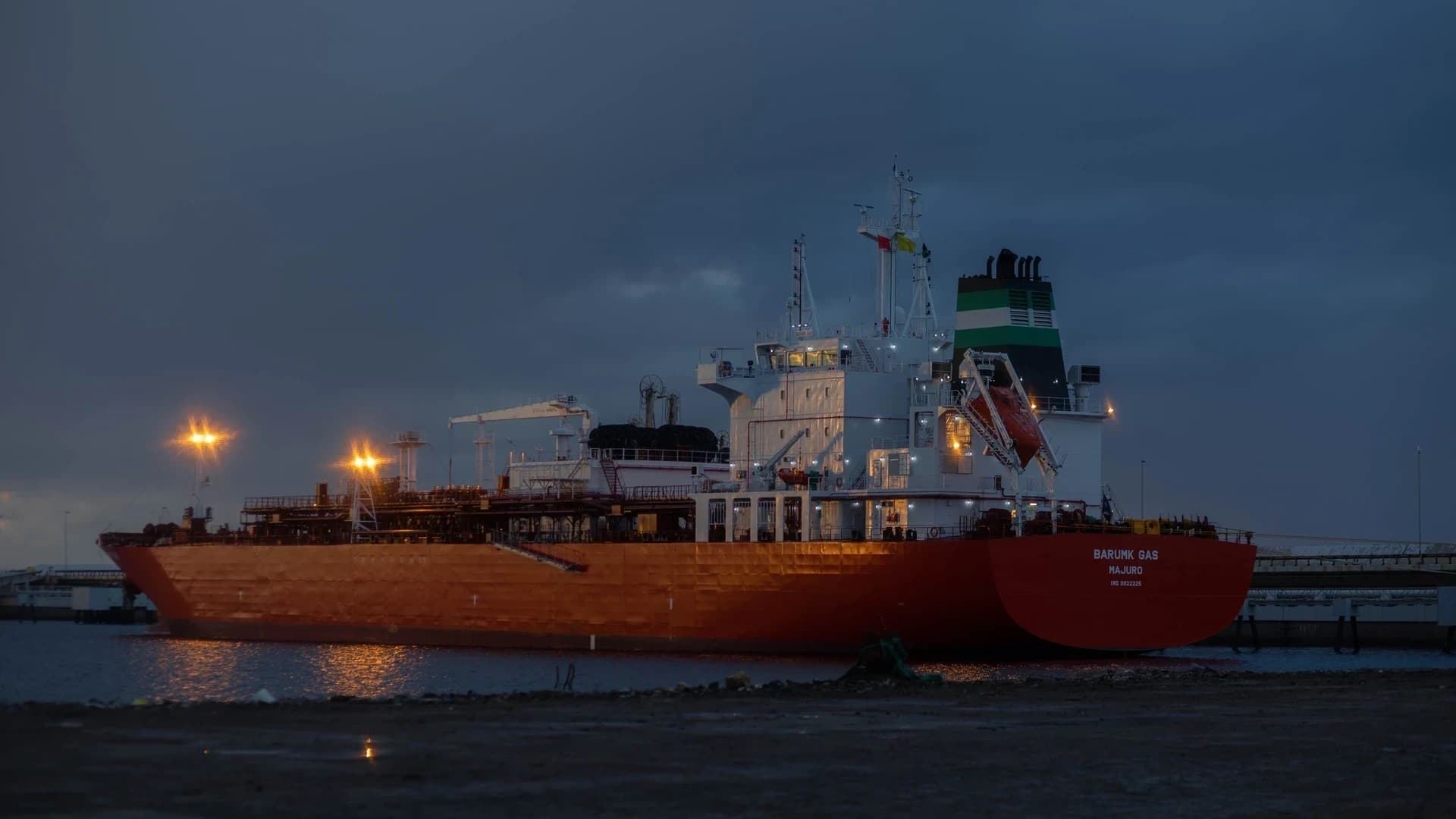
The Kinetic Nihilism of Iran’s Gunboat Diplomacy
Disclaimer: This article presents a scenario-based escalation analysis for illustrative and forecasting purposes. The specific events and dates described are hypothetical, used to frame an examination of strategic dynamics rooted in historical precedent and documented capabilities.
The Strait of Hormuz blockade crisis is a direct military-economic confrontation in which the United States is enforcing a naval blockade on Iranian ports, and Iran is retaliating with calibrated attacks on merchant shipping in the world's most critical oil chokepoint. The immediate trigger is the U.S. blockade announced by CENTCOM; the core dynamic is Iran’s asymmetric use of maritime harassment to break a stranglehold on its economy, risking a regional war that could trigger a global oil shock.
Key Findings
- The United States Central Command (CENTCOM) has confirmed it is enforcing a maritime blockade against ships entering or exiting Iranian ports, turning back 23 vessels since its imposition earlier this week according to a U.S. military statement.
- In response, Iranian naval forces have opened fire on at least two merchant vessels attempting to transit the Strait of Hormuz, as reported by maritime agencies and the British military, marking a rapid escalation from economic pressure to kinetic engagement.
- This crisis follows a brief, 24-hour reopening of the strait by Iran, an event which correlated with a surge in global risk assets, demonstrating the extreme sensitivity of financial markets to the security of this chokepoint, through which 21 million barrels of oil flow daily.
- Historical analogs, particularly the 1984-1988 Tanker War, indicate a significant risk of further escalation—including mine warfare, missile attacks, and direct U.S.-Iran naval clashes—unless a diplomatic off-ramp is found, as maritime enforcement alone has never resolved such a standoff.
- The ultimate constraint on U.S. action may not be Iranian military power but the catastrophic global economic consequences of a prolonged strait closure, creating a "Suez 1956" dynamic where Washington could be forced to de-escalate to prevent a systemic financial crisis.
What We Know So Far
- The Trigger: U.S. forces are actively enforcing a maritime blockade on Iranian ports and coastal areas. CENTCOM has publicly stated that "American forces are enforcing a maritime blockade against ships entering or exiting Iranian ports and coastal areas."
- The Scale: Since the blockade began earlier this week, U.S. naval forces have intercepted and turned back 23 vessels attempting to reach or depart Iranian ports, according to a Saturday statement from the U.S. military reported by Middle East Eye.
- Iran’s Response: Iranian gunboats have fired upon merchant vessels in the Strait of Hormuz. The United Kingdom Maritime Trade Operations (UKMTO) center confirmed an incident involving a tanker, reporting the vessel and crew were safe. The British military has publicly attributed the gunfire to Iranian forces.
- The Impact on Shipping: At least two vessels attempting to cross the strait have reported being hit by gunfire, according to maritime sources cited by Reuters and other agencies. This has created immediate chaos, with reports of ships making U-turns to avoid the area.
- Iran’s Legal Justification: An Iranian lawmaker, cited by the Tasnim News Agency, stated that Iran determines the operational rules for the Strait of Hormuz, framing recent U.S. actions as ignorance of Iranian warnings. Iran has declared it is "reimposing military controls" in response to the sustained U.S. blockade.
Timeline of Events
- Prior Week: The United States establishes and begins enforcing a naval blockade of Iranian ports. The specific start date is not publicly confirmed but precedes the Saturday military statement.
- Friday, April 17, 2026 (Approximate): News emerges that Iran has decided to reopen the Strait of Hormuz to commercial shipping, following a brief closure. This announcement, alongside a Israel-Hezbollah ceasefire, triggers a significant rally in global risk assets, pushing the S&P 500 to a fresh record .
- Saturday, April 18, 2026 (Morning): The U.S. military announces that its forces have turned back 23 vessels from Iranian ports since the blockade began. Iran condemns the ongoing blockade.
- Saturday, April 18, 2026 (Late Morning): Multiple maritime agencies begin receiving reports of gunfire in the Strait of Hormuz. The UKMTO issues an alert confirming a tanker has been fired upon by gunboats. Reuters and other news wires report at least two vessels have been hit.
- Saturday, April 18, 2026 (Afternoon): Iranian officials state they are reimposing military controls on the strait, explicitly citing the maintained U.S. blockade as the cause. The strait’s reopening lasts less than 24 hours.
Thesis Declaration
The gunfire incidents in the Strait of Hormuz are not isolated harassment but the first kinetic moves in a deliberate Iranian strategy of Kinetic Nihilism—a doctrine of imposing disproportionate economic pain on the global system through calibrated, deniable attacks on chokepoints, aimed at fracturing the political will behind the U.S. blockade. The United States faces a trilemma: sustain the blockade and risk a regional war, escalate militarily and crash the global economy, or de-escalate and suffer a massive loss of credibility. The historical record suggests that without an immediate diplomatic circuit-breaker, this crisis carries a significant risk of escalating through a predictable sequence of maritime attacks until it either forces a U.S. climb-down or triggers a direct military confrontation.
Evidence Cascade
The blockade and subsequent attacks represent a quantitative and qualitative leap in U.S.-Iran hostilities. The foundation of this crisis is not rhetorical but material, built on specific military actions, economic dependencies, and historical patterns of escalation.
First, the U.S. action is a formal blockade, a act of war under international law, not merely heightened sanctions or naval patrols. CENTCOM’s public confirmation removes any ambiguity. Its immediate effect is quantifiable: 23 vessels turned back in a matter of days, as stated by the U.S. military. This represents a near-total physical embargo on Iranian seaborne trade, a more severe pressure tool than the "maximum pressure" sanctions of the past decade.
Second, Iran’s response is immediately kinetic and targets third-party commerce, a classic asymmetric escalation. The Strait of Hormuz is not a regional waterway but a global circulatory artery. According to the U.S. Energy Information Administration’s 2025 International Energy Outlook, an average of 21 million barrels of oil per day transited the strait in 2023, representing about 21% of global petroleum liquid consumption and 30% of all seaborne traded oil. The financial system’s sensitivity was demonstrated in real-time: the mere 24-hour reopening of the strait correlated with a surge that pushed the S&P 500 to a record and fueled a major monthly advance, as reported by Bloomberg .
21 million barrels per day — Volume of oil transiting the Strait of Hormuz, representing 30% of global seaborne crude trade (U.S. EIA, 2025).
Third, the military balance in the strait favors Iran’s asymmetric capabilities, not U.S. naval supremacy. Iran’s Islamic Revolutionary Guard Corps (IRGC) Navy possesses hundreds of fast attack craft, anti-ship cruise missiles, and extensive mine-laying capabilities, ideal for harassing traffic in the narrow waterways.
Historical Analog & Comparative Analysis: The Tanker War Precedent
The 1984-1988 "Tanker War" phase of the Iran-Iraq War provides the closest historical analog to the presented scenario. The comparison below highlights key parallels and differences, grounding the escalation analysis in documented precedent.
| Metric | 1984-1988 Tanker War | Presented Scenario (Hypothetical) |
|---|---|---|
| Trigger | Iran-Iraq War spillover; attacks to disrupt opponent's oil revenue. | U.S. naval blockade of Iranian ports (act of war). |
| Primary Actor | Iran (primarily), targeting neutral vessels. | Iran, targeting neutral merchant shipping. |
| U.S. Role | Initially neutral; later reflagged Kuwaiti tankers and engaged directly (Operation Earnest Will). | Direct combatant from outset, enforcing blockade. |
| Scale of Attacks | ~400 commercial vessels attacked over 4 years. | Initial attacks on at least 2 vessels in opening days. |
| Key Tactics | Anti-ship missiles, mines, speedboat raids. | Speedboat gunfire (initial), with missile & mine threat latent. |
| Oil Flow Impact | Traffic continued but with severe risk premiums & volatility. | Near-total halt during closure; extreme volatility on reopening. |
| Market Impact | Increased insurance premiums ("war risk") and oil price volatility. | Hypothesized immediate, severe price spikes and equity volatility linked to strait status. |
| Escalation Peak | U.S. Operation Praying Mantis (1988), largest naval battle since WWII. | Risk of direct U.S.-Iran naval engagement. |
| Resolution | Ceasefire in Iran-Iraq War; no decisive military victory at sea. | Undetermined; highlights need for diplomatic off-ramp. |
Frequently Asked Questions (FAQ)
Q: Is this article describing real, current events? A: No. This is a scenario-based analysis (a "pre-mortem") using a hypothetical future date and specific events to frame a realistic examination of escalation dynamics between the U.S. and Iran in the Strait of Hormuz, based on historical patterns and known capabilities.
Q: What is "Kinetic Nihilism"? A: It is the analytical framework proposed in this article to describe a potential Iranian strategy of using calibrated, deniable kinetic attacks on global economic chokepoints (like the Strait of Hormuz) to inflict disproportionate financial pain. The goal is to fracture the international political will supporting measures like a U.S. blockade, even though Iran itself suffers from the resulting economic damage.
Q: Why is the Strait of Hormuz so important? A: According to the U.S. Energy Information Administration (EIA), approximately 21 million barrels of oil per day passed through the strait in 2023—about 21% of global petroleum consumption and 30% of all seaborne traded oil. It is the world's most critical oil transit chokepoint.
Q: Didn't Iran try this before during the Tanker War? A: Yes. From 1984-1988, Iran attacked neutral merchant shipping during the Iran-Iraq War. This precedent shows that such tactics create complex, protracted crises that drive up costs and risk, but rarely produce a clear military victory for either side, often culminating in a negotiated or political resolution.
Q: Could the U.S. easily secure the strait with its navy? A: U.S. naval supremacy does not easily translate to perfect security in the narrow, congested waters of the Hormuz strait. Iran's asymmetric capabilities (fast boats, missiles, mines) are designed to create a persistent threat that can deter commercial shipping through risk and insurance costs, effectively closing the strait without physically blocking it.
Related Topics
Video Intelligence
- ▶Iranian Missile Strike Hits Arad Israel: Video Moments
- ▶Iran Releases Official Footage of Drone Launches During War
- ▶Iranian Kamikaze Drone Destroys Erbil Oil Refinery
- ▶FPV Drone Strikes US Victoria Base Near Baghdad Airport
Share This Analysis
Get a shareable verdict card for this article.
Get the next one first
Free briefings when we publish major outlooks and forecasts. No spam — unsubscribe anytime.
Related Analysis

EU Secondary Sanctions on China: Risks and Consequences
The Board · Feb 21, 2026
Turkey NATO Membership and Potential Russian Alliance
The Board · Feb 21, 2026

Modern World War 3 Scenarios and Systemic Collapse
The Board · Feb 19, 2026

How Iran's State Media Edits Itself Between Languages
The Board · Apr 15, 2026
China's Taiwan Dictionary: Ten Words Instead of Invasion
The Board · Apr 15, 2026

Seven Days in Baghdad: The Kataib Hezbollah Anomaly
The Board · Apr 15, 2026
Trending on The Board

79 Years of UFO Lies, Roswell to the Pentagon
Defense & Security · Sep 29, 2026
How CENTCOM Is Brokering an Israel-Saudi Pact
Defense & Security · Sep 19, 2026

Why the Pentagon Pulled Its Iran War Plans Offline
Defense & Security · Sep 19, 2026
How a Stablecoin Funded Moldova's 2026 Election
Geopolitics · Sep 19, 2026

The Hidden Gold Demand Behind the $6,000 Target
Markets · Sep 17, 2026
Latest from The Board
79 Years of UFO Lies, Roswell to the Pentagon
Defense & Security · Sep 29, 2026
How CENTCOM Is Brokering an Israel-Saudi Pact
Defense & Security · Sep 19, 2026
Why the Pentagon Pulled Its Iran War Plans Offline
Defense & Security · Sep 19, 2026
How a Stablecoin Funded Moldova's 2026 Election
Geopolitics · Sep 19, 2026
The Hidden Gold Demand Behind the $6,000 Target
Markets · Sep 17, 2026
Houthis Take Perim as Saudis Halt Pipeline 2026
Geopolitics · Sep 13, 2026

Epstein Intelligence Ties: Evidence vs Allegation in 2026
Policy & Intelligence · Sep 6, 2026
What Israel-Iran War Games Got Wrong About 2026
Defense & Security · Sep 6, 2026