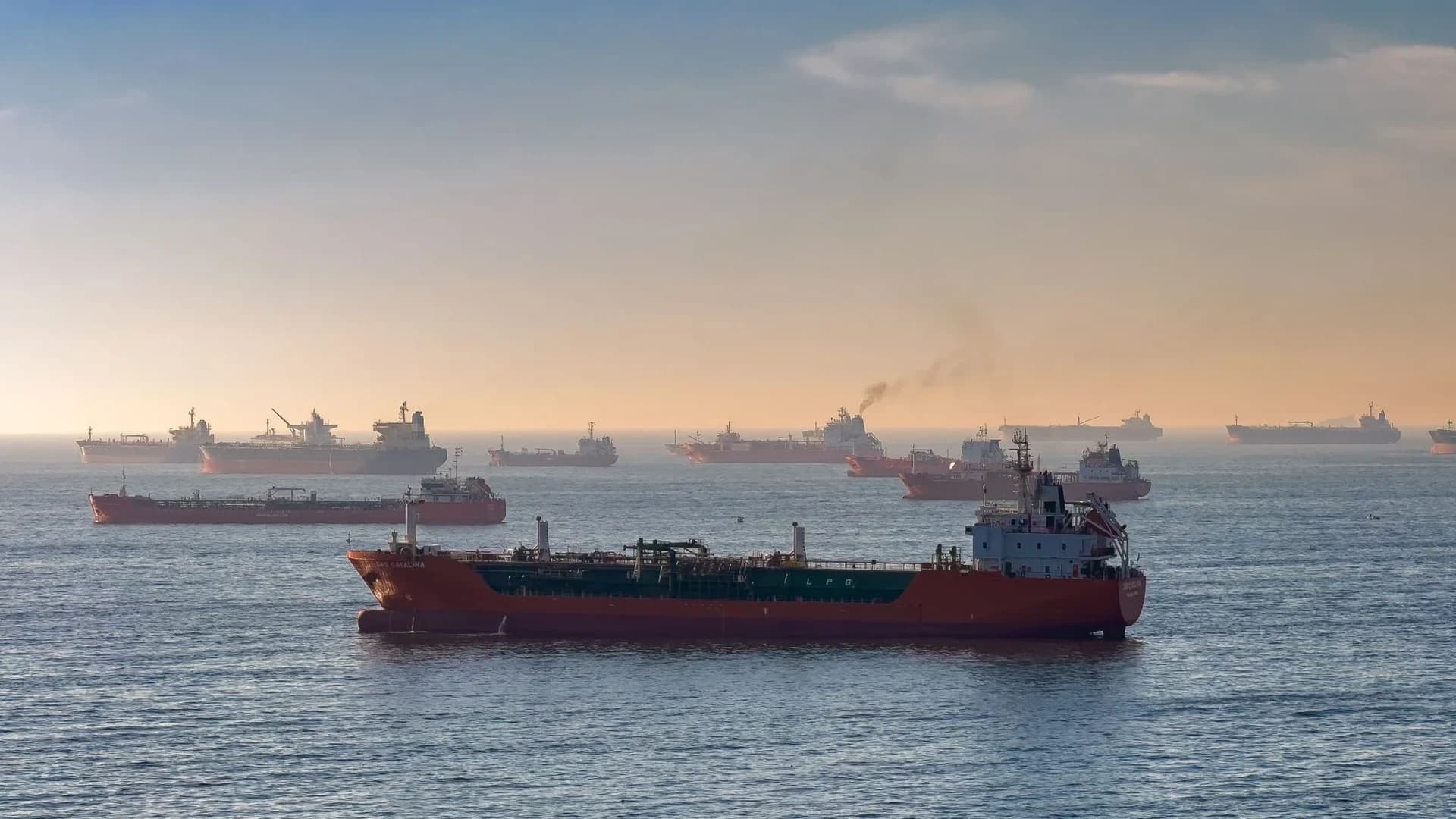
Every time tensions flare in the Persian Gulf, the same question surfaces in energy markets: can the world route around the Strait of Hormuz? The honest answer is partial, conditional, and deeply uncomfortable for anyone managing oil price risk.
There are real bypass pipelines. They carry real oil. But the gap between what they can move and what Hormuz actually moves is so large that calling them a "bypass" is technically accurate and strategically misleading at the same time.
Here is the complete infrastructure picture — what exists, what works, what doesn't, and what the numbers actually say.
The Baseline: What Hormuz Actually Moves
The Strait of Hormuz is a 33-kilometer-wide chokepoint between Iran and Oman connecting the Persian Gulf to the Gulf of Oman and the Arabian Sea. According to the U.S. Energy Information Administration, the strait carried approximately 21 million barrels per day (mb/d) in 2018 — roughly 21% of global petroleum liquids consumption and about one-third of total global seaborne traded oil. It also carries more than a quarter of global LNG trade.
Seventy-six percent of the crude moving through Hormuz goes to Asian markets. China, India, Japan, South Korea, and Singapore together account for 65% of total flows. This is not a regional vulnerability — it is the central artery of the global energy system.
Any disruption here triggers three simultaneous crises: a physical oil shortage, an insurance and shipping market panic, and a geopolitical emergency. The bypass question is really asking: how much of that 21 mb/d can be rerouted before those crises become catastrophic?
The answer from the infrastructure side: somewhere between 6 and 7 mb/d on paper. Far less in practice.
Pipeline 1: The East-West Pipeline (Petroline) — Saudi Arabia's Strategic Backbone
Route: Abqaiq, Eastern Province → Yanbu, Red Sea coast Length: 1,200 kilometers Design Capacity: 5.0 mb/d (expanded from original 1.85 mb/d) Current Throughput: Approximately 2.0–2.5 mb/d Operator: Saudi Aramco Status: Operational
The East-West Pipeline, known internally as Petroline, is the most significant bypass asset in the Middle East — and the one most analysts cite first when discussing Hormuz alternatives. Completed in 1981, expanded multiple times since, it runs 1,200 kilometers across the Saudi Arabian peninsula from the oil-rich Eastern Province to the Red Sea port of Yanbu.
At full design capacity of 5.0 mb/d, Petroline alone could theoretically reroute nearly a quarter of Hormuz's normal flow. That number is real. The problem is the gap between design capacity and actual utilization.
Saudi Arabia currently pumps roughly 9–10 mb/d in total production under OPEC+ constraints. Of that, the bulk moves eastward through the Gulf for loading at Ras Tanura and Jubail — the world's largest crude oil export terminal complex. Petroline carries only the crude destined for Red Sea customers and for strategic diversification. Actual throughput typically runs in the 2.0–2.5 mb/d range, leaving 2.5–3.0 mb/d of unused capacity sitting available in theory.
Why isn't that spare capacity permanently filled? Several reasons are structural:
Tanker terminal constraints at Yanbu. The port can handle VLCC loadings, but ramping from 2.5 mb/d to 5.0 mb/d overnight would require berth scheduling, storage management, and crew logistics that cannot be improvised. Saudi Aramco estimates a surge to full capacity would require weeks of preparation, not days.
Storage buffer limits. Crude pushed through the pipeline at surge capacity accumulates at Yanbu faster than it can be loaded unless terminal tankage is pre-staged. The strategic petroleum reserve logic applies here too: surge capacity means nothing without the downstream infrastructure to absorb it.
The Houthi attack precedent. In May 2019, drone and missile strikes on Petroline pumping stations near Afif temporarily interrupted flow. The attack demonstrated that the pipeline itself is a target in any Persian Gulf conflict — and that its location in Saudi Arabia's interior does not make it immune to asymmetric strikes with sufficient range.
At full demonstrated capability during a crisis, Petroline could realistically deliver 3.5–4.0 mb/d — not the full 5.0 mb/d nameplate figure.
Pipeline 2: The Abu Dhabi Crude Oil Pipeline (ADCOP) — Habshan to Fujairah
Route: Habshan oil fields, Abu Dhabi interior → Al-Fujairah, Gulf of Oman Length: 370 kilometers Design Capacity: 1.5 mb/d Current Throughput: Approximately 0.8–1.0 mb/d Operator: Abu Dhabi Crude Oil Pipeline LLC (ADCOP LLC) Status: Operational since 2012
The Habshan-Fujairah pipeline is the UAE's purpose-built Hormuz bypass — designed explicitly to give Abu Dhabi an export route that avoids the strait entirely. Commissioned in 2012 after years of planning that accelerated sharply following the 2008–2009 period of Iran nuclear tensions, it moves crude from the Habshan processing hub in the Abu Dhabi interior 370 kilometers southeast to the deepwater port of Al-Fujairah on the Gulf of Oman.
Fujairah's strategic position outside the strait has made it one of the world's busiest bunkering hubs, with substantial tankage infrastructure that was expanded in parallel with the pipeline. The UAE invested heavily in the terminal specifically to enable surge loading during a crisis scenario.
At 1.5 mb/d design capacity, ADCOP can handle roughly half of the UAE's normal export volume — the UAE produces around 3.0–3.5 mb/d under OPEC+ quotas. Current utilization runs below capacity, typically in the 0.8–1.0 mb/d range, as the economics of routing through Fujairah rather than directly through the strait favor cost efficiency under normal conditions.
ADCOP is the most strategically credible bypass asset after Petroline because:
- The destination port (Fujairah) already has world-class VLCC loading infrastructure
- The operator has demonstrated the ability to ramp throughput
- It has actually operated continuously without the political complications affecting other pipelines
- Iran, notably, would have no obvious ability to threaten it with the same precision as Gulf-based assets
The constraint is ceiling: even at full 1.5 mb/d, ADCOP moves less than 8% of normal Hormuz throughput.
Pipeline 3: The Goreh-Jask Pipeline — Iran's Ironic Self-Bypass
Route: Goreh, Bushehr Province, Persian Gulf coast → Jask, Sea of Oman Length: 1,100 kilometers Design Capacity: 1.0 mb/d (Phase 1); planned expansion to 1.5 mb/d Current Throughput: Minimal — well under 0.2 mb/d (sanctions-constrained) Operator: National Iranian Oil Company (NIOC) Status: Inaugurated July 2021; severely constrained by sanctions
Iran's Goreh-Jask pipeline represents one of the more strategically peculiar infrastructure projects of the past decade: the country that most frequently threatens to close the Strait of Hormuz has spent years and billions of dollars building a bypass of its own.
The logic from Tehran's perspective is self-interested rather than contradictory. Iran's own oil exports have historically passed through the strait — meaning any full closure of Hormuz is also a self-imposed embargo on Iran's primary revenue source. Goreh-Jask was designed to give Iran an export route to the Sea of Oman that sidesteps the strait entirely, allowing Tehran to credibly block the strait for adversaries while maintaining its own export capability.
The pipeline was inaugurated by President Rouhani in July 2021 amid considerable fanfare. At the ceremony, Iranian officials described it as a "strategic asset" that would allow Iran to export up to 1 million barrels per day independent of Hormuz. The project was years behind its original completion schedule and cost substantially more than initially projected.
The practical reality is starkly different from the inauguration rhetoric. Iran currently operates under comprehensive U.S. sanctions that restrict access to international oil markets regardless of export route. Goreh-Jask moves very limited volumes — estimates suggest well under 200,000 b/d, primarily toward sanctioned buyers in Asia — because the bottleneck is not the pipeline itself but market access.
For purposes of global Hormuz bypass analysis, Goreh-Jask currently contributes near zero to effective bypass capacity. Its Phase 1 design capacity of 1.0 mb/d would only become relevant if sanctions were substantially lifted — and even then, it would require fully operational terminal infrastructure at Jask that remains partially underdeveloped.
There is an additional strategic paradox: if Hormuz were actually closed due to a military conflict involving Iran, any Iranian export infrastructure would be among the first targets of a U.S. or allied response.
Pipeline 4: The Kirkuk-Ceyhan Pipeline — Iraq's Northern Route
Route: Kirkuk oil fields, northern Iraq → Ceyhan, Turkish Mediterranean coast Length: 970 kilometers Design Capacity: 1.6 mb/d (dual-line system) Current Throughput: Effectively zero — suspended since March 2023 Operator: Iraq SOMO / operated jointly via Iraq-Turkey Pipeline Agreement Status: Suspended
The Kirkuk-Ceyhan pipeline is the oldest major oil export route in the Middle East, with origins in the 1970s. It runs from Iraq's northern Kirkuk oil complex through Kurdish-administered territory and across Turkey to the Mediterranean port of Ceyhan — bypassing the Persian Gulf and Hormuz entirely.
In terms of strategic geography, it is theoretically the best positioned bypass asset: Mediterranean export puts crude directly accessible to European refiners and eliminates both Hormuz and Suez Canal dependencies. At 1.6 mb/d design capacity across its dual-line system, it represents meaningful bypass volume.
The operational reality is the opposite of the strategic potential. The pipeline has been plagued by a decades-long series of disruptions:
- Kurdish-Baghdad revenue disputes have repeatedly halted flows as the Kurdistan Regional Government (KRG) and Baghdad disagree over revenue sharing and production rights from fields in disputed territories.
- An international arbitration ruling in March 2023 by the International Chamber of Commerce found that Turkey had violated the Iraq-Turkey Pipeline Agreement by allowing the KRG to export oil without Baghdad's consent. Turkey subsequently shut the pipeline. As of early 2024, the pipeline remained suspended, with Baghdad and Ankara engaged in prolonged negotiations over restart terms.
- Physical infrastructure deterioration from years of reduced maintenance during disputes has reduced effective capacity below nameplate figures even when the pipeline operates.
The Kirkuk-Ceyhan pipeline's lesson for Hormuz bypass analysis is about political reliability, not physical capacity. A pipeline that moves zero barrels due to a sovereignty dispute contributes nothing to bypass capability regardless of its engineering specifications. In any realistic crisis scenario, the same political fragilities that have repeatedly shut Kirkuk-Ceyhan would likely resurface.
Pipeline 5: The Iraq-Saudi Arabia Pipeline (IPSA) — The Ghost Route
Route: Southern Iraqi oil fields → Yanbu, Saudi Arabia Red Sea coast Length: 1,650 kilometers Design Capacity: 1.65 mb/d Current Throughput: Zero Operator: Mothballed — Saudi Aramco controls the Saudi segment Status: Inactive since 1990; Saudi Arabia seized assets in 2001
The Iraq-Saudi Arabia Pipeline, known as IPSA, is the most frequently mentioned and most thoroughly defunct bypass option in existence. Built during the Iran-Iraq War in the mid-1980s specifically to give Iraq an oil export route that circumvented both Iran and the Persian Gulf risk zone, IPSA represents 1.65 mb/d of theoretical capacity that has not moved a barrel in over three decades.
The pipeline's history reflects the volatility of Middle Eastern geopolitics in compressed form:
- 1985: Construction completed. Iraq immediately begins using the pipeline to sustain export revenue during the war with Iran.
- 1990: Saudi Arabia shuts the pipeline following Iraq's invasion of Kuwait. Overnight, a major piece of strategic infrastructure becomes a liability.
- 1991–2001: The pipeline sits idle as Iraq remains under UN sanctions. Saudi Arabia maintains the Saudi segment but Iraq's portion deteriorates without investment.
- 2001: Saudi Arabia formally seizes the pipeline as partial compensation for Iraqi debts accumulated under the pre-1990 arrangement, rebranding the Saudi segment as the "East-West Natural Gas Liquids Pipeline" for domestic use. Some sections were repurposed for domestic NGL transport.
The Iraqi section passing through the western desert has received virtually no maintenance investment in 35 years. Sections of the pipeline are believed to be structurally degraded. There is no operational export terminal infrastructure at the Saudi Red Sea end configured for Iraqi crude. There is no bilateral agreement governing use. There is no political relationship between Baghdad and Riyadh that would enable rapid reactivation.
Even IPSA's most optimistic rehabilitation timeline — assuming immediate political agreement, emergency funding, and accelerated construction — would run 18–24 months minimum before moving meaningful volumes. In a crisis scenario where Hormuz closes, IPSA offers zero near-term bypass capacity.
It appears on bypass pipeline lists because it exists on paper with a large nameplate capacity. In operational terms, it is infrastructure archaeology.
The Capacity Gap: Running the Numbers
Adding up the bypass pipelines produces a figure that looks significant in isolation and is deeply inadequate against actual need:
| Pipeline | Design Capacity | Realistic Crisis Throughput |
|---|---|---|
| East-West (Petroline) | 5.0 mb/d | 3.5–4.0 mb/d |
| Habshan-Fujairah (ADCOP) | 1.5 mb/d | 1.2–1.5 mb/d |
| Goreh-Jask (Iran) | 1.0 mb/d | ~0.1–0.2 mb/d |
| Kirkuk-Ceyhan (Iraq-Turkey) | 1.6 mb/d | 0 mb/d (suspended) |
| IPSA (Iraq-Saudi Arabia) | 1.65 mb/d | 0 mb/d (inactive) |
| Total | 10.75 mb/d | ~5.0–5.7 mb/d |
Against Hormuz's 21 mb/d, the realistic crisis bypass capacity is roughly 5 to 6 mb/d — approximately 27% of normal throughput. Even the theoretical maximum of 10.75 mb/d, achievable only if every pipeline operated at full nameplate capacity simultaneously with no political complications, covers just 51% of normal Hormuz flow.
The EIA's own 2018 assessment confirms this framing. With Saudi Arabia and the UAE as the only two countries possessing functional bypass pipelines, combined capacity stood at 6.5 mb/d, of which only 2.7 mb/d was actually being used — leaving 3.8 mb/d of unused capacity but a maximum ceiling far below Hormuz throughput.
The remaining 15+ mb/d that cannot move through bypass pipelines in a crisis scenario has only one alternative: the ocean.
The Cape of Good Hope Route: The Ocean Bypass
When pipelines cannot fill the gap, tankers reroute. The standard alternative to the Hormuz-Suez corridor for Persian Gulf crude heading to Europe or North America is circumnavigation of Africa via the Cape of Good Hope.
The economics of this route are brutal.
Distance: The sailing distance from the Persian Gulf to Rotterdam via the Cape of Good Hope is approximately 11,500 nautical miles, compared to roughly 6,500 nautical miles via the Strait of Hormuz, the Arabian Sea, and the Suez Canal. That is an addition of approximately 5,000 nautical miles — a 77% increase in voyage distance.
Time: A VLCC (Very Large Crude Carrier) steaming at standard loaded speed of 14–15 knots adds approximately 12–14 additional days per round voyage. This is not just a cost issue — it is a fleet capacity issue. Every tanker that spends two extra weeks at sea is a tanker unavailable for other deliveries. The global VLCC fleet, typically numbering around 800–850 active vessels, has a fixed throughput capacity. Adding 12–14 days per voyage reduces effective fleet capacity by roughly 15–20% almost immediately.
Cost: The additional fuel consumption for a VLCC on the Cape route adds approximately $300,000–$500,000 per voyage in bunker fuel alone at prevailing VLSFO (very low sulfur fuel oil) prices. Charter rates surge during crises as available tonnage tightens — historical data from the 2019 Gulf tensions showed spot VLCC rates spiking to over $300,000 per day from a normal range of $30,000–$50,000 per day. Total additional voyage cost per tanker during a crisis can reach $500,000 to $1.5 million depending on charter rate conditions.
Fleet constraints: The critical constraint is not cost — oil markets can absorb higher transport costs — but physical vessel availability. The Cape route requires more ships moving more slowly to deliver the same volume. A sustained Hormuz closure would trigger an immediate tightening of global tanker supply that charter rates alone cannot solve. New tanker construction requires 18–24 months. There is no emergency reserve of idle VLCCs sufficient to absorb a full 21 mb/d diversion.
LNG specifically: The Cape route for LNG from Qatar to European and Asian buyers is even more problematic. LNG carriers are fewer in number than crude tankers, operate on long-term charters with fixed destinations, and have even less built-in surge capacity. Qatar's 77 mb/d equivalent of LNG passing through Hormuz has almost no viable Cape alternative given current fleet constraints.
Why the Numbers Don't Add Up
Even combining all realistic bypass pipeline capacity (~5.5 mb/d) with aggressive use of the Cape route, the global energy system cannot compensate for a full Hormuz closure without drawing heavily on strategic petroleum reserves and triggering demand destruction through price shock.
Several structural reasons explain why this arithmetic cannot be improved quickly:
Physical choke at Yanbu and Fujairah. Even if Petroline and ADCOP operate at maximum throughput, they deliver crude to two Red Sea/Gulf of Oman terminals with finite loading capacity. Yanbu's crude export terminals were designed to handle Petroline's operating range, not a sudden doubling of flow. Terminal expansion requires months and major capital investment.
No LNG pipeline alternative exists. The bypass pipelines discussed above move crude oil only. The 25%+ of global LNG trade passing through Hormuz — primarily Qatari exports — has no pipeline bypass option whatsoever. Qatar's North Field is geographically and commercially integrated with LNG export infrastructure at Ras Laffan that sits inside the Persian Gulf. The only alternative for Qatari LNG is LNG tankers rerouting via the Cape, with all the fleet constraints that implies.
Political reliability is the real bottleneck. Of the five pipelines examined, two (ADCOP and Petroline) are genuinely operational. One (Goreh-Jask) operates minimally due to sanctions. Two (Kirkuk-Ceyhan and IPSA) currently move zero barrels. The pattern suggests that political and commercial failures, not engineering limitations, are the primary constraint on bypass capacity. Any realistic crisis that triggers a Hormuz closure would likely also generate political complications that further reduce the reliable bypass subset.
Strategic petroleum reserves are not indefinite. IEA member countries hold approximately 4.1 billion barrels of combined strategic and commercial reserves. At 21 mb/d of Hormuz throughput, a full closure creates a shortfall that even a coordinated SPR release cannot cover beyond roughly 100 days — and that assumes consuming countries draw down reserves at maximum rate while simultaneously not increasing demand due to price shocks.
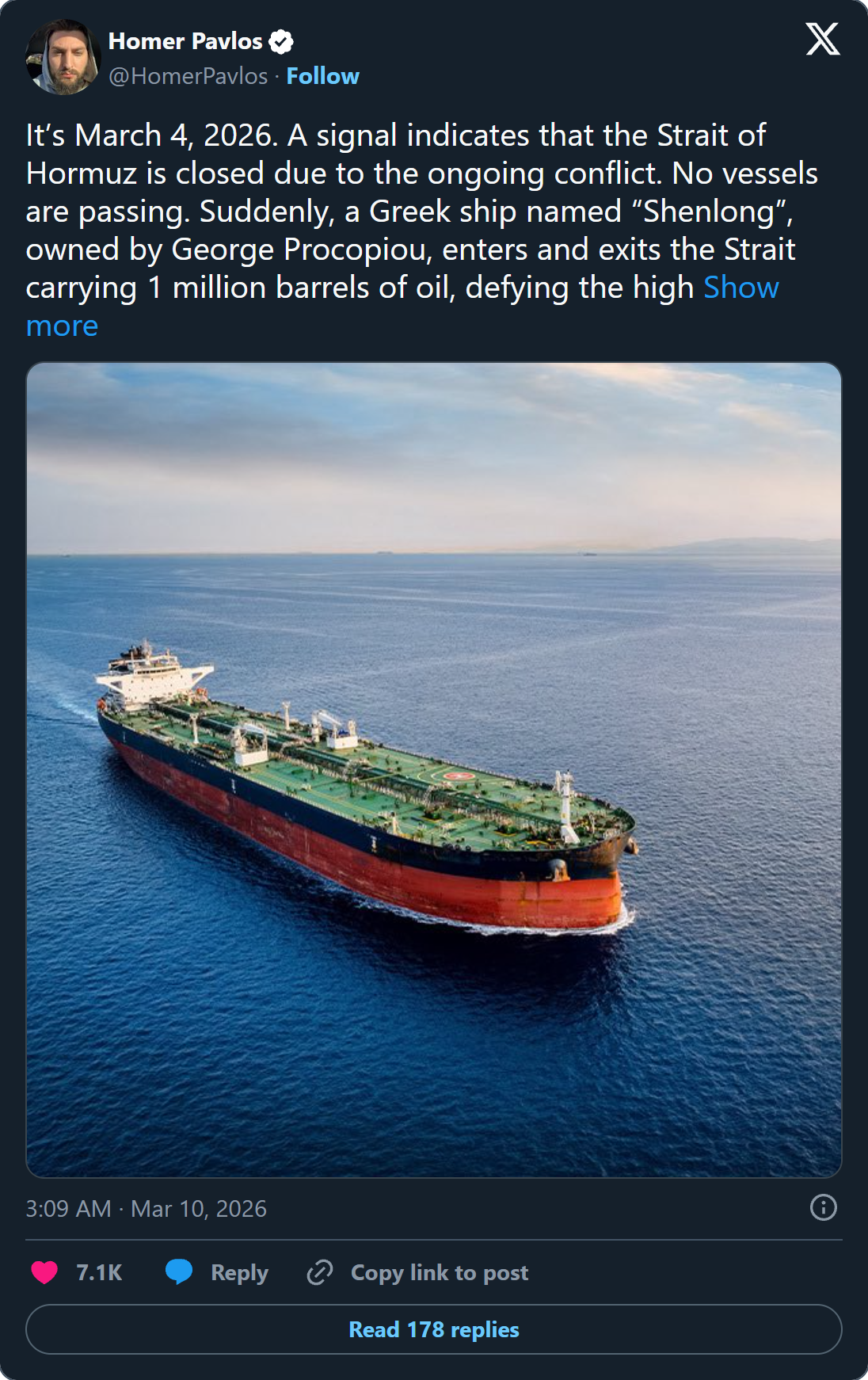
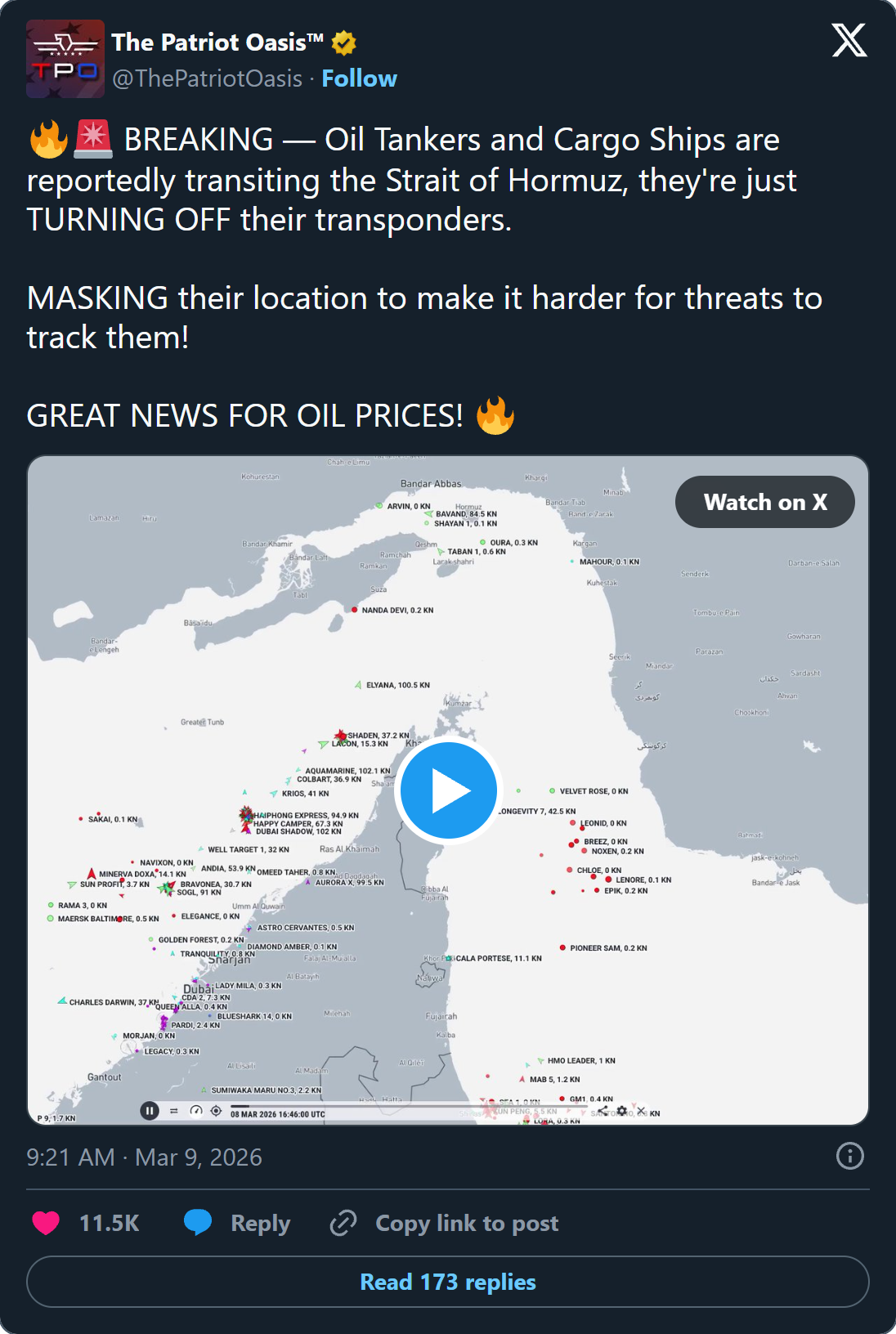
What The World Is Saying
FAQ
Q: Can Saudi Arabia actually shut down Hormuz traffic and keep exporting via Petroline?
Technically yes — Saudi Aramco's East-West Pipeline gives Riyadh an export route independent of the strait. But "Saudi Arabia shutting down Hormuz traffic" is not a realistic scenario. Saudi Arabia is a Hormuz transit country, not a Hormuz blocking country. Iran controls the northern shore of the strait. Any Hormuz closure would be an Iranian military or political action, not a Saudi one. The more relevant question is whether Saudi Arabia could continue exporting during an Iranian-imposed closure — and the answer is partially yes, via Petroline, for approximately 3.5–4.0 mb/d of its normal 6–7 mb/d export volume.
Q: Why hasn't Iraq reactivated IPSA if it provides 1.65 mb/d of bypass capacity?
IPSA's dormancy is a political problem, not an engineering problem. The pipeline crosses into Saudi territory, where Saudi Aramco controls the infrastructure. Relations between Baghdad and Riyadh, while improving since 2020, have not reached the level of integration required to coordinate a joint strategic infrastructure project. Additionally, Iraq's southern export infrastructure — the Basra Oil Terminal — is fully functional and economically competitive, giving Baghdad no urgent commercial incentive to invest the estimated $2–4 billion required to rehabilitate the IPSA route.
Q: How much does bypassing Hormuz via the Cape of Good Hope increase the price of a barrel of oil?
The Cape route adds roughly $1.50–$3.00 per barrel in transport cost during normal market conditions. During a crisis, with tanker rates spiking, the effective transport cost premium can reach $5–$10 per barrel or higher. But the greater price impact comes from the supply shortfall itself, not the transport cost increment. Historical stress-test models suggest a full Hormuz closure sustained for 30+ days would add $30–$50 per barrel to crude prices from supply shock alone, independent of transport costs.
Q: Could new pipeline construction solve the bypass gap?
In theory, yes. Saudi Arabia has previously studied expanding Petroline to 7.0 mb/d and constructing a second parallel pipeline. The UAE has evaluated expanding Fujairah terminal capacity and pipeline throughput. But pipeline construction in this geography takes 5–10 years and costs $5–10 billion per major project. No project currently under active development would materially change the bypass arithmetic within a 5-year horizon.
Q: Is Hormuz actually likely to close?
Full closure is unlikely but not impossible. Iran has threatened closure repeatedly — in 2008, 2011, 2012, 2019, and 2023 — but has never executed it. The reason is economic: Iran itself needs the strait to export oil, and a closure would trigger a military response from the United States and other naval powers that Iran cannot sustain. What is more likely is partial disruption — tanker attacks, mining campaigns, or harassment that drives up insurance rates and shipping costs without physically blocking the strait. The 2019 tanker attacks and the 2024 Houthi Red Sea campaign both demonstrate this model: creating economic pain through threat and incident rather than outright blockade.
Conclusion: Partial Bypass, Not Full Coverage
The infrastructure picture is consistent and sobering. Five pipelines exist that can bypass the Strait of Hormuz in whole or in part. Together, even at full theoretical capacity, they cover roughly half of normal Hormuz throughput. In realistic crisis conditions, they cover perhaps 27% — leaving a gap of 15 million barrels per day that can only be addressed by Cape rerouting, strategic reserve drawdowns, demand destruction, or some combination of all three.
The East-West Pipeline and ADCOP represent genuine, operational backup capacity. They matter. In a partial disruption scenario where Hormuz remains open but tanker insurance costs spike, they provide price pressure relief. For Saudi Arabia and the UAE, they provide genuine strategic optionality.
But the math of 21 mb/d versus 5–6 mb/d of bypass capacity does not close. The Strait of Hormuz remains the irreplaceable node it has always been — not because no alternatives exist, but because the alternatives are structurally insufficient to replace what the strait does every day.
The pipelines are real. The gap is larger.
Sources: U.S. Energy Information Administration (World Oil Transit Chokepoints, 2019); IEA Strategic Petroleum Reserve data; Saudi Aramco infrastructure disclosures; NIOC project documentation; International Chamber of Commerce arbitration ruling on Kirkuk-Ceyhan, March 2023.
Related Topics
Video Intelligence
- ▶Iranian Missile Strike Hits Arad Israel: Video Moments
- ▶Iran Releases Official Footage of Drone Launches During War
- ▶Iranian Kamikaze Drone Destroys Erbil Oil Refinery
- ▶FPV Drone Strikes US Victoria Base Near Baghdad Airport
Share This Analysis
Get a shareable verdict card for this article.
Get the next one first
Free briefings when we publish major outlooks and forecasts. No spam — unsubscribe anytime.
Related Analysis

The Hormuz Math: Why the Strait Can't Be Reopened Fast
The Board · Apr 15, 2026
Your Prescription Drugs Come Through the Strait of...
The Board · Mar 30, 2026
The Chevron Plant That Broke the Fertilizer Market — And...
The Board · Mar 30, 2026

Australia Ran Out of Gas — And Nobody Noticed
The Board · Mar 26, 2026

Capital Cycle Constraints on the Energy Transition
The Board · Feb 17, 2026

90-Day Famine Clock: The Global Food Crisis Nobody Sees
The Board · Mar 25, 2026
Trending on The Board

Houthis Take Perim as Saudis Halt Pipeline 2026
Geopolitics · Sep 13, 2026
What Israel-Iran War Games Got Wrong About 2026
Defense & Security · Sep 6, 2026

Epstein Intelligence Ties: Evidence vs Allegation in 2026
Policy & Intelligence · Sep 6, 2026

China Imported 764 Tons of Gold in Six Months
Markets · Aug 20, 2026

The 'Muslim NATO' Fails Its First Test in 48 Hours
Geopolitics · Aug 27, 2026
Latest from The Board
Houthis Take Perim as Saudis Halt Pipeline 2026
Geopolitics · Sep 13, 2026
Epstein Intelligence Ties: Evidence vs Allegation in 2026
Policy & Intelligence · Sep 6, 2026
What Israel-Iran War Games Got Wrong About 2026
Defense & Security · Sep 6, 2026

Central Banks Turned Gold Sellers. One Country Did It.
Markets · Aug 30, 2026

Schiff vs Saylor vs the Banks: Who Got 2026 Right?
Predictions · Aug 27, 2026

Silver Deficit 2026: BofA's $300 Target Explained
Markets · Aug 27, 2026

Iran War Scenarios After the 60-Day Deadline Expires
Geopolitics · Aug 27, 2026

Gold Price Forecast 2026: $10,000 Call vs $4,500 Banks
Markets · Aug 27, 2026