Executive Summary
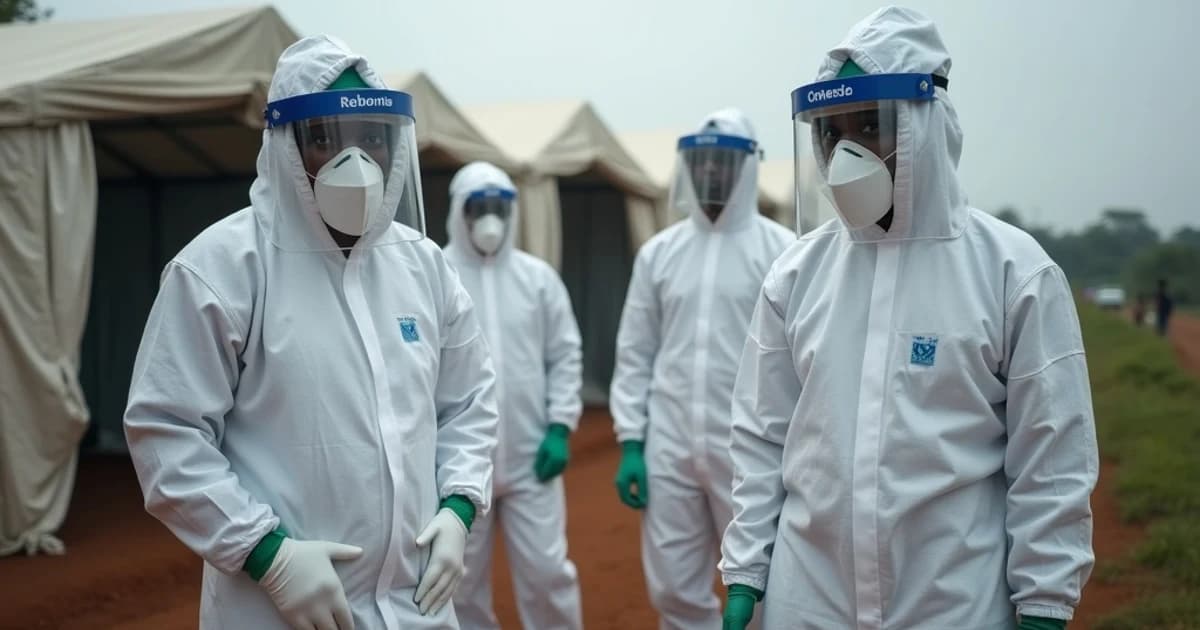
The Democratic Republic of Congo is facing an Ebola outbreak that has slipped its containment lines. Declared on May 15, 2026, the outbreak is caused by the rare Bundibugyo strain — and the numbers are grim. Tallies vary by source and reporting date: Al Jazeera cited 377 killed and 1,307 infected as of June 30, while France24 reported the death toll above 400 by July 2. Africa CDC puts confirmed cases near 1,274, with 96 healthcare workers infected. Combined DRC and Uganda figures reportedly surpass 1,400 cases, 350 deaths, and 500 people in isolation.
The single most consequential development is geographic: the virus has reached Kisangani — the body of a pregnant woman who died of Ebola was carried more than 180 miles by motorcycle into Tshopo province, where testing at a Kisangani morgue confirmed the infection — and the outbreak triggered a cross-border scare with a patient tested in Glasgow, UK. On the strength of that spread, the World Health Organization declared a Public Health Emergency of International Concern (PHEIC) on May 16–17, 2026 — its highest alarm.
Why the Bundibugyo Strain Changes the Math
Most global attention on Ebola over the past decade has tracked the Zaire strain, against which the world now has a real weapon: the licensed Ervebo vaccine and monoclonal-antibody treatments that sharply cut mortality when deployed early. That toolkit does not apply here.
The Bundibugyo strain is a different Ebola species entirely, and there is no approved vaccine and no proven treatment for it. This is not a distribution problem that money and logistics can solve. It is an absence at the level of medical science. That single fact rewrites the entire response equation:
- Containment falls back to classic public-health measures — case identification, contact tracing, safe burials, isolation wards, and community trust — with none of the pharmaceutical backstop that made recent Zaire-strain responses tractable.
- Healthcare workers are dangerously exposed. The 96 infected health workers is not a footnote; without vaccine protection, the very people running the response become vectors and casualties, hollowing out an already thin medical workforce.
- The margin for error is near zero. In a Zaire outbreak, a missed contact can often be caught downstream by ring vaccination. Here, every missed chain can burn unchecked.
The United States has released experimental Ebola drugs for clinical trials in the DRC, which is meaningful but must be read honestly: these are unproven candidates entering trials mid-crisis, not a ready countermeasure.
Containment Breakdown: Kisangani and the Borders
Open-source intelligence indicators and multi-source corroboration point to a response that is losing the geographic race. The epicenter sits in the northeast, but cases have been traced to Haut-Uele province, which borders South Sudan, and Congo has traced possible spread to two new provinces.
The arrival of the virus in Kisangani is the alarm bell. The confirmed link so far is a single imported fatality — a body transported into the province before the infection was recognized — not yet proven sustained local transmission. But a dense urban center hundreds of kilometers from the origin means the virus is now moving along trade and transport corridors rather than staying contained in remote districts, and any onward urban chain would multiply contacts per case and strain isolation capacity.
In response, authorities have banned mass gatherings in Kinshasa, Tshopo, Haut-Uele, and Bas-Uele — a blunt but telling measure that signals concern well beyond the initial hot zone.
Cross-border risk is now live on two fronts:
- South Sudan is assessed at high risk given weak health infrastructure and heavy cross-border movement. It has activated a preparedness plan covering 15 counties.
- The United Kingdom saw a patient tested for suspected Ebola at Glasgow's Queen Elizabeth University Hospital, with part of the site locked down. Crucially, the test came back negative and Public Health Scotland confirmed no cases in Scotland — but the episode shows how quickly a single traveler turns a regional outbreak into a global monitoring event, and it is what a PHEIC designation is built to address.
The Socioeconomic Cost
The damage is not only epidemiological. The UN Development Programme warns the outbreak could cost Africa up to $3.6 billion, with the DRC alone facing real GDP losses exceeding $1 billion and the loss of roughly 55,000 jobs, while an estimated 985,000 more people could be pushed into poverty — figures from its Rapid Socioeconomic Assessment, released June 30, 2026.
That projection reflects a hard lesson from prior epidemics: the economic shock of an Ebola outbreak — collapsed trade, shuttered markets, halted movement, and diverted health spending — routinely dwarfs the direct medical cost. The outbreak is unfolding amid conflict, hunger, and weak infrastructure in eastern DRC, conditions that both accelerate transmission and amplify every downstream economic harm. A poverty shock of nearly a million people is, in turn, a driver of the very instability and displacement that make future outbreaks harder to contain.
What to Watch
- Kisangani transmission chains. Whether the city's first case remains isolated or seeds sustained urban transmission is the near-term bellwether for whether containment is recoverable.
- South Sudan crossings. A confirmed case across the Haut-Uele border would mark true regional escalation and test the 15-county preparedness plan in real conditions.
- The experimental drug trials. Any early efficacy signal from the US-supplied candidates would be the first genuine pharmaceutical lever against Bundibugyo — a potential inflection point.
- Healthcare-worker infection curve. A continued rise past 96 would indicate infection control is failing at the frontline, the clearest leading indicator of a losing response.
- Reconciling the tallies. The 350-to-400+ death range and ~1,274-1,400 case range reflect different sources and dates, not contradiction; watch for WHO and Africa CDC to converge the official count as reporting stabilizes.
The bottom line: this is the outbreak public-health planners have long feared — a strain with no vaccine, spreading into cities and toward borders, in a region without the infrastructure to absorb it. Cross-referencing multiple reporting streams, the trajectory is one of a response fighting with one hand tied, and a window for containment that is narrowing rather than widening.
Sources
- World Health Organization — PHEIC declaration, DRC & Uganda Bundibugyo Ebola (May 2026)
- WHO Disease Outbreak News — Ebola (Bundibugyo virus), DRC — situation update
- US CDC — Ebola Outbreak: Current Situation
- UN Development Programme — Outbreak could push nearly one million into poverty and cost Africa billions
- Down To Earth — Kisangani confirmation and the 985,000-poverty projection
- ITV News — Glasgow suspected-Ebola patient tests negative
Related Analysis
- Chinese Medical AI Revolution: Beijing Deploys While the...
- China Won the Brain Race While America Was Building a...
- Water Crisis 2026: 8 Cities Running Out of Water
- Nuclear Proliferation Risk 2026: Who Gets the Bomb After
- Starship Stumbles: How SpaceX Delays Are Derailing NASA's
- Iran Oil Waiver 2026: $8.5bn Loaded, No Buyers in China
- AI Prediction Accuracy Report — June 2026
- AI Prediction Accuracy Report — May 2026
Related Topics
Video Intelligence
- ▶Iranian Missile Strike Hits Arad Israel: Video Moments
- ▶UK Anti-Immigration Channel: Muslim "Hate Crime" Claims
- ▶Defense Dynamics: How Vital Is Ukrainian Tech?
- ▶Israel-Iran Tensions: The Role of Evangelical Outreach
Share This Analysis
Get a shareable verdict card for this article.
Related Analysis

COVID-19 Origins: 2026 Scientific Consensus Update (What Changed)
The Board · Feb 22, 2026

The Truth About Remote Viewing and CIA Stargate Project
The Board · Feb 22, 2026

Chinese Medical AI Revolution: Beijing Deploys While the...
The Board · Mar 31, 2026

China Won the Brain Race While America Was Building a...
The Board · Mar 30, 2026

Defining Life: Biology vs Artificial Intelligence
The Board · Feb 17, 2026

Risks of AI Native EHR Systems for Hospitals
The Board · Feb 17, 2026
Trending on The Board

Gold Price Path After the Rally: 2026 Update
Markets · Jul 12, 2026

Gladio Stay-Behind Hybrid War 2026: What Still Applies
Defense & Security · Jul 12, 2026

Israel-Turkey War Game Analysis: NATO, Escalation Paths, 2026
Defense & Security · Jul 11, 2026
Gematria Sports Dates Selection Bias Explained 2026
Policy & Intelligence · Jul 12, 2026

If the Strait of Hormuz Closes: The $98 Oil Shock in Numbers (2026)
Geopolitics · Jul 9, 2026
Latest from The Board
Polymarket 8.8-Cent Wallets Beat Official Notices 2026
Predictions · Aug 3, 2026

AI Prediction Accuracy Report — July 2026
Predictions · Aug 1, 2026

AI Speaks One Language—That's the Real Risk
Technology · Jul 14, 2026
Gematria Sports Dates Selection Bias Explained 2026
Policy & Intelligence · Jul 12, 2026
Gladio Stay-Behind Hybrid War 2026: What Still Applies
Defense & Security · Jul 12, 2026
Gold Price Path After the Rally: 2026 Update
Markets · Jul 12, 2026

Kelly Utilization Meaning (Definition) for Prediction Markets
Markets · Jul 11, 2026
Israel-Turkey War Game Analysis: NATO, Escalation Paths, 2026
Defense & Security · Jul 11, 2026