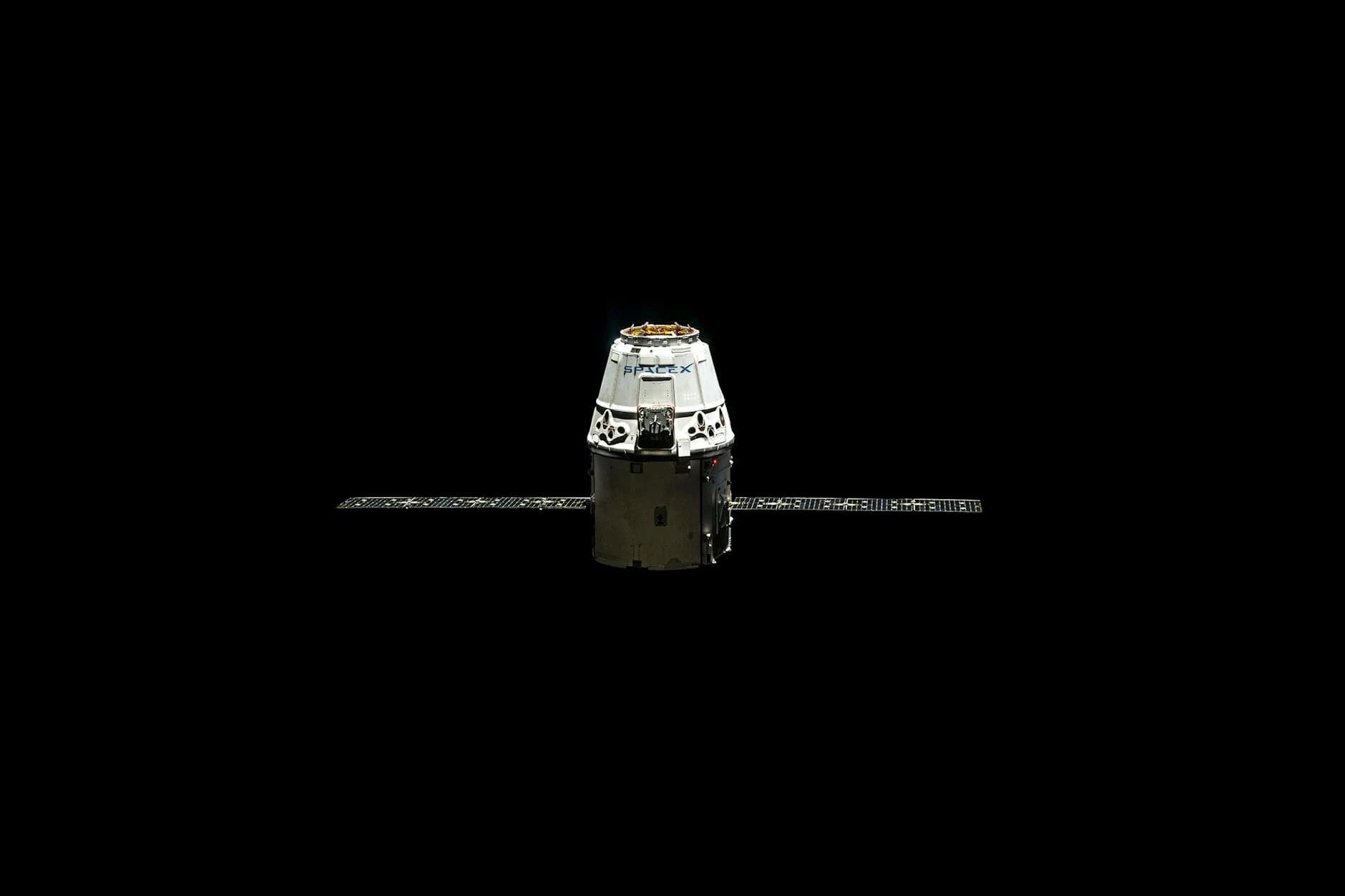
NASA's plan to return humans to the Moon is hostage to a rocket that keeps exploding. SpaceX's Starship — the vehicle selected as the Human Landing System (HLS) for the Artemis program — has made extraordinary progress in rapid-iteration testing but remains years away from the reliability required for crewed lunar missions. A new report from NASA's Office of Inspector General confirms what aerospace insiders have warned for months: the Artemis III crewed landing, originally planned for 2025, is unlikely before 2028 at the earliest, and 2029-2030 is more realistic.
The Technical Mountain
Starship's challenge is unprecedented in scale. The vehicle must demonstrate a chain of capabilities that no spacecraft has ever attempted in sequence: launch to orbit, refuel via multiple tanker flights in low Earth orbit, transit to lunar orbit, descend to the lunar surface, support a crew for up to a week, ascend from the Moon, and return the crew to their Orion capsule.
Each link in this chain presents engineering problems that SpaceX is solving in real time.
Orbital Refueling. The HLS mission architecture requires between 10 and 16 Starship tanker flights to fully fuel a single lunar lander in orbit. No spacecraft has ever transferred cryogenic propellant — liquid methane and liquid oxygen at temperatures below -160°C — in microgravity at the scale required. SpaceX must demonstrate that propellant does not boil off faster than it can be transferred, that docking and fluid connections work reliably in vacuum, and that the entire refueling depot concept is operationally viable. This capability has never been tested in orbit, and NASA's own assessments rate it as the highest-risk element of the HLS contract.
Landing Precision. Starship must land on the lunar surface with a precision of approximately 100 meters from the designated site — a requirement driven by the need to land near pre-positioned cargo and within range of scientifically interesting terrain. The vehicle's landing engines must not excavate a crater that destabilizes the lander or creates a debris hazard for the crew. SpaceX's proposed solution involves elevated landing engines, but the system has never been tested in lunar gravity (1/6 Earth's) or vacuum conditions.
Thermal Management. The lunar surface presents thermal extremes that no crewed vehicle has endured for extended periods since Apollo. Surface temperatures range from +127°C in direct sunlight to -173°C in shadow. Starship's stainless steel construction, while excellent for atmospheric reentry, creates thermal management challenges on the lunar surface where there is no atmosphere for convective cooling. The vehicle's life support systems must maintain crew comfort across these extremes for mission durations of 6-7 days — compared to Apollo's maximum of 75 hours on the surface.
The Testing Timeline
SpaceX's rapid-iteration approach has produced spectacular results and spectacular failures in roughly equal measure. The company has conducted seven integrated flight tests (IFTs) of the full Starship stack since April 2023, with each test achieving progressively more ambitious milestones: successful stage separation, controlled reentry, booster catch by the launch tower's mechanical arms, and most recently, a nearly complete orbital insertion.
However, each test has also revealed new failure modes. IFT-7 in January 2026 achieved orbital velocity but lost the upper stage during a deorbit burn when a Raptor engine experienced a turbopump failure. IFT-6 successfully caught the booster but the ship broke apart during reentry due to tile failure on the leeward side. The pattern is consistent with SpaceX's "test to failure" philosophy — each flight pushes the envelope until something breaks, then that failure is fixed for the next attempt.
The concern is that human-rating Starship requires a fundamentally different certification standard. NASA's loss-of-crew probability requirement for HLS is 1 in 500 — meaning the vehicle must demonstrate reliability far beyond what flight testing alone can prove. SpaceX will need to show extensive ground testing, qualification of every critical system, and a flight record that satisfies NASA's safety reviewers. This process is inherently slower than SpaceX's preferred "fly, fail, fix" approach.
The Ripple Effects
The Starship delay cascades through the entire Artemis program. Artemis II — the crewed flyby of the Moon without landing, using only the Orion capsule and Space Launch System (SLS) — is currently scheduled for September 2026. But Artemis III, the actual landing mission, cannot proceed until Starship is certified. The gap between Artemis II and III, originally planned as one year, is now likely to stretch to three or four years.
This delay has political consequences. The Artemis program was initiated under the Trump administration, continued under Biden, and now faces a third presidential transition with no landing to show for over $50 billion in cumulative spending. Congressional support for SLS — which costs approximately $2.5 billion per launch compared to Starship's target of $100 million — is eroding as the cost-per-flight disparity becomes harder to justify.
NASA has hedged its bets by awarding a second HLS contract to Blue Origin's Blue Moon lander for Artemis V. But Blue Origin's New Glenn rocket, which would support the Blue Moon system, only completed its first orbital flight test in February 2025 and faces its own development timeline. The backup is years behind the primary.
The International Dimension
NASA's delays create opportunities for competitors. China's crewed lunar program, operating under the China Manned Space Agency (CMSA), has announced a target of landing taikonauts on the Moon by 2030. Unlike NASA's distributed architecture — which requires Orion, SLS, and Starship to work together — China is developing an integrated system using the Long March 10 heavy-lift rocket and the Mengzhou crew vehicle, both purpose-built for lunar missions.
China's approach trades innovation for reliability. The Long March 10 uses proven engine technology scaled up rather than revolutionary new designs. The mission profile requires only two launches and a single orbital rendezvous, compared to Artemis III's requirement for 12-18 launches (including Starship tankers) and multiple orbital operations.
If China lands on the Moon before the United States returns, the geopolitical implications extend far beyond national prestige. Lunar exploration is increasingly framed in terms of resource access — particularly water ice at the south pole, which could be converted to rocket fuel for deep space missions. The first nation to establish a sustained lunar presence gains a significant advantage in the broader space economy.
What SpaceX Must Prove
The path from Starship's current state to a lunar-capable vehicle requires clearing several specific milestones, each of which carries significant schedule risk:
First, complete orbital flight and controlled reentry. SpaceX must demonstrate that Starship can reach orbit, perform orbital maneuvers, and return to Earth intact — repeatedly and reliably. Current success rate suggests this milestone is 6-12 months away.
Second, orbital refueling demonstration. SpaceX must launch a propellant depot, conduct at least one tanker docking and fuel transfer, and prove that cryogenic propellant can be stored in orbit without unacceptable boil-off. No date has been set for this test, and industry consensus places it in late 2027 at the earliest.
Third, uncrewed lunar landing. Before NASA will approve a crewed mission, SpaceX must land an uncrewed Starship on the Moon and demonstrate that the vehicle's systems — landing engines, power, thermal control, and communications — function as designed in the lunar environment. This test could occur in 2028 if orbital refueling is demonstrated on schedule.
Fourth, crew certification. NASA must review the complete system and certify it for human flight. This process typically takes 12-18 months after the vehicle demonstrates its full capability.
The Paradox of Ambition
SpaceX's Starship is simultaneously the most ambitious and the most delayed spacecraft in NASA's portfolio. If it works as designed, it will revolutionize space access — providing cargo capacity to the Moon that dwarfs Apollo's by a factor of ten, at a fraction of the cost. If it continues to slip, it risks making the United States a spectator to China's lunar ambitions.
The irony is that SpaceX's greatest strength — its willingness to push hardware to failure and iterate at extraordinary speed — is precisely the quality that makes human-rating the vehicle so challenging. Breaking things is easy. Proving you won't break them when astronauts are aboard is the hardest problem in aerospace engineering.
The Moon is patient. It has waited 4.5 billion years. It can wait a few more. The question is whether American political patience and funding will hold long enough for Starship to fulfill its extraordinary promise.
Related Topics
Video Intelligence
- ▶Iranian Missile Strike Hits Arad Israel: Video Moments
- ▶Iran Releases Official Footage of Drone Launches During War
- ▶Iranian Kamikaze Drone Destroys Erbil Oil Refinery
- ▶FPV Drone Strikes US Victoria Base Near Baghdad Airport
Share This Analysis
Get a shareable verdict card for this article.
Get the next one first
Free briefings when we publish major outlooks and forecasts. No spam — unsubscribe anytime.
Related Analysis

COVID-19 Origins: 2026 Scientific Consensus Update (What Changed)
The Board · Feb 22, 2026

The Truth About Remote Viewing and CIA Stargate Project
The Board · Feb 22, 2026

Chinese Medical AI Revolution: Beijing Deploys While the...
The Board · Mar 31, 2026

China Won the Brain Race While America Was Building a...
The Board · Mar 30, 2026

Synthetic Embryos and the Crisis of the 14-Day Rule
The Board · Feb 18, 2026

The Mountain-Tree Hypothesis: Fact or Biological Fiction?
The Board · Feb 11, 2026
Trending on The Board

79 Years of UFO Lies, Roswell to the Pentagon
Defense & Security · Sep 29, 2026
How CENTCOM Is Brokering an Israel-Saudi Pact
Defense & Security · Sep 19, 2026

Why the Pentagon Pulled Its Iran War Plans Offline
Defense & Security · Sep 19, 2026
How a Stablecoin Funded Moldova's 2026 Election
Geopolitics · Sep 19, 2026

The Hidden Gold Demand Behind the $6,000 Target
Markets · Sep 17, 2026
Latest from The Board
79 Years of UFO Lies, Roswell to the Pentagon
Defense & Security · Sep 29, 2026
How CENTCOM Is Brokering an Israel-Saudi Pact
Defense & Security · Sep 19, 2026
Why the Pentagon Pulled Its Iran War Plans Offline
Defense & Security · Sep 19, 2026
How a Stablecoin Funded Moldova's 2026 Election
Geopolitics · Sep 19, 2026
The Hidden Gold Demand Behind the $6,000 Target
Markets · Sep 17, 2026
Houthis Take Perim as Saudis Halt Pipeline 2026
Geopolitics · Sep 13, 2026

Epstein Intelligence Ties: Evidence vs Allegation in 2026
Policy & Intelligence · Sep 6, 2026
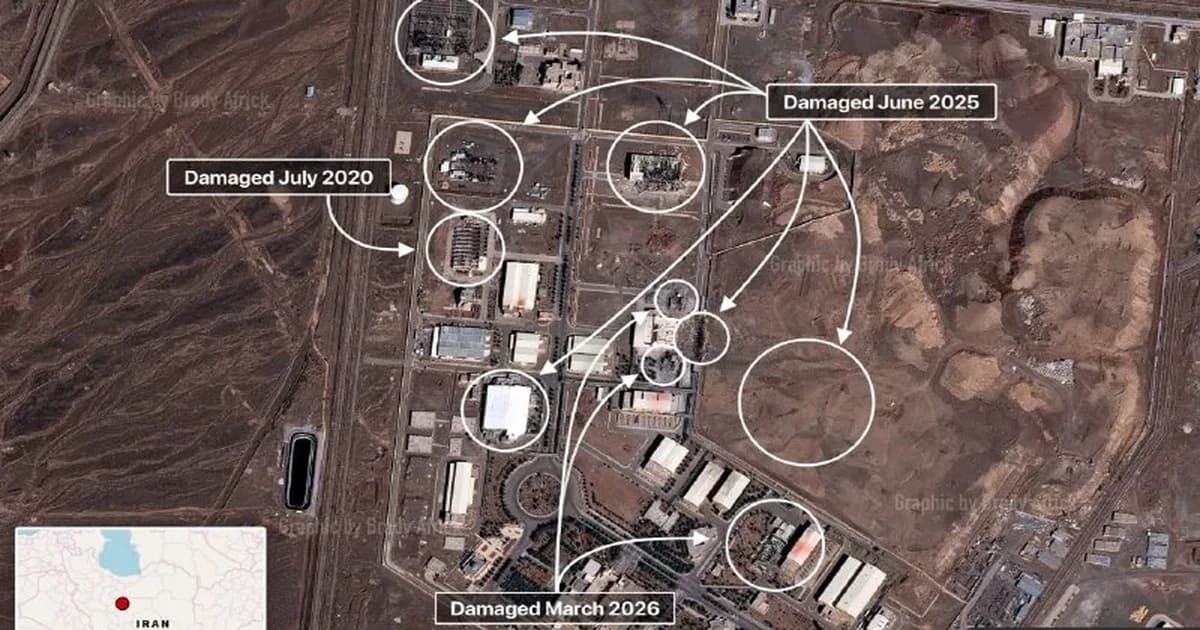
What Israel-Iran War Games Got Wrong About 2026
Defense & Security · Sep 6, 2026