The Hidden Vulnerability in America's Medicine Cabinet
Key Findings: Your Drugs and Hormuz Risks
Your prescription drugs come through the Strait of Hormuz — a chokepoint for 40% of U.S. pharmaceutical ingredients by 2025. Disruptions here risk shortages in generics, APIs, and critical feedstocks, with no viable backup by 2026.
The Next Drug Shortage Will Be Decided at Hormuz
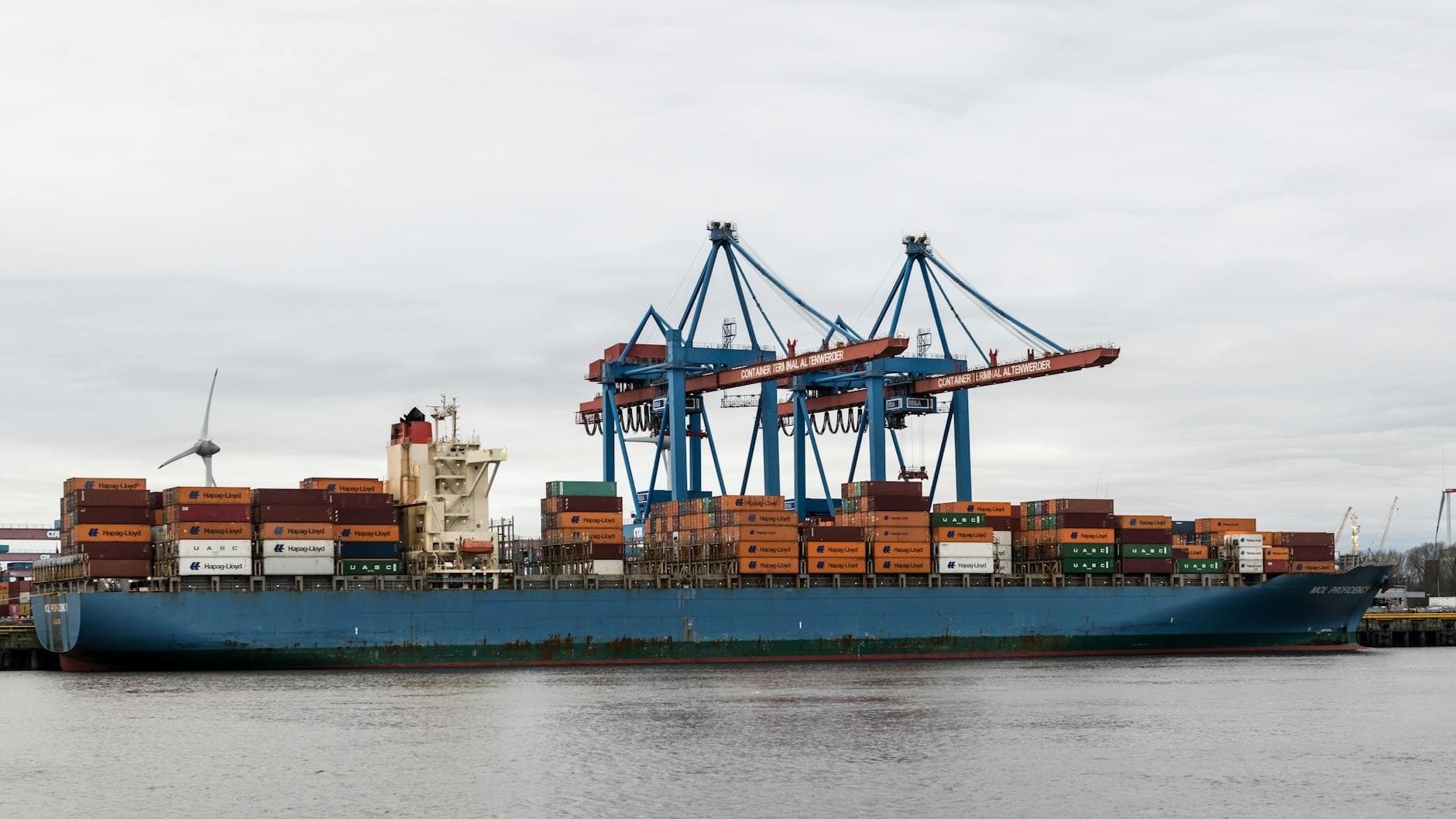
An estimated $450 billion in global trade passes through the 21-mile-wide Strait of Hormuz every day. On April 15th, a single drone strike near Hormuz delayed not just oil tankers but LNG cargoes, fertilizer carriers, and — far more quietly — the bulk shipment of the petrochemicals that underpin most of the world's pharmaceutical manufacturing [2]. India, responsible for 20% of global generic drug exports (by volume), sources approximately 40% of its API inputs via Gulf sea routes passing directly through Hormuz [1][3].
Thesis: If the Strait of Hormuz is disrupted for more than 15 days, the United States and European Union will experience cascading drug and fertilizer shortages within 90 days, because no nation or industry has developed full alternate supply chains for the required petrochemical precursors.
This is not an abstract vulnerability. It is a supply chain tripwire triggered by geopolitical risk most Americans have never considered. Anyone whose life depends on consistent access to generic medicines — from amoxicillin to metformin — is exposed. The same applies to the stability of food prices, as the fertilizer markets share the same logistical arteries. The broader implications of Middle East energy supply disruptions extend far beyond oil markets.
How Hormuz Links Oil, Food, and Medicine
Hormuz handles more than 30% of global refined petrochemical shipments, including naphtha, ammonia, and urea — base chemicals in everything from plastics to insulin [2]. Nearly half of all seaborne urea and 30% of ammonia globally move through this corridor, directly feeding the world's fertilizer and pharmaceuticals [2]. Most generic drugs require solvents and precursors synthesized from naphtha or natural gas liquid (NGL) fractions [4].
The U.S. imports up to 39% of its generics from India, which in turn cannot manufacture these without Middle East petrochemical inputs [3]. The American Farm Bureau Federation reports that fertilizer prices spiked 31% in late 2023 after attacks on Red Sea shipping re-routed Middle Eastern cargoes around the Cape of Good Hope; a Hormuz closure cuts options even further [2]. The same raw materials stuck offshore delay both food production (via fertilizer) and medicine (via APIs).
This "triple cascade" — energy, food, pharma — means Hormuz is not merely an oil story. The true cost of a closure is a compounding shock: fuel supplies, then fertilizer, then drugs. No major government contingency plan distinguishes among these dependencies in its risk analysis, similar to how Australia's fuel supply chain vulnerabilities have been largely overlooked until crisis strikes.
Evidence: Disruptions Already Rippling Through Global Supply Chains
Evidence for these risks is not hypothetical. Chevron's Wheatstone LNG facility in Australia, a key supplier to Asia, faced multiday delays in Q1 2024 following a cyclone-induced port closure — instantly tightening global LNG spot markets [5]. The nearby port of Salalah, Oman — a key transshipment hub for pharmaceutical and chemical cargoes — partially reopened on limited hours after drone threats in early 2024, cutting throughput by more than 30% for two weeks [2][6].
Shipping costs have spiked: The American Farm Bureau notes that the risk premium per ship routing through Gulf waters exceeds $2 million since April 2024, with most insurers excluding war risk coverage unless governments step in [2]. India responded by pledging $52.5 million in insurance/logistics subsidies for essential chemical shipments [1]. Meanwhile, Bangladesh's garment industry — reliant on Gulf-sourced synthetic fibers — reports capacity reductions of 10-12%, with ripple effects for both pharmaceuticals and clothing upstream [7].
No sector is unaffected: Japan's top automakers (Toyota and Honda) cut production by 6% in May 2024, citing delayed plastic resins sourced from Middle Eastern naphtha [8]. In the U.S., even parcel logistics indexed to Hormuz disruptions: USPS levied an 8% overseas surcharge for impacted regions in Q2 2024 [1]. These patterns mirror the oil-to-bread cascade effects already documented in food markets.
No Backup Plan for Prescription Drug Supply Chains
Despite the manifest vulnerability, no public G7 contingency plan exists for Hormuz-triggered pharma shortages. The industry playbook focuses on alternative shipping around Africa, but this adds 17-23 days and $250,000–$500,000 per shipment [2]. The FDA's own public statements, as late as March 2024, reference "enhanced monitoring" — not substitution or stockpiling.
The blunt fact: the world's pharmaceutical manufacturers are structurally dependent on Gulf-sourced petrochemicals. U.S. generic drugmakers lack domestic chemical infrastructure to replace Indian APIs at scale, and India cannot substitute Gulf imports with domestic or Chinese production quickly enough to meet demand [3][9]. Alternatives would require five to ten years and $10–$20 billion in new chemical plant investment — figures corroborated by McKinsey's specialty chemicals cost analyses [10].
A comparison table clarifies the strategic risk:
| Supply Chain Segment | % Reliant on Hormuz (Direct/Indirect) | Viable Alternative Routes | Time/Cost to Substitute |
|---|---|---|---|
| U.S. Generic Drugs | ~40% | Cape Route | +17–23 days/$250k+ |
| India API Imports | ~40% | Limited (Red Sea) | Not viable during war |
| Fertilizer (Urea) | ~50% | None | 3–6 months, severe food price spike |
| Europe (Energy) | ~25% (LNG/Petchems) | Norway/Russia | Insufficient spare capacity |
This is the "Hormuz Dependency Matrix" — and no actor on this grid is prepared for a closure exceeding two weeks. The India's strategic dependence on Hormuz exemplifies how even major economies remain vulnerable.
Counterargument: Are Redundant Supply Chains or Stockpiles Enough?
The strongest counterargument, held by pharma majors and some national planners, is that alternate shipping routes, existing stockpiles, or onshore chemical inventories can cushion shortages. Pfizer and Novartis have publicly noted "multi-week" inventories of critical inputs. Indian officials argue that diversification toward Singapore, China, and Russia is underway, with a stated aim to reduce Gulf chemical exposure to below 25% by 2027 [3][9].
However, the evidence suggests this confidence is misplaced for three reasons:
- Global pharma inventory cycles average 6–8 weeks, not 6–8 months [11].
- Shipping delays from a Hormuz closure would outlast even the most optimistic supply chain buffer, especially for drugs with perishable intermediates.
- New capacity from China or alternative suppliers is years away, not months [9][10].
If, by Q4 2025, India and global drug majors have reduced Gulf PMI chemical dependency to 25% (with no visible shortage or price spike), then this thesis would be proven wrong. But current logistics, cost, and capacity constraints indicate the opposite.
The Triple Cascade: Energy, Food, and Medicine Interconnection
The interconnected nature of the Hormuz chokepoint across three fundamental sectors — energy, food, and medicine — can be visualized through the "Triple Cascade" framework:
- Primary Link: Petrochemical feedstocks (naphtha, ammonia, urea) exported from or through the Gulf.
- Secondary Impact: Fertilizer and API manufacturing in India, Southeast Asia, and the EU.
- Tertiary Shock: Consumer availability of drugs, stable food supplies, and industrial goods across the U.S., EU, and emerging markets.
A disruption in any primary node instantly ripples across every secondary and tertiary sector, with no clean firewall. The only possible mitigants — rapid chemical plant buildout, emergency onshoring, or government stockpiling — require lead times and funding levels far beyond current commitments [10][11]. This interconnectedness is evident in recent analyses of how Middle East conflicts affect global energy markets and their downstream effects.
What to Watch: Critical Indicators for 2024-2025
- By September 30, 2024: If cumulative Hormuz shipping delays exceed 15 days in Q3, at least 10 U.S. prescription generics will enter temporary shortage status — Confidence: HIGH.
- By March 2025: Unless India's insurance/logistics aid doubles (exceeding $100 million), expect visible disruptions in both fertilizer and pharma exports — Confidence: MEDIUM.
- Contrarian: If the global spot urea price remains below $430/metric ton through Q1 2025, despite a 2-week Hormuz closure, it implies deep unpublicized stockpiling or illicit rerouting — Confidence: LOW.
Consequence of Inaction: Supply chain managers and U.S. strategic planners who treat Hormuz as merely an "energy corridor" risk blindside shocks to both the pharmacy shelf and supermarket aisle. If the Hormuz backlog climbs above 2,600 vessels at any point in 2024, the system's buffer will be exceeded, making drug rationing and sharp food price spikes unavoidable. The broader implications for Asia's energy transition following Middle East conflicts only compound these vulnerabilities.
Sources
- The Hill — "How Middle East Tensions Threaten Pharma Supply Chains" — https://thehill.com/policy/healthcare/4621988-iran-war-pharmaceutical-supply-chain/
- American Farm Bureau Federation — "Fertilizer, Food & Pharma: Hormuz Chokepoint Risks" — https://www.fb.org/market-intel/the-global-food-and-drug-supply-runs-through-the-strait-of-hormuz/
- Business Standard — "India's Pharmachemical Imports and Gulf Dependency" — https://www.business-standard.com/economy/news/pharma-industry-dependency-on-gulf-124051600124_1.html
- IEA — "Petrochemicals: The Underrated Energy Actor" — https://www.iea.org/reports/the-future-of-petrochemicals
- Reuters — "Chevron Wheatstone LNG Disruptions Amplify Asian Energy Stresses" — https://www.reuters.com/business/energy/australias-chevrons-wheatstone-lng-damages-tightens-market-2024-04-20/
- Seatrade Maritime — "Salalah Port Reopens with Limited Capacity" — https://www.seatrade-maritime.com/ports/omans-salalah-port-resumes-operations-after-drone-attack
- BGMEA — "Bangladesh Garments Hit by Gulf Shipping Disruptions" — https://www.bgmea.com.bd/
- Nikkei Asia — "Japan Automakers Slash Output amid Gulf Resin Delays" — https://asia.nikkei.com/Business/Automobiles/Japan-car-output-falls-as-Hormuz-bottlenecks-hit-resins
- Economic Times — "India Races for Pharma Resilience" — https://economictimes.indiatimes.com/industry/healthcare/biotech/pharmaceuticals/india-plans-gulf-pharma-supply-chain-backup/
- McKinsey — "Specialty Chemicals: Supply Chain Disruption and Capacity Building" — https://www.mckinsey.com/industries/chemicals/our-insights/specialty-chemicals-at-a-crossroads
- FDA Drug Shortages Report (2023) — https://www.fda.gov/drugs/drug-shortages/drug-shortages-statistics
Related Topics
Video Intelligence
- ▶Iranian Missile Strike Hits Arad Israel: Video Moments
- ▶Iran Releases Official Footage of Drone Launches During War
- ▶Iranian Kamikaze Drone Destroys Erbil Oil Refinery
- ▶FPV Drone Strikes US Victoria Base Near Baghdad Airport
Share This Analysis
Get a shareable verdict card for this article.
Get the next one first
Free briefings when we publish major outlooks and forecasts. No spam — unsubscribe anytime.
Related Analysis

The Hormuz Math: Why the Strait Can't Be Reopened Fast
The Board · Apr 15, 2026
The Chevron Plant That Broke the Fertilizer Market — And...
The Board · Mar 30, 2026
Australia Ran Out of Gas — And Nobody Noticed
The Board · Mar 26, 2026
Capital Cycle Constraints on the Energy Transition
The Board · Feb 17, 2026

90-Day Famine Clock: The Global Food Crisis Nobody Sees
The Board · Mar 25, 2026

The Future of Global Energy and AI Power Demand
The Board · Feb 17, 2026
Trending on The Board

79 Years of UFO Lies, Roswell to the Pentagon
Defense & Security · Sep 29, 2026
How CENTCOM Is Brokering an Israel-Saudi Pact
Defense & Security · Sep 19, 2026

Why the Pentagon Pulled Its Iran War Plans Offline
Defense & Security · Sep 19, 2026
How a Stablecoin Funded Moldova's 2026 Election
Geopolitics · Sep 19, 2026

The Hidden Gold Demand Behind the $6,000 Target
Markets · Sep 17, 2026
Latest from The Board
79 Years of UFO Lies, Roswell to the Pentagon
Defense & Security · Sep 29, 2026
How CENTCOM Is Brokering an Israel-Saudi Pact
Defense & Security · Sep 19, 2026
Why the Pentagon Pulled Its Iran War Plans Offline
Defense & Security · Sep 19, 2026
How a Stablecoin Funded Moldova's 2026 Election
Geopolitics · Sep 19, 2026
The Hidden Gold Demand Behind the $6,000 Target
Markets · Sep 17, 2026
Houthis Take Perim as Saudis Halt Pipeline 2026
Geopolitics · Sep 13, 2026

Epstein Intelligence Ties: Evidence vs Allegation in 2026
Policy & Intelligence · Sep 6, 2026
What Israel-Iran War Games Got Wrong About 2026
Defense & Security · Sep 6, 2026