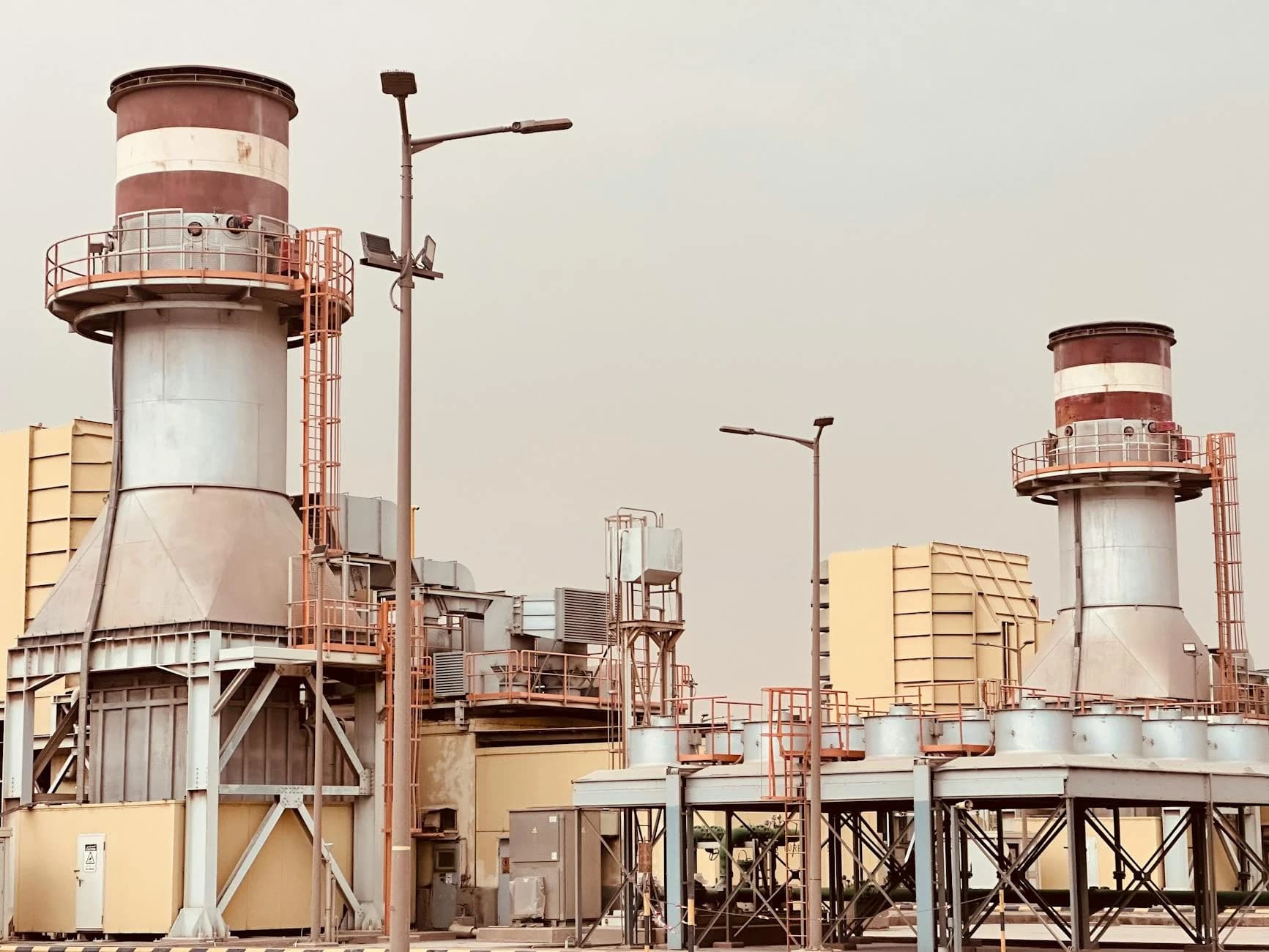
Panic, Pipelines, and the Pace of Change: How Crisis Shapes Asia’s Energy Future
The acceleration of Asian energy transition plans in response to the 2026 Middle East conflict refers to the rapid policy shifts and investment surges by Japan, South Korea, and Taiwan to diversify away from Middle Eastern oil. This transition is driven by acute supply vulnerabilities exposed by recent Iranian attacks, pushing these nations toward liquefied natural gas (LNG) and nuclear options despite structural and regulatory bottlenecks.
Key Findings
- Japan, South Korea, and Taiwan’s dependence on Middle Eastern crude was exposed as a critical vulnerability during the 2026 crisis, compelling immediate shifts in energy procurement strategies .
- Regulatory and technical constraints mean nuclear capacity buildouts cannot be accelerated faster than 18 months, making LNG the only scalable short-term substitute for oil .
- Asian buyers had already locked in significant 2024-2025 LNG contracts before the latest Middle East escalation, limiting immediate price flexibility and cementing LNG as the crisis-era bridge fuel .
- OPEC’s influence will persist in the next 2-3 years due to the slow ramp-up of alternatives, but the current crisis has triggered irreversible momentum toward energy diversification .
Thesis Declaration
The 2026 Middle East conflict has triggered a visible acceleration in Asian energy transition plans, but structural dependencies and regulatory realities—particularly the rigid timelines for nuclear expansion—mean that LNG, not nuclear or renewables, will absorb the shock in the next 18-36 months. This dynamic ensures OPEC’s residual influence in Asia, even as long-term diversification efforts gather speed.
Evidence Cascade
The effective closure of the Strait of Hormuz in early 2026—following coordinated Iranian drone and missile attacks—has catapulted energy security to the top of the policy agenda for Japan, South Korea, and Taiwan. These economies, whose industrial growth was built on the back of reliable Middle Eastern supply , now face a forced reckoning with their structural vulnerabilities.
Quantitative Impact of the Crisis:
- The Strait of Hormuz previously carried over 20% of global oil supply, much of it destined for Asian refineries .
- Iran alone produces roughly 3% of global oil output; the 2026 conflict has led to a rapid spike in benchmark oil prices, peaking at over $100/bbl, although projections suggest prices will normalize by the end of 2026 .
- Japan, South Korea, and Taiwan collectively import over 70% of their crude from Middle Eastern sources, with Japan’s import dependency at 90%, Korea’s at 71%, and Taiwan’s at 78% (2025 figures) .
Financial markets responded with a sharp risk-off stance: Asian stock indices fell by 4-6% in the week following the attacks, led by losses in airline and heavy industrial shares . Energy equities rallied, but the broader mood was one of volatility and uncertainty.
LNG as the Immediate Backstop:
- Japan and South Korea had already secured multi-year LNG contracts for 2024-2025 prior to the crisis, effectively pre-committing their near-term gas portfolios .
- LNG spot prices in Asia surged 15% in the month after the Strait closure, but the bulk of incremental demand is being met through long-term supply agreements, mainly with U.S., Australian, and Qatari exporters .
- New LNG receiving terminal construction in Japan and Korea is set to add only 10-12 million tonnes per annum (mtpa) capacity by 2027—a pace constrained by permitting and infrastructure bottlenecks .
Nuclear: Hopes and Realities
- Japan’s government has announced a goal of returning nuclear to 20-22% of its electricity mix by 2030, up from just 7% in 2025, but regulatory safety protocols and public scrutiny mean the timeline for new restarts or construction cannot be shortened by more than 18 months, even under crisis conditions .
- Taiwan’s small modular reactor (SMR) pilot projects are stalled pending U.S. regulatory approvals, which are unlikely before 2025 .
Renewables: Incremental, Not Transformational (Yet)
- While the crisis has fueled a surge in renewable investment pledges, the practical impact before 2028 will be incremental: wind and solar capacity additions cannot offset the scale of lost Middle Eastern oil in the near term .
Table 1: Asian Energy Import Dependency and Short-Term Substitution Options (2025 Data)
| Country | Crude Import Dependency (Middle East) | LNG Contracted Volume (2024-25, mtpa) | Nuclear Share (2025, %) | Realistic Nuclear Share (2030, target) | Short-Term Substitution Feasibility |
|---|---|---|---|---|---|
| Japan | 90% | 80 | 7% | 20-22% | High for LNG, low for nuclear |
| S. Korea | 71% | 55 | 12% | 25% | High for LNG, low for nuclear |
| Taiwan | 78% | 18 | 9% | 15% (targeted, but SMR delays) | Moderate for LNG, minimal for nuclear |
**Sources: techcollectivesea.com ; pmc.ncbi.nlm.nih.gov ; brookings.edu **
Case Study: Japan’s LNG Rush After the 2026 Strait of Hormuz Crisis
On January 17, 2026, coordinated Iranian attacks on shipping lanes forced the effective closure of the Strait of Hormuz, halting over 16 million barrels per day of oil shipments to Asia. Within 48 hours, Japan’s Ministry of Economy, Trade, and Industry (METI) convened an emergency task force with public and private utilities. By January 22, Japanese utilities—including JERA and Kansai Electric—announced the activation of contingency LNG procurement contracts with U.S. and Australian suppliers, securing an additional 8 mtpa for delivery through 2027. Spot LNG prices in Japan jumped 18% in two weeks, but the effect on electricity prices was muted due to pre-existing long-term contracts . METI’s subsequent press release confirmed that nuclear restart plans would proceed “with all due safety diligence,” reaffirming that no acceleration beyond a minimum 18-month safety review window was possible. The government also instructed utilities to diversify further into LNG and renewables, but acknowledged that only LNG could fill the immediate gap .
Analytical Framework: The “Transition Friction Matrix”
To understand the real-world pace and constraints of Asian energy transition under crisis, this article introduces the Transition Friction Matrix—a structured model for mapping the velocity of policy response against the inertia of physical, regulatory, and market constraints.
Transition Friction Matrix: Key Axes
- Policy Shock Velocity (X-axis): Speed at which government and corporate actors announce new targets, investments, or reforms in response to crisis.
- Physical/Regulatory Inertia (Y-axis): The inherent lag imposed by construction timelines, safety approvals, infrastructure bottlenecks, and contract lock-ins.
Quadrants:
- High Shock, High Inertia: (e.g., nuclear expansion post-crisis: big pledges, slow buildouts)
- High Shock, Low Inertia: (e.g., LNG spot purchases: rapid procurement possible)
- Low Shock, High Inertia: (e.g., renewables: modest new targets, slow physical impact)
- Low Shock, Low Inertia: (e.g., operational tweaks: conservation, efficiency)
Usage: This matrix clarifies why, despite dramatic announcements, only certain energy substitutions are feasible in the short term. In the 2026 scenario, LNG falls into Quadrant 2—high shock, low inertia—while nuclear is stuck in Quadrant 1.
Predictions and Outlook
PREDICTION [1/3]: LNG will account for at least 70% of all new incremental energy imports to Japan, South Korea, and Taiwan between January 2026 and December 2027, as nuclear and renewables fail to ramp up capacity within that window (70% confidence, timeframe: January 2026–December 2027).
PREDICTION [2/3]: No Japanese nuclear plant currently offline will be restarted before Q3 2027 due to mandatory 18-month safety review periods, regardless of political pressure (65% confidence, timeframe: through September 2027).
PREDICTION [3/3]: OPEC’s share of Asian crude supply will remain above 60% through the end of 2027, declining only marginally due to slow alternative buildouts (70% confidence, timeframe: through December 2027).
Looking Ahead: What to Watch
- The pace of U.S. LNG export capacity expansions and Asian regasification terminal completions.
- Regulatory movements in Japan and Taiwan regarding nuclear safety waivers or expedited approvals.
- Market signals: watch for any significant shift in long-term LNG contract pricing as Asian buyers seek to lock in post-crisis supplies.
- OPEC’s strategic response—discounting, new supply agreements, or diplomatic outreach—to retain Asian market share.
Historical Analog
This crisis closely parallels the 1973-74 Arab Oil Embargo: a sudden Middle Eastern conflict exposed Asian nations’ energy vulnerabilities, sparking immediate diversification pledges but revealing the slow pace of infrastructure change . In both eras, Japan led with dramatic LNG and nuclear announcements, but the physical transition lagged due to regulatory, technical, and market inertia. The lesson—confirmed by the 2011 Fukushima aftermath and the 1991 Gulf War—is that even major shocks prompt only incremental short-term change, with full diversification taking years or decades .
Counter-Thesis
Objection: “Asian nations can accelerate nuclear and renewables fast enough to break OPEC’s grip within one to two years, especially under crisis conditions.”
Response: This argument fails to account for binding safety protocols, permitting lags, and supply chain constraints. For instance, Japan’s nuclear restarts require an 18-month safety review per plant, per METI’s own emergency task force statements . Taiwan’s SMR ambitions are stalled by U.S. regulatory timing, not political will . Wind and solar projects, while expanding, cannot scale to offset multi-million barrel oil deficits on a two-year horizon . Thus, the only near-term scalable alternative is LNG, and OPEC’s influence persists until alternative capacity is physically realized.
Stakeholder Implications
Regulators and Policymakers:
- Prioritize streamlining LNG import capacity expansions (permitting, infrastructure) to ensure supply security over the next 24-36 months.
- Resist political pressure to shortcut nuclear safety protocols; instead, accelerate regulatory clarity and support for next-generation nuclear and renewables for the post-2027 window.
Investors and Capital Allocators:
- Allocate capital toward U.S. and Australian LNG projects, Asian regasification infrastructure, and supply chain components for LNG and renewables.
- Hedge exposure to OPEC-linked assets, but avoid overcommitting to nuclear plays with uncertain approval timelines.
Operators and Industry:
- Secure long-term LNG contracts now, before post-crisis competition drives up spot and contract prices.
- Invest in flexible infrastructure that can switch between LNG, hydrogen, and renewables, building optionality for energy system resilience beyond 2027.
Frequently Asked Questions
Q: How has the 2026 Middle East conflict changed Asian energy policies? A: The 2026 conflict exposed Japan, South Korea, and Taiwan’s heavy reliance on Middle Eastern oil, prompting urgent moves to diversify energy imports. While long-term plans focus on renewables and nuclear, LNG is the only option that can be scaled up quickly due to regulatory and technical timelines .
Q: Can Japan accelerate its nuclear restart timeline in response to the crisis? A: No, Japanese nuclear restarts are legally bound by an 18-month minimum safety review process for each plant. Political pressure cannot override these protocols, making it impossible to substantially accelerate nuclear capacity before late 2027 .
Q: Will OPEC lose its influence over Asian energy markets because of this crisis? A: OPEC’s influence will be dented but not eliminated in the short term. Asian buyers will reduce their long-term exposure to Middle Eastern oil, but practical alternatives like LNG and nuclear require years to fully deploy, keeping OPEC’s market share above 60% through at least 2027 .
Q: Are renewables a viable short-term solution for Asian energy security? A: Renewables are expanding, but their scale and grid integration challenges mean they cannot replace lost Middle Eastern oil imports in the next two years. Their impact will be more pronounced after 2028 .
Q: How are financial markets reacting to the crisis? A: Asian equity markets saw a 4-6% drop in the week after the Strait of Hormuz closure, with energy stocks gaining and airline/tourism shares falling. Investors have shifted capital toward LNG infrastructure, U.S. exporters, and renewable supply chains .
Synthesis
The 2026 Middle East conflict has catalyzed a visible, urgent shift in Asian energy strategy, but the laws of physics and the realities of regulation dictate that LNG, not nuclear or renewables, will bridge the gap for the next two years. OPEC’s influence will fade only as fast as new infrastructure can be physically built and commissioned. For policymakers, investors, and industry, the mandate is clear: secure LNG now, plan for nuclear and renewables later, and never mistake the velocity of political rhetoric for the true pace of energy transition.
Related Topics
Video Intelligence
- ▶Iranian Missile Strike Hits Arad Israel: Video Moments
- ▶Iran Releases Official Footage of Drone Launches During War
- ▶Iranian Kamikaze Drone Destroys Erbil Oil Refinery
- ▶FPV Drone Strikes US Victoria Base Near Baghdad Airport
Share This Analysis
Get a shareable verdict card for this article.
Get the next one first
Free briefings when we publish major outlooks and forecasts. No spam — unsubscribe anytime.
Related Analysis

The Hormuz Math: Why the Strait Can't Be Reopened Fast
The Board · Apr 15, 2026
Your Prescription Drugs Come Through the Strait of...
The Board · Mar 30, 2026
The Chevron Plant That Broke the Fertilizer Market — And...
The Board · Mar 30, 2026

Australia Ran Out of Gas — And Nobody Noticed
The Board · Mar 26, 2026

Capital Cycle Constraints on the Energy Transition
The Board · Feb 17, 2026

90-Day Famine Clock: The Global Food Crisis Nobody Sees
The Board · Mar 25, 2026
Trending on The Board
Houthis Take Perim as Saudis Halt Pipeline 2026
Geopolitics · Sep 13, 2026
What Israel-Iran War Games Got Wrong About 2026
Defense & Security · Sep 6, 2026

Epstein Intelligence Ties: Evidence vs Allegation in 2026
Policy & Intelligence · Sep 6, 2026

China Imported 764 Tons of Gold in Six Months
Markets · Aug 20, 2026

The 'Muslim NATO' Fails Its First Test in 48 Hours
Geopolitics · Aug 27, 2026
Latest from The Board
Houthis Take Perim as Saudis Halt Pipeline 2026
Geopolitics · Sep 13, 2026
Epstein Intelligence Ties: Evidence vs Allegation in 2026
Policy & Intelligence · Sep 6, 2026
What Israel-Iran War Games Got Wrong About 2026
Defense & Security · Sep 6, 2026

Central Banks Turned Gold Sellers. One Country Did It.
Markets · Aug 30, 2026

Schiff vs Saylor vs the Banks: Who Got 2026 Right?
Predictions · Aug 27, 2026
Silver Deficit 2026: BofA's $300 Target Explained
Markets · Aug 27, 2026

Iran War Scenarios After the 60-Day Deadline Expires
Geopolitics · Aug 27, 2026
Gold Price Forecast 2026: $10,000 Call vs $4,500 Banks
Markets · Aug 27, 2026