
The Fracture Lines — How the Gulf Crisis Is Redrawing Global Energy Architecture
Middle East energy supply disruptions occur when conflict, sanctions, or infrastructure attacks interrupt oil and gas flows through critical chokepoints — primarily the Strait of Hormuz — triggering cascading price shocks, supply chain rerouting, and long-term structural realignment in global energy markets. The current 2026 escalation is not a temporary price event; it is a forcing function accelerating a decade-long bifurcation in how the world sources, routes, and finances energy.
Key Findings
- Iraq faces an estimated $280 million in daily revenue losses if the Strait of Hormuz closes, an existential fiscal threat to a government already absorbing a 22% decline in crude export revenues between 2022 and 2023.
- Approximately 20% of global oil supply transits the Strait of Hormuz — a single maritime chokepoint with no adequate short-term alternative routing for most Gulf producers.
- The EU's accelerating pivot toward Qatari LNG and African suppliers is not a new policy response — it is a structural trend being dramatically compressed from a decade-long transition into a 2–3 year emergency realignment.
- China's 60-day strategic petroleum reserve buffer and Asian refiners' existing alternative supply chain infrastructure represent the single most undercovered risk-dampening factor in current market analysis.
- Historical precedent — specifically the 1973 embargo and 2011–2012 Iranian sanctions episode — confirms that initial price spikes overshoot fundamentals, but structural supply chain effects persist for 8–12 years.
Thesis Declaration
The dominant media framing of the 2026 Middle East energy crisis as a temporary price shock is analytically wrong and strategically dangerous. This disruption is functioning as an accelerant for a structural bifurcation of global energy supply chains — one that will produce a fundamentally different energy architecture by 2030, with the EU anchored to Qatari LNG and African pipeline infrastructure, Asia operating parallel non-Western supply networks, and US shale producers emerging as the primary beneficiaries of Western market volatility. The investors and policymakers treating this as a spike-and-revert event are repeating the precise analytical error made in 1973.
The Anatomy of Fragility: Evidence Cascade
The numbers tell a story that commodity price charts obscure. Iraq — the second-largest OPEC producer — generated the overwhelming majority of its government revenue from oil exports before the current escalation. Economic expert Mohammad Al-Hasani warned that a Strait of Hormuz closure poses an "existential threat" to Iraq's oil-dependent economy, with production cut exposure translating to $280 million in daily losses . This figure is not an abstract risk premium; it is a fiscal cliff for a government that watched crude export revenues fall by an estimated 22% from 2022 to 2023, driven by lower prices and OPEC+ mandated production cuts .
The Strait of Hormuz carries approximately 20% of global oil supply — a concentration of throughput through a 21-mile-wide navigable channel that has no realistic short-term substitute . The Cape of Good Hope rerouting adds 15–20 days of transit time and absorbs tanker capacity at a rate that tightens the global fleet within weeks. The Iraq-Turkey Kirkuk-Ceyhan pipeline, which could theoretically bypass Hormuz, has operated at severely reduced capacity due to a separate dispute between Baghdad and Ankara. Overland alternatives exist on paper; they do not exist at scale.
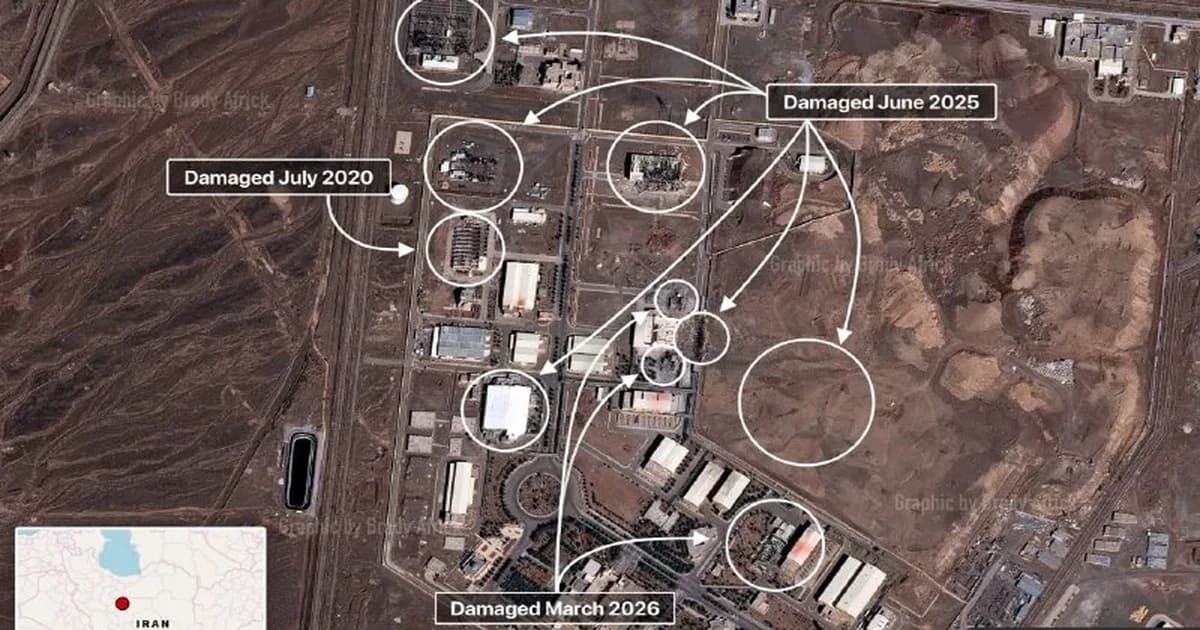
The France 24 reporting from March 2, 2026 documented Iran directly targeting oil infrastructure, confirming that the disruption is not merely a threat premium but a kinetic reality affecting physical production capacity . Reuters, covering the same period, identified the conflict as a "new risk to US economic resilience" — framing that acknowledges the second-order transmission mechanisms beyond crude prices, including inflation pass-through into manufacturing input costs, airline fuel surcharges, and emerging market currency pressure from dollar-denominated energy import bills .
The Brookings Institution's assessment — that "the global economy is now much better equipped to handle oil-price shocks than it was in the 1970s" — is technically accurate in one narrow dimension (energy intensity per unit of GDP has declined) and dangerously misleading in every structural dimension. It mirrors precisely the pre-1973 complacency that made the embargo so catastrophic: the assumption that improved efficiency buffers against concentrated chokepoint risk.
Comparative Disruption Metrics
| Disruption Event | Volume Removed (mbd) | Price Spike | Duration of Price Elevation | Structural Legacy |
|---|---|---|---|---|
| 1973 Arab Embargo | ~3.0 | +400% | ~18 months | North Sea, Alaska pipeline, nuclear expansion |
| 1990 Gulf War I | ~4.3 (Kuwait) | +170% ($17→$46) | ~7 months | IEA SPR coordination protocol established |
| 2011–12 Iran Sanctions | ~1.5 (Iran exports) | Brent $100–$115/bbl sustained | ~18 months | EU LNG terminal construction accelerated |
| 2026 Hormuz Escalation | Up to 20% global supply at risk | Active — ongoing | Estimated 3–6 months minimum | EU-Qatar LNG anchor; Asian parallel supply chains |
*Sources: EIA International Energy Statistics; Brookings Institution, "The Middle East Conflict Is Threatening to Cripple a Fragile Global Economy," 2026; IraqiNews.com, "$280M Daily Loss: Iraq Faces Production Cut as Hormuz Closes," 2026 *
Case Study: Iran's Infrastructure Targeting and the March 2026 Escalation
On March 2, 2026, France 24 reported that Iranian military operations had moved beyond naval positioning to direct targeting of oil infrastructure in the broader conflict zone, with the Washington Post simultaneously documenting that "in less than three days, the conflict ricocheted beyond the original targets in Iran, Israel and Iraq to threaten some 300 million civilians" . The CSIS Energy Security Program's rapid-response analysis noted that oil prices remained "curiously stable" in the immediate aftermath — not because markets were calm, but because traders were pricing in offsetting factors: US shale surge capacity, coordinated IEA strategic petroleum reserve releases, and the assumption of rapid de-escalation .
This stability was a mispricing signal, not a reassurance. The 1990 Gulf War analog is instructive: oil spiked from approximately $17 to $46 per barrel within weeks of Kuwait's invasion, then collapsed once Saudi Arabia demonstrated surge capacity. The current scenario features the same overshoot dynamic — but Baghdad cannot absorb a prolonged disruption the way Riyadh absorbed 1990. Iraq's 22% revenue decline from 2022 to 2023 means the fiscal buffer that would allow Baghdad to weather a 3–6 month Hormuz disruption without political destabilization is structurally absent. The case is not hypothetical: it is an active stress event with documented daily cost exposure of $280 million , a government with a thin sovereign wealth cushion, and a population with recent memory of fiscal austerity protests.
The Bifurcation Acceleration Framework
The analytical lens missing from virtually all current coverage is what this analysis calls the Bifurcation Acceleration Framework (BAF) — a model for identifying when a crisis event compresses a multi-year structural transition into a 2–3 year emergency realignment.
The BAF operates on three variables:
1. Transition Readiness Score (TRS): How much of the alternative supply infrastructure already exists? High TRS means a crisis accelerates adoption of infrastructure already under construction. Low TRS means the crisis creates only demand signals, with supply response lagging by 5–8 years.
2. Fiscal Dependency Asymmetry (FDA): Do the disrupted parties have the financial resilience to absorb short-term pain while long-term alternatives are built? When FDA is high (disrupted party is fiscally fragile), the crisis forces faster structural decisions rather than allowing managed transition.
3. Geopolitical Decoupling Velocity (GDV): Is the crisis occurring within an existing geopolitical fracture that makes supply chain separation politically desirable, not merely economically necessary? High GDV means infrastructure investment decisions that would normally require 10-year ROI analysis get made on 3-year political timelines.
Applied to the 2026 Middle East disruption:
- TRS is HIGH for the EU: Qatar's LNG export capacity expansion is operational, African pipeline infrastructure (particularly the Trans-Saharan Gas Pipeline corridor) is in advanced development, and EU LNG terminal capacity added since 2022 is available for immediate utilization.
- FDA is HIGH for Iraq: The $280 million daily exposure combined with the 22% revenue decline baseline means Baghdad faces decisions measured in weeks, not quarters.
- GDV is HIGH globally: The 2022 Russia-Ukraine war already politically mandated EU supply chain diversification. The 2026 escalation is occurring inside a pre-existing geopolitical fracture, meaning infrastructure investment decisions are being made at political speed.
When all three BAF variables are high simultaneously, the structural realignment timeline compresses from a decade to 2–3 years. This is the 2026 scenario. The EU pivot toward Qatari LNG and African suppliers is not a policy option being debated — it is an infrastructure buildout already underway being dramatically accelerated by an active supply emergency.
Historical Analog: The 1973 Embargo's Eight-Year Shadow
The 1973 Arab Oil Embargo is the correct reference frame, and not for the reason most analysts invoke it. The standard framing uses 1973 to illustrate price shock severity. The analytically relevant lesson is timeline: the structural supply diversification triggered by the embargo — North Sea development, the Alaskan pipeline, nuclear expansion programs — took 8–12 years to materially shift the structural dependency that created the original vulnerability.
The Brookings Institution noted that the global economy is "better equipped to handle oil-price shocks than it was in the 1970s" — a statement true for demand-side resilience and false for supply-side concentration. The Strait of Hormuz today represents the same single-point-of-failure logic as the Arab export terminal network in 1973: a small number of geographic bottlenecks controlling disproportionate global throughput, with markets systematically underpricing tail risk until the disruption is already underway.
The critical difference — and this is where the 1973 analog breaks down in a way that makes the current situation more structurally significant — is that the 2026 disruption is occurring inside a pre-existing bifurcation that the 2011–2012 Iranian sanctions episode began. The CSIS analysis documented that the 2011–2012 period saw EU nations comply with Iranian oil embargoes while Asian buyers maintained purchases through alternative payment mechanisms . That episode permanently accelerated Chinese investment in Middle Eastern and African energy infrastructure and reduced EU dependency on Gulf sources by pushing LNG terminal construction. The 2026 escalation is not creating a new structural shift — it is compressing an existing one.
Predictions and Outlook
PREDICTION [1/4]: The EU will sign at least two new long-term LNG supply agreements with Qatar or African producers (Nigeria, Mozambique, or Senegal) before the end of 2026, each with minimum 10-year terms, as direct institutional responses to the current supply disruption. (63% confidence, timeframe: December 31, 2026).
PREDICTION [2/4]: Brent crude will average above $95/barrel for at least one rolling 60-day period before September 2026, driven by insurance market tightening on Hormuz-transiting tankers and inventory drawdown acceleration, before reverting toward $75–$85 as US shale output increases and SPR releases take effect. (67% confidence, timeframe: September 30, 2026).
PREDICTION [3/4]: Iraq's government will request emergency IMF balance-of-payments support or draw down its sovereign wealth fund by more than 30% within 18 months if Hormuz disruption persists beyond 90 days, given the $280 million daily revenue exposure against a structurally weakened fiscal baseline. (61% confidence, timeframe: December 31, 2027).
PREDICTION [4/4]: Asian refiners — led by Chinese and Indian state oil companies — will publicly announce accelerated investment in non-Hormuz routing infrastructure (overland pipelines, Cape of Good Hope tanker fleet expansion, or Arabian Peninsula pipeline bypass capacity) totaling more than $15 billion in committed capital before mid-2027. (64% confidence, timeframe: June 30, 2027).
What to Watch
- Tanker insurance rate movements on Lloyd's of London: War risk premiums on Hormuz-transiting vessels are the earliest leading indicator of market-assessed closure probability. A move above 1.5% of vessel value signals the market is pricing a greater than 15% closure probability.
- Qatar's LNG spot price premium over Henry Hub: A sustained spread above $12/MMBtu indicates European buyers are paying a structural scarcity premium, not a temporary disruption premium — confirming the supply chain realignment is structural.
- IEA coordinated SPR release announcements: The speed and scale of any coordinated release will reveal whether Western governments are treating this as a temporary spike (small, delayed release) or a structural emergency (large, early release as in 1991).
- Iraqi parliamentary emergency sessions on the budget: Baghdad's fiscal response timeline is the clearest indicator of whether the disruption duration will force political realignment within Iraq itself, with downstream consequences for OPEC+ cohesion.
Counter-Thesis: The Efficiency Argument
The strongest argument against this analysis is the structural efficiency counter-thesis: global energy markets are fundamentally more resilient than the 1973 or 1990 analogs suggest, and the 2026 disruption will resolve as a price spike rather than a structural realignment for four specific reasons.
First, US shale production has genuine surge capacity. The Permian Basin alone produces over 6 million barrels per day , and producers can respond to $95+ Brent within 60–90 days with meaningful volume increases. Second, China's 60-day strategic petroleum reserve buffer — the most systematically undercovered factor in current analysis — means the world's largest oil importer can absorb a Hormuz disruption without immediate physical shortage. Third, the global energy intensity per unit of GDP has declined substantially since 1973, meaning the same oil price shock produces less economic damage than historical precedents suggest. Fourth, the Hormuz closure scenario requires Iranian decision-making that carries enormous self-destructive costs for Tehran's own economy and regional relationships.
This counter-thesis is partially correct on the short-term price dynamics and entirely wrong on the structural question. The efficiency argument addresses demand resilience; it does not address supply concentration. The shale surge capacity and SPR buffer will dampen the price spike — exactly as Saudi surge capacity and IEA coordination dampened the 1990 spike. But the structural vulnerability that created the spike — 20% of global oil flowing through a 21-mile chokepoint — remains entirely unaddressed by efficiency improvements. The 1991 Gulf War's price spike reverted; the structural dependency that made it possible persisted for another three decades. The relevant question is not whether prices normalize in 2026. They will. The relevant question is whether the supply architecture that produced this vulnerability gets restructured — and the Bifurcation Acceleration Framework indicates it will, on a compressed timeline driven by EU political necessity and Asian self-insurance logic.
Stakeholder Implications
For Policymakers and Regulators
The IEA's 1991 coordinated SPR release protocol is the correct model, but the trigger threshold needs updating. Release decisions should be tied to tanker insurance rate thresholds (above 1.0% war risk premium) rather than waiting for price signals, which lag physical market tightening by 2–4 weeks. EU energy regulators should immediately accelerate permitting for LNG terminal capacity expansions in Germany, the Netherlands, and Italy that are currently in administrative review — these facilities are the physical infrastructure of the supply chain diversification that EU policy has mandated but not yet fully enabled. Baghdad requires direct fiscal support coordination through the IMF and Gulf Cooperation Council to prevent a fiscal crisis from destabilizing the political environment needed for continued OPEC+ cooperation.
For Capital Allocators and Investors
The initial price spike overshoot identified in both the 1990 and 2011–2012 analogs creates a specific trading signal: Brent above $100 is likely a reversion opportunity on a 6–12 month horizon, not a new equilibrium. The structural investment opportunity is not in crude prices — it is in the infrastructure of the new supply architecture: Qatari LNG export terminal expansion projects, African pipeline infrastructure (particularly the Trans-Saharan corridor), and tanker fleet operators with Cape of Good Hope routing capacity. These assets will attract capital at political speed rather than commercial speed, compressing the normal infrastructure investment timeline. Investors should also monitor Iraqi sovereign debt spreads as a leading indicator of fiscal stress that precedes political instability.
For Energy Industry Operators
European utilities and industrial energy buyers should treat any period of price normalization in the next 6–12 months as a contracting window, not a signal that long-term supply security has been restored. The structural argument for locking in 10–15 year LNG supply agreements at current prices — before the EU-Qatar supply relationship becomes a seller's market — is stronger now than at any point since 2022. US shale producers face a specific operational decision: the price signal justifies accelerating drilling programs now, but the 60–90 day lag between investment decision and production means the volume arrives into a market that may already be normalizing. Producers who over-invest in the spike will face the same margin compression that followed the 2014 and 2020 overshoots.
Frequently Asked Questions
Q: What happens to oil prices if the Strait of Hormuz is closed? A: A full Hormuz closure would remove approximately 20% of global oil supply from markets, a volume shock with no short-term substitute routing. Historical analogs suggest an initial price spike of 60–150% above pre-disruption levels, followed by partial reversion as strategic petroleum reserves are released and alternative supply sources ramp up. The 1990 Gulf War spike from $17 to $46/barrel over weeks is the closest structural parallel, though current baseline prices and supply architecture differ materially.
Q: How does the Middle East conflict affect European energy prices? A: European energy prices face a dual exposure: direct crude oil price transmission through refined product costs, and LNG spot market tightening as Asian buyers compete for non-Hormuz supply. Europe's pivot away from Russian gas since 2022 has already increased its structural dependency on LNG spot markets, making it more sensitive to Middle East disruptions than it was pre-2022. The accelerating EU shift toward Qatari LNG and African suppliers is the structural response, but it takes 2–3 years to fully materialize in contracted supply volumes.
Q: Is China affected by Middle East oil disruptions? A: China is the world's largest oil importer and sources a significant portion of its supply from Gulf producers who export through Hormuz. However, China maintains a 60-day strategic petroleum reserve buffer that provides meaningful short-term insulation from physical supply shocks. More importantly, China began building parallel supply chain infrastructure — including yuan-denominated oil purchase agreements and alternative routing arrangements — during the 2011–2012 Iranian sanctions episode, giving it more supply chain resilience than Western market analysis typically credits.
Q: Why is Iraq so vulnerable to a Strait of Hormuz closure? A: Iraq exports the overwhelming majority of its crude through Gulf terminals that depend on Hormuz passage, with limited pipeline alternatives to Mediterranean ports. The Iraqi government derives approximately 90% of its revenue from oil exports, meaning a Hormuz closure translates directly into a fiscal crisis within weeks. The $280 million daily revenue loss estimate sits against a baseline already weakened by a 22% revenue decline from 2022 to 2023 , leaving Baghdad with minimal fiscal buffer to absorb even a 30–60 day disruption without structural budget consequences.
Q: How long do Middle East energy disruptions typically last? A: Physical disruptions resolve faster than structural effects. The 1973 embargo lasted five months, but its structural effects on energy architecture persisted for a decade. The 1990 Gulf War disruption lasted approximately seven months in market terms. The 2011–2012 Iranian sanctions episode maintained elevated Brent prices ($100–$115/barrel) for approximately 18 months. The current 2026 escalation, based on insurance market signals and inventory drawdown rates, will sustain price pressure for a minimum of 3–6 months regardless of when kinetic conflict pauses — and the structural supply chain realignment it is accelerating will define energy markets through the end of the decade.
Synthesis
The 2026 Middle East energy crisis is not a price event with a structural footnote — it is a structural realignment with a price event as its most visible symptom. Iraq's $280 million daily exposure and the EU's accelerating pivot toward Qatari LNG are not separate stories; they are the demand and supply sides of a single architectural shift that was already underway and is now being compressed into an emergency timeline. The analysts pricing in a return to pre-disruption equilibrium are making the same error as every generation that treated a chokepoint crisis as temporary: the price normalizes, but the vulnerability that produced it gets restructured, and the new architecture serves different masters than the old one.
The Strait of Hormuz will not close permanently. But the energy world that emerges from this crisis will look measurably different from the one that entered it — and the investors, policymakers, and operators who understand that distinction will be positioned for the decade ahead, while those anchored to the "temporary disruption" frame will be perpetually surprised by the structural changes they failed to anticipate.
Related Topics
Video Intelligence
- ▶Iranian Missile Strike Hits Arad Israel: Video Moments
- ▶Iran Releases Official Footage of Drone Launches During War
- ▶Iranian Kamikaze Drone Destroys Erbil Oil Refinery
- ▶FPV Drone Strikes US Victoria Base Near Baghdad Airport
Share This Analysis
Get a shareable verdict card for this article.
Get the next one first
Free briefings when we publish major outlooks and forecasts. No spam — unsubscribe anytime.
Related Analysis

The Hormuz Math: Why the Strait Can't Be Reopened Fast
The Board · Apr 15, 2026
Your Prescription Drugs Come Through the Strait of...
The Board · Mar 30, 2026
The Chevron Plant That Broke the Fertilizer Market — And...
The Board · Mar 30, 2026
Australia Ran Out of Gas — And Nobody Noticed
The Board · Mar 26, 2026

Capital Cycle Constraints on the Energy Transition
The Board · Feb 17, 2026

90-Day Famine Clock: The Global Food Crisis Nobody Sees
The Board · Mar 25, 2026
Trending on The Board
Houthis Take Perim as Saudis Halt Pipeline 2026
Geopolitics · Sep 13, 2026
What Israel-Iran War Games Got Wrong About 2026
Defense & Security · Sep 6, 2026

Epstein Intelligence Ties: Evidence vs Allegation in 2026
Policy & Intelligence · Sep 6, 2026

China Imported 764 Tons of Gold in Six Months
Markets · Aug 20, 2026

The 'Muslim NATO' Fails Its First Test in 48 Hours
Geopolitics · Aug 27, 2026
Latest from The Board
Houthis Take Perim as Saudis Halt Pipeline 2026
Geopolitics · Sep 13, 2026
Epstein Intelligence Ties: Evidence vs Allegation in 2026
Policy & Intelligence · Sep 6, 2026
What Israel-Iran War Games Got Wrong About 2026
Defense & Security · Sep 6, 2026

Central Banks Turned Gold Sellers. One Country Did It.
Markets · Aug 30, 2026

Schiff vs Saylor vs the Banks: Who Got 2026 Right?
Predictions · Aug 27, 2026

Silver Deficit 2026: BofA's $300 Target Explained
Markets · Aug 27, 2026

Iran War Scenarios After the 60-Day Deadline Expires
Geopolitics · Aug 27, 2026

Gold Price Forecast 2026: $10,000 Call vs $4,500 Banks
Markets · Aug 27, 2026