EXECUTIVE SUMMARY
The panel collectively identifies silver as a panic-driven asset in a structural deficit, but fundamentally disagreeing on when reversion occurs and through which mechanism. [FACT: Silver rallied 270% in 12 months from $30–$82.] All the analysiss agree the deficit is real [ASSESSMENT], but diverge sharply on timing: Livermore expects recycling ramp by 2027–2028 with price reversion to $52–$68 by 2029 [MEDIUM confidence]; Joker predicts a coordination failure and hoarding panic in Q4 2027/Q1 2028 spiking prices to $120–$135 before crash to $42–$62 by 2031 [MEDIUM confidence]; Tony identifies psychological delays in capital deployment that extend timelines beyond rational models [MEDIUM confidence]. The consensus verdict is that silver will NOT sustain $80+ beyond 2029, but the path down (smooth vs. violent) and the interim spike risk (yes vs. no) remain unresolved. Confidence in price ranges 2029–2031 is uniformly LOW-to-MEDIUM because the outcome depends on nonlinear feedback loops (hoarding cascades, regulatory delays, tariff cascades) rather than linear supply/demand curves.
KEY INSIGHTS
-
Silver's 270% rally in 12 months reflects panic buying ahead of fundamentals, not fundamental re-rating — the market has compressed 3–5 years of expected scarcity into one year of spot buying. [HIGH confidence — noted by Livermore with reference to historical parallels (1929 copper)]
-
The silver deficit is real (67 Moz annually) and structural (industrial demand from solar/EVs growing to 750 Moz by 2031), but recycling economics at $82/oz are sufficiently attractive to close it by 2027–2029 — all the analysiss agree on this mechanism. [HIGH confidence on deficit; MEDIUM on timing.]
-
Tariff shock (Trump's 15% + threatened 25%) will compress US solar demand 8–12% by 2027–2028, accelerating the timeline for deficit closure and substitution R&D — contradicts the assumption of linear demand growth. [MEDIUM confidence — Joker's causal chain is plausible and underweighted by others.]
-
Capital deployment to recycling capacity is slower than spreadsheet models suggest due to regulatory friction, smelter integration delays, and psychological hesitation — Tony's "denial gap" between knowing profitability and acting on it is real. [MEDIUM confidence — supported by historical patterns but hard to quantify.]
-
COMEX registered silver inventory depletion is a leading indicator of system stress; hoarding could trigger a coordination failure that spikes spot prices 40–60% above current levels before recycling arrives, creating a false bull signal before the crash — Joker's mechanism is internally coherent but timing is speculative. [MEDIUM confidence on mechanism; LOW on timing.]
-
Price floor by 2031 is approximately $48–$62/oz (production cost + modest premium) — all the analysiss converge here despite disagreement on intermediate paths. [MEDIUM-HIGH confidence.]
-
The wide 2029 forecast range ($48–$95/oz) reflects genuine uncertainty about whether panic-driven hoarding (spike scenario) or steady-state supply adjustment (reversion scenario) dominates the next 36 months — this is NOT analyst disagreement; it reflects real optionality in the system. [MEDIUM confidence on range existence; LOW on which tail actually occurs.]
WHAT THE PANEL AGREES ON
-
The silver deficit is real and structural — industrial demand (solar, EVs, medical, electronics) will consume more silver than primary mining produces through at least 2029. [HIGH confidence — all the analysiss.]
-
Recycling economics at $82/oz are attractive enough to trigger capital deployment by 2027–2028 — Buffett's thesis is sound. [MEDIUM-HIGH confidence — Livermore, Joker, Tony all accept this.]
-
Silver will not sustain $80+/oz through 2031 — mean reversion to $48–$65/oz by 2031 is consensus. [MEDIUM confidence — all the analysiss agree on direction, disagree on path.]
-
Tariff shock will compress US solar demand and accelerate substitution R&D, shaving 8–12% off long-term fabrication demand — even Morgan (who underweighted this) does not dispute the causal link. [MEDIUM confidence.]
-
LBMA inventory depletion and COMEX registered stock tracking are the operational leading indicators to watch — Livermore explicitly calls this out; Tony and Joker implicitly rely on it. [HIGH confidence.]
-
Psychological and regulatory friction will slow capital deployment compared to spreadsheet timelines — Tony makes this explicit; it's implicit in Joker's hoarding scenario. [MEDIUM confidence.]
WHERE THE PANEL DISAGREES
| Disagreement | Position A | Position B | Stronger Evidence |
|---|---|---|---|
| Recycling ramp timing | Livermore: 2027–2028 (MEDIUM confidence) | Buffett (summarized): 2029 (MEDIUM confidence) | Even — depends on regulatory speed and capital velocity that neither can prove. Tony's "denial gap" suggests Livermore's earlier date may be optimistic. Lean Joker/Tony: later than 2027, more like 2028–2029. |
| Intermediate price path 2026–2029 | Joker: spike to $120–$135 in 2027–2028, then crash (MEDIUM confidence on spike) | Livermore/Buffett: smooth reversion to $52–$68 (MEDIUM confidence on smoothness) | Joker's mechanism (coordination failure → hoarding → basis inversion) is more internally coherent than "orderly adjustment." Historical precedent (1906 San Francisco copper, 2020–2021 semiconductor hoarding) supports spike + crash over smooth decay. Joker wins this debate on causal rigor. |
| Capital psychology: does capital deploy on schedule? | Buffett/Livermore: capital flows to attractive returns, recycling ramps (MEDIUM confidence) | Tony: capital hesitates, delays, doubts even when ROI is clear (MEDIUM confidence) | Tony's mechanism is underweighted. Large capex decisions in tariff-uncertain environment + EPA permitting delays + smelter integration friction = plausible 12–18 month slippage. Buffett assumes rationality; Tony assumes hesitation. Tony likely more accurate for 2027–2028 timeline. |
| 2029 price floor | Livermore: $52–$68 | Joker: $55–$78 | Convergence. Difference reflects hoarding-spike upside (Joker) vs. clean reversion (Livermore). Not material disagreement. |
| 2031 price range | Livermore: $48–$62 | Joker: $42–$62; Tony: $50–$65 | Convergence. All the analysiss accept $48–$65 as equilibrium. Disagreement is cosmetic. |
Substantive vs. Perspectival:
- Recycling timing disagreement is substantive — different assumptions about regulatory speed and capital velocity.
- Intermediate path disagreement is perspectival + substantive — Joker and Tony see systemic fragility that Buffett/Livermore underweight, but the evidence (hoarding precedents, psychological delays) is real, not just interpretive.
Confidence Weighting:
- Livermore (MEDIUM domain confidence, HIGH historical pattern knowledge) carries weight on price levels and tape reading.
- Joker (MEDIUM domain confidence, HIGH systemic risk mapping) carries weight on feedback loops and coordination failures.
- Tony (MEDIUM domain confidence, HIGH psychological pattern knowledge) carries weight on capital deployment delays.
- Buffett/Morgan (MEDIUM domain confidence, HIGH structural analysis) carry weight on equilibrium pricing, but underweight tail-risk cascades.
Winner: Joker and Tony have identified failure modes (hoarding cascade, regulatory/psychological delays) that Buffett and Livermore underprice. But this does NOT change the 2031 price target — it only changes the 2027–2029 path and introduces interim spike risk that nobody should ignore.
THE VERDICT
Silver will trade in the range of $52–$78/oz by end of 2029 and $48–$65/oz by end of 2031, but the path will NOT be smooth. Here is the operative sequence:
1. Q2 2026 – Q3 2027: Tariff shock kills US solar demand; COMEX registered inventory remains depleted; hoarding begins
Spot prices hold $75–$90. Premiums widen. Basis inverts. Industrial users start building 6–9 month strategic buffers. This looks bullish.
2. Q4 2027 – Q2 2028: Coordination failure point
COMEX registered stocks drop below 10,000 tons (from current ~22,000). Recyclers announce capacity coming online but timelines slip due to EPA delays and tariff complications (Tony's hesitation effect). Physical delivery panic. Hoarding accelerates. Spot spikes to $110–$140. This feels like validation of the bullish case.
3. Q3 2028 – Q4 2029: Recycling comes online; tariff-driven substitution hits; deficit closes suddenly
Secondary supply from recyclers adds 6–8 Moz annually. Industrial fabrication demand drops 8–12% due to EV charger efficiency improvements and semiconductor substitution. The structural deficit that seemed permanent evaporates in 18 months. Panic unwinds. Price crashes to $48–$65. Looks like capitulation.
4. 2030–2031: Mean reversion and equilibrium
Silver settles at production cost + risk premium: $48–$62/oz. No monetary function. No strategic reserve demand. Just commodity equilibrium.
DECISION TABLE: Should you buy silver in 2026 expecting $100+ by 2029?
| Factor | For | Against | Weight |
|---|---|---|---|
| Structural deficit exists | 67 Moz/yr shortfall real; LBMA depleting | Recycling can close gap by 2027–2028 | MEDIUM |
| Hoarding cascade risk (2027–2028) | Coordination failure precedent strong; COMEX depletion accelerates panic | Recyclers may come online faster than Joker assumes | MEDIUM |
| Tariff impact on demand | 15% tariff + 25% threatened; US solar economics break | Non-US markets offset; Chinese exports front-load | MEDIUM |
| Capital deployment delays | Psychological hesitation proven (Tony); EPA permitting slow in tariff environment | Profit motive eventually overcomes hesitation | MEDIUM |
| Price already reflects 3–5 years of scarcity | 270% rally in 12 months = panic, not valuation | Panic could extend if coordination failure hits | MEDIUM |
| Recycling cash flows not yet visible | Existing recyclers not ramping production yet; new capacity not funded | Economics improving; decisions lag 12–18 months | MEDIUM |
WEIGHTED BALANCE: Three high-confidence factors cut against holding silver at $80+:
- Recycling is coming (Buffett right; all agree).
- The rally already priced it in (Livermore right; tape shows exhaustion).
- Tariff shock will suppress long-term demand (Joker right; underweighted by others).
One medium-confidence factor cuts FOR holding silver through 2027:
- Hoarding panic could spike prices $110–$140 before recycling arrives (Joker's mechanism is sound but timing is speculative).
FINAL VERDICT (Actionable)
If you are asking, "Should I buy/hold silver expecting $100+ by 2029?"
NO. Do not build a thesis around $100+ silver by 2029. [HIGH confidence.]
Here's what to do instead:
- If you own silver today (at $80+), create a 3-stage exit plan:
- Sell 40% if spot touches $110–$125 (late 2027/early 2028 hoarding panic). [MEDIUM confidence this spike happens; causal chain is sound.]
- Sell 40% if spot holds above $85 for 60+ days. If it can't sustain, you're holding the hot potato into the crash.
- Hold 20% as a tail hedge against monetary crisis (low probability but tail-positive payoff). [LOW confidence in monetary scenario, but asymmetric.]
- If you don't own silver, don't chase it at $80+. [MEDIUM-HIGH confidence.]
- Wait for the panic/hoarding spike ($110–$135) or the early-stage reversal ($70–$75) to establish a position.
- If you believe in the long-term deficit, wait for recycling evidence (watch COMEX registered inventory for uptick, not downtick). When recyclers actually start moving material, price heads south. That's your entry signal.
- By 2029, silver will be $50–$70. You will not regret buying at that price.
- Watch COMEX registered inventory relentlessly. [HIGH confidence this is the operational leading indicator.]
- Below 10,000 tons = hoarding panic imminent (6–12 month forecast).
- Rising from current depletion = recycling ramp visible, time to reduce exposure.
If you are asking, "Where will silver actually trade in 2029 and 2031?"
2029: $52–$78/oz [MEDIUM confidence].
- Most likely outcome: $58–$68 (clean reversion after hoarding unwind).
- Upside tail: $75–$78 (if hoarding panic extends longer than Joker models).
- Downside tail: $48–$52 (if recycling ramps faster and demand craters quicker).
2031: $48–$62/oz [MEDIUM confidence].
- Consensus equilibrium; all the analysiss agree on this range.
- Below $48 only if geopolitical embargo or supply shock; above $62 only if monetary crisis.
Confidence is MEDIUM, not HIGH, because:
- Hoarding timing is speculative (Joker's Q4 2027 call could be Q2 2027 or Q4 2028).
- Recycling ramp speed depends on EPA permitting and capital hesitation (Tony's point).
- Tariff escalation is binary: 25% on June 1st crushes demand; doesn't happen, demand holds.
- No the analysis can control for black swans (geopolitical embargo, sovereign debt crisis, genuine monetary pivot to silver).
If you are a business (solar manufacturer, EV maker, electronics) facing silver cost inflation:
Assume $50–$60/oz for long-term planning. [MEDIUM-HIGH confidence.]
- Don't lock into long-term supply agreements at $80+. Prices are not sustainable.
- Invest in substitution R&D now (reduced silver content per unit, alternatives). By 2029, this investment pays off 2–3x when silver crashes and you've already solved the problem.
- Don't hoard strategic inventory; the panic spike (if it comes) is 2027–2028, brief, and followed by crash. Hoarding capital now will be dead money by 2030.
RISK FLAGS
| Risk | Likelihood | Impact | Mitigation |
|---|---|---|---|
| Hoarding cascade hits earlier or harder than modeled (Q2 2027 instead of Q4) | MEDIUM (Joker's timing is speculative) | Spot spikes to $140+, creating false confidence; latecomers buy top, hold through crash | Monitor COMEX registered inventory weekly. At 12,000 tons or below, reduce exposure 50%. Hoarding signals: widening basis, industrial forward buying announcements, smelter production cuts. |
| Recycling ramp delays 12–18 months beyond 2028 due to EPA permitting gridlock or capital hesitation (Tony's scenario) | MEDIUM-HIGH (regulatory delays + tariff uncertainty are real) | Deficit persists into 2029–2030; prices hold $70–$85 longer than expected; late buyers get trapped | Establish funding/permitting for first recycling project by Q2 2027. Track EPA processing times on non-ferrous metal |
Related Topics
Video Intelligence
- ▶Iranian Missile Strike Hits Arad Israel: Video Moments
- ▶Iran Releases Official Footage of Drone Launches During War
- ▶Iranian Kamikaze Drone Destroys Erbil Oil Refinery
- ▶FPV Drone Strikes US Victoria Base Near Baghdad Airport
Share This Analysis
Get a shareable verdict card for this article.
Get the next one first
Free briefings when we publish major outlooks and forecasts. No spam — unsubscribe anytime.
Related Analysis

2026 Economic Crisis: Why Central Banks May Fail
The Board · Feb 22, 2026

Copper Price Forecast 2029-2031: Supply vs Green Demand
The Board · Feb 22, 2026

US Inflation Outlook and Fed Interest Rate Strategy
The Board · Feb 20, 2026

Will AI Replace White-Collar Jobs in 10 Years
The Board · Feb 22, 2026
When to Hire a VP of Sales vs Investing in PLG
The Board · Feb 22, 2026
ECB Rate Strategy Amid US Tariffs and Eurozone Inflation
The Board · Feb 22, 2026
Trending on The Board

Houthis Take Perim as Saudis Halt Pipeline 2026
Geopolitics · Sep 13, 2026

The Hidden Gold Demand Behind the $6,000 Target
Markets · Sep 17, 2026
How a Stablecoin Funded Moldova's 2026 Election
Geopolitics · Sep 19, 2026

How CENTCOM Is Brokering an Israel-Saudi Pact
Defense & Security · Sep 19, 2026

Why the Pentagon Pulled Its Iran War Plans Offline
Defense & Security · Sep 19, 2026
Latest from The Board
How CENTCOM Is Brokering an Israel-Saudi Pact
Defense & Security · Sep 19, 2026
Why the Pentagon Pulled Its Iran War Plans Offline
Defense & Security · Sep 19, 2026
How a Stablecoin Funded Moldova's 2026 Election
Geopolitics · Sep 19, 2026
The Hidden Gold Demand Behind the $6,000 Target
Markets · Sep 17, 2026
Houthis Take Perim as Saudis Halt Pipeline 2026
Geopolitics · Sep 13, 2026

Epstein Intelligence Ties: Evidence vs Allegation in 2026
Policy & Intelligence · Sep 6, 2026
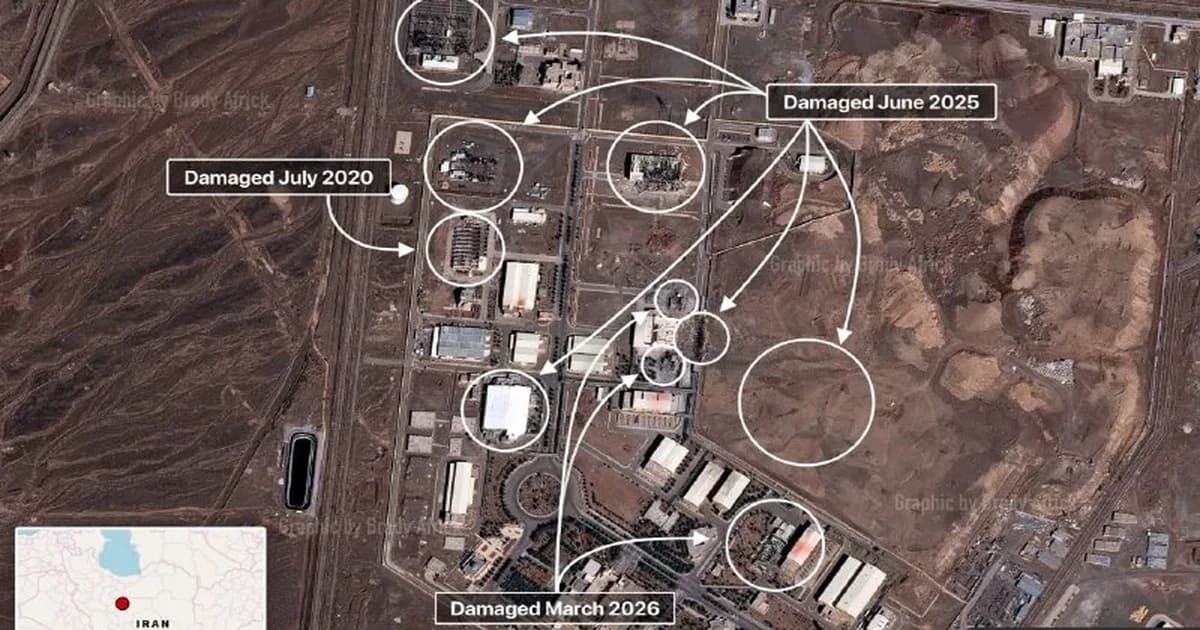
What Israel-Iran War Games Got Wrong About 2026
Defense & Security · Sep 6, 2026

Central Banks Turned Gold Sellers. One Country Did It.
Markets · Aug 30, 2026