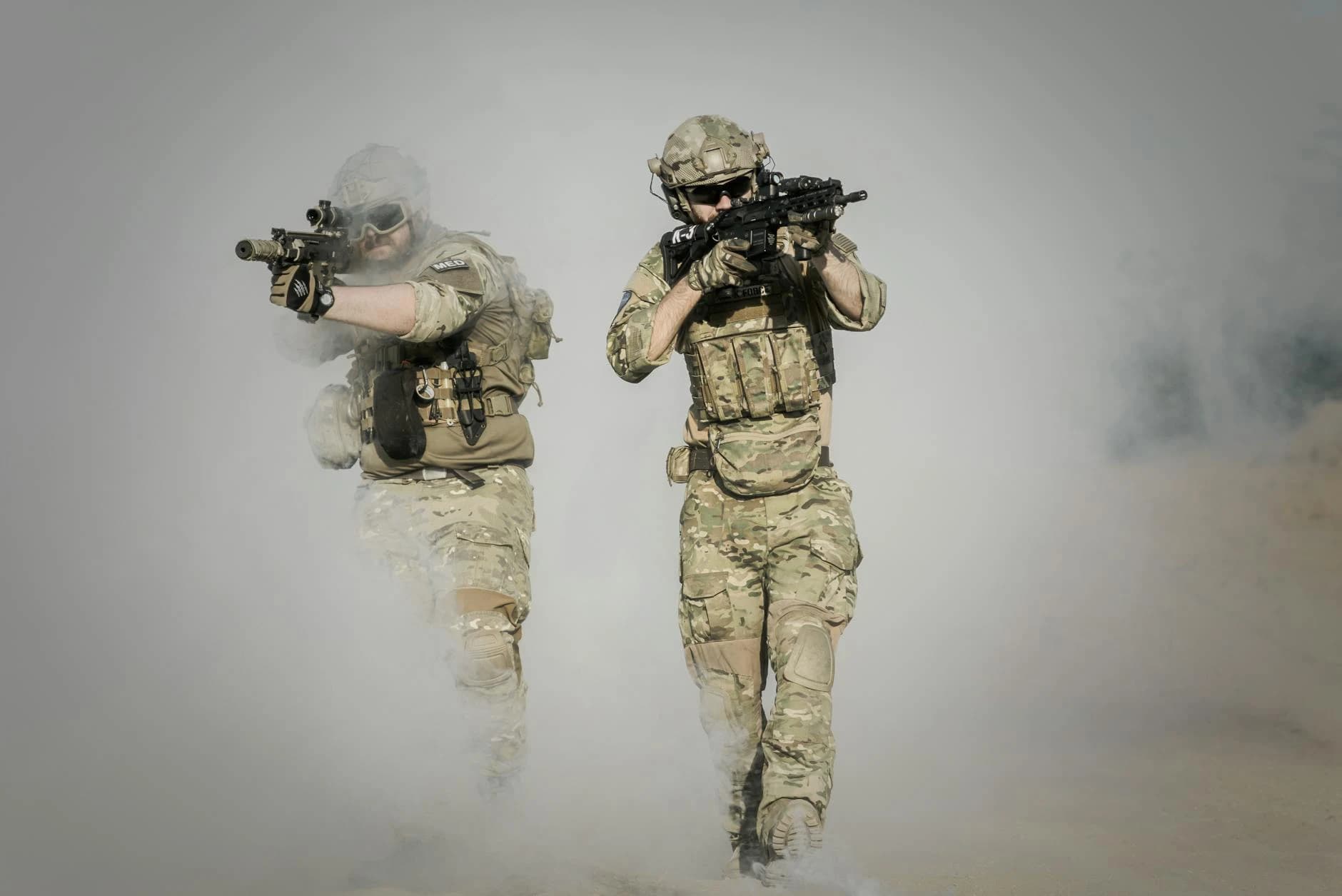
![Natanz Strike: US Bombs Iran Nuclear Facility [2026]](/_next/image/?url=https%3A%2F%2Ftheboard.world%2Fstatic%2Fstock%2Fgeopolitics%2Fpexels-73909.webp&w=1920&q=75)
The strike that crossed every red line -- and what happens next
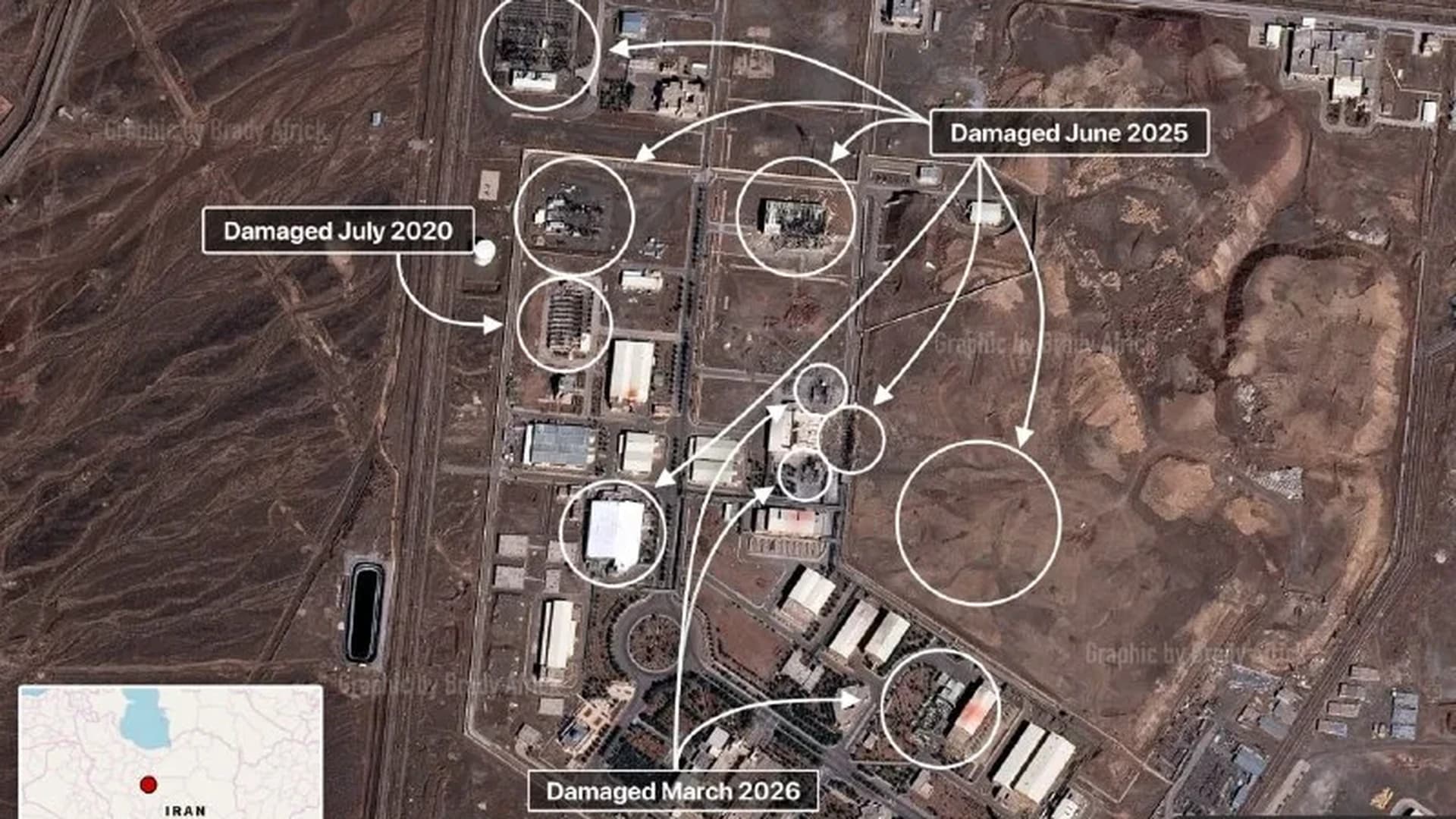
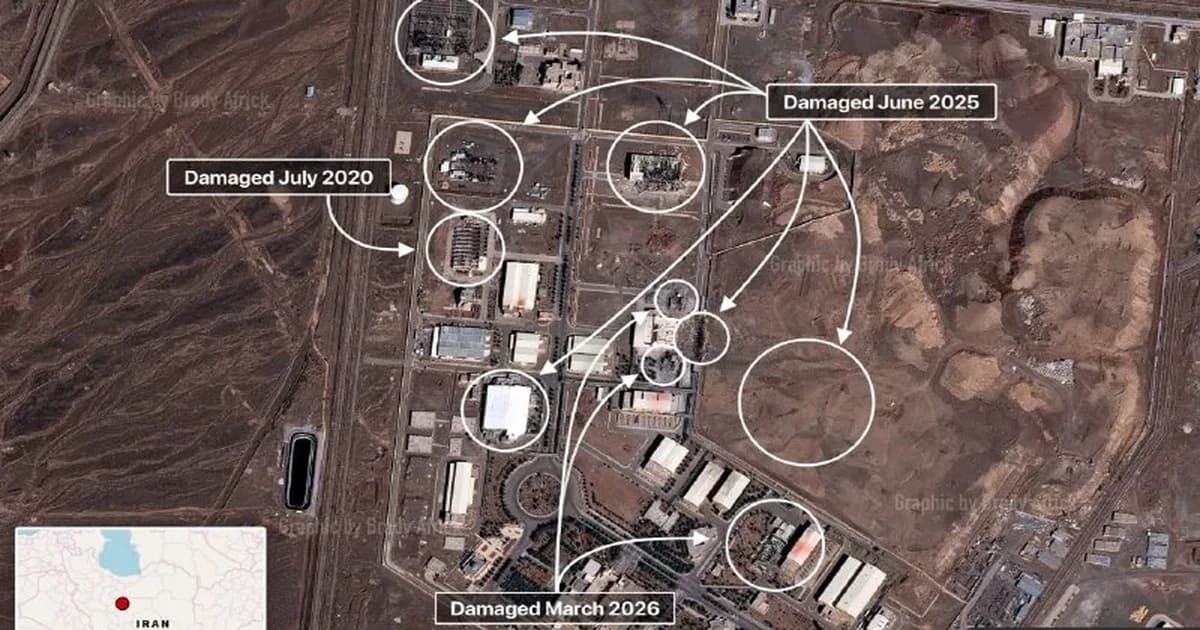
On the morning of March 21, 2026 -- Nowruz, the Persian New Year -- the United States and Israel struck the Shahid Ahmadian Roshun uranium enrichment complex at Natanz, Iran. The attack was carried out by US bombers using bunker-penetrating munitions, according to sources confirmed by Haaretz. Iran's Atomic Energy Organization acknowledged the strike but stated there was no leakage of radioactive materials and no danger to surrounding residents.
This is the single most consequential military action of the conflict so far. Everything before this -- the Kharg Island strikes, the naval engagements, the proxy exchanges -- was escalation on a spectrum. Natanz is a threshold. A nuclear facility is not a military base. Hitting one sends a message that cannot be walked back.
Why Natanz Matters
Natanz is not just another target. It is the centerpiece of Iran's uranium enrichment program -- the facility where thousands of centrifuges spin uranium hexafluoride gas to produce enriched uranium. It has been at the center of international nuclear diplomacy for over two decades.
The facility sits roughly 225 kilometers south of Tehran in Isfahan province. Much of the enrichment infrastructure is buried underground, hardened against exactly this kind of attack. The fact that the US employed bunker-penetrating bombs -- likely the GBU-57 Massive Ordnance Penetrator (MOP), a 30,000-pound weapon designed specifically for deeply buried targets -- signals that the objective was not symbolic. It was structural.
This is the facility that the Stuxnet cyberattack targeted in 2010. The facility that IAEA inspectors have visited hundreds of times. The facility that every arms control negotiation since 2003 has orbited around. And now it has been hit with kinetic force.
The Timeline Contradiction
Two days before this strike, on March 19, Israeli Prime Minister Netanyahu declared that Iran's uranium enrichment capabilities had been "destroyed." Yet on March 21, US bombers hit Natanz with bunker busters.
There are two ways to read this contradiction:
Reading One: Netanyahu's statement was premature or aspirational. Earlier strikes may have damaged surface-level infrastructure, but the hardened underground centrifuge halls -- the actual enrichment capacity -- remained operational. The March 21 strike was the real blow.
Reading Two: The March 21 strike was a follow-up to ensure permanent destruction of what earlier strikes had degraded. A "double tap" on the nuclear program to make sure what Netanyahu claimed was actually true.
Either way, the gap between the political declaration and the kinetic reality suggests that the underground facilities at Natanz were harder to destroy than initially assessed. This has implications for every future discussion about whether airpower alone can eliminate a nation's nuclear program.
Iran's Response: Missiles at Diego Garcia
Hours after the Natanz strike, Iran launched what appears to be its longest-range ballistic missile strike ever attempted -- targeting the joint US-UK military base on Diego Garcia, a British Indian Ocean Territory roughly 3,800 kilometers from Iran.
Two ballistic missiles were fired. One reportedly failed in flight. The other was intercepted. Neither reached its target.
The strike failed militarily but succeeded strategically in one critical way: it demonstrated that Iran's missile capabilities extend far beyond the Middle East theater. Defense experts immediately raised concerns that if Iranian missiles can reach Diego Garcia, they could potentially reach parts of southern Europe.
The United Kingdom's Ministry of Defence called the strikes "reckless," reaffirming its commitment to allowing the US to use British bases. But the Diego Garcia attempt changes the calculus for every European nation currently on the sidelines. When Iranian missiles can theoretically reach the Mediterranean, neutrality becomes harder to justify.
Trump's "Two Weeks" Claim
In a phone interview shortly before the strike, President Trump stated that Iran was "two weeks" away from producing a nuclear weapon and that the US had "decimated" the regime but needed to stay to prevent rebuilding.
This claim carries enormous weight. If accurate, it provides the strongest possible justification for striking Natanz -- a preventive strike in the most literal sense. If Iran was genuinely fourteen days from a deliverable nuclear weapon, the strike window was closing in real time.
However, independent verification is difficult. The IAEA has not confirmed this timeline. Previous US intelligence assessments have varied widely on Iran's breakout capability, and the "two weeks" claim is more aggressive than any prior public estimate.
What is not disputed: Iran had been enriching uranium to 60% purity, a level with no civilian application, and the infrastructure at Natanz was capable of further enrichment to weapons-grade 90% with relatively minor centrifuge reconfiguration. The technical pathway existed. The question was always about political decision, not physical capability.
The Oil Paradox
In a move that seems to contradict the kinetic escalation, the Trump administration simultaneously announced a temporary waiver on sanctions for Iranian oil shipments already at sea. This is the first time the US has eased such restrictions since they were imposed after the 1979 Islamic Revolution.
This is not generosity. It is market management. With Brent crude already elevated due to three weeks of conflict, releasing Iranian oil already in transit prevents a supply shock that would punish American consumers and allies. It also signals to global markets that the US objective is regime behavior change, not economic strangulation of global energy supply.
The paradox: the US is bombing Iran's nuclear facilities while simultaneously allowing Iranian oil to flow. This is the "Gucci strategy" that some analysts have described -- precision military action paired with economic pressure release valves. Hit the nuclear program, protect the oil markets. Destroy the centrifuges, spare the tankers.
Whether this threading-the-needle approach can hold is the central question of the coming weeks.
What Happens Next
Escalation Risks
The strike on Natanz creates several escalation pathways that did not exist 48 hours ago:
Nuclear contamination: Iran says there was no radioactive leakage. If this changes -- if monitoring reveals contamination -- the international response transforms overnight. Striking a nuclear facility that causes environmental damage puts the US in a category no nation wants to occupy.
Iranian nuclear acceleration: Paradoxically, destroying Natanz may accelerate Iran's motivation to pursue weapons-grade enrichment at other sites. Fordow, Iran's other major enrichment facility, is built inside a mountain and may be even harder to reach. If Iran's leadership concludes that only a nuclear weapon can deter further strikes, the attack could produce the exact outcome it was designed to prevent.
European involvement: The Diego Garcia strike attempt expands the conflict's geographic footprint. If Iran continues to target non-Middle Eastern military assets, NATO Article 5 discussions become unavoidable. The UK calling the strikes "a threat to British interests" is diplomatic language one step below invoking collective defense.
Strait of Hormuz: Iran's most powerful asymmetric lever remains the Strait of Hormuz, through which roughly 20% of global oil supply transits. A Natanz strike could trigger the kind of desperation move that Kharg Island's sparing was designed to prevent.
The Nowruz Factor
The timing is not lost on Iranians. Natanz was struck on Nowruz -- the most important holiday in Persian culture, the New Year, a celebration of renewal that predates Islam by millennia. Images from Iranian cemeteries show families visiting graves of war dead while the attack unfolded.
This will shape Iranian public sentiment in ways that military analysts rarely model. Previous strikes could be framed as attacks on "the regime." A strike on Nowruz becomes an attack on Iran itself, in the cultural consciousness of 88 million people.
The Bottom Line
The Natanz strike is the kind of action that divides a conflict into "before" and "after." Before March 21, the US-Iran war was intense but contained within recognizable boundaries -- military bases, naval vessels, energy infrastructure. After March 21, a nuclear facility has been bombed and intercontinental-range missiles have been fired at a base in the Indian Ocean.
The question is no longer whether this conflict will escalate. It is whether the escalation can be controlled. The US is betting that precision strikes and oil market management can thread that needle. Iran is betting that missiles capable of reaching Diego Garcia change the deterrence equation.
Both bets carry enormous risk. The next 72 hours will reveal which calculation was closer to reality.
Related Analysis
- Africa's Resource Wars 2026: Lithium, Cobalt, and the New
- Taiwan Invasion Scenario: What Happens to TSMC and Global Technology
- Fentanyl Crisis 2026: How Chinese Precursors Reach American
- Dark Fleet Tankers 2026: Shadow Fleet Moving Sanctioned Oil
- Iran War Timeline 2026: Complete Day-by-Day Chronology [Updated]
Related Topics
Video Intelligence
- ▶Iranian Missile Strike Hits Arad Israel: Video Moments
- ▶Iran Releases Official Footage of Drone Launches During War
- ▶Iranian Kamikaze Drone Destroys Erbil Oil Refinery
- ▶FPV Drone Strikes US Victoria Base Near Baghdad Airport
Share This Analysis
Get a shareable verdict card for this article.
Get the next one first
Free briefings when we publish major outlooks and forecasts. No spam — unsubscribe anytime.
Related Analysis

EU Secondary Sanctions on China: Risks and Consequences
The Board · Feb 21, 2026
Turkey NATO Membership and Potential Russian Alliance
The Board · Feb 21, 2026
Modern World War 3 Scenarios and Systemic Collapse
The Board · Feb 19, 2026

Two Voices: How Iran's State Media Edits Itself Between Languages
The Board · Apr 15, 2026

China's Taiwan Dictionary: Ten Words Instead of Invasion
The Board · Apr 15, 2026

Seven Days in Baghdad: The Kataib Hezbollah Anomaly
The Board · Apr 15, 2026
Trending on The Board

How CENTCOM Is Brokering an Israel-Saudi Pact
Defense & Security · Sep 19, 2026

Why the Pentagon Pulled Its Iran War Plans Offline
Defense & Security · Sep 19, 2026
How a Stablecoin Funded Moldova's 2026 Election
Geopolitics · Sep 19, 2026

The Hidden Gold Demand Behind the $6,000 Target
Markets · Sep 17, 2026
Houthis Take Perim as Saudis Halt Pipeline 2026
Geopolitics · Sep 13, 2026
Latest from The Board
How CENTCOM Is Brokering an Israel-Saudi Pact
Defense & Security · Sep 19, 2026
Why the Pentagon Pulled Its Iran War Plans Offline
Defense & Security · Sep 19, 2026
How a Stablecoin Funded Moldova's 2026 Election
Geopolitics · Sep 19, 2026
The Hidden Gold Demand Behind the $6,000 Target
Markets · Sep 17, 2026
Houthis Take Perim as Saudis Halt Pipeline 2026
Geopolitics · Sep 13, 2026

Epstein Intelligence Ties: Evidence vs Allegation in 2026
Policy & Intelligence · Sep 6, 2026
What Israel-Iran War Games Got Wrong About 2026
Defense & Security · Sep 6, 2026

Central Banks Turned Gold Sellers. One Country Did It.
Markets · Aug 30, 2026