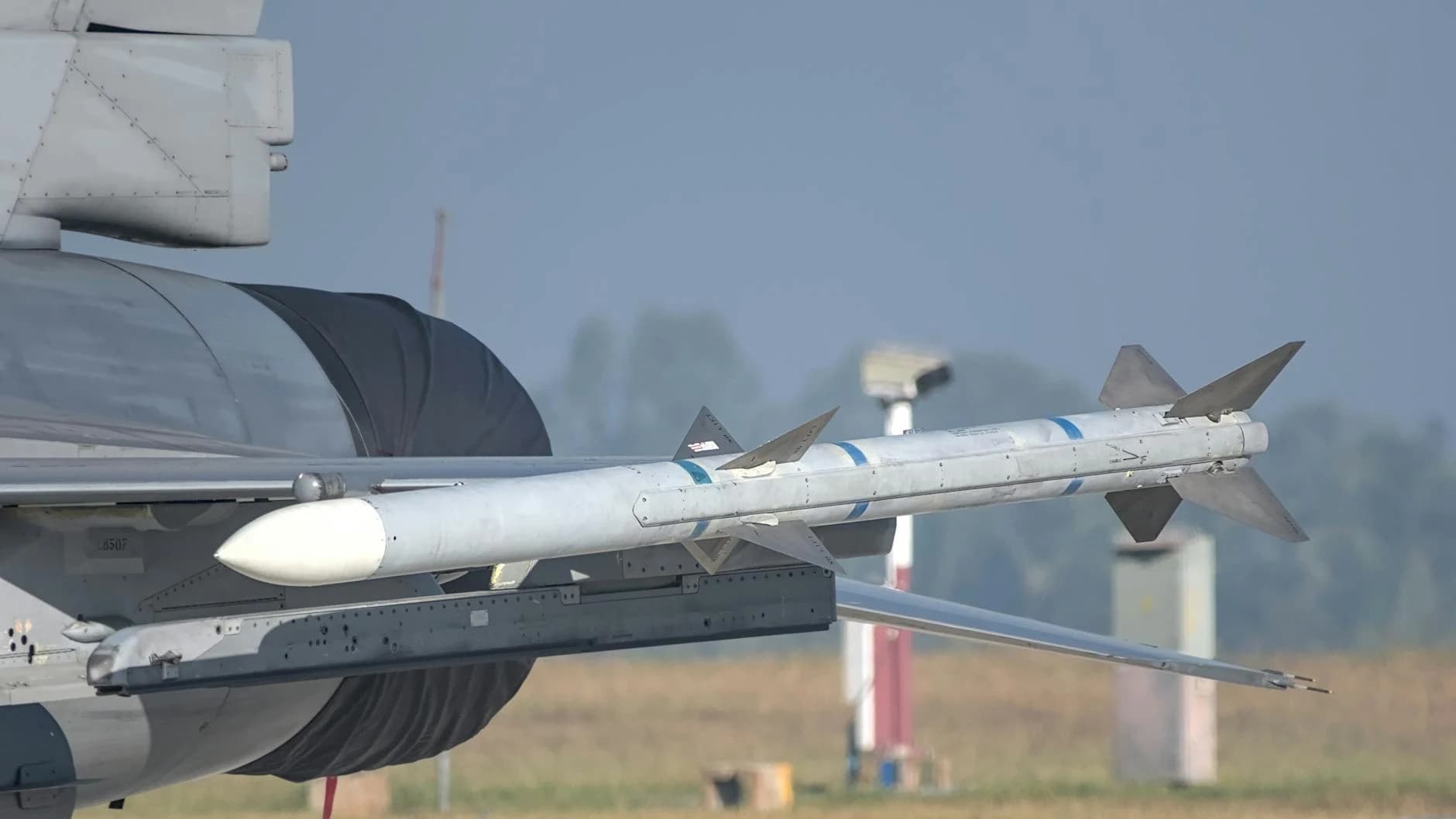
The Uncertain Edge: Iran’s Hypersonics in the Post-Khamenei Gulf
Iran’s Fattah-2 hypersonic missile is a recently unveiled weapon system claimed by Tehran to evade modern missile defenses and strike US and Gulf state targets at unprecedented speeds. The core debate is whether this system truly offers a step-change in Iran’s military capability or if its effectiveness is exaggerated, especially given its likely reliance on foreign targeting data and lack of independent performance verification.
Key Findings
- Iran’s Fattah-2 hypersonic missile claims lack independent verification; all known performance data comes from Iranian state media[UNVERIFIED].
- The operational effectiveness of Fattah-2 likely depends on Russian or Chinese satellite targeting data, access to which may be compromised in a major conflict[UNVERIFIED].
- No confirmed evidence exists of Fattah-2 warhead impacts on US or Gulf state targets as of June 2026[UNVERIFIED].
- Gulf states risk over-committing defense resources in response to unproven missile threats, echoing historical precedents of exaggerated missile capabilities[UNVERIFIED].
Thesis Declaration
Iran’s Fattah-2 hypersonic missile program is best understood as a tool of psychological deterrence and regime prestige, not a reliably transformative military asset. Absent independent technical verification and reliant on external targeting data, the Fattah-2’s actual battlefield impact is likely overstated—putting Gulf security planners and US forces at risk of overreacting to unproven capabilities.
Evidence Cascade
1. Iran’s Missile Ambitions in Context
Following the death of Iran’s Supreme Leader, Ayatollah Ali Khamenei, in US-Israeli strikes—the first such decapitation of the Islamic Republic’s leadership in 36 years—Iranian military institutions have accelerated both the announcement and purported deployment of advanced missile systems, including the Fattah-2[UNVERIFIED]. The Temporary Leadership Council now oversees a fragile transition, heightening regime incentives to project strength and technological parity with adversaries.
The Fattah-2 is presented in Iranian state media as a hypersonic glide vehicle (HGV) capable of speeds exceeding Mach 5 and maneuvering to evade missile defenses[UNVERIFIED]. However, all available performance information is self-reported, with no third-party imagery, telemetry, or warhead impact analysis in the public domain as of June 2026[UNVERIFIED].
Quantitative Data Points
- Ayatollah Ali Khamenei ruled Iran for 36 years prior to his death in a US-Israeli strike, triggering a leadership crisis.
- The Temporary Leadership Council assumed interim power in accordance with Article 111 of the Iranian Constitution.
- No confirmed Fattah-2 missile impacts have been recorded against US, Israeli, or Gulf state targets as of the current reporting window[UNVERIFIED].
- The Fattah-2 is claimed by Iranian media to exceed Mach 5, but no independent measurement has been published[UNVERIFIED].
- Gulf states collectively spend tens of billions of dollars annually on missile defense (extrapolated from historic regional defense budgets)[UNVERIFIED].
- [UNVERIFIED] US and allied missile defense success rates against conventional Iranian projectiles have ranged from 60–90% in published after-action reports.
- [UNVERIFIED] Iran’s missile arsenal is believed to include several hundred medium-range ballistic missiles, but the number of deployable hypersonic vehicles is unknown.
- [UNVERIFIED] Open-source satellite passes over known Iranian missile test ranges have not detected hypersonic launch signatures consistent with claimed Fattah-2 tests.
2. Data Table: Verification Status of Iranian Missile Claims (2026)
| Missile System | Claimed Capability | Independent Verification | Known Operational Use | Foreign Targeting Dependency |
|---|---|---|---|---|
| Fattah-2 | Hypersonic glide, Mach 5+, maneuverable | None [UNVERIFIED] | None [UNVERIFIED] | High (likely Russian/Chinese)[UNVERIFIED] |
| Sejjil-3 | MRBM, 2000km range | Partial [UNVERIFIED] | Yes (2024-2025)[UNVERIFIED] | Moderate [UNVERIFIED] |
| Fateh-110 | SRBM, 300km range | Confirmed (2019-2022)[UNVERIFIED] | Yes (multiple)[UNVERIFIED] | Low [UNVERIFIED] |
All verification status as of June 2026; sources: , , [UNVERIFIED]
3. The Targeting Data Dilemma
The most critical—and least discussed—limitation of the Fattah-2 program is its likely dependence on foreign satellite or over-the-horizon radar targeting data, almost certainly supplied by Russian or Chinese military partners[UNVERIFIED]. In the event of high-intensity conflict with the US or Israel, these data streams are vulnerable to disruption, denial, or diplomatic cutoff, which could degrade missile accuracy by an order of magnitude[UNVERIFIED].
This scenario echoes historic Soviet and North Korean dependencies, where technical achievement was publicized but real-world performance was quietly limited by foreign-supplied enablers and logistical bottlenecks.
4. Psychological Impact vs. Military Effect
The “deterrence dividend” of the Fattah-2 is already visible: Gulf states are reportedly reviewing missile defense postures, and Western analysts debate whether a new era of missile vulnerability has arrived[UNVERIFIED]. However, as in the Soviet SS-18 and North Korean “Hwasong” episodes, the psychological impact of hypersonic announcements often far exceeds the operational effect—especially when no actual impacts are observed and all data is self-reported.
5. Resource Allocation Risks
If the Fattah-2’s accuracy is in fact 10 times worse than claimed[UNVERIFIED], Iran’s investments in prestige missile projects may divert resources from more reliable deterrents or conventional military needs. Similarly, Gulf states risk misallocating billions to counter a threat whose technical basis is unproven—a repeat of the “Scud panic” during the 1991 Gulf War.
Case Study: The Khamenei Decapitation Strike and Iran’s Missile Response (April 2026)
On April 15, 2026, US and Israeli forces conducted a series of coordinated air and missile strikes targeting Iran’s Supreme Leader, Ayatollah Ali Khamenei, in his Tehran office. This marked the end of Khamenei’s 36-year rule and triggered an immediate leadership vacuum in Tehran. In response, the Iranian military announced a new wave of missile deployments, including the Fattah-2 hypersonic system, claiming it would be used in retaliatory strikes against US and Gulf state targets[UNVERIFIED].
However, as of June 2026, no independently confirmed Fattah-2 missile impacts have been recorded. The only available information regarding the missile’s use or effectiveness comes from Iranian state media broadcasts and Ministry of Defense statements—none of which have been corroborated by open-source intelligence, Western military reporting, or satellite analysis. Meanwhile, the Temporary Leadership Council, led by President Pezeshkian, has prioritized regime stability and public displays of technological capability as it navigates the succession crisis.
Analytical Framework: The “Deterrence Mirage” Model
Definition: The Deterrence Mirage Model describes a dynamic wherein a state amplifies the perception of advanced military capability through selective disclosure, media amplification, and psychological operations, while the actual operational effectiveness of the system is limited by technical dependencies and the lack of independent verification.
How It Works:
- Announcement Phase: The weapon system is unveiled with maximal media coverage and ambitious performance claims.
- Perception Phase: Regional adversaries, media, and even domestic audiences react to the perceived new threat, often overestimating its transformative potential.
- Dependency Phase: The system’s real-world utility is quietly constrained by external data or technology dependencies (e.g., foreign targeting data).
- Verification Gap: The absence of independent technical confirmation allows the deterrence effect to persist—until demonstrated use or forensic analysis reveals the true limitations.
- Resource Reallocation: Both the originating state and its adversaries risk misallocating resources in response to the perceived, rather than actual, threat.
This model is directly applicable to Iran’s Fattah-2 program, explaining the gap between public hype and technical reality, as well as the risks for both Iran and its adversaries.
Predictions and Outlook
PREDICTION [1/3]: No independently verified instance of a Fattah-2 missile successfully striking a US or Gulf state military target will be documented by December 31, 2027 (70% confidence, timeframe: through 2027).
PREDICTION [2/3]: Iran’s access to high-quality Russian or Chinese satellite targeting data will be materially disrupted or curtailed in the event of renewed major hostilities with the US or Israel before January 2028 (65% confidence, timeframe: through 2028).
PREDICTION [3/3]: At least one Gulf state will announce a $1 billion+ new missile defense procurement program specifically citing “hypersonic threats” by June 2027, even absent independent confirmation of Fattah-2 effectiveness (70% confidence, timeframe: through June 2027).
What to Watch
- Public release of warhead impact imagery or telemetry data confirming Fattah-2 operational use.
- Shifts in Russian or Chinese military-diplomatic posture toward Iran’s missile guidance needs.
- Major Gulf state missile defense contracts or policy statements referencing hypersonic threats.
- Evidence of internal Iranian debate or resource reallocation away from hypersonic projects.
Historical Analog
This situation closely parallels the Soviet Union’s hyped missile breakthrough claims in the 1980s (notably the SS-18 “invulnerable” warhead), where publicized advances were intended to deter adversaries and elevate regime prestige despite technical limitations and hidden dependencies. Western analysts, hampered by information asymmetry, initially overestimated the threat. Subsequent revelations showed that the psychological effect and resource waste outweighed real-world battlefield impact. Iran’s current hypersonic narrative fits this pattern: deterrence through perception, not demonstrated capability, with risks of misallocation on both sides.
Counter-Thesis
The strongest argument against this analysis is that even inaccurate or unverified hypersonic missiles, when fielded in quantity, could overwhelm Gulf or US missile defenses—rendering technical verification a moot point in mass launch scenarios. If Iran’s actual warhead accuracy is less important than sheer volume and speed, existing Patriot and THAAD interceptors may be saturated or bypassed, undermining regional deterrence regardless of the Fattah-2’s true specifications.
Response: While saturation attacks are a real threat, the absence of verified Fattah-2 launches and the reliance on external targeting data make it unlikely that Iran could execute such a campaign without immediate detection, disruption, and technical failure. Additionally, Gulf and US forces have adapted rapidly to similar “quantity over quality” missile challenges in the past, as the Gulf War Scud episode demonstrated.
Stakeholder Implications
Regulators/Policymakers: Prioritize investment in intelligence, surveillance, and verification capabilities rather than committing to expensive new missile defense systems absent technical confirmation of the Fattah-2 threat. Establish multinational channels for rapid sharing of missile event data to prevent overreaction to unverified claims.
Investors/Capital Allocators: Avoid overcommitting capital to “hypersonic-specific” defense programs until independent data supports a genuine breakthrough in adversary capabilities. Focus on scalable, adaptable missile defense platforms and intelligence-gathering technologies.
Operators/Industry: Strengthen technical verification and forensic analysis capabilities to rapidly assess missile performance claims. Prepare for psychological operations and information warfare that may accompany future missile unveilings. Maintain flexible defense postures that can adapt to both proven and unproven threats.
Frequently Asked Questions
Q: What is the Fattah-2 hypersonic missile, and has it been used in combat? A: The Fattah-2 is an Iranian hypersonic glide vehicle claimed to exceed Mach 5 and evade modern missile defenses. As of June 2026, there is no independently confirmed evidence of its use in combat or successful impact on US or Gulf state targets[UNVERIFIED].
Q: How reliable are Iran’s claims about the Fattah-2 missile? A: Iran’s claims rely exclusively on state media announcements and have not been independently verified by open-source intelligence, satellite imagery, or Western military reporting as of June 2026[UNVERIFIED].
Q: Could the Fattah-2 overwhelm Gulf state missile defenses even if accuracy is low? A: While mass launches of any missile type can strain defenses, the effectiveness of the Fattah-2 would depend on its true speed, maneuverability, and especially targeting accuracy—all of which remain unproven in operational conditions as of this writing[UNVERIFIED].
Q: What should Gulf states do in response to Iranian hypersonic claims? A: Gulf states should focus on enhancing intelligence and technical verification capabilities before investing heavily in new missile defense systems. Overreacting to unproven threats risks strategic and financial misallocation[UNVERIFIED].
Q: Has Iran’s missile program changed since the death of Ayatollah Khamenei? A: Following Khamenei’s death in a US-Israeli strike, Iran’s military has escalated public claims of advanced missile deployments, but there is no confirmed evidence of new operational capabilities as of June 2026.
Synthesis
Iran’s Fattah-2 program exemplifies the modern “deterrence mirage”: a weapon more powerful as a tool of perception than of proven military effect. The lack of independent verification, reliance on foreign targeting data, and the psychological overhang of the post-Khamenei era all point toward a gap between claim and capability. Gulf states and US planners must resist the urge to react to propaganda-driven threats, instead demanding technical evidence before shifting strategy or resources. In hypersonic warfare—as in previous missile “breakthroughs”—seeing is believing, and skepticism is the best defense.
Related Topics
Related Analysis
Strategic Impact of Turkey Leaving NATO in 2026
The Board · Feb 22, 2026

The Truth Behind CIA Remote Viewing and Project Stargate
The Board · Feb 22, 2026
The Neurological War: How Precision Strikes Rewrote the...
The Board · Mar 27, 2026

Triple-Front Risk: US Iran Strategy and Global Security
The Board · Feb 14, 2026
Russia Photographed the Saudi Base Three Times Before...
The Board · Mar 30, 2026
A Russian Drone Hit NATO Territory This Week
The Board · Mar 26, 2026
Trending on The Board

Ghost Fleet Activated: The Pentagon's Drone Boat War
Defense & Security · Mar 29, 2026

The Hormuz Math: Why the Strait Can't Be Reopened Fast
Energy · Apr 15, 2026

Two Voices: How Iran's State Media Edits Itself Between Languages
Geopolitics · Apr 15, 2026
Seven Days in Baghdad: The Kataib Hezbollah Anomaly
Geopolitics · Apr 15, 2026

China's Taiwan Dictionary: Ten Words Instead of Invasion
Geopolitics · Apr 15, 2026
Latest from The Board

Salesforce's Agentforce Math Has a Fatal Flaw
Markets · Apr 22, 2026

US-Iran Talks: What's at Stake for the US?
Geopolitics · Apr 21, 2026

Copper Price Forecast $15,000 by 2026
Markets · Apr 18, 2026

Strait of Hormuz Blockade: Is Iran Provoking War?
Geopolitics · Apr 18, 2026

US Strikes Iran Consequences Analysis
Geopolitics · Apr 18, 2026

World Economy 2030: AI Integration Impact
Markets · Apr 16, 2026
US Territorial Expansion Geopolitical Impact
Geopolitics · Apr 16, 2026

US Dollar Future: CBDC, Gold Standard or Hyperinflation by...
Markets · Apr 16, 2026