Ghost Fleet Activated: The Pentagon's Drone Boat War
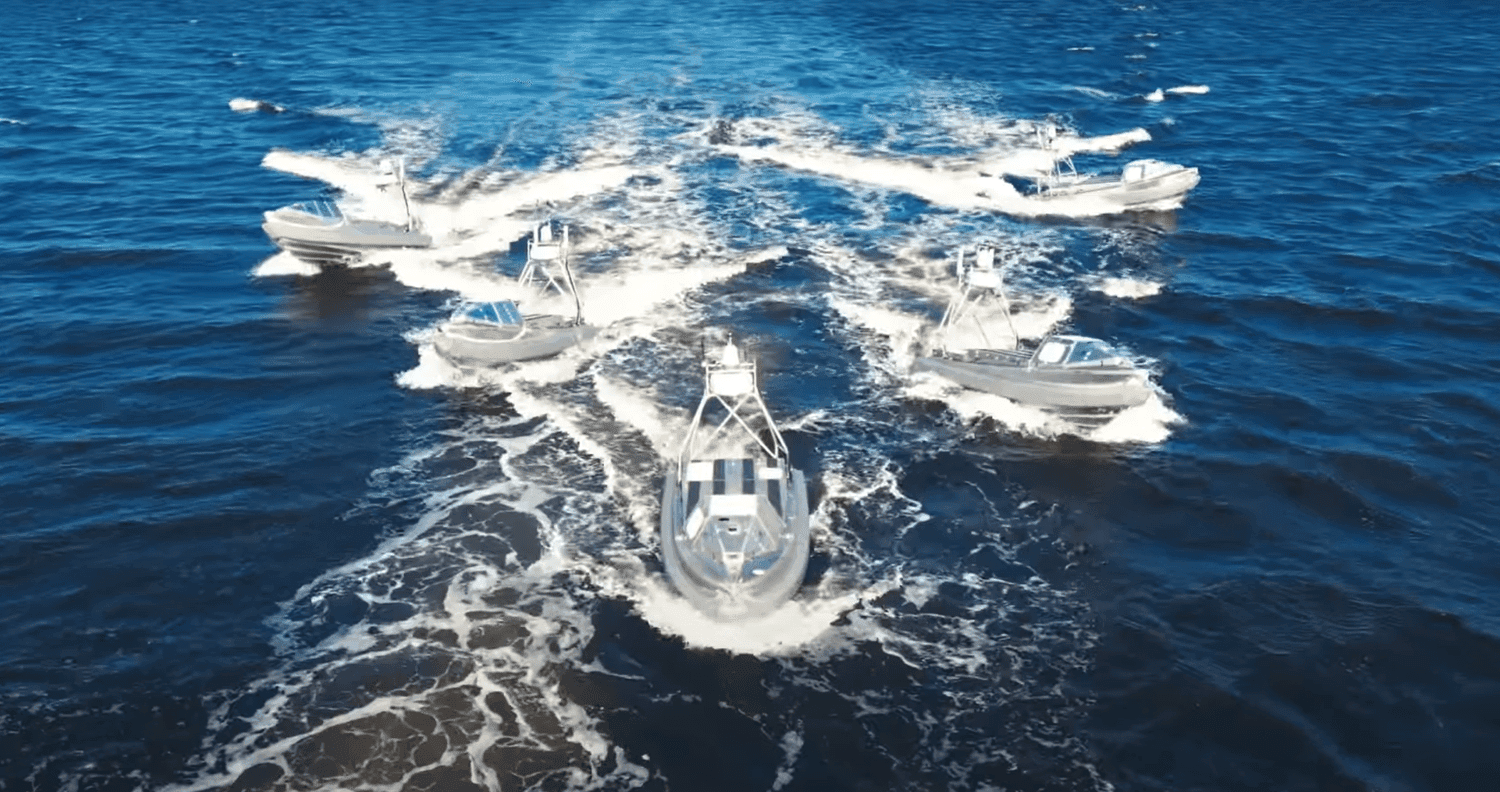
The United States has publicly confirmed what geospatial intelligence analysts have tracked for weeks: autonomous drone speedboats are now conducting operational patrols in the waters surrounding Iran. The deployment of Maryland-based BlackSea Technologies' Global Autonomous Reconnaissance Craft (GARC) marks the first confirmed use of unmanned surface vessels in an active conflict zone — a threshold moment in the evolution of naval warfare.
Pentagon spokesperson Tim Hawkins confirmed the GARC has already logged over 450 operational hours and 2,200 nautical miles during missions supporting Operation Epic Fury, the multi-domain campaign against Iranian military infrastructure that has consumed over 850 Tomahawk cruise missiles. The public acknowledgment itself is significant — the Pentagon rarely confirms the operational deployment of experimental weapons systems while they are actively engaged.
The GARC is not a typical patrol vessel. These unmanned speedboats serve a dual role that defense analysts describe as unprecedented: persistent surveillance of chokepoints, harbor approaches, and shipping lanes without crew fatigue, combined with kamikaze strike capability — the ability to be directed into hostile targets as expendable weapons platforms, a tactic pioneered by Ukraine's naval drones in the Black Sea.
The comparison to Ukraine is deliberate. As precision strike doctrine evolves, Kyiv's improvised maritime drones — notably the Sea Baby — demonstrated that inexpensive uncrewed surface vessels could sink warships, destroy port infrastructure, and deny naval superiority to a far larger fleet. The Pentagon watched, learned, and accelerated its own program.
"Removing sailors from patrol boats isn't a technological luxury — it's a casualty-reduction imperative." — Senior Pentagon Official, Background Briefing
Operation Epic Fury
The drone boat deployment doesn't exist in isolation. It arrives amid Operation Epic Fury, the most intensive U.S. military operation in the Middle East since the 2003 invasion of Iraq — a campaign whose first 72 hours reshaped the regional order.
According to Washington Post reporting corroborated through CENTCOM, the operation has consumed more than 850 BGM-109 Tomahawk cruise missiles — surpassing the previous record set during the opening salvos of the Iraq War.
The operational tempo is staggering. CENTCOM's own updates reference over 11,000 combat flights and more than 11,000 targets struck. More than 150 vessels have been damaged or destroyed. The deployment of autonomous surface vessels represents a force multiplication strategy: covering the maritime domain with minimal crew exposure while preserving human-operated assets for priority missions.
In a theater where Iran has demonstrated both anti-ship missile capability and the willingness to deploy sea mines, the calculus is straightforward. Every patrol hour logged by a GARC is a patrol hour where no American sailor is exposed to an Iranian mine, a fast attack boat swarm, or a kamikaze drone. The 450 hours already logged represent roughly 19 days of continuous maritime coverage that would have otherwise required crewed vessels rotating through one of the world's most dangerous waterways.
Verified Intelligence
- GARC has logged 450+ operational hours and 2,200 nautical miles in the Iran theater — Confirmed
- First public confirmation of autonomous surface vessels in an active conflict zone — Confirmed
- Vessels capable of both surveillance and kamikaze strike operations — Confirmed
- Built by BlackSea Technologies, Maryland — previously obscure defense contractor — Confirmed
- Operation Epic Fury has expended 850+ Tomahawk cruise missiles — surpassing the 2003 Iraq War record — Confirmed
- Iran revealed underground "missile cities" with counter-drone capabilities including sea mines and kamikaze naval drones — Reported
Iran's Counter-Arsenal
Tehran is not standing still. In a carefully timed propaganda release, Iran revealed footage of its underground "missile cities" — vast subterranean facilities housing kamikaze naval drones, anti-ship missiles, and sea mines. The message was unmistakable: any autonomous vessel operating in the Persian Gulf — or the Strait of Hormuz — faces a dense and diverse threat environment.
Quantitative modeling identifies three primary threats to unmanned surface vessels:
- Contact mines — cheap, difficult to detect, effective against both crewed and uncrewed vessels. Iran has stockpiled thousands.
- Fast attack craft swarms — Iran's IRGC Navy has trained extensively in small boat swarming tactics designed to overwhelm defensive systems through sheer numbers.
- Electronic warfare — GPS jamming and spoofing could disable autonomous navigation, a vulnerability Ukraine's operators also encountered in the Black Sea.
The question is not whether Iran can counter autonomous surface vessels — it is whether the volume and persistence of GARC patrols can overwhelm Iran's capacity to respond to each individual incursion. An expendable drone boat that costs a fraction of a crewed patrol vessel fundamentally changes the economics of attrition.
Cross-Domain Intelligence Correlation
- C-17 Globemaster surge: 29 heavy cargo aircraft airborne against a baseline of 15 — a 93% increase suggesting large-scale materiel movement
- Strategic tanker activity: KC-135R aircraft operating at elevated levels across CENTCOM area of responsibility
- Iranian countermeasures: Underground "missile cities" displayed containing kamikaze naval drones and sea mines
- Six vessels attacked in recent weeks amid reports of Iranian drone boats and sea mines (Al Jazeera)
- Diego Garcia targeted: Iran launched ballistic missiles at the U.S./UK base, demonstrating 3,800+ km range
The AI Weapons Race
This deployment accelerates what defense analysts call an AI weapons race that extends far beyond the Persian Gulf. The U.S. Navy struggled for years to field a reliable fleet of unmanned surface vessels — the "Ghost Fleet" program encountered persistent technical delays and cost overruns. The urgency of operations against Iran appears to have pushed past remaining technical objections.
- Defense procurement: BlackSea Technologies, previously a niche contractor, is now a proven combat supplier. Watch for contract expansions and competitor entries into the autonomous naval market.
- Naval doctrine: The success or failure of GARC in a contested environment will shape unmanned vessel doctrine for every major navy for the next decade.
- Escalation dynamics: Losing an unmanned vessel carries zero political cost compared to losing sailors — this lowers the threshold for aggressive postures in contested waters.
- Export potential: Allied navies in the Indo-Pacific facing China's maritime expansion will closely watch the GARC's operational record.
Assessment
The Pentagon's decision to publicly confirm the deployment, rather than maintain operational ambiguity, signals confidence in the system's performance. It also serves as strategic messaging: Iran now knows that even its harassment of commercial shipping and military patrols may be met by expendable vessels it cannot deter through the threat of casualties.
For the first time, unmanned surface vessels are conducting real operations in a real conflict against a state-level adversary with genuine counter-capabilities. Everything that follows — the procurement contracts, the export deals, the Chinese and Russian responses, the updated naval doctrine — stems from what happens in these waters in the coming weeks.
The ghost fleet is operational. And in the cold logic of maritime attrition, a navy that can lose boats without losing lives holds a structural advantage that no amount of underground missile cities can fully offset.
Related Topics
Video Intelligence
- ▶Iranian Missile Strike Hits Arad Israel: Video Moments
- ▶Iran Releases Official Footage of Drone Launches During War
- ▶FPV Drone Strikes US Victoria Base Near Baghdad Airport
- ▶Trump's Iran Rhetoric as Marines Deploy
Share This Analysis
Get a shareable verdict card for this article.
Get the next one first
Free briefings when we publish major outlooks and forecasts. No spam — unsubscribe anytime.
Related Analysis

Strategic Impact of Turkey Leaving NATO in 2026
The Board · Feb 22, 2026

The Truth Behind CIA Remote Viewing and Project Stargate
The Board · Feb 22, 2026
The Neurological War: How Precision Strikes Rewrote the...
The Board · Mar 27, 2026

Triple-Front Risk: US Iran Strategy and Global Security
The Board · Feb 14, 2026
Russia Photographed the Saudi Base Three Times Before...
The Board · Mar 30, 2026
A Russian Drone Hit NATO Territory This Week
The Board · Mar 26, 2026
Trending on The Board
How CENTCOM Is Brokering an Israel-Saudi Pact
Defense & Security · Sep 19, 2026

Why the Pentagon Pulled Its Iran War Plans Offline
Defense & Security · Sep 19, 2026
How a Stablecoin Funded Moldova's 2026 Election
Geopolitics · Sep 19, 2026

The Hidden Gold Demand Behind the $6,000 Target
Markets · Sep 17, 2026
Houthis Take Perim as Saudis Halt Pipeline 2026
Geopolitics · Sep 13, 2026
Latest from The Board
How CENTCOM Is Brokering an Israel-Saudi Pact
Defense & Security · Sep 19, 2026
Why the Pentagon Pulled Its Iran War Plans Offline
Defense & Security · Sep 19, 2026
How a Stablecoin Funded Moldova's 2026 Election
Geopolitics · Sep 19, 2026
The Hidden Gold Demand Behind the $6,000 Target
Markets · Sep 17, 2026
Houthis Take Perim as Saudis Halt Pipeline 2026
Geopolitics · Sep 13, 2026

Epstein Intelligence Ties: Evidence vs Allegation in 2026
Policy & Intelligence · Sep 6, 2026
What Israel-Iran War Games Got Wrong About 2026
Defense & Security · Sep 6, 2026

Central Banks Turned Gold Sellers. One Country Did It.
Markets · Aug 30, 2026