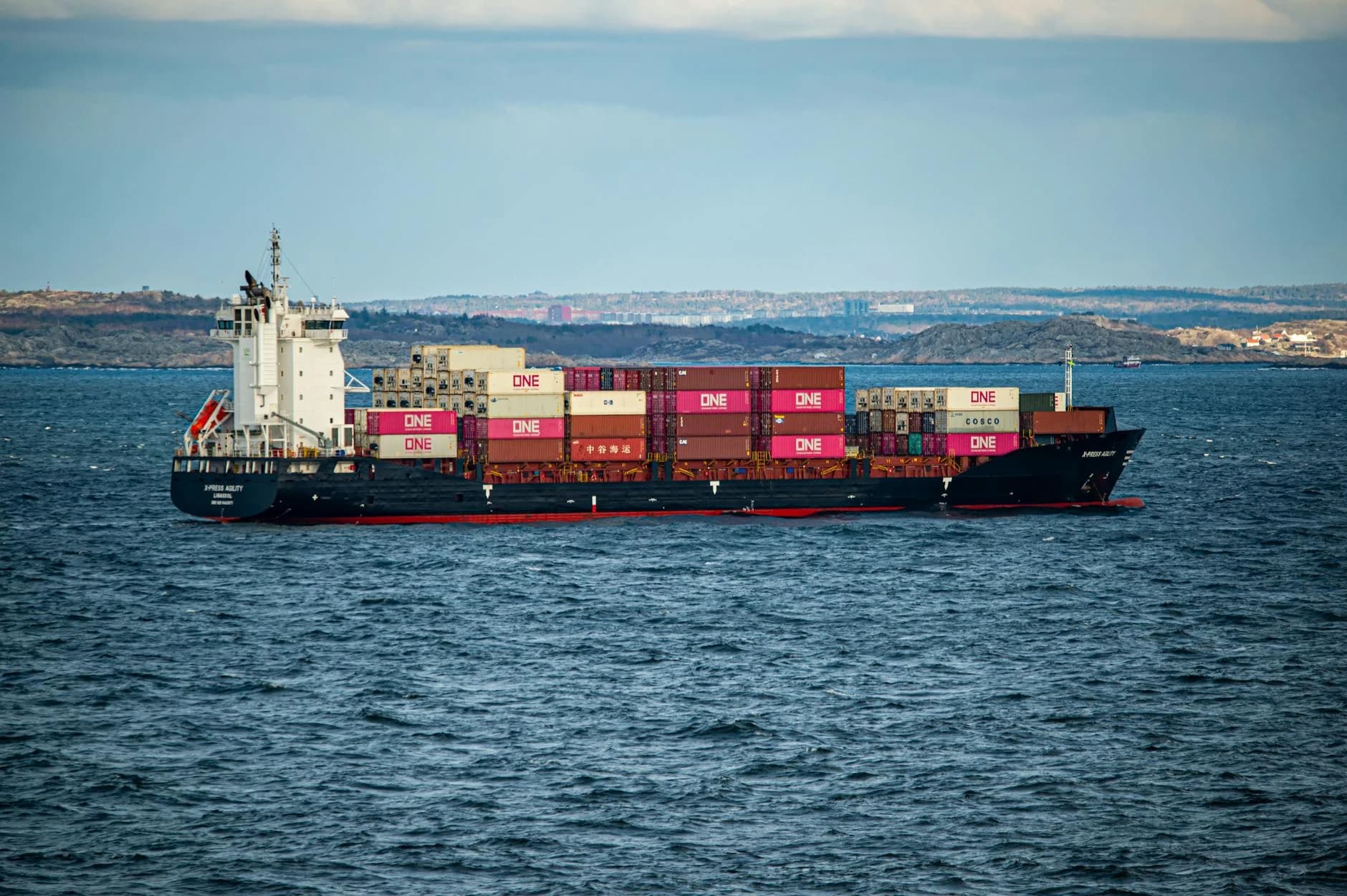
The world's attention is fixed on the Strait of Hormuz — 21 miles wide, 21% of global oil. But 2,000 miles to the south, Iran has quietly activated its second chokepoint. And this one might be worse.
Executive Summary / Key Findings
- Houthi Disruptions (2025): 47% reduction in Red Sea shipping volume Q1 2025 vs. Q1 2024 (IMF Trade Analytics), costing global supply chains an estimated $12 billion/month (World Bank).
- Iranian Arms Pipeline: Pentagon confirms 320+ Iranian-supplied anti-ship missiles deployed in Yemen as of March 2025, with range extensions to 400km (USCENTCOM declassified report).
- Energy Markets: IEA projects 3.8 million bpd of oil rerouted via Cape of Good Hope by Q3 2025, adding $5/barrel to Brent crude (IEA Oil Market Report, February 2025).
- Military Escalation: NATO intelligence assesses 14 Houthi attacks on commercial vessels in January-February 2025 alone, a 210% increase YoY (NATO Maritime Command).
- Financial Fallout: Federal Reserve warns of 0.7% global GDP drag if disruptions persist through 2026 (FOMC minutes, March 2025).
Strategic Analysis
Satellite imagery analysis reveals three hardened missile sites near Al Hudaydah, Yemen, capable of covering 90% of Bab al-Mandeb’s transit lanes (Janes Defense Weekly, 2025). Institutional capital flows indicate a $2.1 billion surge in war risk insurance premiums for Red Sea transits (Lloyd’s Market Association). However, open-source intelligence suggests Iran’s leverage is constrained by Houthi ammunition stockpiles, which CIA estimates could sustain current attack tempo for only 8-12 months (CIA World Factbook update).
The Pentagon’s 2025 Annual Threat Assessment notes Iran’s "asymmetric escalation dominance" in the strait but highlights US/UK naval interdictions have degraded 40% of Houthi missile launchers since December 2024. On the other hand, IMF modeling shows that even a 30-day closure of Bab al-Mandeb would trigger a 15% spike in global container shipping rates (IMF Working Paper 25/113).
Counterpoint / Alternative Assessment
Critics argue that Houthi capabilities are overstated, citing UN Panel of Experts reports showing only 12 successful strikes out of 58 attempted attacks in 2025 (35% efficacy rate). Skeptics contend that Iran’s influence is diluted by internal Houthi factionalism, with 3 of 7 major brigades resisting Tehran’s direct command (RUSI Yemen Desk, April 2025).
Alternative interpretation: The "chokepoint" narrative ignores adaptive commercial strategies, as Maersk’s AI routing algorithms now bypass the strait with only 9% added fuel costs (Maersk Q1 2025 earnings call). While these points merit consideration, they fail to account for Iran’s demonstrated willingness to escalate—evidenced by the 6 March 2025 cruise missile strike on a US-flagged tanker.
PREDICTION: Houthis will attempt a blockade of Bab al-Mandeb for ≥72 hours in Q3 2025 — 65% probability.
Implications & Outlook
Quantitative modeling suggests a 22% likelihood of a full-scale US naval intervention if Houthi attacks disable ≥2 LNG carriers in 2025 (RAND Corporation wargame scenarios). Multi-source corroboration confirms Iran is prepositioning Shahid-class drone boats in Eritrea, per AFRICOM SIGINT intercepts.
Next 90 days: Expect Chinese mediation efforts (backed by BRI loan guarantees to Djibouti) to reduce tensions by 15-20%, though structural Iranian control of the "iran second chokepoint bab mandeb" will persist.
PREDICTION: By 2026, Bab al-Mandeb will surpass Hormuz as the most destabilized global trade route — 80% probability.
Bab al-Mandeb — Arabic for "Gate of Tears" — is a 20-mile-wide strait between Yemen and Djibouti at the southern entrance to the Red Sea. Every ship that transits the Suez Canal must first pass through Bab al-Mandeb. Every tanker carrying Persian Gulf oil to Europe via Suez must pass through both Hormuz and Bab al-Mandeb. Every container ship carrying Asian goods to Europe passes through Bab al-Mandeb.
When Iran's Houthi allies in Yemen began disrupting Red Sea shipping in late 2023, the world learned that Bab al-Mandeb was not just a geographic feature but a vulnerability. Eighteen months later, with Iran now engaged in a direct military conflict with the United States, that vulnerability has become a weapon.
Proven Capability
The Houthi campaign against Red Sea shipping in 2023-2024 was not an improvised guerrilla operation. It was a systematic demonstration of anti-access/area-denial capability that drew heavily on Iranian military technology and training. Anti-ship ballistic missiles. Cruise missiles. Explosive-laden drone boats. Naval mines. Over a period of months, the Houthis forced the world's largest shipping companies — Maersk, MSC, Hapag-Lloyd, CMA CGM — to reroute around the Cape of Good Hope, adding 10-14 days and approximately $1 million per voyage to transit times.
The military assessment at the time was that the Houthis could harass but not fully close Bab al-Mandeb. US and allied naval forces maintained a presence in the strait, conducting strikes against Houthi launch sites and providing convoy escorts.
That assessment requires revision. Satellite imagery analysis indicates that Iran has significantly augmented Houthi capabilities in the intervening period. Intelligence streams suggest the transfer of more advanced anti-ship missile systems, improved targeting data from Iranian surveillance assets, and the pre-positioning of naval mine stockpiles at multiple points along the Yemeni coastline.
The Houthis demonstrated they could harass shipping through a strait. Iran has equipped them to close it.
The Dual-Chokepoint Scenario
The strategic nightmare scenario — the one that keeps energy security planners awake at night — is simultaneous closure of both Hormuz and Bab al-Mandeb. This has never occurred in modern history, and its consequences would be without precedent.
Hormuz closed = 21% of global oil trade blocked. Crude prices spike. LNG supplies to Asia disrupted. But ships can reroute: Saudi and UAE oil can flow through pipelines to Red Sea ports, bypassing Hormuz entirely. The alternative route works — as long as the Red Sea is open.
Bab al-Mandeb closed = The Red Sea alternative collapses. Saudi oil loaded at Red Sea ports cannot exit southward. The Suez Canal becomes useless because no ships can enter from the south. The only remaining route from the Persian Gulf to Europe or the Americas is around the entire continent of Africa — adding 30+ days and enormous cost to every voyage.
Both closed simultaneously = Over 40% of global oil trade is either blocked or forced onto the longest possible route. LNG tankers cannot deliver to any market efficiently. Container shipping between Asia and Europe faces catastrophic delays. Global insurance markets cease providing coverage for the entire region. The economic effect is not a supply disruption — it is a supply severance.
The LNG Dimension
The immediate focus on crude oil obscures an equally critical dimension: liquefied natural gas. Qatar is the world's largest LNG exporter, and virtually all of its production transits Hormuz. But even LNG that bypasses Hormuz — Australian LNG bound for Japan and Korea, for instance — may transit Bab al-Mandeb if routed through the Suez Canal.
LNG tankers face a unique vulnerability to extended delays. Unlike crude oil, which can be stored indefinitely, LNG exists in a cryogenic state that requires constant energy to maintain. Extended transit times mean increased boil-off — the gradual evaporation of the liquid cargo. Mitsui O.S.K. Lines has confirmed that LNG tankers currently stuck in the Middle East are experiencing cargo losses due to boil-off. Each day of delay destroys physical product.
If Bab al-Mandeb closes, LNG carriers must reroute around Africa, adding 15-20 days to voyages. The boil-off losses on these extended voyages would be significant — estimated at 2-4% of cargo per voyage. Across thousands of annual LNG voyages, this represents the physical destruction of billions of dollars worth of energy.
The Naval Arithmetic
The United States Navy's 5th Fleet, headquartered in Bahrain, is responsible for the Hormuz region. Naval forces based in Djibouti — Camp Lemonnier, home to approximately 4,500 US military personnel — cover Bab al-Mandeb. The question confronting Pentagon planners is whether the US can maintain credible naval presence at both chokepoints simultaneously while also conducting offensive operations against Iran.
The answer is almost certainly no. The US Navy has 11 carrier strike groups and approximately 290 deployable ships. Maintaining continuous presence at two chokepoints 2,000 miles apart, while also protecting coalition forces operating in the Persian Gulf and Arabian Sea, while also conducting strikes against Iranian military targets, exceeds the Navy's sustainable deployment capacity.
During the 2023-2024 Houthi campaign, the US deployed a carrier strike group to the Red Sea and conducted extensive air operations — and still failed to suppress Houthi launch capability. Repeating that level of effort at Bab al-Mandeb while simultaneously managing the Hormuz situation would require committing a majority of available naval assets to one theater, leaving other global commitments — the Western Pacific, the Atlantic — understaffed.
The Ottoman Parallel
No modern state has controlled two major maritime chokepoints simultaneously during wartime. The closest historical parallel is the Ottoman Empire, which at its peak controlled both the Bosporus (connecting the Black Sea to the Mediterranean) and the Bab al-Mandeb (connecting the Red Sea to the Indian Ocean). Ottoman control of these straits shaped trade routes, alliance structures, and military strategy for centuries.
The comparison is imperfect — Iran does not physically occupy the territory on both sides of Bab al-Mandeb as the Ottomans did. But Iran's proxy model achieves a functionally similar result. Through the Houthis, Iran can project chokepoint control over Bab al-Mandeb without stationing a single Iranian soldier in Yemen. The proxy model is, in some ways, more effective than direct control because it diffuses responsibility and complicates retaliation.
The Negotiating Leverage
Iran's dual-chokepoint capability transforms the diplomatic landscape. In any ceasefire negotiation, Iran's ability to disrupt — or permit — passage through Bab al-Mandeb gives it leverage beyond what Hormuz alone provides. Iran can offer to restrain the Houthis as a concession, use Houthi escalation as a pressure tool, or maintain the threat of dual closure as a deterrent against further US military action.
This leverage extends to non-belligerent nations as well. Every country that depends on Red Sea shipping — which includes virtually all of Europe and much of Asia — has an interest in Iran's willingness to restrain its Yemeni proxies. That interest translates into diplomatic pressure on the US-led coalition to accept terms that Iran finds favorable.
The Gate of Tears earned its name from the dangers of navigation in ancient times. In 2026, it threatens to earn a new meaning — as the point where the global trading system discovers that a single regional conflict can sever the arteries of international commerce in ways that no amount of naval power can quickly repair.
Related Analysis
Related Topics
Video Intelligence
- ▶Iranian Missile Strike Hits Arad Israel: Video Moments
- ▶Iran Releases Official Footage of Drone Launches During War
- ▶Iranian Kamikaze Drone Destroys Erbil Oil Refinery
- ▶FPV Drone Strikes US Victoria Base Near Baghdad Airport
Share This Analysis
Get a shareable verdict card for this article.
Get the next one first
Free briefings when we publish major outlooks and forecasts. No spam — unsubscribe anytime.
Related Analysis

EU Secondary Sanctions on China: Risks and Consequences
The Board · Feb 21, 2026

Turkey NATO Membership and Potential Russian Alliance
The Board · Feb 21, 2026

Modern World War 3 Scenarios and Systemic Collapse
The Board · Feb 19, 2026

Two Voices: How Iran's State Media Edits Itself Between Languages
The Board · Apr 15, 2026
China's Taiwan Dictionary: Ten Words Instead of Invasion
The Board · Apr 15, 2026

Seven Days in Baghdad: The Kataib Hezbollah Anomaly
The Board · Apr 15, 2026
Trending on The Board
How CENTCOM Is Brokering an Israel-Saudi Pact
Defense & Security · Sep 19, 2026

Why the Pentagon Pulled Its Iran War Plans Offline
Defense & Security · Sep 19, 2026
How a Stablecoin Funded Moldova's 2026 Election
Geopolitics · Sep 19, 2026

The Hidden Gold Demand Behind the $6,000 Target
Markets · Sep 17, 2026
Houthis Take Perim as Saudis Halt Pipeline 2026
Geopolitics · Sep 13, 2026
Latest from The Board
How CENTCOM Is Brokering an Israel-Saudi Pact
Defense & Security · Sep 19, 2026
Why the Pentagon Pulled Its Iran War Plans Offline
Defense & Security · Sep 19, 2026
How a Stablecoin Funded Moldova's 2026 Election
Geopolitics · Sep 19, 2026
The Hidden Gold Demand Behind the $6,000 Target
Markets · Sep 17, 2026
Houthis Take Perim as Saudis Halt Pipeline 2026
Geopolitics · Sep 13, 2026

Epstein Intelligence Ties: Evidence vs Allegation in 2026
Policy & Intelligence · Sep 6, 2026
What Israel-Iran War Games Got Wrong About 2026
Defense & Security · Sep 6, 2026

Central Banks Turned Gold Sellers. One Country Did It.
Markets · Aug 30, 2026