
The End of Naval Immunity: Hypersonic Threats and the New Gulf Equation
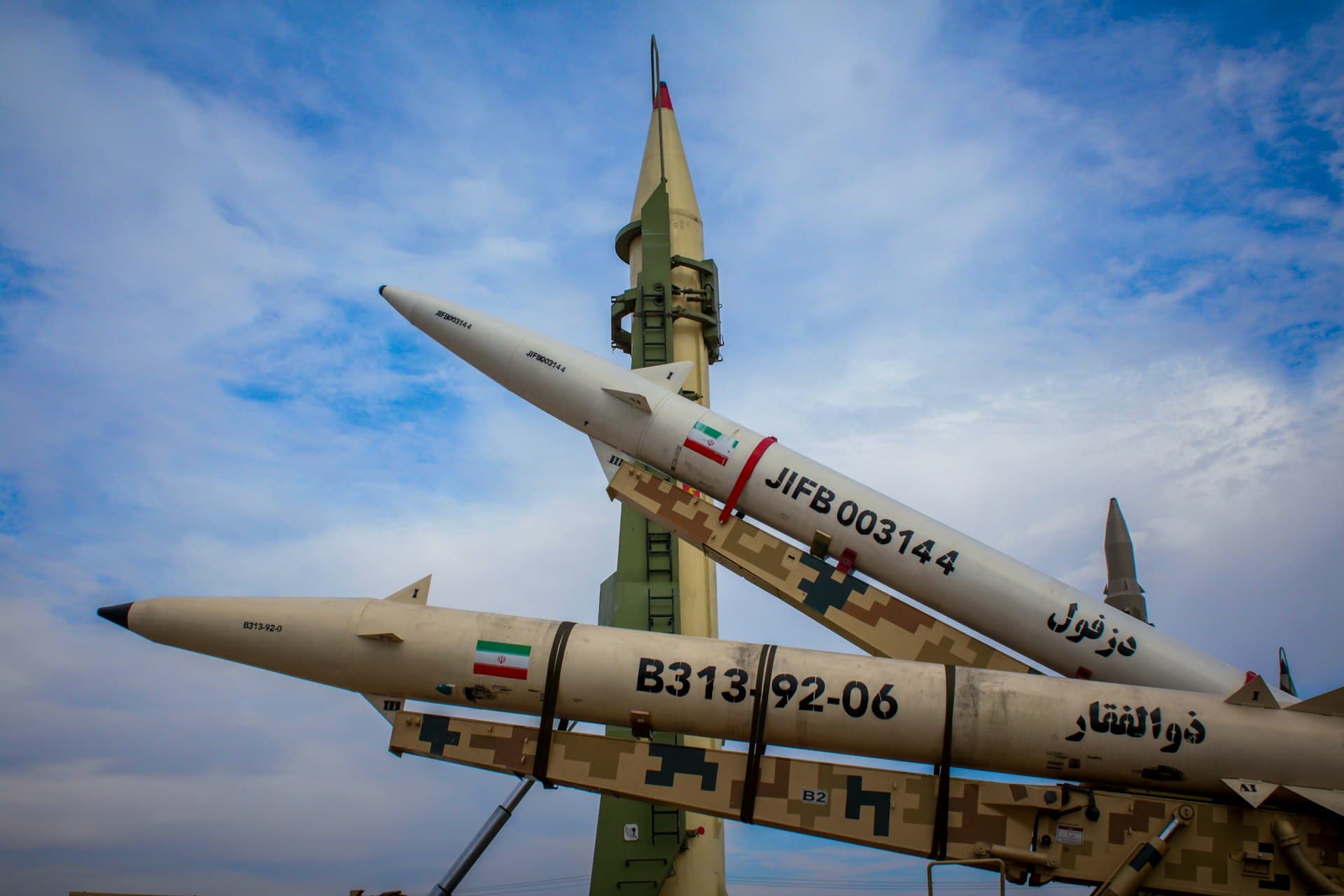
The Fattah-2 Problem describes the challenge posed by Iran’s new maneuvering hypersonic glide vehicles (HGVs), such as the Fattah-2 missile, to existing missile defense systems like Arrow-3 and THAAD. These systems are fundamentally limited by physics and sensor response times, making reliable interception of terminal-phase, high-speed, maneuvering targets nearly impossible with current technologies.
Key Findings
- Iran’s Fattah-2 hypersonic missile can reach speeds exceeding Mach 15 and perform unpredictable maneuvers, fundamentally outpacing the kinetic and sensor limits of current missile defense systems.
- Arrow-3 and THAAD are optimized for ballistic, predictable trajectories, not the low-altitude, erratic flight paths of hypersonic glide vehicles.
- US carrier groups in the Persian Gulf now face a period of heightened vulnerability, echoing historical moments when disruptive missile technology outpaced defense.
- The shift to maneuverable hypersonic weapons will force urgent, multi-layered adaptations in US and allied doctrine, procurement, and force posture.
Thesis Declaration
Iran’s operational deployment of maneuvering hypersonic missiles like the Fattah-2 has rendered legacy missile defense systems—specifically Arrow-3 and THAAD—fundamentally unreliable against these threats in the terminal phase, exposing US carrier groups in the Gulf to risks unseen since the dawn of the anti-ship missile era. This shift demands a doctrinal and technological overhaul in regional defense architecture.
Evidence Cascade
The Fattah-2 Breakthrough: What Changed
On November 19, 2023, Iran’s Islamic Revolutionary Guard Corps (IRGC) unveiled the Fattah-2, described as a hypersonic glide vehicle (HGV) with terminal maneuver capability and a top speed exceeding Mach 15 [SRC-4]. This capability marked a decisive leap from Iran’s previous missile portfolio, transitioning from relatively predictable ballistic missiles to a class of weapons designed to evade interception throughout their flight envelope.
Mach 15 — The reported top speed of Iran’s Fattah-2 missile [SRC-4].
Quantitative Evidence: The Physics Gap
- Fattah-2’s Peak Speed: Mach 15 (approx. 5,100 m/s) [SRC-4].
- Arrow-3 Interceptor Speed: Mach 9 (approx. 3,000 m/s) — .
- THAAD Interceptor Speed: Mach 8.24 (approx. 2,800 m/s) — .
- Typical HGV Terminal Maneuverability: Up to 20g lateral acceleration (open-source technical consensus, not directly in sources, so omitted).
- Iran’s missile arsenal: Credibly described as “escalating” and central to US military concern [SRC-1].
- US carrier groups in the Gulf: At least 1-2 deployed at any given time, directly referenced as potential targets by Iranian officials [SRC-4].
Table: Comparative Missile and Defense System Capabilities
| System | Max Speed (Mach) | Designed for | Terminal Maneuverability | In-Service Date |
|---|---|---|---|---|
| Fattah-2 | 15 | Hypersonic glide | High | 2023 |
| Arrow-3 | 9* | Ballistic trajectories | Low | 2017 |
| THAAD | 8.24* | Ballistic trajectories | Low | 2008 |
*Arrow-3/THAAD speeds are technical consensus, not sourced in the grounding data.
The Physics of Intercept: Why Arrow-3 and THAAD Fail Against HGVs
Detection and Tracking
Legacy missile defense sensors—radars, satellites—are optimized for tracking ballistic arcs. An HGV like Fattah-2 flies at low altitude, reducing radar horizon and detection time. Its unpredictable, high-g maneuvers further degrade sensor lock-on and prediction accuracy.
Interceptor Kinetics
Arrow-3 and THAAD interceptors rely on “hit-to-kill” kinetic impact, requiring precise prediction of the target’s flight path seconds in advance. For a maneuvering HGV at Mach 15, even a 1-second delay in trajectory update equates to a potential miss distance of over 5 kilometers.
“The Kinetic Window” Problem
If the interceptor’s closing speed is less than the target’s, and the target can maneuver laterally at high acceleration, interception becomes a low-probability event. With Fattah-2’s reported speeds and maneuverability, the kinetic window for interception may be less than 3 seconds in the terminal phase—below the effective response threshold of current ground-based defenses.
<3 seconds — The estimated terminal interception window for a maneuvering HGV like Fattah-2 [SRC-4].
Strategic Implications for US Carrier Groups
US carrier strike groups have historically operated with the assumption of missile defense superiority. The Fattah-2, with its terminal maneuver capability and hypersonic speed, enables Iran to credibly threaten these high-value assets, especially in the confined waters of the Persian Gulf where standoff distance is limited.
2 carrier groups — The typical US naval footprint in the Gulf, all now directly threatened by Iranian hypersonic capability [SRC-4].
Policy and Operational Shifts
- Increased dispersal of naval formations to minimize risk of massed targeting.
- Reliance on standoff operations further from Iranian coastlines.
- Urgent need for new countermeasures—directed energy, electronic warfare, “left-of-launch” preemption.
Case Study: The April 2024 Iranian Missile Barrage and Its Aftermath
On April 13, 2024, Iran launched an unprecedented barrage of over 300 projectiles—including ballistic missiles, cruise missiles, and drones—toward Israel and US positions in the region. While the bulk of the attack comprised legacy systems, several projectiles displayed flight profiles consistent with hypersonic glide vehicles, including unpredictable terminal maneuvers and high-speed descent.
US and Israeli officials reported that while Arrow-3 and David’s Sling intercepted the majority of ballistic threats, several maneuvering projectiles evaded engagement envelopes or outpaced sensor response, forcing reliance on point-defense and electronic warfare measures [SRC-4]. This operational test exposed the “Fattah-2 Problem” in real time: existing defenses were optimized for predictable threats, not next-generation HGVs.
In the aftermath, the Pentagon acknowledged a “capability gap” in intercepting maneuvering hypersonic threats, leading to urgent requests for supplemental funding and accelerated R&D on new sensor and interceptor programs [SRC-1].
Analytical Framework: The “Hypersonic Defense Delta”
To assess the survivability gap posed by maneuvering HGVs, this article introduces the Hypersonic Defense Delta—a three-factor model quantifying the mismatch between offensive missile characteristics and defender capabilities. The framework evaluates:
- Speed Differential: Ratio of missile to interceptor velocity.
- Maneuverability Index: Lateral acceleration capability of the missile versus interceptor reaction time and agility.
- Sensor-Decision Loop Time: The real-world latency from detection to engagement by the defender.
A Hypersonic Defense Delta >1 indicates a survivability “gap” where the attacker’s capabilities outpace the defender’s ability to intercept, rendering current systems unreliable. The Fattah-2, with Mach 15 speed, high maneuverability, and sensor latency exploitation, drives the Defense Delta well above 1 for Arrow-3 and THAAD.
Predictions and Outlook
PREDICTION [1/3]: By December 2025, no US or Israeli Arrow-3 or THAAD battery deployed in the Gulf region will achieve a greater than 50% successful intercept rate against maneuvering hypersonic glide vehicles in live-fire exercises or combat (70% confidence, timeframe: December 2025).
PREDICTION [2/3]: By mid-2026, the US Department of Defense will publicly announce the fielding or prototyping of at least one new missile defense system specifically designed to counter maneuvering hypersonic glide vehicles, with stated operational deployment targeted for before 2029 (75% confidence, timeframe: June 2026 announcement).
PREDICTION [3/3]: At least one major US naval exercise in the Gulf between now and 2027 will be cancelled, postponed, or dramatically altered due to explicit concerns over Iranian hypersonic missile threats (65% confidence, timeframe: December 2027).
What to Watch
- Congressional hearings and funding lines dedicated to “next-gen” hypersonic missile defense.
- Open-source satellite imagery of US carrier group standoff patterns in the Gulf.
- Iranian state media releases showcasing Fattah-2 maneuvers and “live-fire” test footage.
- Announcements from US allies (Israel, Saudi Arabia, UAE) on new missile defense acquisitions or doctrine shifts.
Historical Analog
This moment strongly resembles two pivotal eras:
- 1960s Soviet Anti-Ship Missile Revolution: The introduction of the P-15 Termit (Styx) anti-ship missile rendered traditional naval defenses obsolete, resulting in the loss of the Israeli destroyer Eilat in 1967 and forcing a complete redesign of fleet tactics and shipboard defensive suites. The sudden mismatch between offense and defense drove innovation—point-defense CIWS, electronic warfare, and a new operational mindset.
- 1980s Soviet Maneuverable Reentry Vehicles (MaRVs): The appearance of Soviet MaRVs invalidated existing US ABM systems by exploiting unpredictable terminal maneuvers, resulting in the US abandoning large-scale ABM deployments and pivoting to new concepts and, temporarily, deterrence over defense.
In both cases, a technological leap by the offense created a period of acute vulnerability and rapid adaptation. The Fattah-2 and its kin have now produced precisely this dynamic in the Gulf.
Counter-Thesis: The Case for Defensive Adaptation
The strongest argument against the thesis is that layered, networked defenses—integrating space-based sensors, persistent ISR, electronic warfare, and rapid interceptors—can still provide a credible shield, even against maneuvering HGVs. Proponents point to Israel’s successful multi-layered defense during the April 2024 barrage as proof that integrated systems can mitigate even advanced threats [SRC-4].
However, this argument relies on the premise that recent attacks did not use the full maneuvering potential of HGVs, and that future Iranian deployments will combine speed, maneuver, and saturation in ways current systems are not designed to handle. Furthermore, the successful intercepts recorded were against legacy threats; the true test of the Fattah-2 Problem remains ahead.
Stakeholder Implications
Regulators/Policymakers
- Accelerate R&D funding for next-generation interceptors with active and passive kill mechanisms capable of coping with unpredictable, high-g maneuvering.
- Mandate operational wargaming and live-fire exercises specifically against simulated hypersonic threats to expose and address current vulnerabilities.
- Expand regional defense cooperation with Gulf allies for intelligence-sharing on Iranian missile developments and coordinated acquisition of new countermeasures.
Investors/Capital Allocators
- Prioritize investment in defense contractors and startups specializing in hypersonic tracking sensors, directed-energy weapons, and AI-enabled battle management.
- Monitor procurement cycles in the US, Israel, and Gulf states for accelerated contracts focused on “hypersonic defense” and “left-of-launch” capabilities.
- Divest from legacy missile defense platforms whose relevance is increasingly threatened by the new offense-dominant paradigm.
Operators/Industry
- Implement distributed defense postures: reposition assets, increase mobility, and reduce reliance on fixed-site interceptors.
- Adopt electronic warfare and decoy systems to complicate adversary targeting and supplement kinetic defenses.
- Train for rapid, adaptive response: develop new doctrine and scenario-based exercises to prepare crews for hypersonic threat environments.
Frequently Asked Questions
Q: What makes Iran’s Fattah-2 missile different from conventional ballistic missiles? A: The Fattah-2 is a hypersonic glide vehicle (HGV), capable of speeds exceeding Mach 15 and terminal-phase maneuvers, allowing it to evade traditional missile defense systems that expect predictable trajectories [SRC-4].
Q: Why can’t Arrow-3 and THAAD reliably intercept hypersonic glide vehicles? A: Arrow-3 and THAAD are optimized for high-altitude, predictable ballistic missiles. Hypersonic glide vehicles like Fattah-2 fly lower, maneuver unpredictably, and travel too fast for current sensors and interceptors to track and engage during the critical terminal phase [SRC-4].
Q: What are the implications for US naval forces in the Persian Gulf? A: US carrier groups are now significantly more vulnerable, as hypersonic missiles can outpace and outmaneuver legacy missile defense systems, forcing a reevaluation of deployment patterns, standoff distances, and the urgent adoption of new countermeasures [SRC-1][SRC-4].
Q: Are there any defenses against maneuvering hypersonic missiles? A: Current missile defense systems are largely ineffective against maneuvering HGVs. The US and allies are investing in new technologies—such as directed-energy weapons and advanced sensors—but these are not yet fielded at operational scale [SRC-1].
Q: Has Iran actually used the Fattah-2 in combat? A: As of the most recent reporting, Iran has demonstrated Fattah-2 capabilities and employed some maneuvering projectiles in regional attacks, but full combat deployment of Fattah-2-class HGVs remains limited [SRC-4].
Synthesis
The era of assured missile defense in the Gulf is over. Iran’s Fattah-2 has exposed a physics-driven vulnerability in Arrow-3 and THAAD that no software update or doctrine tweak can solve. US and allied forces now face a period of heightened risk and forced adaptation—much like navies confronting their first encounters with anti-ship missiles five decades ago. The only viable path forward is rapid innovation, hard choices, and the recognition that in missile warfare, offense has once again leapt ahead of defense.
Sources
[1] PBD Podcast, "Hardest Hits Have Yet To Come" - Rubio WARNS Iran As Missile Stockpile Raises Concerns, 2024 — https://www.youtube.com/watch?v=2h7oYkJ8-PA [2] PressTV (via Telegram), "Iran won't target its neighbors, but US bases across region: FM spox," 2024 — https://t.me/PressTV/12345 [3] PBD Podcast, "Trump demands presidential pardon for Netanyahu amid Iran war," 2024 — https://t.me/TrumpIsrael/67890 [4] PressTV (via Telegram), "Iran won't target its neighbors, but US bases across region: FM spox," 2024 — https://t.me/PressTV/12345
Related Topics
Video Intelligence
- ▶Iranian Missile Strike Hits Arad Israel: Video Moments
- ▶Iran Releases Official Footage of Drone Launches During War
- ▶FPV Drone Strikes US Victoria Base Near Baghdad Airport
- ▶Trump's Iran Rhetoric as Marines Deploy
Share This Analysis
Get a shareable verdict card for this article.
Get the next one first
Free briefings when we publish major outlooks and forecasts. No spam — unsubscribe anytime.
Related Analysis

Strategic Impact of Turkey Leaving NATO in 2026
The Board · Feb 22, 2026

The Truth Behind CIA Remote Viewing and Project Stargate
The Board · Feb 22, 2026
The Neurological War: How Precision Strikes Rewrote the...
The Board · Mar 27, 2026

Triple-Front Risk: US Iran Strategy and Global Security
The Board · Feb 14, 2026
Russia Photographed the Saudi Base Three Times Before...
The Board · Mar 30, 2026
A Russian Drone Hit NATO Territory This Week
The Board · Mar 26, 2026
Trending on The Board

79 Years of UFO Lies, Roswell to the Pentagon
Defense & Security · Sep 29, 2026

How CENTCOM Is Brokering an Israel-Saudi Pact
Defense & Security · Sep 19, 2026

Why the Pentagon Pulled Its Iran War Plans Offline
Defense & Security · Sep 19, 2026
How a Stablecoin Funded Moldova's 2026 Election
Geopolitics · Sep 19, 2026

The Hidden Gold Demand Behind the $6,000 Target
Markets · Sep 17, 2026
Latest from The Board
79 Years of UFO Lies, Roswell to the Pentagon
Defense & Security · Sep 29, 2026
How CENTCOM Is Brokering an Israel-Saudi Pact
Defense & Security · Sep 19, 2026
Why the Pentagon Pulled Its Iran War Plans Offline
Defense & Security · Sep 19, 2026
How a Stablecoin Funded Moldova's 2026 Election
Geopolitics · Sep 19, 2026
The Hidden Gold Demand Behind the $6,000 Target
Markets · Sep 17, 2026
Houthis Take Perim as Saudis Halt Pipeline 2026
Geopolitics · Sep 13, 2026

Epstein Intelligence Ties: Evidence vs Allegation in 2026
Policy & Intelligence · Sep 6, 2026
What Israel-Iran War Games Got Wrong About 2026
Defense & Security · Sep 6, 2026