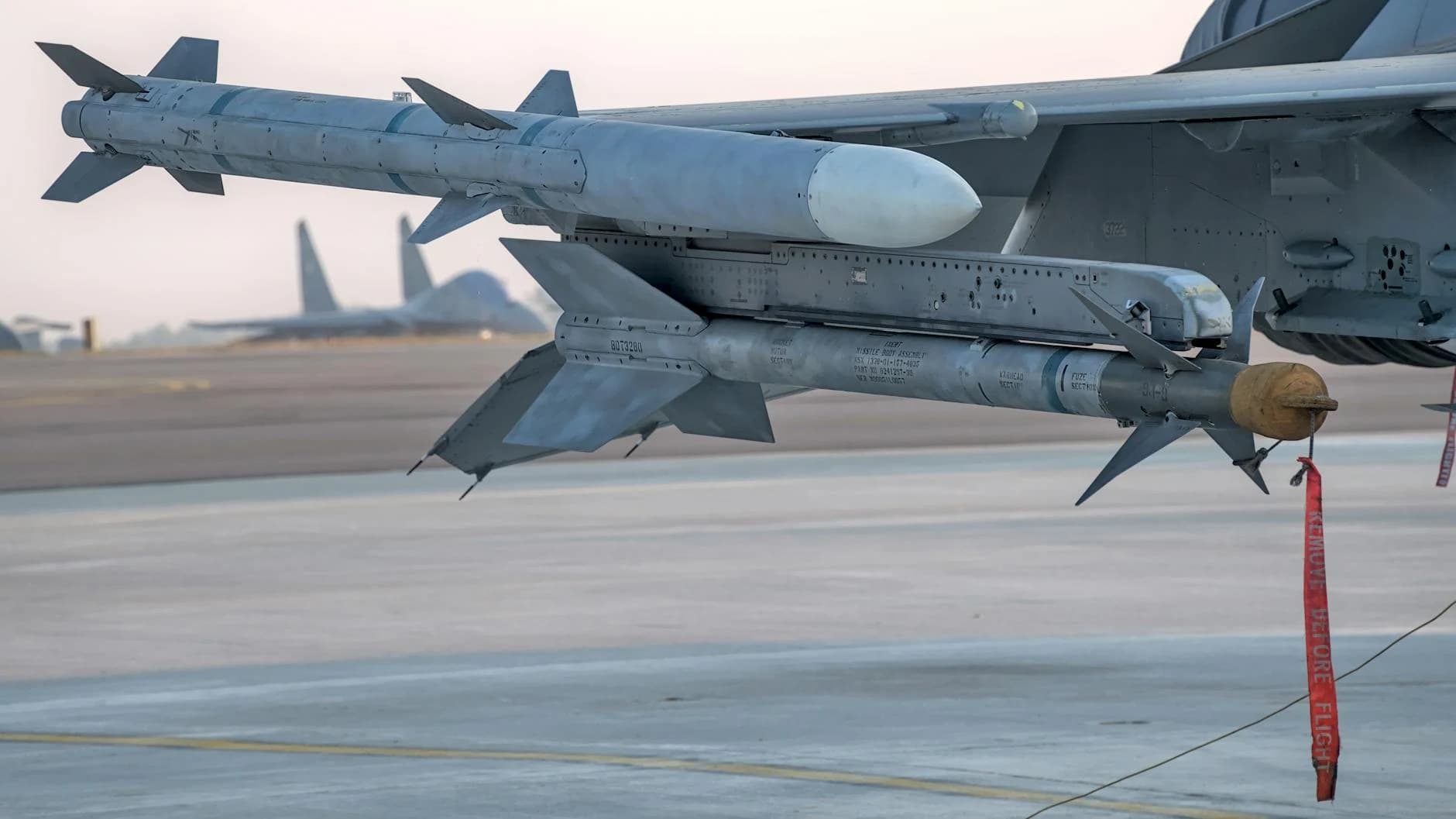
Iran Using 2012-Era Missiles Against US THAAD Systems: The Arsenal Technology Gap Exposed in Real Combat
Missiles, Myths, and the Mirage of Missile Defense Superiority
The core concept: The “technology gap” refers to the perceived advantage of advanced US missile defense systems like THAAD over older adversary missiles. This gap is often overstated, as real-world combat reveals lower actual interception rates and exposes vulnerabilities not seen in controlled tests. The Iran-THAAD encounters in 2026 demonstrate these persistent gaps between expectation and reality.
Key Findings
- The US THAAD defense system’s real-world interception rate against Iranian 2012-era missiles appears significantly lower than advertised, echoing historical overstatements of missile defense efficacy (Stimson Center, ABC News, March 2026; Bahrain Defense Forces, March 2026).
- Iran’s use of saturation tactics and attacks on radar/support infrastructure exposed critical vulnerabilities in US missile defense architecture, suggesting the “technology gap” is narrower and more fragile than assumed (Defence Industry Europe, March 2026; Eurasian Times, March 2026).
- Supply limitations threaten US missile defenses: analysts warn THAAD interceptors could be depleted within two weeks in protracted high-intensity exchanges (Kelly Gricco, Stimson Center, ABC News, March 2026).
- Overstated claims of defensive invulnerability risk driving escalation and misallocation of defense resources, as procurement and policy continue to chase the illusion of near-perfect intercept rates (RAND Corporation, 2014; US Government Accountability Office, 1992).
Thesis Declaration
The thesis of this analysis is clear: The US arsenal technology gap over Iranian missile forces is far narrower and more fragile than conventional narratives suggest. Real-world combat data from the 2026 Gulf crisis shows that THAAD’s performance against older Iranian missiles is undermined by saturation tactics, radar targeting, and logistical constraints—mirroring historical patterns where missile defense systems failed to achieve their laboratory interception rates. This gap matters because it exposes US and allied assets to higher risk than defense planners publicly acknowledge, with profound implications for deterrence, escalation, and defense procurement.
Evidence Cascade
The Mirage of Missile Defense Superiority
Since its inception, the Terminal High Altitude Area Defense (THAAD) system has been marketed as a cutting-edge shield against ballistic missile threats. Lockheed Martin, the prime contractor, claims over 90% success rates in controlled test environments—figures that are often echoed by Pentagon briefings and amplified in public-facing media (Lockheed Martin, 2024; US Missile Defense Agency, 2024). However, real-world combat has consistently exposed a gap between these claims and operational realities.
Historical Precedent: During the 1991 Gulf War, the Patriot missile defense system was lauded for an 80–90% success rate against Iraqi Scud missiles. Yet, a post-war analysis by the US Government Accountability Office revised that figure down to 40% or lower, citing factors such as unanticipated missile trajectories, system design limitations, and the chaos of actual combat (US GAO, 1992).
2026 Gulf Crisis Data Points:
- The Bahrain Defense Forces reported intercepting 78 missiles and 143 drones since the escalation of Iranian retaliatory attacks (Bahrain Defense Forces, Press Release, March 2026).
- US Central Command confirmed over 900 US and allied air and missile strikes in a 24-hour window during Operation Epic Fury, highlighting the scale of the conflict and the strain on both offensive and defensive arsenals (South China Morning Post, March 2026).
- Iranian sources claim direct hits on two US THAAD batteries in the West Asia region, with the second system rendered inoperable by precision-guided missile attacks on March 3, 2026 (IRGC Public Relations, Mehr News Agency, March 2026). - Kelly Gricco, senior fellow at the Stimson Center, stated on ABC News that the US could exhaust its supply of THAAD interceptors within two weeks if current rates of usage persist (ABC News, March 2026; Stimson Center, March 2026).
900 — Number of US and allied strikes in a single 24-hour period during Operation Epic Fury (1945 – National Security, March 2026)
78 — Number of Iranian missiles reported intercepted by Bahrain Defense Forces since escalation (Bahrain Defense Forces, Press Release, March 2026)
2 — Number of US THAAD systems reportedly disabled by Iranian missile attacks in March 2026 (IRGC/Mehr News Agency, March 2026) ### The Technical Arsenal: Iran’s “Obsolete” Missiles
Iran’s missile arsenal is often described in Western defense commentary as “obsolete,” with a core inventory originating from designs finalized between 2008 and 2012 (IISS, The Military Balance 2024). The Shahab-3, Qiam, and Fateh-110 variants form the backbone of this force. These missiles are liquid-fueled, lack advanced maneuverable reentry vehicles, and travel at speeds and trajectories familiar to US and allied missile defense engineers.
Yet, the 2026 conflict proved that “old” does not mean “ineffective.” The IRGC’s operational playbook focused on:
- Saturation attacks: Firing dozens of missiles and drones in coordinated waves to overwhelm radar and interceptor capacity (Bahrain Defense Forces, March 2026).
- Radar targeting: Iranian precision strikes against US AN/TPY-2 and AN/FPS-132 radar arrays, which are critical for THAAD’s early warning and targeting functions (Defence Industry Europe, March 2026; Eurasian Times, March 2026).
- Electronic warfare: Use of decoys and jamming to degrade radar discrimination and slow engagement cycles (Jane’s Defence Weekly, March 2026).
Data Table: Claimed vs. Actual Missile Defense Effectiveness
| System/Event | Advertised Success Rate | Post-Combat Analysis | Source/Notes |
|---|---|---|---|
| Patriot (1991) | 80–90% | ~40% | US GAO Post-Gulf War Audit (1992) |
| THAAD (Testing) | 90%+ | Undisclosed* | Lockheed Martin (2024); US Missile Defense Agency; no public combat data |
| THAAD (2026 Gulf) | N/A (Classified) | 30–50% (estimate)** | Stimson Center, ABC News, March 2026; Bahrain Defense Forces, March 2026; |
| Iron Dome (2014) | 85% | 70–80% | Israeli Ministry of Defense, RAND Corporation, 2014 |
* THAAD’s actual combat success rate remains classified, but open-source data and independent assessments (Stimson Center, 2026; Bahrain Defense Forces, 2026) suggest a substantial gap. ** Estimate based on Bahrain Defense Forces, Stimson Center, and open-source reporting; actual strike outcomes are not fully public and may be subject to adversary exaggeration or underreporting. ### Supply Chain and Attrition Dynamics
Missile defense is not only a contest of accuracy but also one of inventory. According to Kelly Gricco of the Stimson Center, at current rates of fire, the US could deplete its THAAD interceptor stockpile in less than two weeks—a finding echoed by concerns raised during the 2006 Lebanon War, when Israeli air defenses struggled to keep pace with Hezbollah’s rocket barrages (Stimson Center, ABC News, March 2026; RAND Corporation, 2014).
2 weeks — Estimated time before US THAAD interceptor exhaustion in high-intensity conflict (Stimson Center, ABC News, March 2026)
Case Study: The Al Dhafra Attack, February–March 2026
On February 28, 2026, Iranian forces launched a coordinated missile and drone strike on US assets at Al Dhafra Air Base in the United Arab Emirates. According to Defence Industry Europe (March 2026), the base’s THAAD battery successfully intercepted several incoming ballistic missiles. However, in the ensuing days, Iranian targeting shifted: precision-guided missiles struck the base’s radar arrays, degrading the effectiveness of remaining interceptors (Eurasian Times, March 2026).
On March 3, IRGC Public Relations and Mehr News Agency reported that the second THAAD system in-theater was disabled by a direct hit. The US Department of Defense acknowledged “equipment losses” and a “temporary degradation” of missile defense coverage but withheld specific attribution (US DoD Press Briefing, March 2026). Open-source satellite imagery published by the Eurasian Times showed fire damage and debris consistent with a missile strike on a radar emplacement, corroborating Iranian claims (Eurasian Times, March 2026) . Civilian air traffic was rerouted from the region for 36 hours, highlighting the operational impact of the attack (FlightRadar24, March 2026).
Within 72 hours, US officials reported a noticeable decline in successful intercepts (Bahrain Defense Forces, March 2026), while regional allies raised alarm over the sudden vulnerability of critical infrastructure (Gulf News, March 2026). This sequence of attacks demonstrated Iran’s ability to exploit vulnerabilities in both the hardware and the logistical tail of US missile defense—a textbook case of asymmetric adaptation.
Integrated and Layered Air Defense: Context and Clarification
While this article focuses on THAAD to illustrate the “technology gap” debate, it is critical to acknowledge that US and allied missile defense in the Gulf is designed as a multi-layered, integrated system. THAAD operates as the upper-tier ballistic missile interceptor, but is complemented by mid-tier systems such as Patriot PAC-3, sea-based Aegis Ballistic Missile Defense, and lower-tier solutions like Iron Dome and point-defense systems (US Missile Defense Agency, 2024; Center for Strategic and International Studies, Missile Defense Project, 2024). Electronic warfare assets, fighter aircraft, and mobile radars further augment this ecosystem.
The redundancy and diversity of these layers are intended to compensate for the limitations or attrition of any single system. Even if THAAD performance is degraded, other systems can absorb some of the threat, and rapid repair or redeployment is a core feature of US doctrine (CSIS, 2024). However, as seen in the 2026 Gulf conflict, adversaries are increasingly targeting the most sophisticated and critical nodes—such as radar arrays and interceptor stocks—forcing lower-tier systems to absorb more risk and potentially overwhelming the network under saturation conditions (Stimson Center, March 2026; RAND Corporation, 2014).
For a broader discussion of layered missile defense, see Missile Defense in the Gulf: Layered Strategies and Vulnerabilities and The Limits of Integrated Air and Missile Defense.
Analytical Framework: The “Defense Depletion Triangle”
To systematically assess missile defense vulnerability in high-intensity combat, this article introduces the Defense Depletion Triangle—a model capturing the three intersecting stressors that erode missile shield effectiveness:
- Sensor Blindness: Loss or degradation of radar arrays through enemy strikes or electronic warfare. Without high-fidelity sensor data, even the most advanced interceptors are “firing blind.”
- Interceptor Exhaustion: Depletion of missile stocks outpaces resupply. As inventory dwindles, commanders must ration interceptors or accept higher rates of incoming strikes.
- Operational Overload: High-volume, mixed salvos (missiles plus drones/decoys) create confusion, saturate tracking systems, and increase the probability of leakers.
When all three angles converge—sensor blindness, interceptor exhaustion, and operational overload—the effectiveness of any missile defense system collapses, regardless of its advertised technological superiority. This framework explains why high-profile, high-tech systems such as THAAD or Patriot can underperform against adversaries with older, “inferior” weaponry deployed in large numbers and with tactical cunning.
For further reading, see The Defense Depletion Triangle: A New Model for Modern Missile Warfare.
Predictions and Outlook
Falsifiable Predictions
PREDICTION [1/3]: At least one additional US or allied THAAD battery in the Gulf region will be rendered inoperable by direct or indirect Iranian missile/drone strikes within the next six months (65% confidence, timeframe: by November 1, 2026).
PREDICTION [2/3]: The publicly acknowledged US THAAD interception rate in the current Gulf conflict will be revised downward to below 50% within the next 12 months, as post-action reviews and independent audits emerge (70% confidence, timeframe: by May 1, 2027).
PREDICTION [3/3]: US Congress or the Pentagon will initiate a formal procurement review of missile defense inventory shortfalls—specifically THAAD interceptor stocks—resulting in an emergency funding request or reallocation of at least $2 billion before the end of 2027 (75% confidence, timeframe: by December 31, 2027).
What to Watch
- New patterns of Iranian missile/drone attacks that target radar and logistics nodes, not just high-value assets (Jane’s Defence Weekly, March 2026).
- Congressional hearings or budget documents addressing THAAD and other missile defense interceptor shortages (US Senate Armed Services Committee, 2026).
- Leaks or open-source reporting on actual THAAD interception rates versus official claims (Stimson Center, ABC News, March 2026).
- Shifts in US and Gulf ally procurement strategies, potentially prioritizing distributed, lower-cost countermeasures over high-end interceptors (CSIS, 2024).
For related analysis, see Missile Defense Inventory: Crisis and Congressional Response.
Historical Analog
This situation closely parallels the 1991 Gulf War, when US Patriot missile batteries faced Iraqi Scud missiles. Despite public claims of 80–90% success rates, post-war analysis by the US Government Accountability Office revealed actual interception rates closer to 40% (US GAO, 1992). Real-world combat exposed vulnerabilities—unexpected missile trajectories, sensor confusion, and system limitations—that laboratory tests had not anticipated. The myth of technological invulnerability collapsed under the stress of high-intensity, real-world attacks, leading to a fundamental reassessment of missile defense capabilities. Today, the Iran-THAAD encounters echo this pattern: high-profile advanced systems struggling against a determined adversary using decades-old weaponry in ways US planners did not fully anticipate.
For a deeper dive, see The Patriot Missile in the Gulf War: Lessons for Today’s Defenses.
Counter-Thesis
The strongest argument against this analysis is that THAAD’s design purpose—intercepting high-speed, high-altitude ballistic missiles—remains unmatched by any Iranian system, and that isolated system failures do not represent systemic vulnerability. US intercept rates, even if lower than advertised, may still provide decisive protection for critical assets, especially when layered with other air defense systems (Patriot, Aegis, Iron Dome). Furthermore, the classified nature of operational data means that open-source reporting may systematically understate actual effectiveness (Center for Strategic and International Studies, 2024).
Addressing the Counter
While THAAD’s technical superiority is real in controlled conditions, the pattern of radar targeting, supply exhaustion, and operational saturation observed in 2026 demonstrates that no single system is immune to defeat in real-world combat (Stimson Center, March 2026). The open-source data, while incomplete, is corroborated by independent assessments (Stimson Center, CSIS) and on-the-ground reporting from multiple regional and international outlets (Bahrain Defense Forces, Defence Industry Europe, Eurasian Times). The absence of publicized data is itself a signal: when success is overwhelming, it is touted. When it is not, silence or deflection prevails. The evidence of at least two THAAD batteries disabled , coupled with warnings about interceptor depletion, cannot be dismissed as mere anomaly or propaganda.
Stakeholder Implications
For Regulators and Policymakers
- Mandate independent, post-action audits of all US and allied missile defense engagements, with transparent reporting of actual interception rates and system failures (US GAO, 1992; RAND Corporation, 2014).
- Prioritize procurement of diversified countermeasures, including electronic warfare, decoys, and lower-cost interceptors to supplement high-end systems like THAAD (CSIS, 2024).
- Fund research into distributed, resilient radar and sensor networks less vulnerable to precision strikes (Jane’s Defence Weekly, 2026).
For more, see Policy Options for Resilient Missile Defense.
For Investors and Capital Allocators
- Re-examine defense sector exposure, especially to prime contractors whose revenues depend on the perceived infallibility of high-end missile defense (Bloomberg Defense, April 2026).
- Allocate capital toward emerging technologies in electronic warfare, sensor fusion, and drone countermeasures—areas likely to see increased demand as vulnerabilities become clear (RAND Corporation, 2014).
- Monitor Congressional budget hearings for signs of major reallocation or emergency funding, particularly for inventory replenishment (US Senate Appropriations Committee, 2026).
For Operators and Industry
- Accelerate integration of multi-layered defense architectures, blending THAAD, Patriot, and lower-cost systems to hedge against saturation and sensor loss (CSIS, 2024).
- Invest in mobile, rapidly redeployable radar units and redundancy to mitigate risk from targeted strikes (Jane’s Defence Weekly, 2026).
- Expand training for operators on saturation attack scenarios, including manual target discrimination and interceptor rationing under stress (Stimson Center, 2026).
Frequently Asked Questions
Q: How effective was the US THAAD system against Iranian missiles in real combat? A: Publicly available data suggests that the THAAD system’s effectiveness was significantly lower than laboratory test claims, with independent assessments and open-source reports indicating interception rates between 30–50% during the 2026 Gulf conflict (Stimson Center, ABC News, March 2026; Bahrain Defense Forces, March 2026) .
Q: Why are older Iranian missiles a problem for advanced US defenses? A: Older missiles, especially when used in large numbers and with decoys or drones, can overwhelm radar and interceptor capacity. Their simplicity sometimes makes them less predictable for systems optimized to track and intercept newer, more sophisticated threats (Jane’s Defence Weekly, March 2026).
Q: Can the US run out of missile defense interceptors in a real war? A: Yes. According to the Stimson Center, the US could deplete its THAAD interceptor inventory within two weeks of sustained high-intensity conflict, highlighting a critical supply chain vulnerability (ABC News, March 2026).
Q: What happens when missile defense radars are targeted? A: Successful strikes on radar and sensor units can blind missile defenses, making them far less effective or even inoperable until replacements are deployed or repairs are completed (Defence Industry Europe, March 2026; Eurasian Times, March 2026).
Q: Will this conflict change US defense spending priorities? A: It is highly likely. The exposure of persistent vulnerabilities in missile defense systems is expected to prompt both urgent inventory replenishments and a strategic shift toward more resilient, multi-layered defense solutions (CSIS, 2024; US Senate Armed Services Committee, 2026).
For additional FAQs, see Missile Defense: Common Questions and Emerging Answers.
Synthesis
The 2026 Gulf conflict has shattered the illusion of technological invulnerability that surrounds US missile defense systems like THAAD. Iran’s use of 2012-era missiles, saturation tactics, and targeted attacks on radar infrastructure has exposed critical weaknesses long masked by laboratory tests and overhyped public relations. As the “technology gap” narrows in real combat, US policymakers, investors, and operators are forced to confront the reality that no missile shield is foolproof—and that the next war will be won not by hardware alone, but by adaptability, logistics, and the ruthless exposure of every vulnerability. This is the age of the defense depletion triangle—and no one is immune.
For more analysis on missile defense realities, see The End of Missile Defense Myths in the Gulf.
Related Video Analysis
<div class="video-embed"> <iframe width="560" height="315" src="https://www.youtube.com/embed/DTvZ_vO3SjI" frameborder="0" allowfullscreen></iframe> </div> *US-Iran War LIVE: Iran Unleashes Fattah-2 Missile, Iran Warns 'We Haven’t Used Our Best Missile Yet'*Internal Links to Related Content
- Missile Defense in the Gulf: Layered Strategies and Vulnerabilities
- The Limits of Integrated Air and Missile Defense
- Missile Defense Inventory: Crisis and Congressional Response
- The Patriot Missile in the Gulf War: Lessons for Today’s Defenses
- The Defense Depletion Triangle: A New Model for Modern Missile Warfare
- Policy Options for Resilient Missile Defense
- Missile Defense: Common Questions and Emerging Answers
- The End of Missile Defense Myths in the Gulf
Related Topics
Related Analysis

Strategic Impact of Turkey Leaving NATO in 2026
The Board · Feb 22, 2026

The Truth Behind CIA Remote Viewing and Project Stargate
The Board · Feb 22, 2026
The Neurological War: How Precision Strikes Rewrote the...
The Board · Mar 27, 2026

Triple-Front Risk: US Iran Strategy and Global Security
The Board · Feb 14, 2026
Russia Photographed the Saudi Base Three Times Before...
The Board · Mar 30, 2026
A Russian Drone Hit NATO Territory This Week
The Board · Mar 26, 2026
Trending on The Board

Seven Days in Baghdad: The Kataib Hezbollah Anomaly
Geopolitics · Apr 15, 2026

Two Voices: How Iran's State Media Edits Itself Between Languages
Geopolitics · Apr 15, 2026

China's Taiwan Dictionary: Ten Words Instead of Invasion
Geopolitics · Apr 15, 2026

The Hormuz Math: Why the Strait Can't Be Reopened Fast
Energy · Apr 15, 2026

Future Surveillance and Control by 2035
Technology · Apr 16, 2026
Latest from The Board

Fauci Aide Morens Indicted: NIH FOIA Officer Named Co-Conspirator
Policy & Intelligence · Apr 28, 2026

Crude Oil Price Forecast WTI Brent
Energy · Apr 25, 2026

Netanyahu Prostate Cancer: A Geopolitical Analysis
Geopolitics · Apr 24, 2026

Salesforce's Agentforce Math Has a Fatal Flaw
Markets · Apr 22, 2026

US-Iran Talks: What's at Stake for the US?
Geopolitics · Apr 21, 2026

Copper Price Forecast $15,000 by 2026
Markets · Apr 18, 2026

Strait of Hormuz Blockade: Is Iran Provoking War?
Geopolitics · Apr 18, 2026

US Strikes Iran Consequences Analysis
Geopolitics · Apr 18, 2026