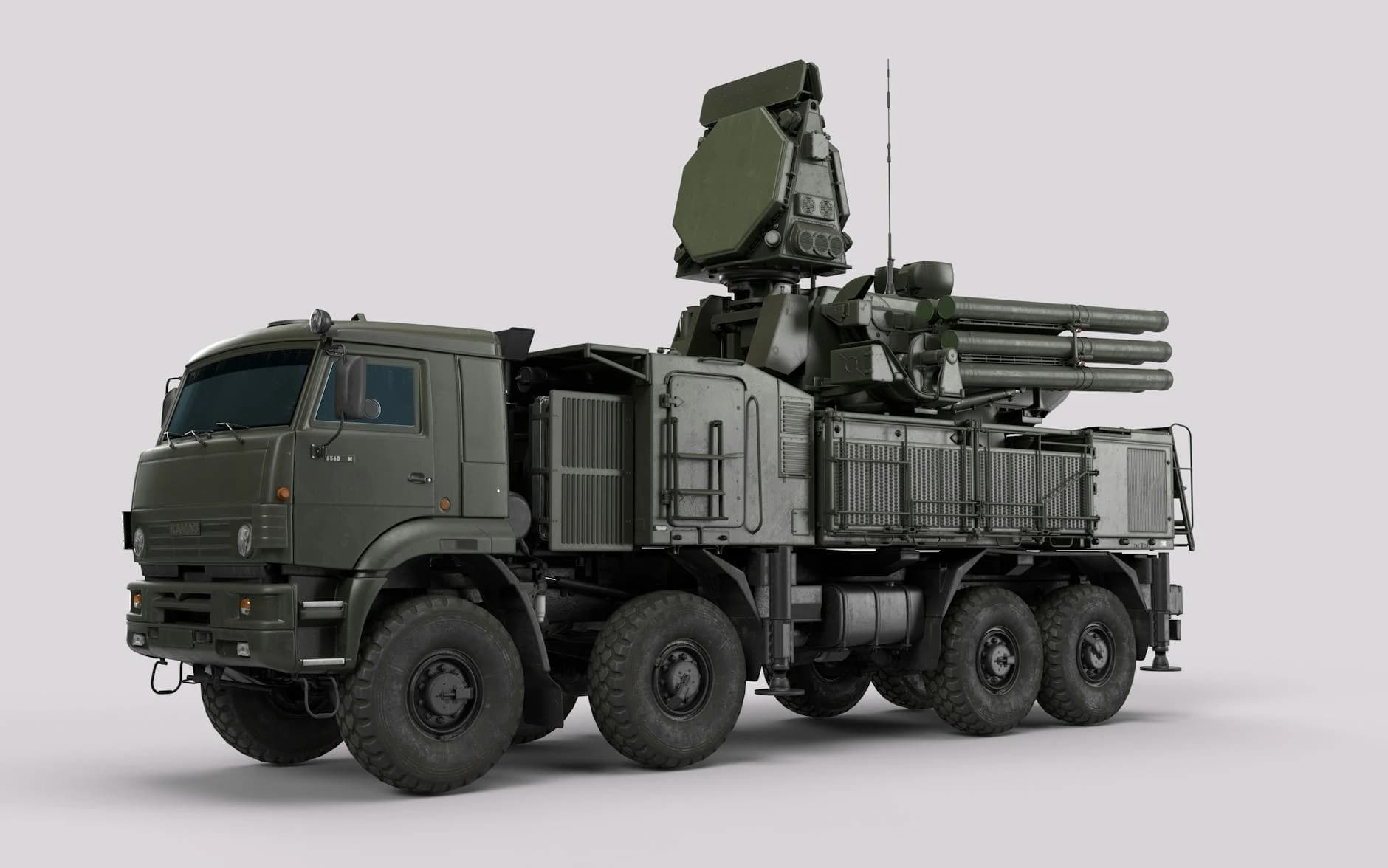
Taiwan is transforming itself into a porcupine. Over the past three years, the island has embarked on the most aggressive coastal defense buildup in its history, deploying a layered anti-ship missile network designed to make any amphibious invasion prohibitively costly. The strategy is not to match China's military power — that ship sailed long ago — but to ensure that the price of taking Taiwan by force exceeds anything Beijing is willing to pay.
The Missile Density Equation
Taiwan's western coastline stretches approximately 400 km — the side facing China across the 130 km Taiwan Strait. Along this narrow front, Taiwan is deploying what defense analysts estimate will be over 1,000 anti-ship missiles by the end of 2026, giving it the highest anti-ship missile density of any coastline on Earth.
The backbone of this arsenal is the domestically produced Hsiung Feng III (HF-3) supersonic anti-ship cruise missile. With a range exceeding 400 km and a speed of Mach 2.5, the HF-3 can reach any point in the Taiwan Strait in under four minutes. Taiwan's National Chung-Shan Institute of Science and Technology (NCSIST) has ramped production from 30 to over 100 units per year, with a stated goal of 500 HF-3s deployed by mid-2027.
Complementing the HF-3 is the subsonic Hsiung Feng II (HF-2E) land-attack variant, the truck-mounted Harpoon Block II missiles acquired from the United States (400 units, $2.37 billion), and the recently unveiled "Wan Chien" air-launched cruise missile carried by F-16V fighters. Together, these systems create overlapping kill zones that cover every approach vector across the Strait.
The most significant recent addition is mobile coastal defense. Taiwan has adopted the "distributed lethality" concept pioneered by the US Marine Corps, deploying anti-ship missiles on modified civilian trucks that can operate from highway overpasses, industrial parks, and mountain tunnels. These mobile launchers are designed to survive a Chinese first strike against fixed military installations — the scenario that keeps Taiwanese defense planners awake at night.
The Porcupine Doctrine
Taiwan's defense transformation reflects a strategic pivot that military planners call the Overall Defense Concept (ODC), sometimes referred to as the "porcupine doctrine." The logic is straightforward: Taiwan cannot win a conventional war against the People's Liberation Army (PLA), which fields 370 major surface combatants, over 60 submarines, and the world's largest navy by hull count. What Taiwan can do is make the cost of invasion so high that China's leadership calculates the risk is not worth the reward.
The ODC prioritizes asymmetric capabilities over prestige platforms. Instead of buying expensive destroyers or fighter jets that would be destroyed in the opening hours of a conflict, Taiwan is investing in thousands of small, mobile, and difficult-to-target weapons: anti-ship missiles, sea mines, shoulder-launched air defense systems, and armed drones.
This represents a philosophical break from decades of Taiwanese defense procurement, which emphasized big-ticket platforms like F-16 fighters, M1 Abrams tanks, and guided missile frigates. The old approach assumed that Taiwan could contest Chinese air and naval superiority in a conventional fight. The new approach assumes it cannot — and optimizes for inflicting maximum attrition during an amphibious crossing.
The Geography Advantage
The Taiwan Strait is a natural fortress for the defender. At its narrowest point, the Strait is 130 km wide — roughly the distance from New York to Philadelphia. An amphibious invasion fleet would need to cross this distance while exposed to attack from multiple axes: anti-ship missiles from the coast, submarines lurking in the shallow waters, air-launched weapons from hardened mountain bases, and potentially thousands of naval mines seeded across the most likely approach corridors.
The Strait's bathymetry further favors Taiwan. Average depths of 60 meters limit submarine operations and force large amphibious vessels into predictable channels. Strong currents of 2-4 knots complicate landing operations and create narrow windows of optimal tidal conditions. Military analysts estimate there are only two viable landing windows per year — in April and October — when weather, tides, and sea states align for a large-scale amphibious operation.
Taiwan has only 14 beaches suitable for amphibious landings, and all are now covered by pre-registered artillery coordinates, anti-ship missile arcs, and rapidly deployable obstacles. The island's mountainous eastern coast is effectively impenetrable to amphibious assault, channeling any invasion force toward the heavily defended western plain.
China's Counter-Moves
Beijing is not standing still. The PLA Rocket Force has deployed an estimated 1,500 short-range ballistic missiles (SRBMs) opposite Taiwan, capable of saturating the island's air defenses and destroying fixed military targets in the opening minutes of a conflict. The PLA Navy has commissioned over 20 Type 055 and Type 052D destroyers equipped with advanced air defense and anti-submarine warfare systems. And China's growing fleet of Type 075 and Type 076 amphibious assault ships provides the sealift capacity to move tens of thousands of troops across the Strait.
China's most dangerous capability may be its growing arsenal of precision-guided munitions designed to neutralize Taiwan's mobile missile launchers. The PLA's constellation of reconnaissance satellites, combined with long-endurance drones and signals intelligence aircraft, is designed to find and fix mobile targets before they can launch. The race between Taiwan's ability to hide its missiles and China's ability to find them will likely determine the outcome of any conflict.
The PLA is also investing heavily in mine countermeasures and electronic warfare capabilities specifically designed to degrade Taiwan's coastal defense network. Joint exercises in 2025 featured simulated amphibious landings under conditions of heavy anti-ship missile threat, suggesting that Chinese military planners are actively working the problem of Taiwan's missile wall.
The American Factor
The United States has accelerated arms transfers to Taiwan, but the relationship is complicated. Washington officially maintains "strategic ambiguity" about whether it would intervene militarily in a Taiwan conflict — a policy designed to simultaneously deter Chinese aggression and Taiwanese provocation.
In practice, the US has moved toward what analysts call "strategic clarity by increment." The $2.37 billion Harpoon sale, combined with $10 billion in additional arms packages approved since 2023, represents the largest sustained military transfer to Taiwan since the 1979 Taiwan Relations Act. US Special Operations Forces have quietly expanded training missions on the island, and joint planning between US Indo-Pacific Command and Taiwan's military has deepened considerably.
The challenge is time. Taiwan's defense industrial base is building capacity, but many critical systems — particularly the US-manufactured Harpoons and HIMARS rocket systems — face delivery backlogs stretching to 2028. The gap between Taiwan's current defensive capability and its planned force structure creates a window of vulnerability that both Taipei and Washington are racing to close.
Implications for the Indo-Pacific
Taiwan's missile buildup is reshaping security calculations across the region. Japan has begun deploying its own anti-ship missile batteries on the Ryukyu Islands chain, creating a complementary barrier that extends Taiwan's defensive perimeter northward. The Philippines has accelerated its coastal defense program, acquiring BrahMos cruise missiles from India. Australia's AUKUS submarine program, while years from delivery, signals a long-term commitment to undersea capabilities that would complicate Chinese naval operations.
The cumulative effect is the emergence of what strategists call a "first island chain missile barrier" — a network of land-based anti-ship capabilities stretching from Japan through Taiwan to the Philippines that would make Chinese naval power projection into the Western Pacific enormously costly.
For Beijing, the closing window of military advantage creates a dangerous dynamic. If China's leadership concludes that Taiwan's defenses will become impenetrable within a decade, it increases the incentive to act sooner rather than later. The porcupine strategy's success depends on the transition period — the years between announcing the buildup and completing it — being managed without triggering the very conflict it is designed to deter.
Taiwan is betting its survival on a simple proposition: that enough missiles, properly dispersed and concealed, can deter the world's largest military from attempting the most complex amphibious operation in history. It is a high-stakes wager with no margin for error.
Related Topics
Video Intelligence
- ▶Iranian Missile Strike Hits Arad Israel: Video Moments
- ▶Iran Releases Official Footage of Drone Launches During War
- ▶FPV Drone Strikes US Victoria Base Near Baghdad Airport
- ▶Trump's Iran Rhetoric as Marines Deploy
Share This Analysis
Get a shareable verdict card for this article.
Get the next one first
Free briefings when we publish major outlooks and forecasts. No spam — unsubscribe anytime.
Related Analysis

Strategic Impact of Turkey Leaving NATO in 2026
The Board · Feb 22, 2026

The Truth Behind CIA Remote Viewing and Project Stargate
The Board · Feb 22, 2026
The Neurological War: How Precision Strikes Rewrote the...
The Board · Mar 27, 2026

Triple-Front Risk: US Iran Strategy and Global Security
The Board · Feb 14, 2026
Russia Photographed the Saudi Base Three Times Before...
The Board · Mar 30, 2026
A Russian Drone Hit NATO Territory This Week
The Board · Mar 26, 2026
Trending on The Board
Houthis Take Perim as Saudis Halt Pipeline 2026
Geopolitics · Sep 13, 2026
What Israel-Iran War Games Got Wrong About 2026
Defense & Security · Sep 6, 2026

Epstein Intelligence Ties: Evidence vs Allegation in 2026
Policy & Intelligence · Sep 6, 2026
China Imported 764 Tons of Gold in Six Months
Markets · Aug 20, 2026

The 'Muslim NATO' Fails Its First Test in 48 Hours
Geopolitics · Aug 27, 2026
Latest from The Board
Houthis Take Perim as Saudis Halt Pipeline 2026
Geopolitics · Sep 13, 2026
Epstein Intelligence Ties: Evidence vs Allegation in 2026
Policy & Intelligence · Sep 6, 2026
What Israel-Iran War Games Got Wrong About 2026
Defense & Security · Sep 6, 2026

Central Banks Turned Gold Sellers. One Country Did It.
Markets · Aug 30, 2026
Schiff vs Saylor vs the Banks: Who Got 2026 Right?
Predictions · Aug 27, 2026
Silver Deficit 2026: BofA's $300 Target Explained
Markets · Aug 27, 2026
Iran War Scenarios After the 60-Day Deadline Expires
Geopolitics · Aug 27, 2026

Gold Price Forecast 2026: $10,000 Call vs $4,500 Banks
Markets · Aug 27, 2026