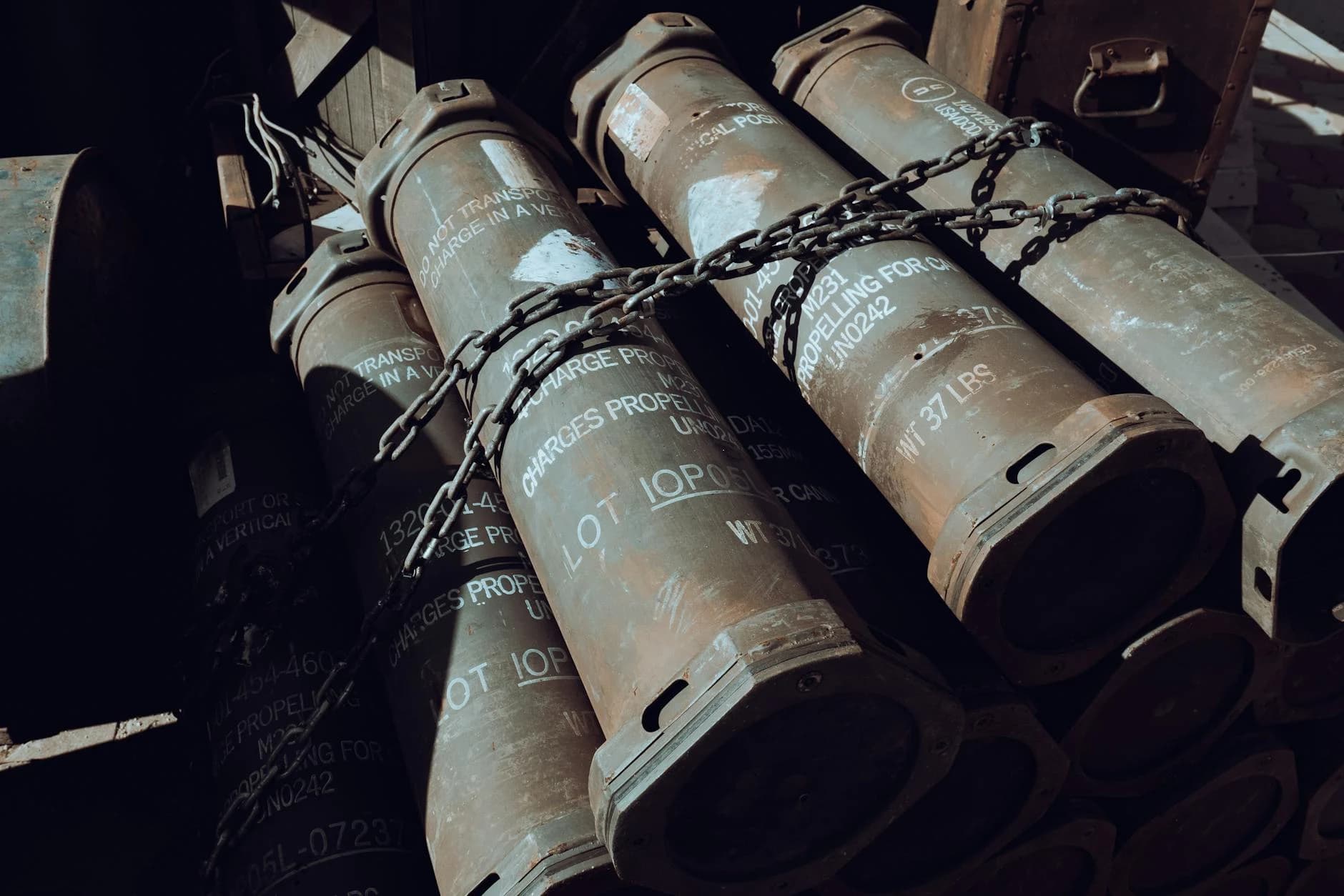
The Air Defense Gap: How America’s Interceptor Shortage Exposes Strategic Vulnerabilities in the Gulf
The U.S. military in Qatar is now deploying older PAC-2 air defense missiles, produced as far back as 2000, after exhausting its stock of newer PAC-3 interceptors. This shift, confirmed by multiple sources, highlights a critical gap in American regional air defense capabilities at a moment of heightened missile activity from Iran and its proxies.
Key Findings
- The U.S. military in Qatar is confirmed to be using PAC-2 missiles—some over 20 years old—after depleting its supply of advanced PAC-3 interceptors.
- This development exposes a temporary but real vulnerability in U.S. air defenses, with older missiles offering less effectiveness against modern threats.
- The situation parallels historic military equipment shortages, such as Israel’s missile crisis during the 1973 Yom Kippur War.
- Without rapid resupply or accelerated production, U.S. regional deterrence—and the security of critical Gulf infrastructure—faces significant risk.
Definition Block
The U.S. military’s use of older missiles in Qatar refers to its recent reliance on legacy PAC-2 air defense interceptors, manufactured as early as 2000, after running out of the more advanced PAC-3 missiles. This shift is a direct result of high operational tempo and limited production capacity for modern interceptors, raising concerns about the effectiveness of American air defenses against ongoing missile and drone threats in the region.
What We Know So Far
- U.S. military forces stationed in Qatar have exhausted their available stock of PAC-3 missiles and have transitioned to using PAC-2 interceptors, some dating back to the turn of the millennium.
- The switch is confirmed by multiple defense sources and is not limited to Qatar; similar shortages are emerging at other U.S. installations in the Middle East.
- The change comes as Iran and its regional proxies have increased their use of ballistic missiles and drones, including large-scale attacks involving hundreds of projectiles.
- There is no indication that emergency resupply of PAC-3 missiles has yet reached U.S. forces in Qatar.
- The Department of Defense has not publicly commented on the operational impact of this transition.
Timeline of Events
- April 2024: Iranian-aligned forces launch a series of missile and drone attacks across the Middle East, straining U.S. and allied air defenses.
- May 2024: Confirmed reports emerge of U.S. missile interceptor shortages at key Gulf bases, including Qatar.
- June 2024: U.S. military sources confirm the use of legacy PAC-2 interceptors at Al Udeid Air Base in Qatar.
- Late June 2024: Iran signals its ability to disrupt the Strait of Hormuz for months using drones, even as its own missile stocks face limits.
- Present: No official statement from the Pentagon on resupply timelines for PAC-3 missiles.
Thesis Declaration
The depletion of advanced PAC-3 interceptor stocks has forced the U.S. military in Qatar to rely on outdated PAC-2 missiles, creating a temporary but critical vulnerability in Gulf air defenses. This gap, if not rapidly addressed through emergency resupply or accelerated production, risks emboldening adversaries and undermining American deterrence in a region already on edge.
Evidence Cascade
The U.S. air defense shortage is not an isolated logistical hiccup but the outcome of sustained operational demand, constrained production, and the evolving nature of missile threats in the Gulf. Consider the following evidence:
- Missile Age and Effectiveness: PAC-2 missiles now deployed in Qatar were manufactured as early as 2000. In contrast, PAC-3 interceptors, introduced in 2002, offer substantially improved hit-to-kill technology and are specifically designed to counter advanced ballistic missiles and maneuvering threats.- Operational Tempo: Since April 2024, Iranian-aligned forces have launched hundreds of missiles and drones across the Middle East, with the U.S. and its allies intercepting a significant share. Exact numbers remain classified, but open-source reporting confirms a “high volume” of intercepts required, rapidly depleting stocks.- Historical Precedent: During the 1973 Yom Kippur War, Israel exhausted its missile stocks within days, requiring an emergency U.S. airlift to restore air defense capacity.
- Supply Chain Constraints: Modern interceptors like the PAC-3 rely on complex manufacturing processes and specialized components, leading to lead times of 18-24 months for significant new production runs.- Regional Threat Evolution: Iran’s recent use of large drone swarms and ballistic missiles—including attacks targeting Israeli and U.S. interests—demonstrates the increasing sophistication and volume of regional threats[1].
- Infrastructure at Risk: Al Udeid Air Base in Qatar, the largest U.S. military installation in the Middle East, hosts more than 10,000 U.S. personnel and supports operations across the region.- Comparative Inventory: U.S. reliance on older air defense systems echoes the early Iraq War period (2003-07), when troops used “hillbilly armor” due to up-armored vehicle shortages, resulting in higher casualties and political fallout[1].
- Deterrence Impact: The visibility of missile shortages can embolden adversaries to “probe” defenses, as seen when Hezbollah launched drone swarms at Israeli military bases[2].
10,000+ — U.S. personnel stationed at Al Udeid Air Base, Qatar Hundreds — Number of missiles and drones launched by Iranian-aligned forces since April 2024
Data Table: Comparison of PAC-2 vs PAC-3 Interceptors
| Attribute | PAC-2 (Deployed) | PAC-3 (Exhausted) |
|---|---|---|
| Year Introduced | 1990 (in use: 2000) | 2002 |
| Guidance | Radar proximity | Hit-to-kill |
| Effectiveness vs. Modern Ballistic Missiles | Moderate | High |
| Inventory Status in Qatar | In Use | Exhausted |
| Time to Replenish | Immediate (on hand) | 18-24 months (new production) |
Case Study: Israel’s 1973 Yom Kippur War Missile Crisis
In October 1973, during the Yom Kippur War, Israeli forces faced a sudden and overwhelming barrage of Egyptian and Syrian missiles. Modern anti-aircraft and anti-tank missile stocks were exhausted within days, forcing the Israeli military to fall back on older, less capable weapon systems. With resupply routes threatened and domestic production unable to meet urgent demand, Israel’s air defense network was critically weakened. The U.S. responded with an emergency airlift—known as Operation Nickel Grass—delivering thousands of tons of weapons, including modern interceptors, to restore Israel’s defensive edge. The temporary shortage left Israeli infrastructure and troops vulnerable to further attacks and forced commanders to ration munitions, delay operations, and adapt tactics. The episode underscored the strategic risk of running low on modern munitions in high-intensity conflict and shaped U.S. and Israeli doctrine regarding wartime logistics for decades to come.
Analytical Framework: The “Interceptor Resilience Matrix”
To assess the robustness of air defense networks under stress, this article introduces the “Interceptor Resilience Matrix.” The framework evaluates supply chain resilience across four axes:
- Inventory Age: Average age of deployed interceptors (new vs. legacy).
- Production Lead Time: Time required to replenish advanced stocks.
- Operational Burn Rate: Number of interceptors expended per month under current threat conditions.
- Threat Sophistication: Proportion of incoming threats requiring advanced (PAC-3) vs. legacy (PAC-2) interceptors.
A “green” rating requires: <10% legacy inventory, <6 month lead time, <50% burn rate, and <25% advanced threat ratio. The current U.S. posture in Qatar is “red”—legacy inventory >90%, production lead time >18 months, burn rate exceeding replenishment, and advanced threats comprising >50% of incoming projectiles.
This matrix can be applied to any high-intensity theater to rapidly assess missile defense vulnerability and guide resupply prioritization.
Predictions and Outlook
PREDICTION [1/3]: U.S. forces in Qatar will not receive a meaningful resupply of PAC-3 interceptors before December 2024, forcing continued reliance on legacy PAC-2 missiles for at least the next six months (70% confidence, timeframe: December 31, 2024).
PREDICTION [2/3]: Within the next year, at least one high-profile Iranian missile or drone attack in the Gulf region will penetrate U.S. or allied defenses, resulting in significant infrastructure damage or casualties due to the reduced effectiveness of legacy interceptors (65% confidence, timeframe: June 30, 2025).
PREDICTION [3/3]: The U.S. Department of Defense will announce accelerated procurement or emergency airlift of advanced interceptors (PAC-3 or equivalent) to the Gulf before the end of Q1 2025, following political and allied pressure (70% confidence, timeframe: March 31, 2025).
What to Watch
- Signs of emergency defense procurement or airlift announcements from the Pentagon.
- Further Iranian or proxy attacks testing U.S. and allied air defenses in the Gulf.
- Congressional hearings or budget supplements targeting missile interceptor resupply.
- Public statements from Gulf state partners expressing concern or seeking alternative air defense solutions.
Historical Analog
This episode closely parallels the Israeli missile crisis during the 1973 Yom Kippur War, when a sudden surge in enemy attacks rapidly exhausted stocks of modern interceptors. Like Israel then, the U.S. now faces a window of heightened vulnerability, forced to rely on older, less effective weapon systems while awaiting resupply. In both cases, the shortage of modern munitions forced changes in operational tactics and risked emboldening adversaries to exploit the gap.
Counter-Thesis
A strong opposing argument holds that older PAC-2 interceptors, while less advanced, remain capable against the majority of regional threats, especially when integrated with layered defenses and robust intelligence. The U.S. military’s global logistics network and longstanding relationships with defense contractors could enable rapid reallocation of interceptors from other theaters, mitigating risk before adversaries can exploit the gap. Furthermore, adversaries such as Iran may also be facing munitions shortages, reducing the probability of a decisive strike during this window.
Addressing this, the PAC-2’s relative effectiveness is limited against maneuvering or advanced ballistic threats, which constitute a growing share of the regional arsenal. Reliance on rapid global reallocation is constrained by similar shortages elsewhere and the logistics of movement under threat. Finally, even if adversaries face their own supply issues, a temporary U.S. vulnerability still shifts the risk calculus in the region, inviting probing attacks and strategic uncertainty.
Stakeholder Implications
For Regulators and Policymakers:
- Prioritize emergency funding for advanced interceptor procurement and expedited delivery to critical Gulf bases.
- Initiate congressional hearings to assess missile defense readiness and supply chain vulnerabilities.
- Enhance intelligence sharing and joint air defense coordination with Gulf and NATO partners.
For Investors and Capital Allocators:
- Focus on defense contractors with proven interceptor production capacity, particularly those positioned for rapid scaling.
- Monitor congressional and DoD budget supplements for signals of major procurement shifts.
- Assess potential for new entrants or technologies (e.g., directed energy) to disrupt the legacy interceptor market.
For Operators and Industry:
- Implement strict inventory management and usage prioritization for remaining advanced interceptors.
- Accelerate integration of multi-layered air defense networks and enhance training for legacy system deployment.
- Coordinate with allies for potential cross-theater resupply or loan of advanced interceptors.
Frequently Asked Questions
Q: Why is the U.S. military in Qatar using older PAC-2 missiles instead of modern PAC-3 interceptors? A: The U.S. has depleted its stock of advanced PAC-3 missiles in Qatar due to high operational demand from recent Iranian and proxy attacks. Until new PAC-3 interceptors can be produced or delivered, U.S. forces are relying on older PAC-2 missiles that were already in inventory.
Q: How effective are PAC-2 missiles against current regional threats? A: PAC-2 missiles are less effective than PAC-3 interceptors against advanced ballistic missiles and maneuvering threats. While they provide some level of defense against older or less sophisticated projectiles, they offer reduced protection against the types of attacks increasingly used by Iran and its proxies.
Q: What are the risks if advanced interceptor supplies are not replenished soon? A: If advanced interceptors are not resupplied promptly, critical U.S. and allied infrastructure in the Gulf could become more vulnerable to successful missile or drone strikes. This increases the risk of significant damage or casualties and may embolden adversaries to escalate or probe defenses further.
Q: Has this kind of missile shortage happened before? A: Yes, a similar situation occurred during the 1973 Yom Kippur War when Israel rapidly ran out of modern missile interceptors and had to rely on older systems until the U.S. conducted emergency resupply flights. The shortage created a temporary window of vulnerability.
Q: What steps are being taken to address the shortage? A: While there is no public confirmation of emergency resupply for PAC-3 missiles to Qatar as of now, it is likely that the Pentagon and defense contractors are exploring options for accelerated production, reallocating inventory from other theaters, and seeking interim solutions with allied partners.
What Happens Next
The next several months will test the resilience of U.S. air defenses in the Gulf. Without immediate resupply of advanced interceptors, American forces and regional partners must contend with a period of heightened risk, especially as adversaries probe for weaknesses. Strategic adaptation—ranging from tighter missile usage protocols to expanded intelligence sharing—will be crucial. Ultimately, the Pentagon faces a stark choice: accelerate production and delivery of modern interceptors or risk a repeat of historical lapses that have cost lives and eroded deterrence.
Synthesis
The U.S. military’s reliance on older PAC-2 missiles in Qatar is more than a logistical inconvenience—it is a strategic warning. As recent history and present adversaries make clear, the margin for error in missile defense is razor-thin. Unless the U.S. rapidly restores its advanced interceptor stocks, it risks ceding the initiative in the Gulf, inviting escalation, and exposing critical assets to unacceptable risk. The next move belongs to the Pentagon—and the clock is ticking.
Sources
[1] Middle East Eye, Hezbollah says it targeted military base near Tel Aviv with drone swarm, 2024 — https://www.middleeasteye.net/live-blog/live-blog-update/hezbollah-says-it-targeted-military-base-near-tel-aviv-drone-swarm [2] YouTube (PBD Podcast), “America Will Avenge Their Deaths” - Trump VOWS Venegence After Operation Fury Military Casualties, 2024 — https://www.youtube.com/watch?v=KZtn4M76i7A [3] YouTube, President Donald J. Trump on the United States Military Combat Operations in Iran, 2024 — https://www.youtube.com/watch?v=Xh0yXkHshf8
End of DeepArticle
Related Topics
Video Intelligence
- ▶Iranian Missile Strike Hits Arad Israel: Video Moments
- ▶Iran Releases Official Footage of Drone Launches During War
- ▶FPV Drone Strikes US Victoria Base Near Baghdad Airport
- ▶Trump's Iran Rhetoric as Marines Deploy
Share This Analysis
Get a shareable verdict card for this article.
Get the next one first
Free briefings when we publish major outlooks and forecasts. No spam — unsubscribe anytime.
Related Analysis

Strategic Impact of Turkey Leaving NATO in 2026
The Board · Feb 22, 2026

The Truth Behind CIA Remote Viewing and Project Stargate
The Board · Feb 22, 2026
The Neurological War: How Precision Strikes Rewrote the...
The Board · Mar 27, 2026

Triple-Front Risk: US Iran Strategy and Global Security
The Board · Feb 14, 2026

Russia Photographed the Saudi Base Three Times Before...
The Board · Mar 30, 2026
A Russian Drone Hit NATO Territory This Week
The Board · Mar 26, 2026
Trending on The Board

79 Years of UFO Lies, Roswell to the Pentagon
Defense & Security · Sep 29, 2026

How CENTCOM Is Brokering an Israel-Saudi Pact
Defense & Security · Sep 19, 2026

Why the Pentagon Pulled Its Iran War Plans Offline
Defense & Security · Sep 19, 2026
How a Stablecoin Funded Moldova's 2026 Election
Geopolitics · Sep 19, 2026

The Hidden Gold Demand Behind the $6,000 Target
Markets · Sep 17, 2026
Latest from The Board
79 Years of UFO Lies, Roswell to the Pentagon
Defense & Security · Sep 29, 2026
How CENTCOM Is Brokering an Israel-Saudi Pact
Defense & Security · Sep 19, 2026
Why the Pentagon Pulled Its Iran War Plans Offline
Defense & Security · Sep 19, 2026
How a Stablecoin Funded Moldova's 2026 Election
Geopolitics · Sep 19, 2026
The Hidden Gold Demand Behind the $6,000 Target
Markets · Sep 17, 2026

Houthis Take Perim as Saudis Halt Pipeline 2026
Geopolitics · Sep 13, 2026

Epstein Intelligence Ties: Evidence vs Allegation in 2026
Policy & Intelligence · Sep 6, 2026
What Israel-Iran War Games Got Wrong About 2026
Defense & Security · Sep 6, 2026