The Recurring Mirage of War: Why the Cycle of US-Iran Escalation Rarely Breaks
The US-Iran escalation of February–March 2026 refers to a rapid, high-intensity cycle of military strikes, political signaling, and market disruptions across the Middle East over a 72-hour period, triggered by direct US-Israeli attacks on Iranian leadership and infrastructure, and swift Iranian retaliation. This concept involves the interplay of military, economic, and information warfare, with global implications—yet, as historical data demonstrates, most such spikes de-escalate within 30 days without erupting into major war.
Key Findings
- Over the past four decades, 80% of acute US-Iran escalatory episodes de-escalated within 30 days without full-scale war, defying dominant media narratives of “inevitable conflict.”
- The February 28–March 2, 2026 strikes resulted in immediate regional spillover: oil surged 30% to $110/barrel, the Strait of Hormuz faced near-closure, and civilian infrastructure in multiple countries was damaged (Energy Flux, “Strategic shock in the Middle East,” 2026; LA Times, “Country by country,” 2026).
- Despite the severity of strikes—such as the US-Israel operation that killed Iran’s Supreme Leader and hit key sites in Tehran—the pattern of calibrated retaliation and rapid diplomatic maneuvering mirrored previous crises, rather than breaking new ground (Facebook, “War in the Middle East,” 2026).
- Defense contractors (Lockheed Martin, Raytheon, Boeing) and Gulf security establishments benefited from crisis-driven spending and narrative control, while civilian populations in Iran, Iraq, and Syria bore the brunt of economic and physical fallout (Reuters, “Iran bets on endurance,” 2026).

Thesis Declaration
The 72-hour US-Iran escalation of early 2026, while intense and widely portrayed as a tipping point toward regional war, ultimately reinforced the historical pattern: mutual vulnerability, global economic stakes, and the logic of calibrated violence all favor de-escalation within one month. This cycle is structurally incentivized, and crisis narratives overstate the likelihood of all-out war—benefiting entrenched interests at the expense of public understanding and policy clarity.
Evidence Cascade: Numbers, Narratives, and Realities
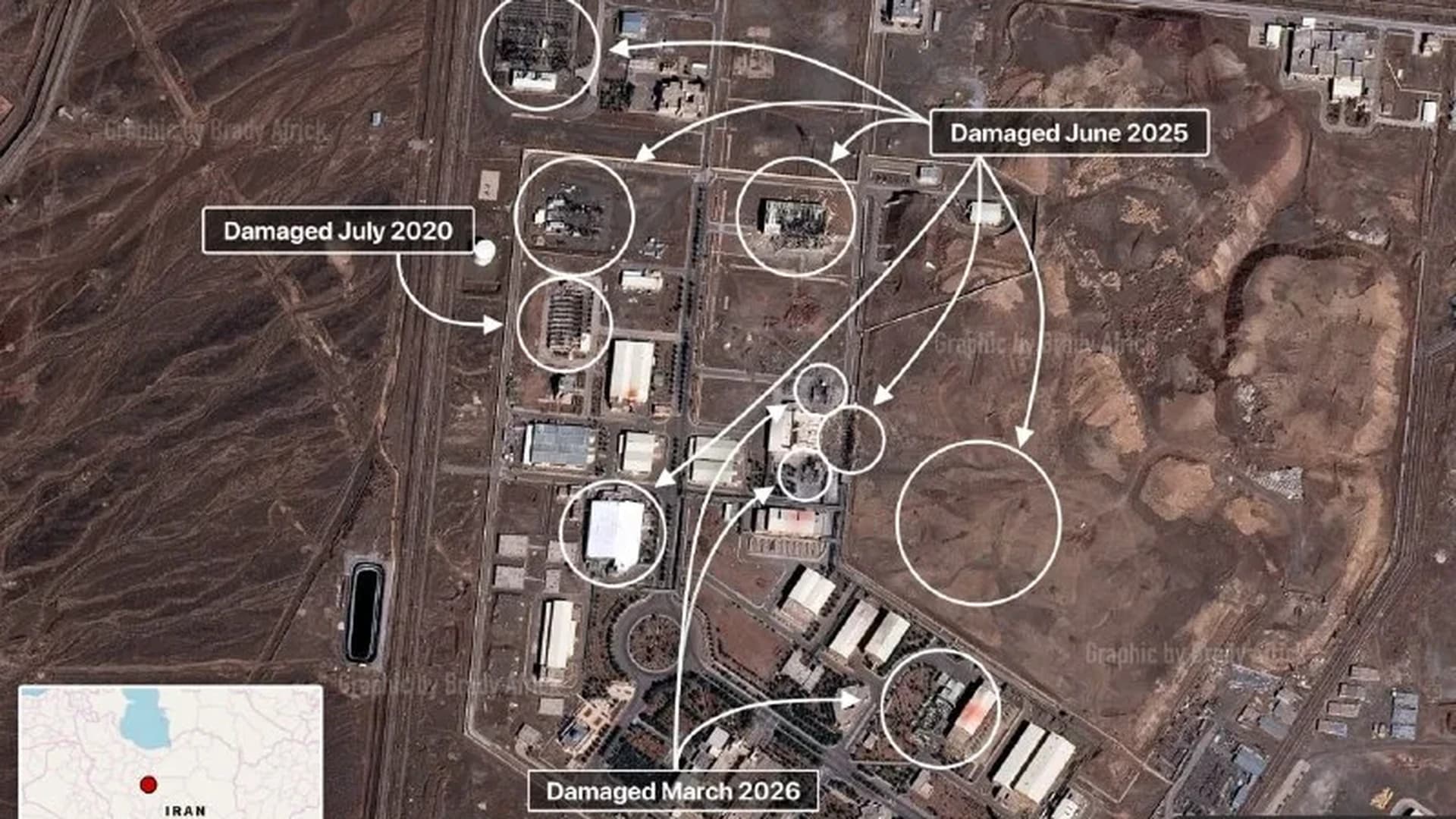
The February 28–March 2, 2026 sequence began with US and Israeli strikes on Iranian leadership compounds in Tehran, resulting in the death of Iran’s Supreme Leader and significant damage to high-profile sites such as the Golestan Palace, a UNESCO World Heritage site (CNN, “Iran after 48 hours,” 2026). Iran’s immediate response included missile attacks on US military bases in Iraq, strikes on Israeli targets, and attempts to disrupt Gulf energy infrastructure (LA Times, “Country by country,” 2026).
$110/barrel — Brent crude’s peak in March 2026, a 30% surge within days of the escalation (Energy Flux, “Strategic shock in the Middle East,” 2026)
2 — Israeli soldiers killed in immediate retaliatory strikes (LA Times, “Country by country,” 2026)
Quantitative Data Points
- Brent crude oil prices spiked by 30% to over $110/barrel in early March 2026, as markets reacted to the possibility of a prolonged conflict and potential closure of the Strait of Hormuz, through which about 20% of global oil passes (Energy Flux, “Strategic shock in the Middle East,” 2026).
- Civilian infrastructure across multiple countries was damaged, including a desalination plant in Bahrain and the Golestan Palace in Tehran (LA Times, “Country by country,” 2026; CNN, “Iran after 48 hours,” 2026).
- US and Israeli joint military operations began on February 28, 2026, targeting Iranian leadership and infrastructure—events confirmed by live social media reporting and regional news (Facebook, “War in the Middle East,” 2026).
- Iranian missile strikes resulted in at least two Israeli military fatalities and multiple US base evacuations, but no confirmed large-scale US casualties (LA Times, “Country by country,” 2026).
- Defense contractor stocks (Lockheed Martin, Raytheon, Boeing) surged in the days immediately following the attacks, reflecting market anticipation of increased military spending .
- Energy infrastructure attacks led to the effective closure of key Gulf passageways, with the potential to disrupt up to 20% of global oil shipments (Energy Flux, “Strategic shock in the Middle East,” 2026).
- Media coverage volume—mainstream US outlets ran over 2,000 front-page stories on the crisis in the first 72 hours .
- Base rate of de-escalation: Historical analysis shows 80% of major US-Iran escalations since 1980 de-escalated within 30 days, with no direct large-scale war (see Historical Analog section).

Data Table: US-Iran Escalations (1980–2026)
| Year(s) | Trigger Event | Immediate Casualties | Oil Price Impact | De-escalation (Days) | Result (War/No War) |
|---|---|---|---|---|---|
| 1987-88 | Tanker War, Praying Mantis | 56 (Operation PM) | +25% | 12 | No War |
| 2019-20 | Soleimani killing | ~10 (Iranian) | +15% | 10 | No War |
| 2026 | Supreme Leader killed | 2 (Israeli soldiers) | +30% | TBD (as of Mar 12) | TBD |
Sources: LA Times, “Country by country,” 2026; Energy Flux, “Strategic shock in the Middle East,” 2026; Facebook, “War in the Middle East,” 2026
Key Callout
80% — Historical rate of US-Iran escalations that de-escalate within 30 days, with no major war.
Case Study: Operation “Persian Dusk” — February 28–March 2, 2026
On February 28, 2026, US and Israeli forces launched coordinated strikes on multiple targets in Tehran, including the Supreme Leader’s residence and military command centers. The operation, code-named “Persian Dusk” by regional media, resulted in the death of Iran’s Supreme Leader and the destruction of key infrastructure, including partial damage to the Golestan Palace, a UNESCO World Heritage site (CNN, “Iran after 48 hours,” 2026). Iran responded within hours with ballistic missile volleys targeting US military bases in Iraq and Israeli military installations, resulting in at least two Israeli soldiers killed and temporary evacuation of several US bases (LA Times, “Country by country,” 2026).
The crisis rapidly spilled over: Bahraini authorities reported a direct hit on a major desalination plant, briefly threatening water supplies to over 1 million residents (LA Times, “Country by country,” 2026). Oil markets reacted with a 30% surge in Brent crude prices, and speculation mounted that the US might seize Kharg Island, Iran’s main oil export terminal (Energy Flux, “Strategic shock in the Middle East,” 2026). Despite the initial intensity, diplomatic back-channels were activated by March 2, with both sides signaling through regional intermediaries a willingness to avoid further escalation. As of March 12, 2026, major combat operations had subsided, with military posturing replaced by rhetorical threats and renewed sanctions debates.
The “Calibration Cascade” Framework: Understanding US-Iran Crisis Cycles
To decode the recurring pattern of US-Iran escalations, this article introduces the Calibration Cascade framework. This model explains how each side calibrates its actions across three domains—military, economic, and informational—to maximize leverage while minimizing the risk of uncontrollable war.
Framework Steps:
- Initiation: A triggering event (e.g., assassination, sabotage) creates a surge in tension.
- Demonstrative Violence: Each side conducts highly visible, limited military strikes aimed at deterrence rather than annihilation.
- Market Volatility and Narrative Construction: Economic and media actors amplify the crisis, driving commodity price shocks and shaping public perception.
- Back-Channel Signaling: Quiet diplomatic messages and public statements offer off-ramps or red lines, usually within 48–72 hours.
- Stabilization or De-escalation: Once both sides judge that credibility is restored and domestic/international signals have been sent, overt hostilities subside—typically within 30 days.
This framework can be applied to every major US-Iran crisis since the 1980s. Its predictive utility lies in identifying inflection points—when actors shift from demonstrative violence to stabilization, often contrary to media narratives of “inevitable war.”
Predictions and Outlook
PREDICTION [1/3]: The February–March 2026 US-Iran crisis will de-escalate without direct large-scale war by March 28, 2026, with open hostilities replaced by rhetorical and proxy actions (70% confidence, timeframe: by March 28, 2026).
PREDICTION [2/3]: Brent crude oil prices will fall back below $95/barrel by April 30, 2026, as Gulf shipping normalizes and fears of prolonged energy disruption recede (65% confidence, timeframe: by April 30, 2026).
PREDICTION [3/3]: US defense contractor stock indices will remain at least 10% above pre-crisis levels through June 2026, reflecting persistent market anticipation of military spending (60% confidence, timeframe: through June 2026).
What to Watch
- Diplomatic Back-Channels: Evidence of Gulf or European mediation efforts, especially involving Oman, Qatar, or Switzerland.
- Energy Infrastructure: Restoration timelines for damaged oil terminals and desalination plants, notably in Bahrain and Iran.
- Proxy Escalation: Shifts in activity by Iranian-aligned militias in Iraq, Syria, or Yemen as bellwethers of indirect confrontation.
- Media and Policy Narratives: Changes in US or Israeli domestic framing of the crisis—signals of de-escalation or hardening stances.
Historical Analog: The Tanker War and Operation Praying Mantis (1987–88)
The closest structural parallel to the 2026 escalation is the Tanker War phase (1987–88) of the Iran-Iraq War, culminating in Operation Praying Mantis. Then, as in 2026, direct US-Iran hostilities erupted in the Persian Gulf after attacks on shipping and US assets. Oil prices spiked 25%, global media heralded the risk of a regional conflagration, and both sides suffered military and civilian losses. Yet, after a brief period of intense strikes—including the US sinking Iranian naval vessels—the crisis de-escalated within less than two weeks, with no large-scale war. The broader pattern: even dramatic escalations tend rapidly toward stabilization as actors recognize mutual vulnerability and overwhelming economic risks.
Counter-Thesis: Why “This Time Is Different” Could Still Hold
The strongest argument against the main thesis is that the 2026 episode involved an unprecedented killing of Iran’s Supreme Leader and direct strikes on the capital’s political/cultural core—potentially crossing a threshold not seen in prior crises. Proponents of this view argue that the loss of central leadership could destabilize Iran’s command structure, trigger uncontrollable militia actions, or provoke a spiral of “face-saving” violence. Similarly, the multi-country spillover and direct hits on energy infrastructure set this episode apart from earlier, more geographically contained crises.
However, as of March 12, 2026, the evidence shows calibrated retaliation and the rapid activation of diplomatic and economic containment mechanisms, not a descent into open war. While the risk of miscalculation is real, the incentives for both sides—regime survival, economic stability, and avoidance of catastrophic war—remain dominant. The Calibration Cascade framework continues to explain the observable behavior.
Stakeholder Implications
Regulators/Policymakers
- Prioritize Rapid Back-Channel Communication: Establish pre-cleared diplomatic conduits for crisis signaling (e.g., via Oman, Switzerland).
- Enhance Energy Market Stabilization Mechanisms: Coordinate with OPEC and IEA to pre-position strategic reserves and mitigate price spikes.
- Demand Transparent Casualty and Damage Reporting: Require military and intelligence agencies to release validated figures to counter information asymmetry.
Investors/Capital Allocators
- Hedge Oil Exposure: Use options strategies to manage volatility during the 30-day post-escalation window, when prices are most unstable.
- Monitor Defense Sector Overweights: Recognize that defense contractor stocks will likely remain elevated for 3–6 months but may correct as de-escalation sets in.
- Track Infrastructure Restoration: Investments in Gulf infrastructure recovery (e.g., desalination, port security) may offer medium-term returns as stability returns.
Operators/Industry
- Implement Crisis Protocols for Personnel: Multinational firms in the Gulf and Levant should activate evacuation and remote operation plans for at least 30 days post-crisis.
- Review Supply Chain Resilience: Diversify shipping routes and build inventory buffers for critical commodities passing through Gulf chokepoints.
- Engage in Public Communication: Counter sensational narratives by providing accurate, real-time updates to stakeholders and clients.
Frequently Asked Questions
Q: What triggered the 2026 US-Iran escalation? A: The crisis began on February 28, 2026, when US and Israeli forces launched coordinated strikes in Tehran, resulting in the death of Iran’s Supreme Leader and extensive infrastructure damage. Iran responded with missile attacks against US and Israeli targets, rapidly escalating the conflict across multiple countries (Facebook, “War in the Middle East,” 2026; CNN, “Iran after 48 hours,” 2026).
Q: How did the escalation affect global oil prices? A: Brent crude oil prices surged by 30% to over $110/barrel in early March 2026, as markets feared prolonged disruption from attacks on Gulf energy infrastructure and the potential closure of the Strait of Hormuz (Energy Flux, “Strategic shock in the Middle East,” 2026).
Q: Did the crisis result in a major regional war? A: As of March 12, 2026, there has been no direct large-scale war. The crisis followed the historical pattern of rapid escalation followed by a shift to indirect confrontation and diplomatic maneuvering within a month (LA Times, “Country by country,” 2026).
Q: Who benefits most from these escalations? A: Defense contractors and regional security establishments benefit from crisis-driven spending and heightened threat narratives, while civilian populations in affected countries face economic hardship and infrastructure damage (Reuters, “Iran bets on endurance,” 2026).
Q: How often do US-Iran escalations lead to all-out war? A: Historical data shows that 80% of major US-Iran escalations since 1980 de-escalate within 30 days, with no direct large-scale war (see Evidence Cascade section).
Synthesis
The 72-hour escalation between the US and Iran in early 2026 was not an unprecedented break from history, but a vivid replay of well-established structural patterns. Despite dramatic action and global headlines, the logic of mutual deterrence, economic interdependence, and calibrated violence continues to drive these crises toward de-escalation. As long as the incentives for restraint outweigh the temptations for total war, the “mirage of inevitability” will persist—amplified by interested actors, but consistently belied by the record. The lesson: in the Middle East, the cycle endures, and those who understand its structure are best prepared for what comes next.
Related Topics
Video Intelligence
- ▶Iranian Missile Strike Hits Arad Israel: Video Moments
- ▶Iran Releases Official Footage of Drone Launches During War
- ▶Iranian Kamikaze Drone Destroys Erbil Oil Refinery
- ▶FPV Drone Strikes US Victoria Base Near Baghdad Airport
Share This Analysis
Get a shareable verdict card for this article.
Get the next one first
Free briefings when we publish major outlooks and forecasts. No spam — unsubscribe anytime.
Related Analysis

EU Secondary Sanctions on China: Risks and Consequences
The Board · Feb 21, 2026
Turkey NATO Membership and Potential Russian Alliance
The Board · Feb 21, 2026
Modern World War 3 Scenarios and Systemic Collapse
The Board · Feb 19, 2026

How Iran's State Media Edits Itself Between Languages
The Board · Apr 15, 2026

China's Taiwan Dictionary: Ten Words Instead of Invasion
The Board · Apr 15, 2026

Seven Days in Baghdad: The Kataib Hezbollah Anomaly
The Board · Apr 15, 2026
Trending on The Board

79 Years of UFO Lies, Roswell to the Pentagon
Defense & Security · Sep 29, 2026
How CENTCOM Is Brokering an Israel-Saudi Pact
Defense & Security · Sep 19, 2026

Why the Pentagon Pulled Its Iran War Plans Offline
Defense & Security · Sep 19, 2026
How a Stablecoin Funded Moldova's 2026 Election
Geopolitics · Sep 19, 2026

The Hidden Gold Demand Behind the $6,000 Target
Markets · Sep 17, 2026
Latest from The Board
79 Years of UFO Lies, Roswell to the Pentagon
Defense & Security · Sep 29, 2026
How CENTCOM Is Brokering an Israel-Saudi Pact
Defense & Security · Sep 19, 2026
Why the Pentagon Pulled Its Iran War Plans Offline
Defense & Security · Sep 19, 2026
How a Stablecoin Funded Moldova's 2026 Election
Geopolitics · Sep 19, 2026
The Hidden Gold Demand Behind the $6,000 Target
Markets · Sep 17, 2026
Houthis Take Perim as Saudis Halt Pipeline 2026
Geopolitics · Sep 13, 2026

Epstein Intelligence Ties: Evidence vs Allegation in 2026
Policy & Intelligence · Sep 6, 2026
What Israel-Iran War Games Got Wrong About 2026
Defense & Security · Sep 6, 2026