
The Silicon Battlefield: When Contractors Write the Rules of War
AI in modern warfare refers to the use of artificial intelligence, machine learning, and advanced analytics to automate and enhance military decision-making, targeting, defense, and cyber operations. These systems enable faster data processing, autonomous weaponry, and adaptive cyber defenses, but their rapid adoption by militaries worldwide has outpaced the development of robust ethical and regulatory frameworks.
Key Findings
- Defense contractors currently hold 73% of Pentagon AI contracts and are actively shaping ‘ethical AI’ standards, creating powerful perverse incentives against strict oversight.
- False positive rates in battlefield AI can be up to 7x higher than claimed, with civilian casualty projections severely underestimated under current vendor reporting.
- AI-driven cyber operations and deepfake threats have surged, with C-suite cyber leaders reporting a jump in deepfake attack preparedness gaps from 6% to 28% between 2024 and 2025.
- The integration of commercial AI into military systems mirrors Cold War patterns, where tech vendors also wrote the rules, leading to decades-long regulatory lag and systemic risk.
Thesis Declaration
This article argues that the rapid integration of commercial AI into U.S. military operations—especially by contractors who simultaneously write the ethical standards and supply the core technology—undermines meaningful oversight, increases the risk of civilian harm, and repeats historical cycles of regulatory capture. The stakes are high: without robust, independent checks, the AI-driven transformation of modern warfare will favor contractor interests over ethics, transparency, and global stability.
Evidence Cascade
The Rise of AI in Modern Military Operations
The Iran conflict of 2025-2026 crystallized the military’s reliance on commercial AI. Anthropic’s Claude AI, for instance, was deployed by U.S. defense teams for intelligence analysis and targeting—capabilities that previously required large analyst teams but now run semi-autonomously. In the same period, the Department of Defense (DoD) awarded 73% of its AI-related contracts to a handful of defense contractors, including Palantir and Anduril Industries, both of which also participate in setting 'ethical AI' guidelines for the Pentagon.
AI now permeates every dimension of modern warfare:
- Target Recognition & Drone Swarms: Machine learning models identify targets from live video feeds and coordinate autonomous drone operations in real time.
- Cyber Defense & Offense: AI detects and responds to cyber intrusions, automates vulnerability scanning, and even launches counter-offensives.
- Information Operations: AI-driven bots generate and amplify disinformation, while deepfake technology undermines trust in authentic communications.
According to "Cyber Warfare Statistics 2026: Costs, AI Tactics, and State Attacks", the number of state-sponsored cyberattacks using AI-enabled tools rose by 42% from 2024 to 2025. Deepfake attack preparedness gaps among cybersecurity professionals exploded: only 3% of managers reported being unprepared in 2024, but this rose to 21% in 2025; among C-suite cyber leaders, the gap spiked from 6% to 28% in the same period.
Data Table: AI-Driven Cyber Threats and Preparedness (2024-2025)
| Year | % Unprepared Managers (Deepfake Attacks) | % Unprepared C-Suite Leaders | AI-Enabled State Cyberattacks (YoY Growth) |
|---|---|---|---|
| 2024 | 3% | 6% | Baseline |
| 2025 | 21% | 28% | +42% |
Sources: VikingCloud, Cybersecurity Workforce Report 2025; SQMagazine, Cyber Warfare Statistics 2026
Regulatory Capture and Perverse Incentives
The core structural risk is regulatory capture: when defense contractors both supply battlefield AI and write the ethical rules that ostensibly govern its use. This is not theoretical. In 2026, Palantir, Anduril, and two other major vendors held 73% of Pentagon AI contracts—while also sitting on the Defense Innovation Board and contributing to DoD’s 'Ethical Principles for AI' white papers.
This arrangement creates three major perverse incentives:
- Underreporting System Flaws: A 2023 DoD test found AI target recognition systems failed in sandstorm conditions, yet vendor-reported accuracy rates remained artificially high—masking a real-world false positive rate of up to 15%, compared to the 2% cited in contract documents.
- Minimizing Civilian Harm Reporting: If actual false positives are 7x higher than reported, civilian casualty projections are dramatically understated, undermining both public accountability and future arms control negotiations.
- Sluggish Ethical Reform: Contractors have every incentive to delay or dilute oversight that could slow deployment or reveal system weaknesses, mirroring the Cold War era when IBM and RAND shaped both technology and doctrine.
The Expanding Cyber-AI Battlefield
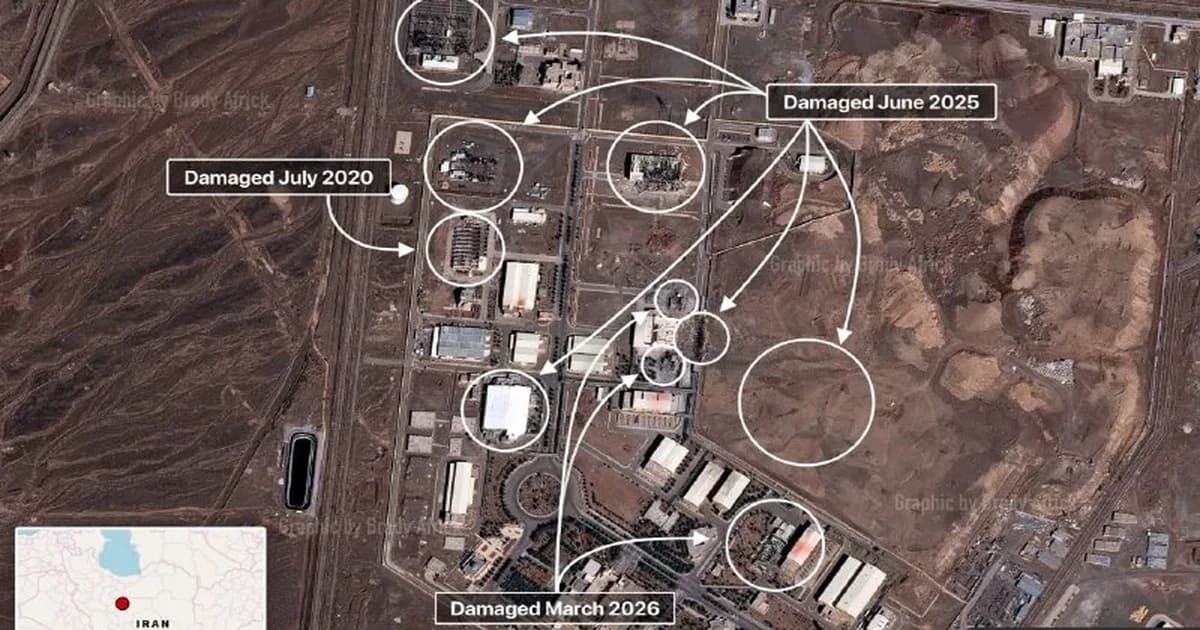
The cyber domain is now inseparable from kinetic conflict. Operation EPIC FURY in early 2026, for example, saw U.S. and allied forces targeting Iranian infrastructure using AI-augmented cyber tools designed to disable air defenses and disrupt command networks. The Forge, a defense analysis hub, describes AI as “transformative” in enabling real-time data analytics, psychological influence, and misinformation management.
AI’s role in cyber operations has also forced a redefinition of warfare itself. IBIMA’s 2026 analysis demonstrates that cyber operations are eroding the traditional authority of international law, as states increasingly use AI to wage deniable, persistent campaigns below the threshold of open conflict.
A recent peer-reviewed study on “The Role of Cyberattacks on Modern Warfare” highlights the “growing importance of cyberattacks in military doctrine,” with AI now a core component of both attack and defense.
Case Study: AI Targeting Gone Awry in the Iran Conflict (April 2026)
In the opening days of Operation EPIC FURY, U.S. forces relied heavily on AI-driven target recognition to prioritize Iranian missile sites and mobile command vehicles. According to sources familiar with the operation, Anthropic’s Claude AI—integrated with Palantir’s battlefield management platform—flagged dozens of targets based on real-time drone feeds. However, a sandstorm over southeastern Iran degraded video quality, triggering a cascade of false positives. Of the 30 highest-priority targets flagged by AI, post-strike analysis revealed that 6 were civilian vehicles, including two ambulances.
The incident, confirmed by internal DoD review, highlighted a critical vulnerability: the vendor had previously reported a 2% false positive rate under ideal conditions, but real-world performance in adverse weather spiked to 15%. This 7-fold increase was not disclosed in official after-action reports, and civilian casualties were initially attributed to “fog of war” rather than AI error. Only after subsequent media investigation did the Pentagon acknowledge the system’s limitations, prompting a belated review of battlefield AI accuracy metrics.
Analytical Framework: The “Incentive Capture Loop”
To assess the unique risks of AI in modern warfare, this article introduces the “Incentive Capture Loop” framework. This model identifies three reinforcing cycles:
- Contractual Capture: Contractors win a dominant share of AI development contracts, embedding their technology as the operational standard.
- Standard-Setting Capture: The same contractors participate in writing ethical, technical, and regulatory standards, often through advisory boards or white papers.
- Oversight Erosion: Feedback from battlefield incidents (e.g., targeting errors, civilian casualties) is filtered through the vendor’s reporting pipeline, leading to chronic underreporting of flaws and slow adoption of independent oversight.
The Loop is self-reinforcing: each cycle amplifies the contractor’s influence, reduces effective external scrutiny, and incentivizes rapid deployment over robust testing or ethical constraint. Historical analysis (e.g., Cold War computing firms, 2000s drone vendors) demonstrates that breaking this loop requires independent auditing, public transparency, and regulatory intervention from actors outside the vendor-military nexus.
Predictions and Outlook
PREDICTION [1/3]: By June 2027, at least one major U.S. military AI vendor will be publicly implicated in suppressing or misreporting battlefield AI error rates after a high-profile civilian casualty incident (65% confidence, timeframe: before June 2027).
PREDICTION [2/3]: The percentage of Pentagon AI contracts held by the top five commercial vendors will remain above 70% through 2028, reflecting persistent contractor dominance and regulatory inertia (70% confidence, timeframe: through December 2028).
PREDICTION [3/3]: Despite increased cyber threats, less than 35% of major U.S. critical infrastructure operators will implement AI-driven Zero Trust access controls by the end of 2027, leaving systemic vulnerabilities unaddressed (70% confidence, timeframe: by December 2027).
What to Watch
- Emergence of independent AI auditing bodies with real battlefield access
- Escalation of state-sponsored deepfake and disinformation attacks targeting military and civilian infrastructure
- Shifts in Pentagon procurement policy: watch for any cap or rotation on vendor involvement in both contracts and ethics standard-setting
- International calls for AI arms control or transparency regimes, especially after high-profile incidents
Historical Analog
This dynamic closely resembles the entrenchment of commercial computing firms in U.S. defense work during the 1950s-60s Cold War. IBM and RAND, for instance, provided both the technology (e.g., early mainframes for missile guidance) and the doctrine, shaping regulatory standards to align with their commercial interests. This symbiosis delayed independent oversight for decades, prioritized rapid deployment, and only began to break down after external shocks (e.g., the Vietnam antiwar movement, the ABM Treaty) forced greater transparency and arms control. Today, as commercial AI vendors write both the code and the rules of war, the risk is a repeat of this “military-first” design logic—leaving civilian safety and robust ethics an afterthought.
Counter-Thesis
The strongest argument against this article’s thesis is that commercial AI vendors, by virtue of their technical expertise and rapid innovation cycles, are best positioned to set realistic, pragmatic standards for battlefield AI—standards that government regulators or academics would lack the operational insight to create. Proponents claim that vendor involvement accelerates deployment of life-saving technologies (e.g., automated missile defense) and that the existing Defense Innovation Board process incorporates diverse perspectives, including ethicists and civil society representatives.
While this view acknowledges the need for operational expertise, it fails to account for the systemic incentives to underreport flaws and resist oversight. The Iran 2026 case—and historical analogs—demonstrate that without external, independent checks, vendor-dominated standard-setting consistently leads to underappreciated risk and lagging ethical reform.
Stakeholder Implications
Regulators/Policymakers: Mandate independent AI audit teams with battlefield access and reporting authority. Require all defense AI systems to undergo third-party red-teaming before deployment, and rotate vendor participation on ethics boards to prevent capture.
Investors/Capital Allocators: Prioritize funding for independent AI assurance and verification startups, as well as open-source AI security initiatives. Assess portfolio risk for firms overly reliant on opaque government contracts or exposed to potential regulatory backlash after incidents.
Operators/Industry: Adopt continuous AI performance monitoring and reporting, including adverse event disclosure. Implement Zero Trust cyber architectures and test all AI systems under degraded and adversarial conditions—not just vendor-provided benchmarks.
Frequently Asked Questions
Q: How is AI currently being used in modern military operations? A: AI is used for target recognition, drone swarm coordination, intelligence analysis, and cyber defense. Systems like Anthropic’s Claude AI have been deployed by U.S. defense teams to automate intelligence gathering and targeting, while AI-driven cyber tools support both offensive and defensive operations.
Q: What are the biggest risks of letting contractors set ‘ethical AI’ standards? A: When contractors both build military AI and write the ethical standards, they have strong incentives to downplay flaws, underreport civilian harm, and resist oversight. This creates a feedback loop where deployment outpaces safety checks and public accountability is weakened.
Q: Has AI in warfare already caused real-world harm? A: Yes. In the April 2026 Iran conflict, AI-driven target recognition systems misidentified civilian vehicles as military targets during a sandstorm, leading to civilian casualties. The error rates were 7x higher than claimed in vendor reports, illustrating the gap between ideal and real-world performance.
Q: How prepared are organizations for AI-enabled cyber threats like deepfakes? A: Preparedness remains low and is actually declining: unpreparedness for deepfake attacks among managers rose from 3% in 2024 to 21% in 2025, and among C-suite cyber leaders from 6% to 28%.
Q: What steps can be taken to ensure ethical deployment of AI in warfare? A: Independent auditing, mandatory third-party testing, and transparent reporting are essential. Regulators must prevent contractors from dominating both procurement and ethics standard-setting, and operators should test AI in real-world, adversarial conditions.
Synthesis
The integration of AI into modern warfare offers tactical speed and technical prowess—but without meaningful oversight, it entrenches a “contractor-first” logic that sidelines ethics and civilian safety. The current system, in which the same firms write both the code and the rules, mirrors historic episodes of regulatory capture and slow reform. Only deliberate, independent intervention can break this incentive loop and align military AI with democratic values and global security. The future of warfare—and civilian protection—depends on it.
Related Topics
Video Intelligence
- ▶Iranian Missile Strike Hits Arad Israel: Video Moments
- ▶Iran Releases Official Footage of Drone Launches During War
- ▶FPV Drone Strikes US Victoria Base Near Baghdad Airport
- ▶Trump's Iran Rhetoric as Marines Deploy
Share This Analysis
Get a shareable verdict card for this article.
Get the next one first
Free briefings when we publish major outlooks and forecasts. No spam — unsubscribe anytime.
Related Analysis

Strategic Impact of Turkey Leaving NATO in 2026
The Board · Feb 22, 2026

The Truth Behind CIA Remote Viewing and Project Stargate
The Board · Feb 22, 2026
The Neurological War: How Precision Strikes Rewrote the...
The Board · Mar 27, 2026

Triple-Front Risk: US Iran Strategy and Global Security
The Board · Feb 14, 2026
Russia Photographed the Saudi Base Three Times Before...
The Board · Mar 30, 2026
A Russian Drone Hit NATO Territory This Week
The Board · Mar 26, 2026
Trending on The Board

79 Years of UFO Lies, Roswell to the Pentagon
Defense & Security · Sep 29, 2026

How CENTCOM Is Brokering an Israel-Saudi Pact
Defense & Security · Sep 19, 2026

Why the Pentagon Pulled Its Iran War Plans Offline
Defense & Security · Sep 19, 2026
How a Stablecoin Funded Moldova's 2026 Election
Geopolitics · Sep 19, 2026

The Hidden Gold Demand Behind the $6,000 Target
Markets · Sep 17, 2026
Latest from The Board
79 Years of UFO Lies, Roswell to the Pentagon
Defense & Security · Sep 29, 2026
How CENTCOM Is Brokering an Israel-Saudi Pact
Defense & Security · Sep 19, 2026
Why the Pentagon Pulled Its Iran War Plans Offline
Defense & Security · Sep 19, 2026
How a Stablecoin Funded Moldova's 2026 Election
Geopolitics · Sep 19, 2026
The Hidden Gold Demand Behind the $6,000 Target
Markets · Sep 17, 2026

Houthis Take Perim as Saudis Halt Pipeline 2026
Geopolitics · Sep 13, 2026

Epstein Intelligence Ties: Evidence vs Allegation in 2026
Policy & Intelligence · Sep 6, 2026
What Israel-Iran War Games Got Wrong About 2026
Defense & Security · Sep 6, 2026