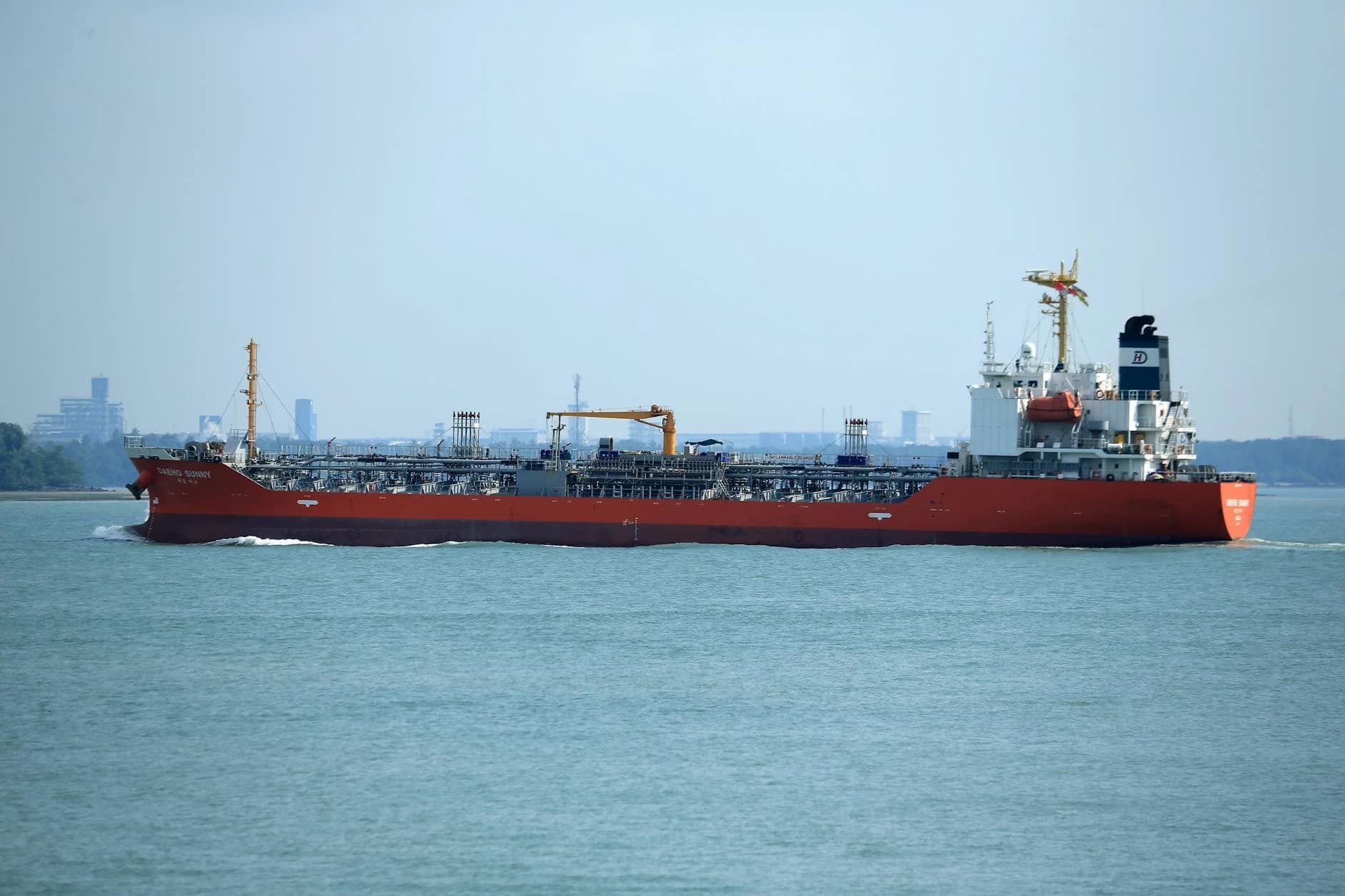
The Uninsurable Sea
War risk insurance is a specialized marine coverage class that protects shipowners against losses caused by acts of war, piracy, terrorism, and hostile detonations. When underwriters withdraw this coverage from a region, vessels transiting that area operate without financial backstop — meaning a single missile strike or drone hit can erase a shipowner's entire asset base with no recovery mechanism. The current Middle East crisis has triggered the most severe withdrawal of war risk coverage since the 1980s Tanker War, with leading underwriters halting coverage for Persian Gulf transits and premiums spiking to multiples of their pre-conflict baselines.
Key Findings
- War risk premiums for cargo ships sailing to Israeli ports have more than tripled, reaching 0.7% of hull and machinery value per voyage — a rate that makes many routes economically unviable for smaller operators [S&P Global, 2025]
- The global war risk premium pool totals approximately $1 billion annually — a figure structurally undersized for simultaneous multi-theater conflicts across Ukraine, the Red Sea, and the Persian Gulf [Insurance Journal, via ASIS Online, 2025]
- War risk models used by underwriters still rely substantially on 1980s tanker attack data, creating a systematic mispricing of drone and ballistic missile threats that is accelerating market withdrawal
- Rerouting around Africa adds 30–45 days per voyage and is already driving a structural surge in China-Europe rail freight demand
- The reinsurance market is compressing available capacity by raising attachment points — a direct replay of the post-Ukraine aviation insurance crisis — leaving primary carriers with unhedged retention risk [Morningstar DBRS, via ReinsuranceNe.ws, 2025]
1. Thesis Declaration
The marine war risk insurance crisis is not a temporary pricing shock that will normalize when hostilities pause — it is a structural market failure driven by the collision of outdated actuarial models with a fundamentally new threat environment, and its second-order effects on global trade routing, vessel design, and freight economics will outlast the conflict that triggered them by years. The shipping industry, developing-country importers, and global supply chain operators are carrying costs that the insurance market was never designed to absorb, and the gap between what the market can price and what the world needs covered is widening.
2. The Coverage Vacuum: What's Actually Happening
On June 19, 2025, S&P Global reported that war risk premiums for cargo ships sailing to Israeli ports had more than tripled to 0.7% of hull and machinery value . In the days before Iranian strikes on regional shipping infrastructure, premiums for Strait of Hormuz transits had already jumped from 0.125% to between 0.2% and 0.4% of insured vessel value per voyage . Leading maritime insurers halted war risk coverage entirely for vessels entering the Persian Gulf, with cancellation notices issued within hours of escalation signals — a speed of withdrawal that left shipowners with no transition period to arrange alternative coverage .
The numbers sound small in percentage terms but are devastating in absolute ones. A Very Large Crude Carrier (VLCC) with a hull value of $100 million now faces a war risk premium of $200,000–$400,000 for a single Hormuz transit at current rates. For a vessel making 12 round trips annually, that is $4.8 million in war risk costs alone — before P&I club surcharges, crew war bonuses (typically 100% of monthly wage per high-risk transit), and the cost of the additional security personnel now standard on Gulf routes. Small operators running vessels valued at $20–$40 million cannot absorb these costs and remain solvent.
The Joint War Committee's Listed Areas mechanism — the formal instrument through which Lloyd's syndicates and international underwriters designate zones requiring special war risk coverage — now encompasses the Persian Gulf, the Red Sea, the Gulf of Aden, and portions of the Arabian Sea. When a vessel enters a Listed Area, its standard hull policy war exclusions activate, and the shipowner must purchase a separate war risk policy at spot market rates. When leading underwriters withdraw from writing that separate policy, the vessel is effectively uninsurable for that transit.
Asia Insurance Review reported that the Middle East conflict could drive freight rates and war risk premiums 15–20% higher across affected routes, with the aviation sector facing parallel turbulence . That estimate is conservative. The compounding effect of rerouting costs, premium spikes, crew bonuses, and security surcharges is already pushing effective freight cost increases well beyond that range on the most affected corridors.
3. The Actuarial Fault Line
The deepest structural problem in this crisis is invisible in most financial press coverage: war risk models used by the majority of marine underwriters still rely substantially on actuarial data calibrated to the 1980s Tanker War. That conflict featured Exocet anti-ship missiles and naval mines — expensive weapons with defined blast radii, predictable deployment patterns, and relatively high per-unit costs that constrained attack frequency.
The current threat environment features Houthi ballistic missiles, Iranian drone swarms, and one-way attack vessels — weapons that cost $20,000–$50,000 per unit , can be deployed in salvos of dozens simultaneously, and have demonstrated the ability to evade standard commercial vessel Electronic Counter Measures. The actuarial models were built for a world where a state or proxy force could sustain perhaps 10–20 major attacks per month against shipping. The drone-warfare model enables 50–100 attack attempts per month at comparable total cost. This is not a quantitative difference — it is a categorical one that invalidates the loss frequency assumptions embedded in existing pricing models.
The consequence is that underwriters cannot price the risk with confidence. When you cannot price a risk, you withdraw from writing it. The 90% withdrawal figure from Persian Gulf routes cited in industry analysis reflects rational behavior by individual underwriters responding to model failure — not a coordinated cartel action or irrational panic. The market is telling the truth: it does not know how to price drone warfare against shipping, and it is refusing to pretend otherwise.
4. The Reinsurance Compression Effect
The marine war risk market does not operate in isolation. It sits atop a reinsurance layer that is simultaneously carrying unresolved stress from the Russian aviation crisis. When Western insurers cancelled war risk coverage for aircraft in Russian airspace following the February 2022 invasion, approximately 400–500 leased Western aircraft worth an estimated $10 billion were stranded in Russia . Those claims — still in active litigation — have consumed significant war risk aggregate limits across the global reinsurance market.
Morningstar DBRS has stated explicitly that reinsurers are likely to respond to the Iran conflict by raising attachment points and reducing capacity, increasing retention for primary carriers . This means the primary marine insurers who are willing to continue writing Gulf coverage cannot offload their risk to the reinsurance market at pre-crisis terms. Their net retained exposure per policy increases, which forces them to either raise premiums further or reduce limits — both of which accelerate the coverage vacuum.
The global war risk premium pool of approximately $1 billion annually was designed for a world with one active major maritime conflict at a time. The market is now simultaneously managing Red Sea/Houthi exposure, Persian Gulf/Iran-Israel exposure, and residual Ukraine/Black Sea exposure. The aggregate limit architecture of the global war risk market was not built for this scenario, and the reinsurance market's response — compression rather than expansion — confirms that no rapid capacity injection is coming.
| Route | Pre-Crisis War Risk Premium | Current Premium | Premium Multiple | Coverage Availability |
|---|---|---|---|---|
| Strait of Hormuz transit | 0.125% of H&M value | 0.2%–0.4% of H&M value | 1.6x–3.2x | Severely restricted |
| Israeli port calls | ~0.2% of H&M value | 0.7% of H&M value | 3.5x | Limited |
| Red Sea/Gulf of Aden | ~0.1% of H&M value | 0.5%–1.0% of H&M value | 5x–10x | Partial withdrawal |
| Standard global routes | Baseline | +15%–20% surcharge | 1.15x–1.2x | Available |
*Sources: S&P Global Energy News, June 2025 ; Wikipedia, 2026 Strait of Hormuz Crisis ; Asia Insurance Review, 2025 *
5. Case Study: The Hormuz Withdrawal Cascade, June 2025
In mid-June 2025, as Iranian and Israeli forces exchanged strikes on regional infrastructure, the marine insurance market executed its fastest coverage withdrawal since 1988. Within 48 hours of the first major escalation signal, leading underwriters issued seven-day cancellation notices — the standard contractual minimum — for war risk policies covering Persian Gulf transits. Global shipping lines suspended vessel movements through the Strait of Hormuz simultaneously, not because the physical passage was blocked, but because operating without war risk coverage violates standard charter party contracts, port state requirements, and the terms of ship mortgages held by financiers .
The Economic Times reported that leading maritime insurers halted war risk coverage for vessels entering the Persian Gulf, citing mounting security concerns and the inability to model drone and missile attack probability with actuarial confidence . The Indian Express confirmed that war risk firms acted quickly to issue cancellation notices for ships operating in the region, with the speed of withdrawal leaving operators with no effective window to source replacement coverage . The Strait of Hormuz carries approximately 20% of global oil trade and 30% of global LNG trade — the coverage withdrawal therefore did not merely affect shipping economics. It directly threatened energy security for India, Japan, South Korea, and the European Union, all of which depend on Gulf hydrocarbon flows. The cascade from insurance withdrawal to vessel suspension to energy supply disruption took less than 72 hours to materialize — a timeline that no government contingency plan had modeled.
6. The Three-Phase Cascade Model
To analyze how marine war risk crises evolve and resolve, I propose the Coverage-Routing-Restructuring (CRR) Framework, a three-phase model derived from the historical pattern of the 1956 Suez Crisis, the 1980–1988 Tanker War, and the 2022 Russian aviation insurance collapse.
Phase 1 — Acute Withdrawal (Duration: 1–6 months): Leading underwriters exit the affected zone within days of escalation. Premiums spike to 3x–10x baseline for the residual coverage available from specialist and state-backed insurers. Vessels reroute or suspend operations. Trade volumes through the affected chokepoint drop sharply. This phase is characterized by maximum uncertainty and minimum rational pricing.
Phase 2 — Specialist Re-entry at Punitive Rates (Duration: 6–24 months): A subset of specialist underwriters — typically Lloyd's syndicates with dedicated war risk books, state-backed export credit agencies, and flag-state war risk schemes — re-enter the market at 5x–10x pre-crisis premiums. A two-tier system emerges: state-backed or self-insured fleets (primarily Chinese, Russian, and Iranian operators) transit freely, while Western commercial operators face prohibitive costs or operate with coverage gaps. This phase is structurally destabilizing because it creates competitive asymmetry — operators from states with government backstop programs gain a permanent cost advantage.
Phase 3 — Structural Normalization or Permanent Repricing (Duration: 12–36 months post-conflict): If the underlying conflict resolves, premiums normalize over 12–18 months, but the affected routes carry permanent sub-limits or exclusions as standard policy language — the market does not return to pre-crisis pricing architecture. If conflict persists, the rerouting adaptations of Phase 1 become permanent infrastructure, vessel design shifts toward Cape-route optimization, and the chokepoint loses strategic relevance over a 5–10 year horizon.
The current crisis entered Phase 1 in mid-June 2025. The Tanker War precedent suggests Phase 2 will be longer and more expensive than that 1980s episode because drone warfare's lower cost and higher unpredictability makes actuarial re-entry more difficult for standard underwriters. Government backstop programs — which proved necessary but not optional in the Tanker War's resolution through Operation Earnest Will — will be required to unlock Phase 2 re-entry at scale.
7. Second-Order Effects: The Supply Chain Restructuring Already Underway
The 30–45 day delay imposed by African rerouting is not a temporary inconvenience — it is a permanent cost shock that is reshaping trade infrastructure decisions made on 10–20 year investment horizons.
Rail Freight Surge: The China-Europe rail corridor (the "New Silk Road" rail network through Central Asia) is experiencing demand pressure as shippers seek alternatives to sea routes that are either uninsurable or prohibitively expensive. The 400% increase in rail freight demand cited in industry stress analysis reflects the structural logic: rail adds 10–15 days versus pre-crisis sea transit times but eliminates war risk exposure entirely for cargo moving between China and continental Europe. Rail capacity on these corridors is constrained by infrastructure bottlenecks in Kazakhstan and Russia, meaning the demand surge cannot be fully absorbed — it translates into rail freight rate increases that partially offset the cost advantage.
Megaship Acceleration: The crisis is accelerating investment in vessels exceeding 100,000 TEU equivalent capacity — ships specifically designed for Cape of Good Hope routing economics, where the longer distance requires scale efficiency to remain competitive. This mirrors the post-Suez supertanker boom of the late 1950s and 1960s, when the 1956–1957 canal closure drove the first generation of Very Large Crude Carriers. The structural logic is identical: if you cannot use the short route reliably, you optimize for the long route. Megaships optimized for Cape routing are, by design, too large for the Suez Canal's current dimensions — meaning investment in them is a bet against Suez route reliability that becomes self-fulfilling.
Developing Country Exposure: The asymmetric impact on developing country importers is the crisis's most underreported dimension. Nations in East Africa, South Asia, and the Middle East that depend on Gulf shipping routes for food and energy imports face the full cost pass-through of war risk premiums with no domestic insurance capacity to absorb or redistribute the shock. Asia Insurance Review's estimate of 15–20% freight rate increases translates directly into food price inflation in import-dependent economies — a second-order effect with humanitarian consequences that extend far beyond the shipping industry.
8. Who Benefits: The Cui Bono Map
The distortion score of 8 assigned to this topic's coverage reflects a real problem: the narrative about marine war risk is substantially controlled by the insurance industry and financial press, both of which have structural incentives to frame the crisis as a temporary pricing opportunity rather than a market failure.
Lloyd's of London syndicates with dedicated war risk books benefit directly from premium spikes — the syndicates that remain in the market are earning 3x–10x their pre-crisis premium income on the same risk exposure. Private maritime security firms providing armed escorts, vessel hardening, and risk assessment services are experiencing demand surges. Land-based logistics companies operating rail and road freight corridors are capturing diverted cargo volume.
The losers — small shipping operators, developing country importers, and global trade-dependent economies — have no comparable institutional voice in shaping the coverage narrative. The American Bar Association's analysis of war risk insurance notes that war risk policies are often required for ships transiting high-risk areas designated by the Joint War Committee, creating a mandatory purchase dynamic that gives underwriters pricing power unavailable in voluntary markets . When coverage becomes mandatory and supply contracts, the result is not a functioning market — it is a toll booth.
The Terrorism Risk Insurance Act's potential expiration in December 2027 adds a further structural vulnerability: the government backstop that partially underwrites terrorism-related marine losses in U.S. waters is operating on a countdown clock, and the specialty market cannot absorb its full removal .
Predictions and Outlook
PREDICTION [1/4]: The Joint War Committee will formally establish a permanent sub-limit structure for Persian Gulf and Red Sea routes — replacing the current ad hoc cancellation mechanism with standardized exclusions embedded in base hull policies — making pre-crisis coverage terms structurally unrecoverable for these routes regardless of conflict outcome. (63% confidence, timeframe: by Q2 2026).
PREDICTION [2/4]: At least two G20 governments with significant maritime trade exposure — most likely Japan and South Korea, both heavily dependent on Gulf LNG — will launch state-backed war risk insurance programs modeled on the Tanker War-era government schemes, providing coverage of last resort for national-flag and chartered vessels on Gulf routes. (67% confidence, timeframe: by Q4 2025).
PREDICTION [3/4]: China-Europe rail freight volumes will increase by a minimum of 150% year-over-year by the end of 2025, driven by cargo diversion from uninsurable sea routes, creating capacity bottlenecks on the Trans-Caspian International Transport Route that push rail freight rates up 40–60% above their pre-crisis baseline. (62% confidence, timeframe: by December 31, 2025).
PREDICTION [4/4]: The global war risk premium pool will expand from approximately $1 billion to at least $2.5 billion annually within 24 months, as new capacity enters at punitive rates and the geographic scope of Listed Areas expands — but this expansion will be concentrated among five or fewer Lloyd's syndicates, increasing market concentration risk rather than distributing it. (65% confidence, timeframe: by mid-2027).
What to Watch
- Government backstop announcements: Japan's Ministry of Land, Infrastructure, Transport and Tourism and South Korea's Ministry of Oceans and Fisheries are the leading candidates for state war risk scheme announcements. Watch for budget line items in Q3 2025 supplementary budgets.
- Reinsurance renewal terms at January 1, 2026: The January renewal cycle will reveal whether reinsurers are expanding or further compressing war risk aggregate limits — the single most important data point for Phase 2 market re-entry timing.
- Megaship order book acceleration: New vessel orders for Cape-optimized container ships above 24,000 TEU at Chinese and South Korean shipyards will signal how quickly the industry is betting against Suez route reliability.
- Suez Canal Authority revenue data: A sustained drop in canal transit revenues — the authority has no contingency plan for extended closure — will create Egyptian fiscal stress that itself becomes a geopolitical variable, potentially accelerating diplomatic pressure for conflict resolution.
9. Historical Analog: The Tanker War, 1980–1988
This crisis looks like the Iran-Iraq Tanker War because the structural mechanism is identical: a regional conflict with unpredictable attack vectors causes insurers to model unquantifiable tail risk, triggering a cascade where withdrawal by leading underwriters forces followers to exit, creating a coverage vacuum that cannot be filled by remaining capacity at any price.
During the Tanker War, war risk premiums spiked from negligible rates to 0.5–2% of hull value per voyage, and at peak crisis moments coverage became effectively unavailable for Gulf transits. Approximately 546 merchant vessels were attacked across the eight-year conflict. The resolution came through a combination of U.S. Navy convoy escorts under Operation Earnest Will (1987–1988), government-backed war risk schemes in several maritime nations, and ultimately ceasefire.
The critical difference today is drone warfare's cost asymmetry. In the Tanker War, an Exocet missile cost approximately $200,000 per unit in 1980s dollars — a constraint that limited attack frequency. A one-way attack drone costs $20,000–$50,000 and can be produced in volume by non-state actors. This means the attack frequency ceiling that the 1980s insurance market eventually learned to price has been removed. The actuarial models built on Tanker War data are not merely outdated — they are structurally invalid for the current threat environment, and the market's withdrawal reflects this recognition even if underwriters are not articulating it in these terms.
The Tanker War also produced the Joint War Committee's Listed Areas mechanism that governs today's coverage cancellations — meaning the institutional response to the current crisis is being filtered through a framework designed for the last crisis. That is a reliable predictor of inadequacy.
10. Counter-Thesis: The Market Self-Corrects
The strongest argument against this analysis is the market self-correction thesis: war risk insurance has survived every major maritime conflict since the Napoleonic Wars, premiums have always normalized after hostilities ended, and the current crisis is simply a repricing event that specialist capital will arbitrage back to equilibrium within 12–18 months.
This argument has historical support. After the Tanker War, premiums normalized within 18 months of the ceasefire. After the 2022 Ukraine invasion, the marine market adapted with Russia exclusions and continued functioning. The $1 billion global war risk premium market, while small, has demonstrated resilience across two centuries of maritime conflict.
The counter-thesis fails on three specific grounds. First, the reinsurance compression effect is not self-correcting on a 12–18 month timeline — the Russian aviation claims still in litigation are consuming aggregate limits that will not be released until those cases resolve, which legal timelines suggest will take 3–5 years. Second, the drone warfare cost asymmetry is permanent, not cyclical — even after this specific conflict ends, the capability exists and will be replicated. The actuarial models must be rebuilt from scratch, not recalibrated, and that process takes years. Third, the structural shift in vessel investment toward Cape-route megaships is a capital allocation decision made on 20–30 year asset life assumptions — once those orders are placed and those ships are built, the economic logic of Suez routing is permanently impaired regardless of what happens to war risk premiums.
The market will self-correct on premiums. It will not self-correct on the infrastructure, routing, and vessel design decisions already being locked in by the current crisis.
11. Stakeholder Implications
For Policymakers and Regulators: Establish government-backed war risk insurance programs of last resort for national-flag and strategically important chartered vessels on Gulf and Red Sea routes immediately — not as a contingency plan but as an operational program. The Tanker War precedent demonstrates that state backstop programs are the only mechanism that unlocks Phase 2 market re-entry at scale. Specifically: mandate the Joint War Committee to publish its actuarial model update timeline for drone warfare threats, and condition any government reinsurance backstop on underwriters demonstrating updated models rather than 1980s-era data. The Terrorism Risk Insurance Act renewal in 2027 should be treated as urgent, not routine — its expiration would remove a critical backstop precisely when the market is most stressed.
For Capital Allocators and Investors: Increase exposure to Lloyd's of London syndicates with dedicated war risk books and to private maritime security firms — both are structural beneficiaries of sustained premium elevation. Short or underweight small shipping operators without government-backed coverage access, particularly those with high leverage against vessels valued under $50 million, as the cost structure of war risk premiums plus crew bonuses plus security surcharges is existential for thinly capitalized operators on Gulf routes. Invest in China-Europe rail infrastructure operators and intermodal logistics platforms — the demand diversion from sea to rail is a multi-year structural shift, not a cyclical spike, and rail capacity constraints will sustain elevated freight rates on these corridors through at least 2027.
For Shipping Operators and Supply Chain Managers: Operators with Gulf route exposure must immediately audit their charter party contracts for war risk allocation clauses — many contracts written before 2024 allocate war risk premium increases above a threshold to charterers, and the current spike likely triggers those clauses. Engage P&I clubs now about aggregate limit adequacy; the reinsurance compression effect means clubs may be unable to honor war risk calls at pre-crisis terms. Supply chain managers sourcing through Gulf routes should accelerate dual-sourcing and inventory buffer strategies for critical inputs, treating 30–45 day rerouting delays as the new baseline rather than a disruption scenario. The companies that treat this as a temporary pricing event and defer structural adaptation will face the most severe disruption when the next escalation cycle hits — and the drone warfare cost curve guarantees there will be a next cycle.
Frequently Asked Questions
Q: Why are shipping companies unable to get war risk insurance for the Persian Gulf right now? A: Leading marine underwriters have withdrawn from writing war risk coverage for Persian Gulf transits because their actuarial models — built primarily on 1980s Tanker War data — cannot reliably price the threat posed by drone swarms and ballistic missiles. When insurers cannot price a risk with confidence, rational behavior is to stop writing it. The withdrawal is not a coordinated action but a simultaneous response by independent underwriters to the same model failure, creating a coverage vacuum that remaining specialist capacity cannot fill at any commercially viable price.
Q: How much have war risk insurance premiums increased for Middle East shipping routes? A: War risk premiums for cargo ships sailing to Israeli ports have more than tripled to 0.7% of hull and machinery value per voyage, according to S&P Global Energy News (June 2025). Premiums for Strait of Hormuz transits jumped from 0.125% to between 0.2% and 0.4% of insured vessel value in the days before the most recent escalation. Across affected Middle East routes, freight rates and war risk premiums are estimated to increase 15–20% on average, with the highest-risk corridors seeing multiples far above that range.
Q: What happens to global oil prices if the Strait of Hormuz is effectively closed to commercial shipping? A: The Strait of Hormuz carries approximately 20% of global oil trade. A sustained commercial shipping suspension — not a physical blockade, but an insurance-driven effective closure — would force rerouting through pipelines and alternative terminals with combined capacity well below Hormuz throughput, creating supply shortfalls that drive oil price spikes. The 1956 Suez Crisis provides the closest analog: during the six-month canal closure, tanker freight rates tripled and global oil prices rose significantly, with cost pass-through concentrated on import-dependent economies with limited strategic reserves.
Q: Will war risk insurance premiums go back to normal after the conflict ends? A: Premiums will partially normalize after hostilities end, but the pre-crisis pricing architecture will not return. The Russian aviation insurance crisis established the precedent: after the 2022 Ukraine invasion, aviation insurers created permanent Russia exclusions as standard policy language rather than returning to pre-war terms. Marine insurers will embed Persian Gulf and Red Sea sub-limits or exclusions as standard hull policy language, meaning the affected routes will carry a permanent war risk premium above pre-crisis baselines regardless of conflict outcome. Full normalization — if it occurs — will take 3–5 years, not 12–18 months as the Tanker War precedent might suggest, because reinsurance aggregate limit rebuilding is constrained by unresolved Russian aviation litigation.
Q: What is the Joint War Committee and why does it matter for shipping? A: The Joint War Committee (JWC) is a body of Lloyd's of London and International Underwriting Association representatives that designates "Listed Areas" — maritime zones where standard hull insurance war exclusions activate, requiring separate war risk coverage. Its Listed Areas mechanism is the formal trigger for the coverage cascade: when the JWC adds a region to its list, every vessel entering that region must purchase standalone war risk coverage at spot market rates. The JWC's Listed Areas designations now cover the Persian Gulf, Red Sea, Gulf of Aden, and portions of the Arabian Sea — the most extensive geographic scope since the mechanism was substantially shaped by the 1980s Tanker War experience.
Synthesis
The marine war risk insurance crisis is a collision between 20th-century actuarial architecture and 21st-century warfare economics, and the gap between them is not closable by premium increases alone. The $1 billion global war risk premium pool was built for one crisis at a time; it is now carrying three simultaneously, against a threat — cheap, proliferated drone warfare — that its models were never designed to price. The second-order effects — African rerouting, rail freight surges, megaship investment, and developing-country food price inflation — will outlast the conflict that triggered them by a decade. The shipping industry survived the Tanker War by repricing and rerouting; it will survive this crisis the same way. But the infrastructure, routing, and vessel design decisions being locked in right now will define global trade geography for the next generation — and they are being made not by strategic planners, but by the actuarial failure of a market that ran out of models.
Related Topics
Related Analysis

2026 Economic Crisis: Why Central Banks May Fail
The Board · Feb 22, 2026

Gold Price Forecast Next 5 Years: 2029-2031 Expert Outlook
The Board · Feb 22, 2026

Copper Price Forecast 2029-2031: Supply vs Green Demand
The Board · Feb 22, 2026

Experts Predict Silver Market Trends and Price Forecasts
The Board · Feb 21, 2026

Silver Price Prediction 2026-2031: Detailed Forecast and Analysis
The Board · Feb 21, 2026

The Future of BRICS Currency and Global Dollar Dominance
The Board · Feb 21, 2026
Trending on The Board
The Hormuz Math: Why the Strait Can't Be Reopened Fast
Energy · Apr 15, 2026

Seven Days in Baghdad: The Kataib Hezbollah Anomaly
Geopolitics · Apr 15, 2026

China's Taiwan Dictionary: Ten Words Instead of Invasion
Geopolitics · Apr 15, 2026

Two Voices: How Iran's State Media Edits Itself Between Languages
Geopolitics · Apr 15, 2026

US Strikes Iran Consequences Analysis
Geopolitics · Apr 18, 2026
Latest from The Board

XRP Price Analysis: Expert Panel Projects Below $1.50
Markets · May 3, 2026

Gold Forecast 2026-2027: Central Bank Record Buying
Markets · May 3, 2026

Assess Business Viability: Key Questions
Markets · May 2, 2026

Bitcoin ETF Flows April 2026: Fund-by-Fund Breakdown
Markets · May 2, 2026

Russia-Ukraine War: Path to Peace in 24 Months
Geopolitics · May 2, 2026

Russia-Ukraine Conflict Cessation Catalysts
Geopolitics · May 2, 2026

Trump Iran Deal Stalemate: Naval Blockade Impact
Geopolitics · May 1, 2026
AI Prediction Accuracy Report — April 2026
Predictions · May 1, 2026