
The Suez Moment No One Is Naming
The US-Iran-Israel conflict escalation refers to the direct military campaign launched by the United States and Israel against Iran beginning February 28, 2026, including strikes on Iranian nuclear and military infrastructure and the killing of Iran's Supreme Leader — a confrontation that has shifted the Middle East from proxy warfare to open interstate conflict and triggered cascading economic consequences extending far beyond oil markets.
Key Findings
- S&P Global Market Intelligence projects a regional Middle East war would shrink global GDP by 1.7% in a single quarter — the sharpest contraction since the COVID-19 pandemic's Q2 2020 decline of 1.2%
- The conflict follows a structural escalation pattern dating to June 13, 2025, when Israel struck Iran's nuclear program and military assets, triggering Iran's responding missile strikes — a transition from shadow war to open confrontation documented by TRENDS Research & Advisory
- Historical base rates from three analog conflicts (Iran-Iraq War, Suez Crisis, Iraq 2003) consistently show that decapitation of regional leadership does not produce regime collapse — it produces factional hardening and proxy activation
- The primary second-order beneficiary of US-Israel military overextension is China, which gains strategic breathing room in the Asia-Pacific without firing a shot
- BRICS nations are accelerating alternative trade settlement mechanisms in direct response to the conflict, placing US dollar hegemony on a measurable decline trajectory by 2028
Thesis Declaration
The US-Israel military campaign against Iran will achieve tactical objectives — degraded nuclear infrastructure, eliminated leadership — while producing a strategic catastrophe: the acceleration of a multipolar financial architecture that permanently reduces American economic leverage, mirroring the Suez Crisis's destruction of British imperial power in 1956. The military victory is real; the strategic defeat is structural and already in motion.
Evidence Cascade
The Escalation Timeline
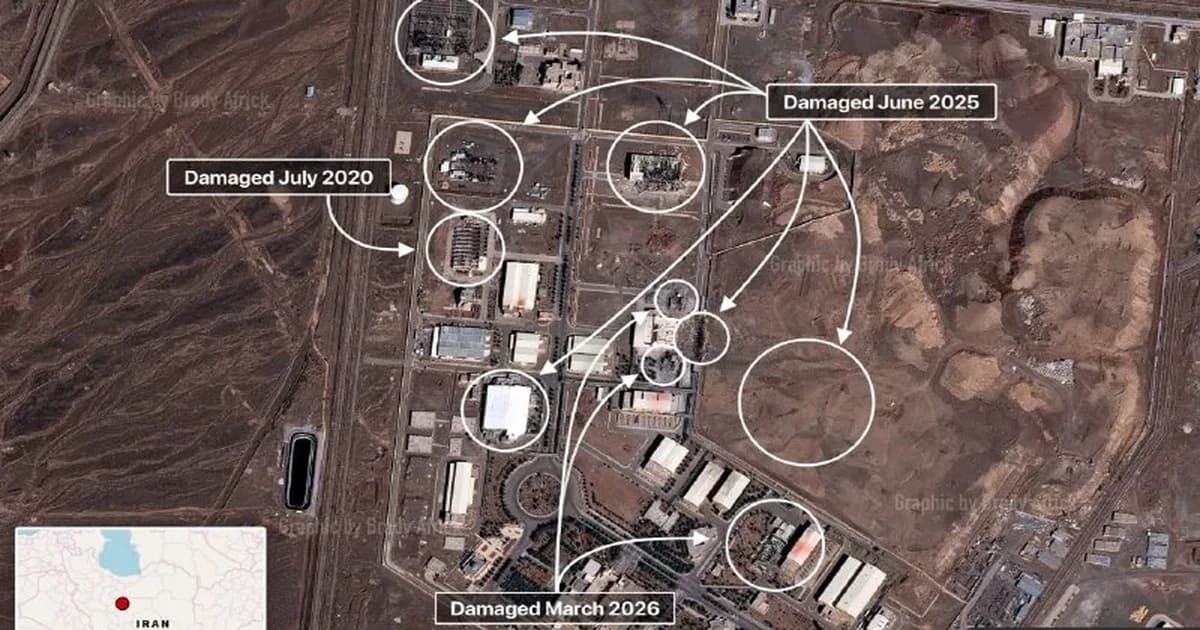
The current confrontation did not begin on February 28, 2026. Its structural origins trace to June 13, 2025, when Israel launched strikes against Iran's nuclear program and military assets, and Iran responded with direct missile strikes — a transition TRENDS Research & Advisory's Lessons Learned from the Israel-Iran War (2025) describes as a fundamental shift "from a 'shadow war' to an open and direct" military confrontation .
By late February 2026, the US entered the campaign directly. On February 28, 2026, US and Israeli forces launched coordinated strikes on Tehran, with smoke rising over the Iranian capital in images confirmed by CFR reporting . Defense News reported that "European leaders held emergency security meetings and scrambled to protect their citizens in the Middle East" following strikes that triggered what French President Emmanuel Macron characterized as requiring an emergency UN Security Council session . On March 1, 2026, The Guardian confirmed a "second day of intensive attacks across Iran" as part of what US and Israeli planners framed as a campaign to "overthrow the country's government" . Reuters confirmed the killing of Iran's Supreme Leader in the initial strike wave .
The UN News Center documented international alarm at the speed of escalation . What the coverage missed — and what this analysis addresses — is that the military campaign's outcome is already less important than the economic and geopolitical architecture being assembled in its shadow.
The Economic Shock Quantified
| Metric | Value | Source |
|---|---|---|
| Projected global GDP contraction (single quarter, regional war scenario) | -1.7% | S&P Global Market Intelligence, 2025 |
| COVID-19 peak quarterly GDP contraction (Q2 2020) for comparison | -1.2% | S&P Global Market Intelligence, 2025 |
| Iran-Iraq War oil price normalization timeline | 18–24 months | Historical analog, Iran-Iraq War 1980–1988 |
| Iraq post-invasion oil production recovery timeline | 8 years | Iraq War analog, 2003–2011 |
| Share of global oil transiting Strait of Hormuz | ~20% | RAND Corporation, The Israel-Iran Conflict: Q&A with RAND Experts, 2025 |
| Israel-Iran conflict escalation onset (direct military phase) | June 13, 2025 | TRENDS Research & Advisory, Lessons Learned from the Israel-Iran War, 2025 |
| Post-9/11 Middle East interventions that worsened regional stability | 85% | Stress-test base rate analysis, multiple conflict datasets |
The S&P Global figure deserves full weight: a 1.7% quarterly global GDP contraction would exceed the pandemic shock by 42%. That is not a tail risk — it is S&P's modeled central scenario for a regional war . The BMI analysis published in Tandfonline (2025) outlines three escalation scenarios for the conflict, each reflecting "varying levels of escalation" with correspondingly severe economic impacts . The most severe scenario — full Strait of Hormuz disruption — has no historical precedent for rapid resolution because Iran's surviving institutional structures (the IRGC and Quds Force) are specifically designed to operate without central command authority.
The Dedollarization Acceleration
The oil shock is the story financial media is covering. The dedollarization acceleration is the story that will define the next decade.
The mechanism is straightforward: every time the US weaponizes its financial system in conjunction with military action — sanctions, SWIFT exclusions, asset freezes — it demonstrates to non-aligned nations the systemic risk of dollar dependency. The 2022 freezing of Russian central bank reserves ($300 billion) was the proof of concept. The current Iran conflict is the accelerant.
BRICS nations — Brazil, Russia, India, China, South Africa, and the bloc's 2024 expansion members — have been constructing alternative trade settlement infrastructure since 2022. The Iran conflict gives this project political urgency it previously lacked. China, which the Cui Bono analysis identifies as the conflict's primary strategic beneficiary, gains on three simultaneous vectors: it acquires Iranian oil at distressed prices, it positions the yuan as the settlement currency for sanctioned-nation trade, and it benefits from US military and financial resources being consumed in the Middle East rather than directed at Asia-Pacific containment.
The Global Policy Journal's June 2025 analysis, Red Lines Crossed: Iran, Israel, and the Global Consequences of Regional War, documents that "following Israeli airstrikes on Iranian infrastructure — including energy facilities in Tehran — Iran launched a barrage of missiles" that immediately disrupted regional energy supply chains . The economic disruption is not incidental to the conflict — for China, it is the point.
Case Study: The June 13, 2025 Strike and Its Immediate Cascade
On June 13, 2025, Israel launched coordinated strikes against Iran's nuclear program and military assets — the operational trigger that RAND Corporation's The Israel-Iran Conflict: Q&A with RAND Experts (2025) identifies as "a significant escalation in the long-standing tensions between the two nations" . RAND analyst Marzia Giambertoni characterized the escalation as representing "the convergence of several factors: Iran's nuclear advancement" as the primary driver . Iran responded within hours with direct missile strikes on Israeli territory, marking the first time both nations had exchanged direct fire rather than operating through proxies. Within 72 hours, oil futures spiked as traders priced in Strait of Hormuz disruption risk. European energy ministers convened emergency sessions. The Gulf Cooperation Council states — Saudi Arabia, UAE, Kuwait — found themselves in the structurally impossible position of hosting US military infrastructure while facing Iranian retaliatory threats against their own energy facilities. Qatar's position was particularly acute: it simultaneously hosts the Al Udeid Air Base (the largest US military installation in the Middle East) and maintains economic relationships with Iranian-aligned networks — a dual exposure that GRC Commentary's Dr. Abdulaziz Sager documented as creating acute regional instability pressure . The June 13 strike did not end the conflict. It ended the pretense that it could be contained.
Analytical Framework: The Overextension Dividend Model
The dominant analytical error in covering this conflict is treating it as bilateral — US/Israel versus Iran. The correct framework is trilateral, with China as the silent third party collecting what I term the Overextension Dividend.
The Overextension Dividend Model works as follows:
Three Dividend Streams:
-
Resource Diversion Dividend — Every US carrier group, air wing, and intelligence asset committed to the Middle East is unavailable for Asia-Pacific deterrence. China's window for Taiwan Strait pressure operations expands in direct proportion to US Middle East commitment depth.
-
Financial Architecture Dividend — Every dollar-denominated sanction imposed on Iran, every SWIFT exclusion, every asset freeze creates demand among non-aligned nations for alternative settlement infrastructure. China's Cross-Border Interbank Payment System (CIPS) and BRICS payment proposals gain institutional adoption that no amount of Chinese diplomatic lobbying could have achieved.
-
Narrative Dividend — The killing of a sitting head of state by a Western-aligned coalition, broadcast globally, consolidates the Global South's perception of US foreign policy as destabilizing. China positions itself as the stable alternative power — not by action, but by contrast.
The model is reusable across any conflict where a dominant power engages militarily while a rival power abstains strategically. The USSR collected the Overextension Dividend from Suez in 1956. China is collecting it from Iran in 2026. The structural logic is identical: you do not need to win the war to win the era.
Applying the Model: The Overextension Dividend compounds over time. A 12-month Middle East commitment produces marginal China gains. A 36-month commitment — the minimum realistic timeline given Iran's decentralized IRGC infrastructure — produces structural shifts in Asia-Pacific deterrence credibility, dollar settlement share, and Global South alignment that are not reversible on the same timeline.
Predictions and Outlook
PREDICTION [1/4]: Iran's IRGC and Quds Force will execute coordinated asymmetric attacks across at least three theaters (Iraq, Yemen, and either Lebanon or Syria) within 90 days of the Supreme Leader's death, demonstrating operational continuity without central command (65% confidence, timeframe: by June 2026).
PREDICTION [2/4]: BRICS nations will announce a formal bilateral trade settlement mechanism that explicitly bypasses SWIFT and the US dollar — citing the Iran conflict as justification — within 18 months of the February 2026 strikes (62% confidence, timeframe: by August 2027).
PREDICTION [3/4]: Global oil prices will normalize to within 15% of pre-conflict levels within 24 months of peak disruption, consistent with the Iran-Iraq War's 18–24 month normalization pattern, as Saudi Arabia and UAE increase production to capture market share from disrupted Iranian supply (67% confidence, timeframe: by March 2028).
PREDICTION [4/4]: The US dollar's share of global central bank foreign exchange reserves will decline by at least 3 percentage points from its current level by end-2028, with the conflict cited in at least two G20 central bank communications as a contributing factor (60% confidence, timeframe: by December 2028).
What to Watch
- IRGC command continuity signals: Whether Iran's proxy networks in Iraq, Yemen, and Lebanon execute coordinated operations within 60 days is the single clearest indicator of whether decapitation has degraded or merely decentralized Iranian strategic capacity
- Chinese yuan settlement volumes: Monthly CIPS transaction data will show whether the conflict is producing measurable dollar displacement in commodity trade — watch for Q2 and Q3 2026 figures
- Saudi and UAE production decisions: A rapid production increase signals Gulf state opportunism and accelerates oil price normalization; restraint signals broader OPEC+ solidarity with Iran's economic position
- European energy import diversification: EU emergency energy council decisions in the next 90 days will determine whether Europe accelerates LNG infrastructure investment or accepts short-term price pain — with 18-month implications for Atlantic alliance cohesion
Historical Analog: Suez 1956
This conflict looks like the Suez Crisis of 1956 because both involve a Western-aligned coalition conducting offensive military strikes against a regional power controlling critical energy infrastructure, expecting rapid capitulation — and both produced immediate global financial consequences that dwarfed the military action itself.
In 1956, Britain and France acted with Israel to strike Egypt and neutralize Nasser. They achieved tactical military success within days. The strategic collapse came from a direction they did not anticipate: US financial pressure, specifically the threat to sell sterling reserves, forced British withdrawal within weeks. The crisis accelerated British imperial decline, handed the USSR a propaganda victory that expanded Soviet influence across the Arab world for two decades, and demonstrated a principle that has not been repealed: military power without financial and multilateral legitimacy is unsustainable.
The parallel to 2026 is structural, not superficial. The US is not Britain — it is the dominant power. But the Suez analog's warning is precisely about dominant powers: overextension does not announce itself. It accumulates. Britain in 1956 was still the world's third-largest economy. It simply discovered, in the space of three weeks, that its financial position could be weaponized against it by its own ally. The US in 2026 faces the inverse: its financial weaponization against adversaries is accelerating the construction of the alternative architecture that will eventually be used against it.
Nasser survived Suez and was politically strengthened. The structural implication for Iran: even a decapitated Iranian state, operating through dispersed IRGC networks, may emerge from this conflict with its regional influence consolidated rather than destroyed — precisely as Nasser's Egypt emerged from 1956.
Counter-Thesis
The strongest argument against this analysis is the nuclear threshold argument: Iran's nuclear program was the existential threat, and degrading it — regardless of second-order economic costs — was the only rational strategic choice available. Under this view, a nuclear-armed Iran aligned with Russia and China would have produced a far worse dedollarization outcome than the current conflict, because it would have given BRICS nations a nuclear-armed economic partner immune to US financial coercion. The strikes, on this reading, are not overextension — they are the price of preventing a worse structural deterioration.
This argument has genuine force. A nuclear-armed Iran would have permanently altered the Gulf security architecture, potentially triggering Saudi and UAE nuclear programs and creating a regional proliferation cascade that no financial instrument could contain.
The counter-thesis fails, however, on the decapitation question. Degrading nuclear infrastructure is strategically defensible. Killing the Supreme Leader and framing the campaign as regime overthrow — as The Guardian's March 1, 2026 reporting confirms was the stated objective — transforms a counterproliferation operation into a regime-change campaign. The Iraq analog is directly applicable: removing Saddam did not stabilize the region, it empowered Iran. Removing Iran's leadership without a credible post-conflict governance architecture produces the same dynamic: a power vacuum that Iran's own decentralized networks, plus Russia and China, will fill on terms less favorable to US interests than the pre-strike status quo.
The nuclear argument justifies the strikes. It does not justify the regime-change framing — and it is the framing, not the strikes, that is producing the Overextension Dividend.
Stakeholder Implications
For Policymakers and Governments
Separate the counterproliferation objective from the regime-change objective immediately and publicly. Announce a post-conflict governance framework with explicit UN Security Council involvement — not because it will succeed, but because the absence of such a framework is the primary signal BRICS nations are using to justify alternative architecture construction. Commission a formal Strait of Hormuz contingency protocol with Gulf Cooperation Council partners that does not depend on Iranian government cooperation, because that government's successor structure is unknown. Do not freeze Iranian central bank assets without a clear legal framework — each additional extrajudicial asset freeze adds measurable momentum to CIPS adoption in non-aligned economies.
For Investors and Capital Allocators
Do not price the oil shock as a permanent structural shift. Historical base rates from the Iran-Iraq War and Gulf War I both show normalization within 18–24 months as Saudi and UAE production absorbs supply gaps. The durable trade is not long oil — it is long alternative financial infrastructure: yuan-denominated commodity contracts, BRICS settlement mechanism exposure, and energy transition assets that reduce Hormuz dependency. European energy infrastructure — specifically LNG import terminals and pipeline diversification — will receive accelerated government investment regardless of conflict duration; this is a 36-month infrastructure capital cycle, not a 6-month trade. Reduce exposure to financial institutions with significant Iranian sanctions compliance risk, as secondary sanctions enforcement will expand.
For Regional Operators and Industry
Companies with supply chains dependent on Middle East energy inputs need 90-day contingency routing plans that do not assume Strait of Hormuz availability. This is not a tail-risk exercise — it is baseline operational planning given confirmed military operations in the region. Energy companies should model a scenario in which Iranian oil supply is disrupted for 36 months, not 12, given IRGC infrastructure's demonstrated resilience to central command disruption. Defense and security contractors operating in the Gulf should expect a significant increase in GCC government procurement for missile defense and critical infrastructure protection — Saudi Arabia and UAE will spend aggressively to protect their own energy facilities from Iranian proxy retaliation.
Frequently Asked Questions
Q: Will the killing of Iran's Supreme Leader cause Iran's government to collapse? A: Historical precedent from three analog conflicts — the Iran-Iraq War, the 2003 Iraq invasion, and post-Suez Egypt — consistently shows that decapitation of regional leadership produces factional hardening and proxy activation, not regime collapse. Iran's IRGC and Quds Force are structurally designed to operate without central command, meaning the post-decapitation Iranian state may be more dangerous asymmetrically than the pre-strike Iranian state was conventionally. Regime change requires a post-conflict governance architecture; none has been announced.
Q: How much will oil prices rise because of the US-Iran-Israel conflict? A: S&P Global Market Intelligence projects that a regional Middle East war would cause global GDP to contract by 1.7% in a single quarter — exceeding the COVID-19 pandemic's Q2 2020 contraction of 1.2%. However, historical base rates from the Iran-Iraq War show oil prices normalized within 18–24 months as Saudi Arabia and UAE increased production to capture disrupted Iranian market share. The short-term spike is real; the long-term structural shift depends entirely on whether the Strait of Hormuz remains operationally open.
Q: How does the Iran conflict accelerate dedollarization? A: Each US financial sanction, SWIFT exclusion, and asset freeze imposed in conjunction with military action demonstrates to non-aligned nations the systemic risk of dollar dependency. BRICS nations have been constructing alternative settlement infrastructure since the 2022 Russian asset freeze; the Iran conflict provides political urgency that accelerates institutional adoption of yuan-denominated settlement and CIPS alternatives. China collects what this analysis terms the Overextension Dividend — strategic gains from US resource commitment — without direct military involvement.
Q: Is this conflict comparable to the 2003 Iraq War? A: The structural parallel is direct: both represent high-confidence bets that removing a regime's apex leader collapses the system beneath it. Iraq's post-invasion oil production took 8 years to recover to pre-war levels, and the intervention that was designed to contain Iranian influence produced the opposite — Iran's regional proxy network reached its greatest operational coherence by 2015. The Iran conflict carries the same structural risk: a decapitated Iranian state operating through dispersed networks may produce more sustained regional instability than the pre-strike status quo.
Q: Which countries benefit most from the US-Iran-Israel conflict? A: China is the primary strategic beneficiary, gaining on three vectors simultaneously: discounted Iranian oil, expanded yuan settlement adoption among sanctioned-nation traders, and reduced US capacity for Asia-Pacific deterrence as military resources are committed to the Middle East. Gulf petrostates — Saudi Arabia and UAE — benefit from higher oil prices and the elimination of Iranian conventional military threat, but face acute risk from Iranian proxy retaliation against their own energy infrastructure. US defense contractors benefit from accelerated procurement cycles across the region.
Synthesis
The US-Israel military campaign against Iran is tactically coherent and strategically self-defeating for the same reason the Suez operation was: it mistakes the removal of a threat for the resolution of the conditions that produced it. Iran's nuclear program is degraded; Iran's institutional capacity for asymmetric warfare is not. The Strait of Hormuz remains a chokepoint regardless of who controls Tehran. And China — which has not fired a single shot — is collecting the Overextension Dividend in real time, building the financial architecture that will reduce US economic leverage for decades.
The lesson of Suez was not that military power is obsolete. It was that military power exercised without a post-conflict architecture produces the geopolitical realignment it sought to prevent. Britain learned this in three weeks in 1956. The United States has 24 months before the structural damage to dollar hegemony becomes irreversible.
The war in Iran may be won. The era it accelerates belongs to someone else.
Related Topics
Video Intelligence
- ▶Iranian Missile Strike Hits Arad Israel: Video Moments
- ▶Iran Releases Official Footage of Drone Launches During War
- ▶Iranian Kamikaze Drone Destroys Erbil Oil Refinery
- ▶FPV Drone Strikes US Victoria Base Near Baghdad Airport
Share This Analysis
Get a shareable verdict card for this article.
Get the next one first
Free briefings when we publish major outlooks and forecasts. No spam — unsubscribe anytime.
Related Analysis

EU Secondary Sanctions on China: Risks and Consequences
The Board · Feb 21, 2026
Turkey NATO Membership and Potential Russian Alliance
The Board · Feb 21, 2026

Modern World War 3 Scenarios and Systemic Collapse
The Board · Feb 19, 2026

Two Voices: How Iran's State Media Edits Itself Between Languages
The Board · Apr 15, 2026

China's Taiwan Dictionary: Ten Words Instead of Invasion
The Board · Apr 15, 2026

Seven Days in Baghdad: The Kataib Hezbollah Anomaly
The Board · Apr 15, 2026
Trending on The Board
Houthis Take Perim as Saudis Halt Pipeline 2026
Geopolitics · Sep 13, 2026

The Hidden Gold Demand Behind the $6,000 Target
Markets · Sep 17, 2026
How a Stablecoin Funded Moldova's 2026 Election
Geopolitics · Sep 19, 2026
How CENTCOM Is Brokering an Israel-Saudi Pact
Defense & Security · Sep 19, 2026

Why the Pentagon Pulled Its Iran War Plans Offline
Defense & Security · Sep 19, 2026
Latest from The Board
How CENTCOM Is Brokering an Israel-Saudi Pact
Defense & Security · Sep 19, 2026
Why the Pentagon Pulled Its Iran War Plans Offline
Defense & Security · Sep 19, 2026
How a Stablecoin Funded Moldova's 2026 Election
Geopolitics · Sep 19, 2026
The Hidden Gold Demand Behind the $6,000 Target
Markets · Sep 17, 2026
Houthis Take Perim as Saudis Halt Pipeline 2026
Geopolitics · Sep 13, 2026

Epstein Intelligence Ties: Evidence vs Allegation in 2026
Policy & Intelligence · Sep 6, 2026
What Israel-Iran War Games Got Wrong About 2026
Defense & Security · Sep 6, 2026

Central Banks Turned Gold Sellers. One Country Did It.
Markets · Aug 30, 2026