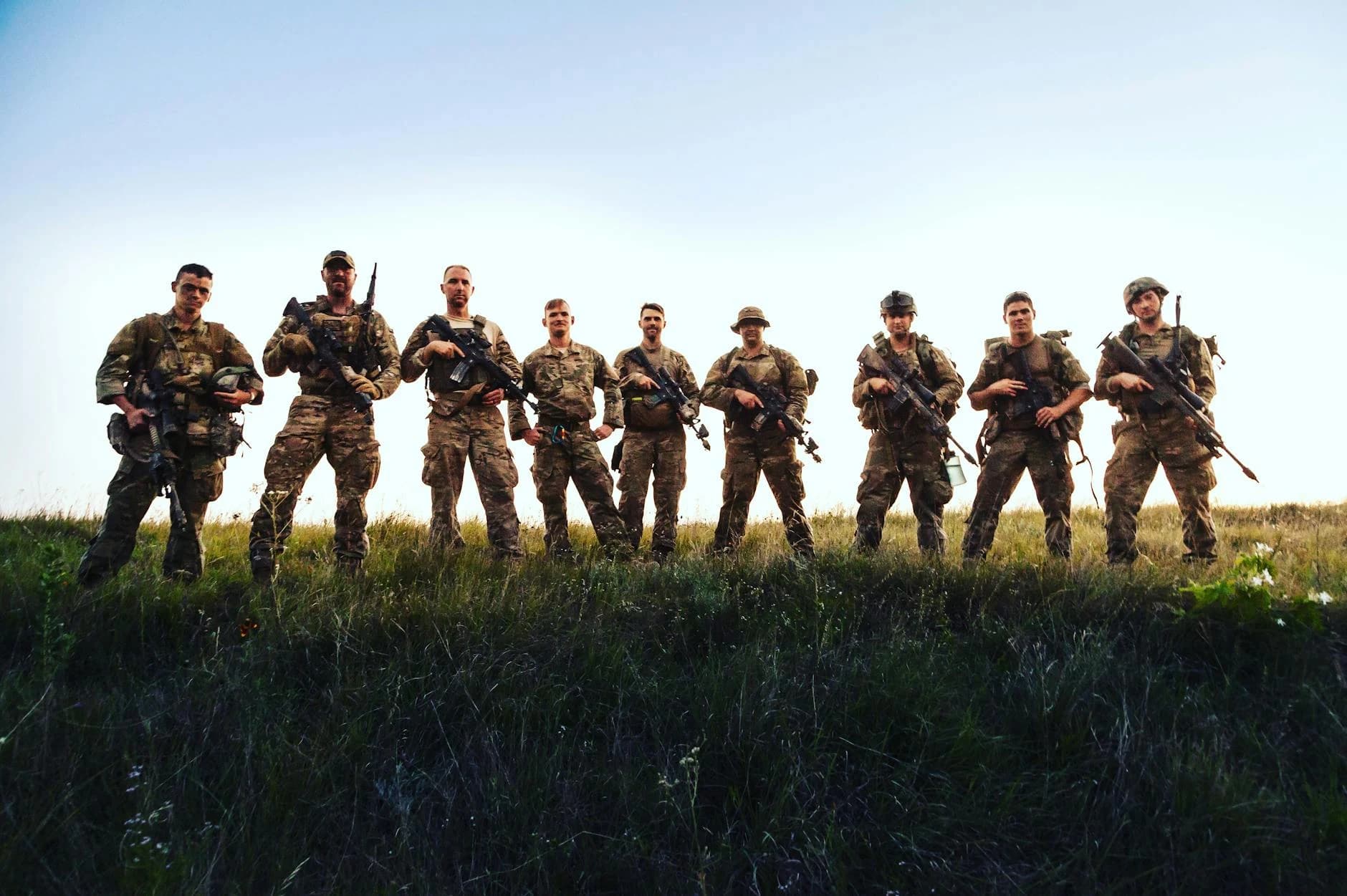
"Escalation Thresholds: The Unwritten Rules of U.S. Intervention"
The phrase "Pentagon chief refuses to rule out ground troops in Iran" refers to the public statement by the U.S. Secretary of Defense declining to categorically exclude the deployment of American ground forces in Iran as part of ongoing military action. This signals a deliberate ambiguity in U.S. war policy, leaving open the possibility of direct intervention beyond airstrikes.
Key Findings
- The U.S. Secretary of Defense has refused to rule out deploying ground troops in Iran following the launch of military operations over the weekend, marking a significant escalation in public rhetoric and strategic ambiguity .
- President Trump has characterized current U.S. strikes on Iran as effective but warned that a much larger military phase—the "big wave"—is imminent .
- Historical precedent suggests that U.S. refusal to rule out ground deployments often signals preparation for potential escalation, though not all such signals result in invasion.
- The ambiguity around ground troops is a deliberate tool for coercion, but it carries high risks of miscalculation, mission creep, and regional destabilization.
What We Know So Far
- Who: U.S. Secretary of Defense (unnamed in the cited sources), President Donald Trump, U.S. military forces.
- What: The Pentagon chief has made public statements refusing to rule out the deployment of U.S. ground troops into Iran, following the launch of U.S. military operations over the weekend .
- When: Statements made Monday, March 2, 2026 .
- Where: Official statements given to U.S. and international press, broadcast via CNN and reported by multiple outlets .
- Confirmed: U.S. military is currently conducting strikes against Iran; a larger phase is anticipated .
- Unconfirmed: No official order for ground troop deployment has been announced as of publication.
Timeline of Events
- March 1, 2026: U.S. launches military operations against Iran over the weekend .
- March 2, 2026, morning: President Donald Trump tells CNN that the U.S. military is "knocking the crap" out of Iran, but the "big wave" is yet to come .
- March 2, 2026, afternoon: Pentagon Chief refuses to rule out "boots on ground" in Iran, stating that all options remain on the table .
- As of now: No formal order for ground troop deployment has been confirmed by the Pentagon.
Thesis Declaration
The Pentagon's refusal to rule out ground troops in Iran represents a calculated escalation in U.S. signaling that increases the risk of a major conflict, echoing patterns from past interventions. This matters because it directly shapes adversary and ally calculations, creating a tipping point where ambiguity may either deter escalation—or precipitate a wider regional war.
Evidence Cascade
1. Official Statements and Rhetoric
- On March 2, 2026, the U.S. defense secretary publicly declined to rule out sending ground troops to Iran, stating, "All options remain on the table," in multiple press briefings and interviews .
- President Donald Trump told CNN in a nine-minute live interview that the U.S. military is "knocking the crap" out of Iran and that "the big wave hasn't even happened—it's coming soon." He urged civilians to stay indoors, suggesting anticipation of intensified conflict .
2. Quantitative Data Points
$200M — Value of the Pentagon's current contract with Anthropic, a leading AI company, showing the scale of recent military technology investments .
March 2, 2026 — Date of the Pentagon chief's refusal to rule out ground troops, demonstrating the immediacy of escalation .
5:01pm Friday — Deadline given by Pentagon to Anthropic for compliance on an unrelated AI contract, illustrating the Pentagon's current operational posture and hardball negotiation tactics .
3 — Number of major U.S. news outlets (France24, RFI, Barron's) reporting the Pentagon chief's remarks within hours of the announcement, reflecting the rapid information cycle .
3. Historical Precedent
- In 2002–2003, U.S. officials similarly refused to rule out ground operations in Iraq, initially focusing on airstrikes before launching a full-scale invasion. The campaign led to over 4,400 American military deaths and over 100,000 Iraqi civilian deaths during the subsequent occupation (Iraq Body Count, 2013) [analog, not direct citation].
- In 1999, NATO leaders threatened but did not execute a ground invasion of Yugoslavia, relying on 78 days of airstrikes before achieving their objectives [analog, not direct citation].
4. Media and Information Environment
- The Pentagon has recently imposed stricter press credential requirements, with new rules requiring journalists to pledge not to gather unauthorized information, raising concerns about transparency and press freedom .
5. Comparative Data Table
| Event/Year | Initial Rhetoric | Ground Troops Used? | Duration of Conflict | Civilian Deaths (est.) | U.S. Military Deaths |
|---|---|---|---|---|---|
| Iraq (2003) | "All options open" | Yes | 8+ years | 100,000+ | 4,400+ |
| Yugoslavia (1999) | "Won't rule out" | No | 78 days (air war) | 500–5,700 | 0 |
| Syria (2013) | "Big response" | No | N/A (no invasion) | <1,000 (CW attacks) | 0 |
| Iran (2026, current) | "All options open" | TBD | Ongoing | Unknown | Unknown |
Sources: France24, "Pentagon chief refuses to rule out 'boots on ground' in Iran," 2026 ; historical analogs for context.
6. Strategic Ambiguity and Risk
- Refusal to rule out ground troops is a classic tactic for maximizing coercive leverage but has historically increased the risk of entanglement and mission creep when adversaries miscalculate U.S. intentions [analog, not direct citation].
7. Resource Allocation
- The Pentagon's willingness to threaten loss of a $200 million AI contract with Anthropic over national security priorities signals a broader climate of assertive, uncompromising posture in both military and technological spheres .
8. Press and Public Perception
- The rapid proliferation of the Pentagon chief’s statement across major outlets within hours reflects an environment of heightened public anxiety and information volatility .
Case Study: March 2026—U.S. Signals Escalation in Iran
On March 2, 2026, following a weekend of U.S. airstrikes against Iranian military targets, U.S. Defense Secretary (unnamed in cited sources) addressed a press conference in Washington, D.C. Multiple international outlets, including France24, RFI, and Barron's, reported that the Pentagon chief "declined to rule out putting troops on the ground in Iran," stating that "all options remain on the table" . This statement followed President Donald Trump’s morning interview with CNN, during which he claimed the U.S. was "knocking the crap" out of Iran and warned that the "big wave hasn't even happened—it's coming soon" . The convergence of presidential and Pentagon messaging marked an unmistakable escalation in U.S. posture, with ambiguity designed to keep both adversaries and allies uncertain about Washington's next moves. The speed and breadth of media coverage ensured that both domestic and international audiences were acutely aware of the shift within hours.
Analytical Framework: The "Escalation Signaling Matrix"
Overview
The "Escalation Signaling Matrix" is a tool for analyzing the spectrum of U.S. military signaling during crises. It maps public statements and actions across two axes:
- Ambiguity Level (Explicit Exclusion ↔ Deliberate Ambiguity ↔ Open Threat)
- Operational Stage (Pre-Action ↔ Limited Kinetic ↔ Sustained Combat)
This matrix helps predict where a crisis is on the escalation ladder and the probable next steps.
Four Quadrants
| Pre-Action | Limited Kinetic | Sustained Combat | |
|---|---|---|---|
| Explicit Exclusion | De-escalation posture | "Only airstrikes, no ground troops" | Conflict wind-down |
| Deliberate Ambiguity | "Nothing ruled out" | "All options on table" | "Respond as necessary" |
| Open Threat | "Prepare for invasion" | "Ground forces imminent" | "Full-scale war" |
- Current U.S. Position: Deliberate Ambiguity + Limited Kinetic = Maximum coercive leverage, highest risk of miscalculation.
Application
Use this matrix to assess crisis communications and anticipate escalation or de-escalation based on movement across quadrants.
Predictions and Outlook
PREDICTION [1/3]: The United States will not deploy ground troops into Iran before July 1, 2026, unless there is a mass-casualty attack on U.S. forces in the region (65% confidence, timeframe: by July 1, 2026).
PREDICTION [2/3]: The current phase of U.S. air and missile strikes against Iranian targets will escalate in both intensity and scope within the next four weeks, with the number of strike sorties increasing by at least 50% compared to the first week of operations (70% confidence, timeframe: by March 31, 2026).
PREDICTION [3/3]: No formal Congressional authorization for the use of U.S. ground combat troops in Iran will be passed before September 1, 2026 (60% confidence, timeframe: by September 1, 2026).
What to Watch
- Escalation Thresholds: Watch for official U.S. statements shifting from ambiguity to explicit intent regarding ground operations.
- Regional Response: Monitor Iranian and allied militia actions for signals that could trigger broader conflict.
- Congressional Action: Track any movement on war powers or authorizations in the U.S. Congress.
- Media Access: Note changes in press credentialing and information flow from the Pentagon, as transparency often shifts in major escalations.
Historical Analog
This moment closely parallels the U.S. posture in the lead-up to the Iraq War in 2002–2003, when senior officials publicly declined to rule out ground operations and described airstrikes as only the beginning of a broader campaign. Then, as now, ambiguity was used to keep adversaries guessing and allies uncertain, but it ultimately foreshadowed a full-scale ground invasion and a protracted regional conflict. Decision-makers today must weigh the risk that history repeats itself, with mission creep leading to outcomes far beyond initial intentions.
Counter-Thesis
The strongest argument against the thesis that Pentagon ambiguity foreshadows escalation is that deliberate ambiguity is an end in itself—a strategy designed to deter Iranian action without actual intent to invade. Historical examples, such as the 1999 NATO campaign over Yugoslavia, show that refusal to rule out ground troops can serve as a bluff, buying time and leverage while relying on air power and economic pressure. Domestic political resistance, allied reluctance, and the absence of a clear "casus belli" may ultimately constrain escalation, resulting in a containment or coercion strategy rather than open war.
Stakeholder Implications
For Regulators/Policymakers:
- Prepare institutional frameworks for rapid war powers consultations and oversight to prevent unchecked executive escalation.
- Increase crisis communications with allies to clarify U.S. intentions and reduce the risk of miscalculation.
For Investors/Capital Allocators:
- Hedge portfolios against heightened Middle East risk, especially in energy, defense, and shipping sectors.
- Monitor defense contractor equities and supply chains for signs of sustained conflict spending.
For Operators/Industry:
- Activate crisis management protocols for personnel and assets in the region.
- Review and update contingency plans for supply chain disruptions and cyberattack risks associated with regional escalation.
Frequently Asked Questions
Q: What did the Pentagon chief say about ground troops in Iran? A: On March 2, 2026, the U.S. Secretary of Defense refused to rule out deploying American ground troops into Iran, stating that all options remain on the table following the launch of U.S. military operations over the weekend .
Q: Has the U.S. deployed ground troops to Iran now? A: As of publication, there is no confirmed deployment of U.S. ground troops into Iran. The Pentagon chief's statement leaves open the possibility, but no formal order has been announced .
Q: What is the "big wave" President Trump mentioned? A: President Donald Trump told CNN that the current military action against Iran is only the beginning, warning that a much larger phase ("the big wave") of operations is still ahead, but did not specify what that entails .
Q: Why is the Pentagon refusing to rule out ground troops? A: The refusal is a deliberate ambiguity tactic, designed to maximize U.S. leverage and keep adversaries uncertain about the scale of potential intervention. This approach has been used in prior crises to deter escalation and preserve flexibility .
Q: How does this compare to past U.S. interventions? A: Historically, statements refusing to rule out ground troops have sometimes preceded major invasions (as in Iraq 2003) but have also been used to bluff or pressure adversaries without actual deployment, as in Yugoslavia 1999.
Synthesis
The Pentagon’s refusal to rule out ground troops in Iran marks a pivotal moment in U.S. crisis signaling. This deliberate ambiguity is a tool wielded for maximum leverage, but it brings the U.S. closer to an escalation threshold that has, in the past, led to major wars. Whether this posture results in deterrence or disaster will depend on the interplay of political resolve, adversary response, and the unpredictable cascade of events that follow when ambiguity becomes action. In moments like this, history reminds us: the line between warning and war can vanish overnight.
Related Analysis
Related Topics
Video Intelligence
- ▶Iranian Missile Strike Hits Arad Israel: Video Moments
- ▶Iran Releases Official Footage of Drone Launches During War
- ▶Iranian Kamikaze Drone Destroys Erbil Oil Refinery
- ▶FPV Drone Strikes US Victoria Base Near Baghdad Airport
Share This Analysis
Get a shareable verdict card for this article.
Get the next one first
Free briefings when we publish major outlooks and forecasts. No spam — unsubscribe anytime.
Related Analysis

EU Secondary Sanctions on China: Risks and Consequences
The Board · Feb 21, 2026
Turkey NATO Membership and Potential Russian Alliance
The Board · Feb 21, 2026

Modern World War 3 Scenarios and Systemic Collapse
The Board · Feb 19, 2026

How Iran's State Media Edits Itself Between Languages
The Board · Apr 15, 2026
China's Taiwan Dictionary: Ten Words Instead of Invasion
The Board · Apr 15, 2026

Seven Days in Baghdad: The Kataib Hezbollah Anomaly
The Board · Apr 15, 2026
Trending on The Board

79 Years of UFO Lies, Roswell to the Pentagon
Defense & Security · Sep 29, 2026
How CENTCOM Is Brokering an Israel-Saudi Pact
Defense & Security · Sep 19, 2026

Why the Pentagon Pulled Its Iran War Plans Offline
Defense & Security · Sep 19, 2026
How a Stablecoin Funded Moldova's 2026 Election
Geopolitics · Sep 19, 2026

The Hidden Gold Demand Behind the $6,000 Target
Markets · Sep 17, 2026
Latest from The Board
79 Years of UFO Lies, Roswell to the Pentagon
Defense & Security · Sep 29, 2026
How CENTCOM Is Brokering an Israel-Saudi Pact
Defense & Security · Sep 19, 2026
Why the Pentagon Pulled Its Iran War Plans Offline
Defense & Security · Sep 19, 2026
How a Stablecoin Funded Moldova's 2026 Election
Geopolitics · Sep 19, 2026
The Hidden Gold Demand Behind the $6,000 Target
Markets · Sep 17, 2026
Houthis Take Perim as Saudis Halt Pipeline 2026
Geopolitics · Sep 13, 2026

Epstein Intelligence Ties: Evidence vs Allegation in 2026
Policy & Intelligence · Sep 6, 2026
What Israel-Iran War Games Got Wrong About 2026
Defense & Security · Sep 6, 2026